How to Turn BFCM First-Time Buyers Into Repeat Customers
A first BFCM order is the start of a customer relationship. Here's how to follow up with first-time buyers so a relevant second purchase becomes more likely.
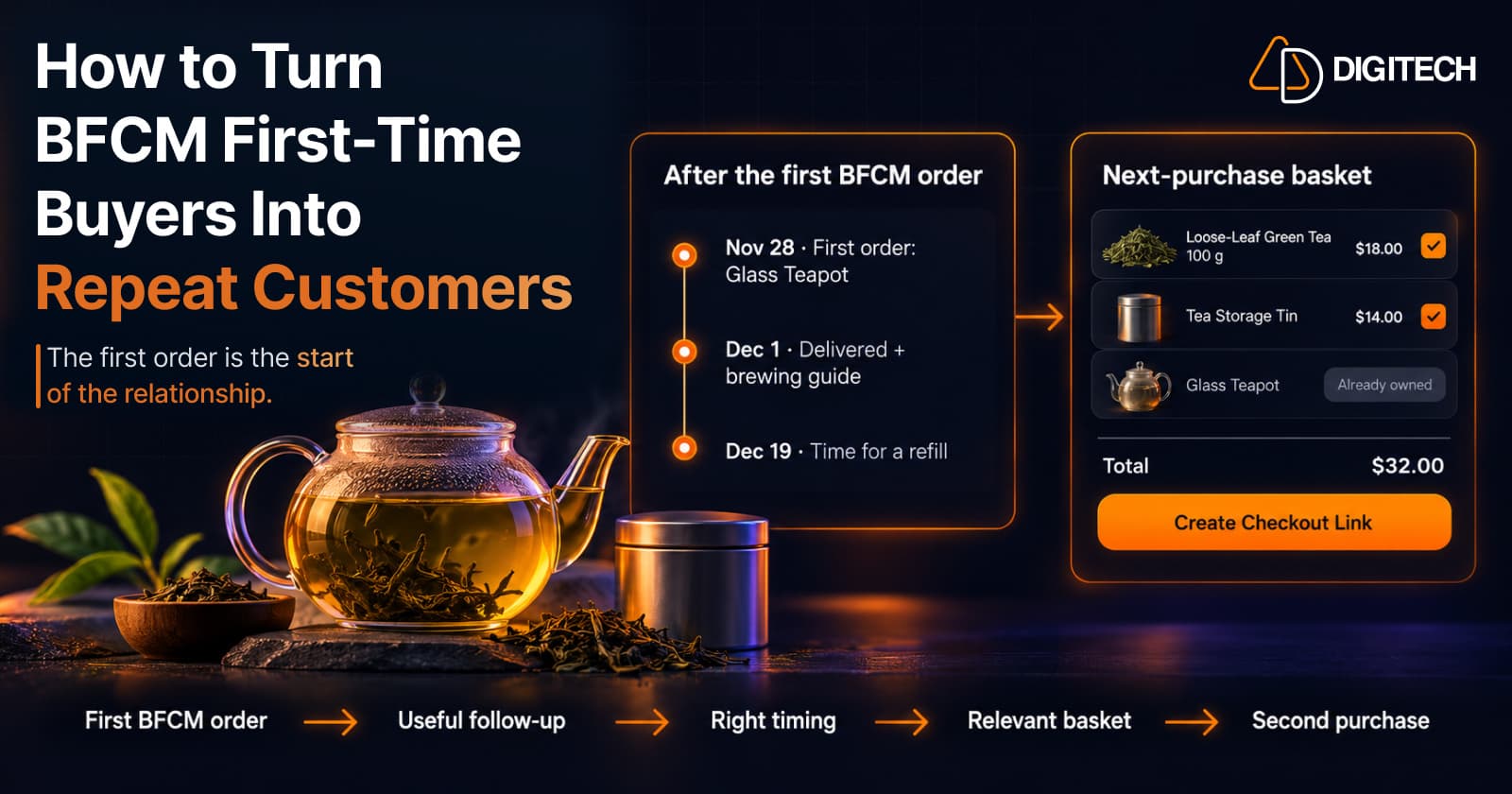
Black Friday falls on November 27, 2026, and Cyber Monday on November 30. For many Shopify stores, those four days bring in more new customers than any other week of the year.
Most of the planning goes into getting those customers to the first order. Much less goes into what happens next. A customer who bought once on a BFCM discount hasn't decided to become a regular. They've decided that one product, at that price, was worth it.
Shopify's own BFCM campaigns guide makes the point directly: "A first-time buyer who purchased at full price deserves a different message than someone who only converted on a steep discount." This guide covers what to do after the first BFCM order, so a relevant second purchase becomes more likely. It doesn't guarantee one. For the pre-sale side, see our guide to personalizing BFCM offers.
Why the First Purchase Is Only the Beginning
A first order is a transaction. Whether it becomes a relationship depends on what the customer experiences next:
- Did the order meet expectations? The product matched the description, arrived in good condition and did what they bought it for.
- Was delivery smooth? BFCM puts pressure on fulfillment, and a late or damaged order shapes how customers see the brand.
- Is there a natural reason to buy again? A coffee subscriber has one; someone who bought a sofa may not for years.
- Did you follow up usefully? Helpful information about the product they bought builds more trust than another promotion.
Not every first-time buyer should receive a sales offer straight away. Some customers have a reason to come back soon; others don't, and pushing them can do more harm than good.
Start With the Customer's First BFCM Purchase
The first order is your best guide to what a customer might need next. In Shopify, each customer's profile shows their order history, and Shopify's customer reports include a One-time customers report for customers "whose order history includes only one order."
Read the order for what it suggests:
- A customer who bought a coffee maker may later want compatible beans, filters or a descaler.
- A customer who bought a cleanser may be interested in the moisturizer from the same routine.
- A customer who bought a dog harness may need a matching leash, or treats they'll use up.
These are hypothetical examples, not predictable buying patterns. Purchase history gives you context, but it doesn't prove what a customer needs now. A BFCM order may also have been a gift, which tells you more about the recipient than the buyer. Our guide to turning purchase history into new sales covers how to read past orders as signals.
Five Practical Ways to Encourage a Second Purchase
1. Deliver a Useful Post-Purchase Experience
When it's useful: for almost every first-time buyer, especially with products that need setup, care or a little learning.
Example: a customer who bought a cast-iron skillet gets a short seasoning and care guide a few days after delivery, with no offer attached.
How to implement it: use your store's order and shipping notifications, plus a post-purchase email through your email tool, to send care instructions, setup tips or a how-to video.
Common mistake: treating "post-purchase" as another word for "upsell". A customer who can't get the product working won't buy a second one.
2. Recommend Relevant Complementary Products
When it's useful: when the first purchase has natural add-ons or consumables.
Example: a customer who bought an espresso machine is shown a milk frothing pitcher and a descaling kit, not your best-selling candle.
How to implement it: map each of your main BFCM products to two or three genuinely related items before the sale. Our guide to recommending complementary products covers how to judge those pairings.
Common mistake: recommending something the customer already owns, or a product from an unrelated category because it's overstocked.
3. Choose Follow-Up Timing Based on the Product
When it's useful: always. The right moment for a second purchase depends on what was bought.
Example: a 30-day supply of supplements may justify a reminder around day 25, while a winter coat probably won't need a follow-up offer for months.
How to implement it: group your BFCM products into consumables, accessories and durable goods, and set a different follow-up window for each. Shopify suggests launching post-purchase emails and SMS "within two to five days after a customer buys," which suits a thank-you or care message better than a product offer for items still in transit.
Common mistake: using one timing for every product, so some customers hear from you too early and others too late.
4. Make the Next Offer Relevant, Not Merely Discounted
When it's useful: when you're deciding whether a second-purchase offer needs a discount at all.
Example: a customer who paid full price during BFCM may respond to a relevant product without a discount. A customer who only bought because of a steep discount may need a smaller incentive to try a second product.
How to implement it: if you use a discount, Shopify's amount off discounts can be limited to "Customer segments" or "Specific customers," limited to one use per customer, and given an end date. Shopify's BFCM guide suggests focusing discounts "on products customers will need to restock regardless."
Common mistake: sending the same discount to every first-time buyer, which costs margin on customers who would have bought anyway.
5. Use Customer Feedback and Engagement to Guide Follow-Up
When it's useful: when you want to know whether a customer is happy before asking for another order.
Example: a customer who opened the care guide and left a positive review is a better candidate for a follow-up recommendation than one who filed a return request.
How to implement it: check support tickets, returns and reviews before you send a second-purchase message, and respect each customer's communication preferences. Shopify's BFCM checklist advises being "careful not to over-communicate, since purchasers are likely getting order-related emails in the days following BFCM."
Common mistake: adding every first-time buyer to the same promotional sequence, regardless of how their first order went.
A Simple Post-BFCM Follow-Up Workflow
- Identify first-time customers acquired during BFCM. Shopify customer segments can filter by first order date and number of orders.
- Review their first purchase and any relevant context, such as returns or support contact.
- Make sure the order experience was satisfactory. Resolve open issues first.
- Identify one or more relevant next-product opportunities.
- Choose a sensible follow-up time and a suitable channel for each product type.
- Prepare a personalized product selection or basket.
- Send communication only through an appropriate, permitted channel. Shopify's checklist reminds merchants to make sure "you have consent to send promotional emails," and the same care applies to SMS and other messages under the rules that apply to your store.
- Measure second purchases and customer-level outcomes.
Preparing a basket and sending a campaign are separate steps. One way to package a basket is a draft order: Shopify lets you "send invoices with secure checkout links for customers to complete payment online" (Draft orders and invoices). Creating the link doesn't send it.
How Curivo Can Help Merchants Prepare Personalized Next-Purchase Baskets
For step 6, Curivo is our Shopify app for preparing a personalized basket from a customer's purchase history:
- Select a customer and review their purchase history and available context.
- Build a basket by hand, or ask Curivo's AI to generate four recommendation options.
- Review and edit the basket before anything is shared.
- Create a checkout link through Curivo's draft order and direct checkout workflow.
- Share the link with the customer through your own, permitted channel.
- Review analytics for activity and revenue attribution, where supported.
Curivo doesn't run post-purchase campaigns or send emails, SMS or WhatsApp messages. It doesn't predict future purchases or calculate customer lifetime value. You decide who receives a basket, when and how. It's available on the Shopify App Store, with a free plan.
How to Measure Whether Your Retention Efforts Are Working
Shopify's BFCM checklist lists "Repeat purchase rate among new BFCM customers" among the things to monitor after the sale, and notes that "some outcomes, like repeat purchases from new customers, might not be visible right away."
Useful measures, where available:
- Second-purchase rate for BFCM first-time buyers: customers whose first order was placed during BFCM and who placed a second order within a defined period, such as 90 days, divided by all customers whose first order was placed during BFCM.
- Time between first and second orders.
- Longer-term value: over a longer horizon, customer lifetime value shows what those customers are worth, not just whether they ordered twice.
- Revenue associated with follow-up messages or recommendation links, where attribution is supported.
- Profit after discounts and relevant costs.
A period-based repeat purchase rate isn't the same as Shopify's returning-customer figures, which are based on each customer's entire order history. Our guide to measuring repeat purchase rate explains the difference. Whatever definition you use, keep it the same from one period to the next.
Common Post-BFCM Retention Mistakes
- Sending a discount to every first-time buyer.
- Recommending unrelated products, or ones the customer already owns.
- Promoting another purchase before fixing a poor first order.
- Contacting customers too often in the weeks after BFCM.
- Ignoring replenishment cycles for consumable products.
- Treating every first-time customer as equally ready to buy again.
- Confusing link creation with campaign delivery. A checkout link does nothing until someone shares it.
- Measuring sales without discounts, costs and attribution limits.
Post-BFCM Customer Retention Checklist
- Identify first-time buyers from the BFCM period.
- Review each group's order and product context.
- Confirm the first-order experience was good, and resolve open issues.
- Select relevant complementary or repeat-purchase products.
- Choose follow-up timing by product type.
- Review discounts and margins before offering any.
- Check marketing consent for each channel.
- Measure second purchases and results over a defined period.
Conclusion
A successful BFCM doesn't end when the order ships. The first purchase is the beginning of a customer relationship, and the next interaction decides whether it continues. Make that interaction useful first, then relevant, and only add a discount when it genuinely helps.
If you'd like to prepare personalized next-purchase baskets from your BFCM customers' order history, you can explore Curivo.
Sources
- Shopify: BFCM Campaigns: 13 Strategies for 2026
- Shopify: Black Friday Checklist 2026: 25 BFCM Prep Steps
- Shopify Help Center: Customers reports
- Shopify Help Center: Amount off discounts
- Shopify Help Center: Draft orders and invoices
Frequently asked questions
When should I contact BFCM first-time buyers after their order?
It depends on the product. Shopify's BFCM guidance suggests post-purchase emails within two to five days of a purchase, but a second-purchase offer usually fits better once the product has arrived and been used. For consumables, base the timing on how long the product typically lasts.
Should every first-time BFCM buyer get a discount for a second order?
No. A discount can help some customers, but it also reduces margin and can train customers to wait for one. A relevant product, recommended at the right time, may be enough on its own.
How do I find first-time BFCM buyers in Shopify?
Shopify customer segments can filter customers by first order date and number of orders, so you can find customers whose first order was during BFCM and who haven't ordered again. Shopify's One-time customers report also lists customers with a single order.
Can Curivo send follow-up emails to my BFCM customers?
No. Curivo helps you prepare a personalized basket for a customer and create a checkout link. You review it and share the link yourself through a channel you already use and have permission to use.
How do I know if my post-BFCM follow-up worked?
Track how many BFCM first-time buyers make a second purchase within a defined period, the time between their first and second orders, and the profit from those orders after discounts. Keep the definitions the same so you can compare periods.
Turn Customer History Into Your Next Sale
See how Curivo helps Shopify merchants turn customer purchase history into personalized recommendations, ready-to-buy baskets, and measurable revenue.
Related reading
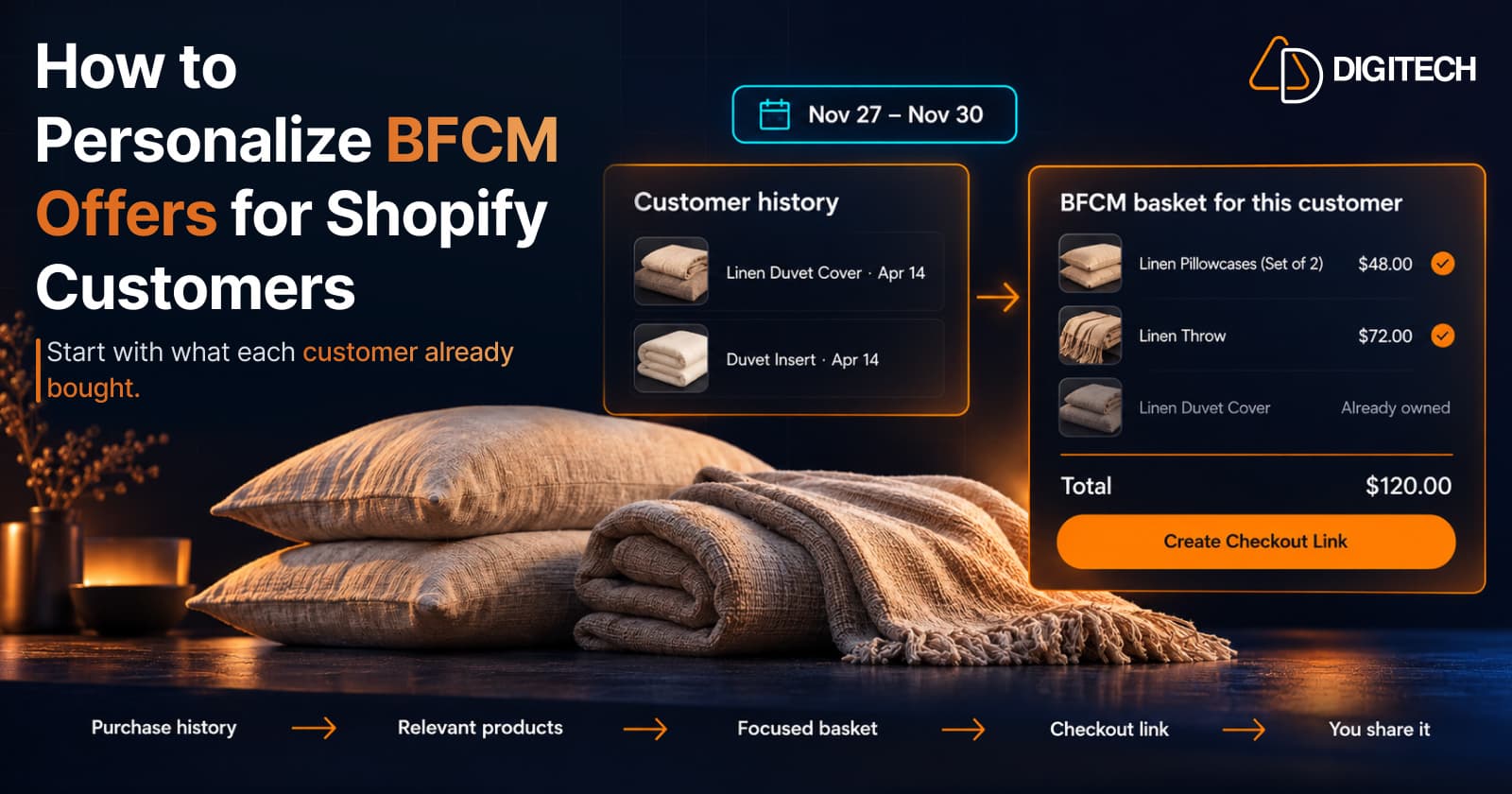
How to Personalize BFCM Offers for Shopify Customers
Use Shopify customer purchase history to build relevant BFCM offers for existing customers: what to check, five ways to personalize, and how to measure it.
Read article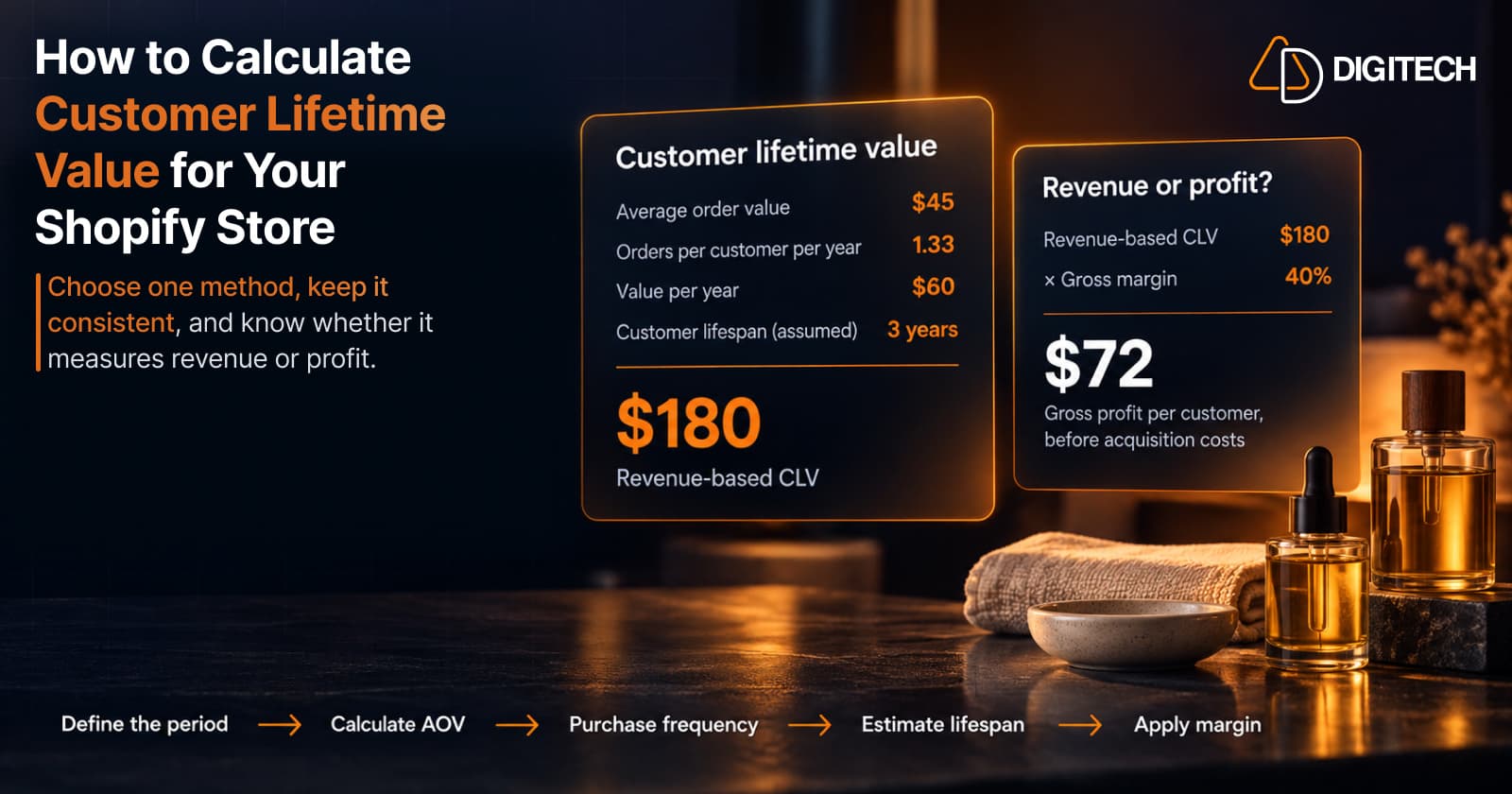
How to Calculate Customer Lifetime Value for Your Shopify Store
Learn how to calculate customer lifetime value for a Shopify store, choose between revenue and profit-based CLV, find the data in Shopify, and avoid common mistakes.
Read article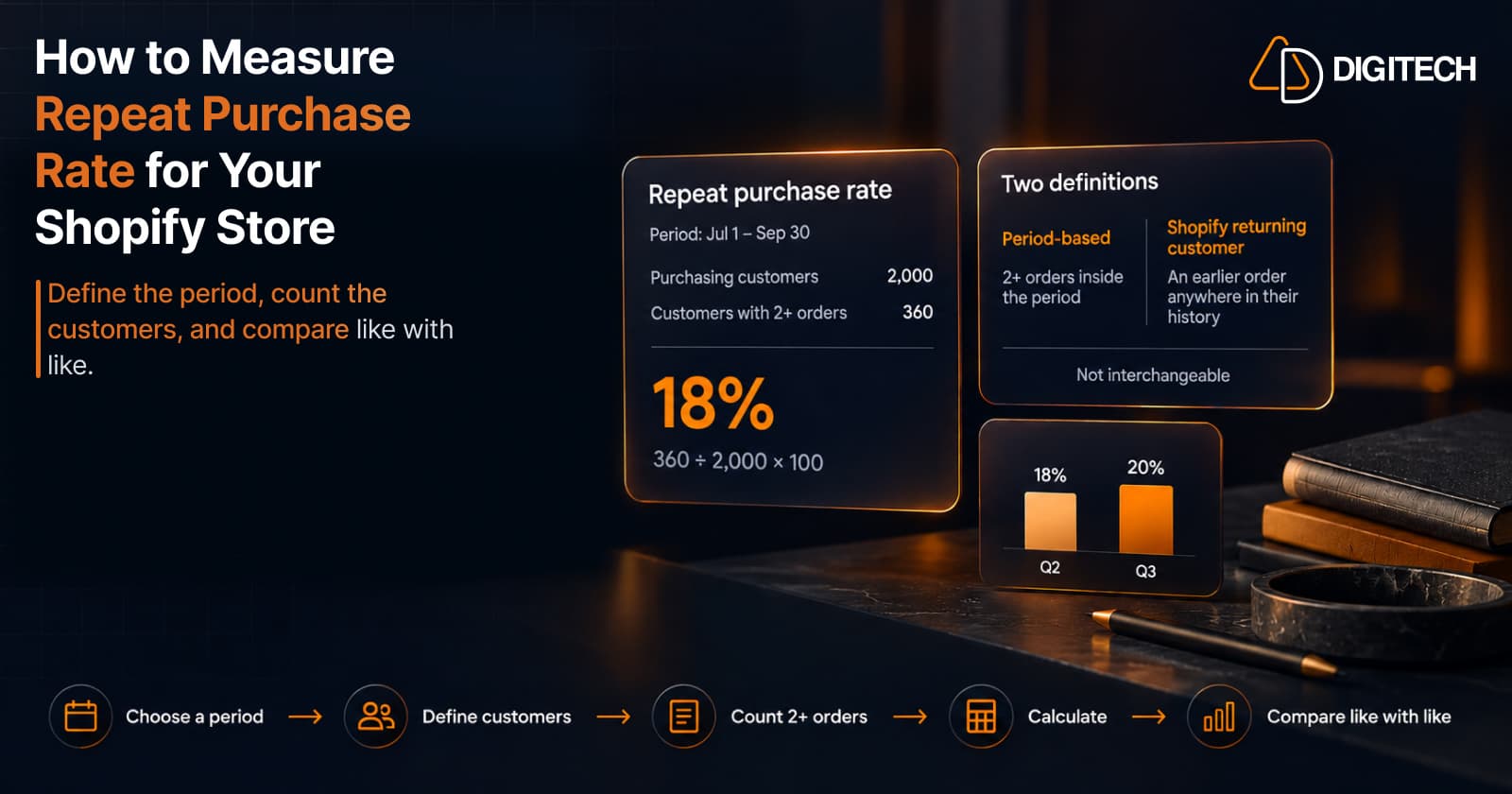
How to Measure Repeat Purchase Rate for Your Shopify Store
Learn how to calculate repeat purchase rate for a Shopify store, choose the right period and customer population, read the result carefully, and track the related retention metrics.
Read article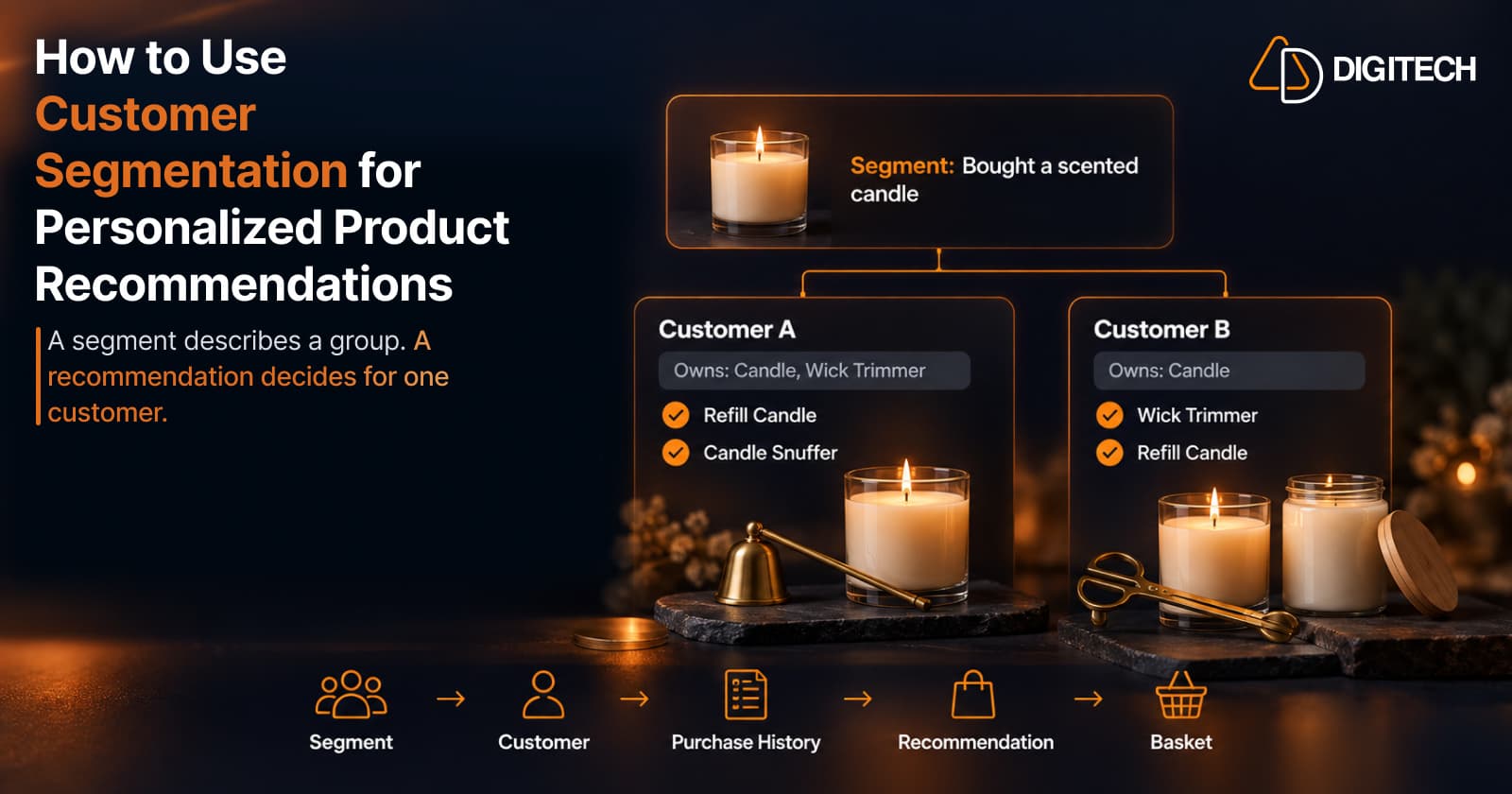
How to Use Customer Segmentation for Personalized Product Recommendations on Shopify
Learn how to use Shopify customer segments to make product recommendations more relevant, and how to turn a segment-level insight into a recommendation for one customer.
Read article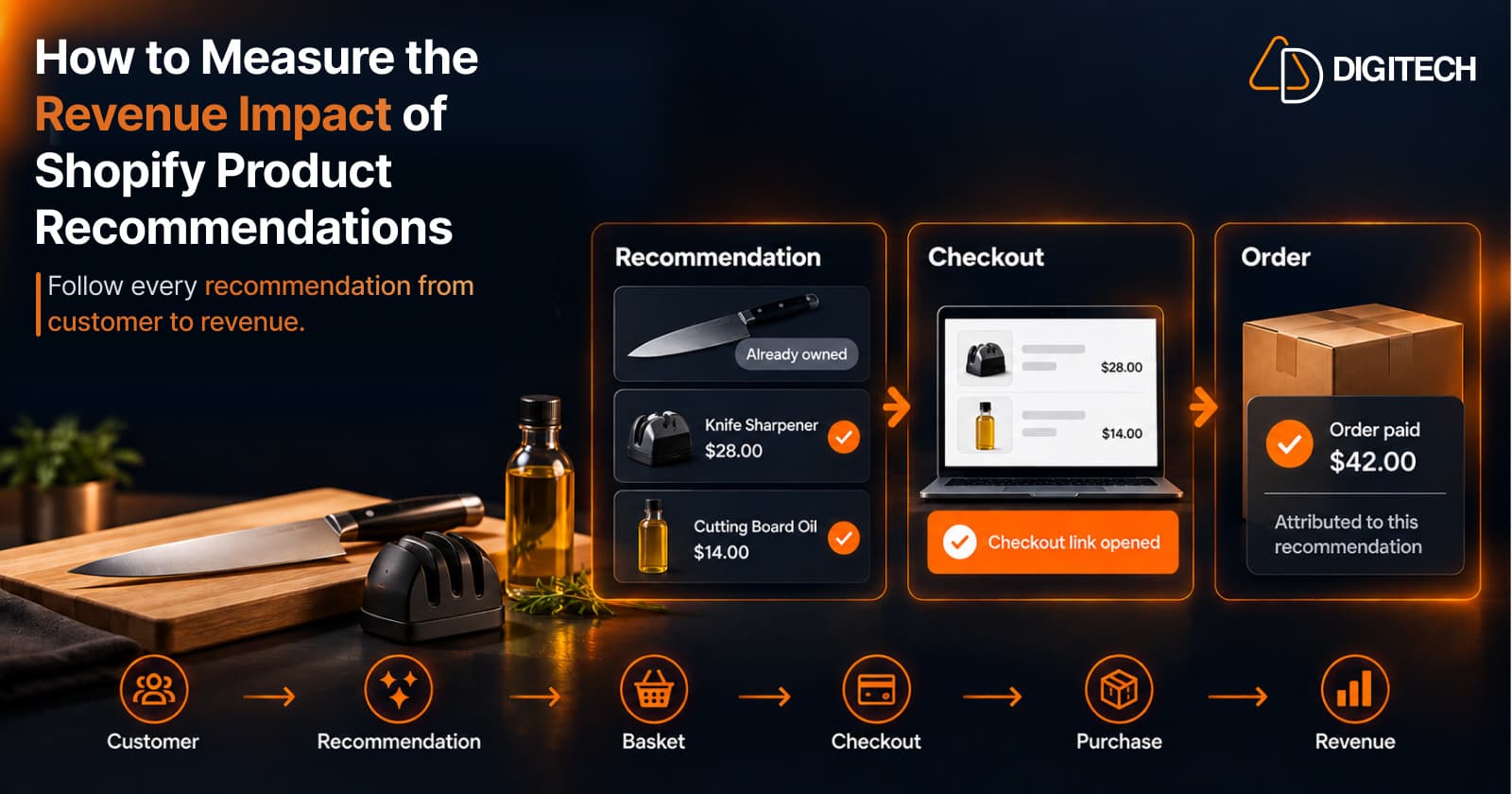
How to Measure the Revenue Impact of Shopify Product Recommendations
Learn how Shopify merchants can measure product recommendation performance, track checkout activity, attribute revenue, and improve personalized recommendations.
Read article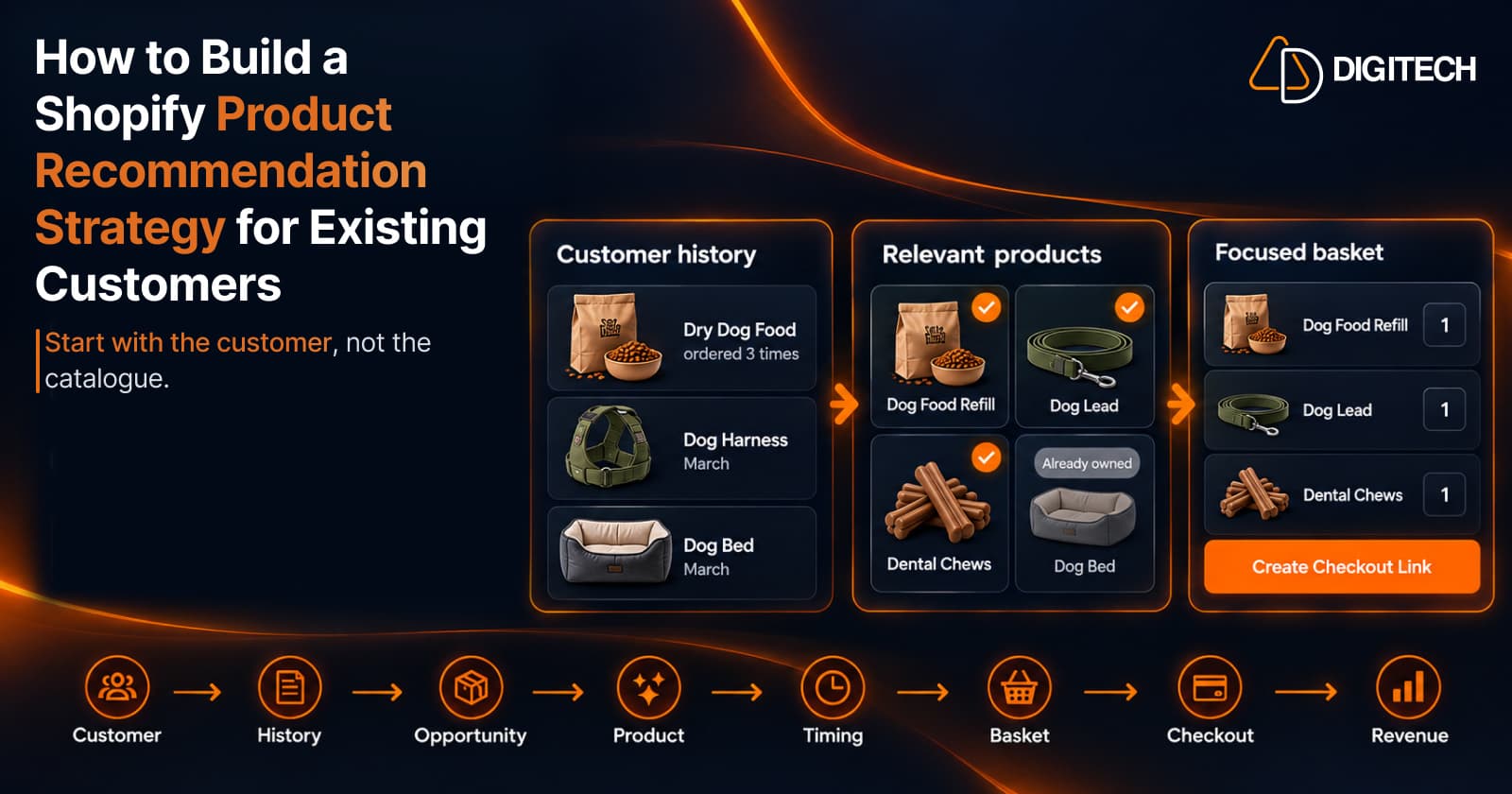
How to Build a Shopify Product Recommendation Strategy for Existing Customers
Learn how to build a Shopify product recommendation strategy using customer history, product relationships, timing, and personalized recommendations.
Read article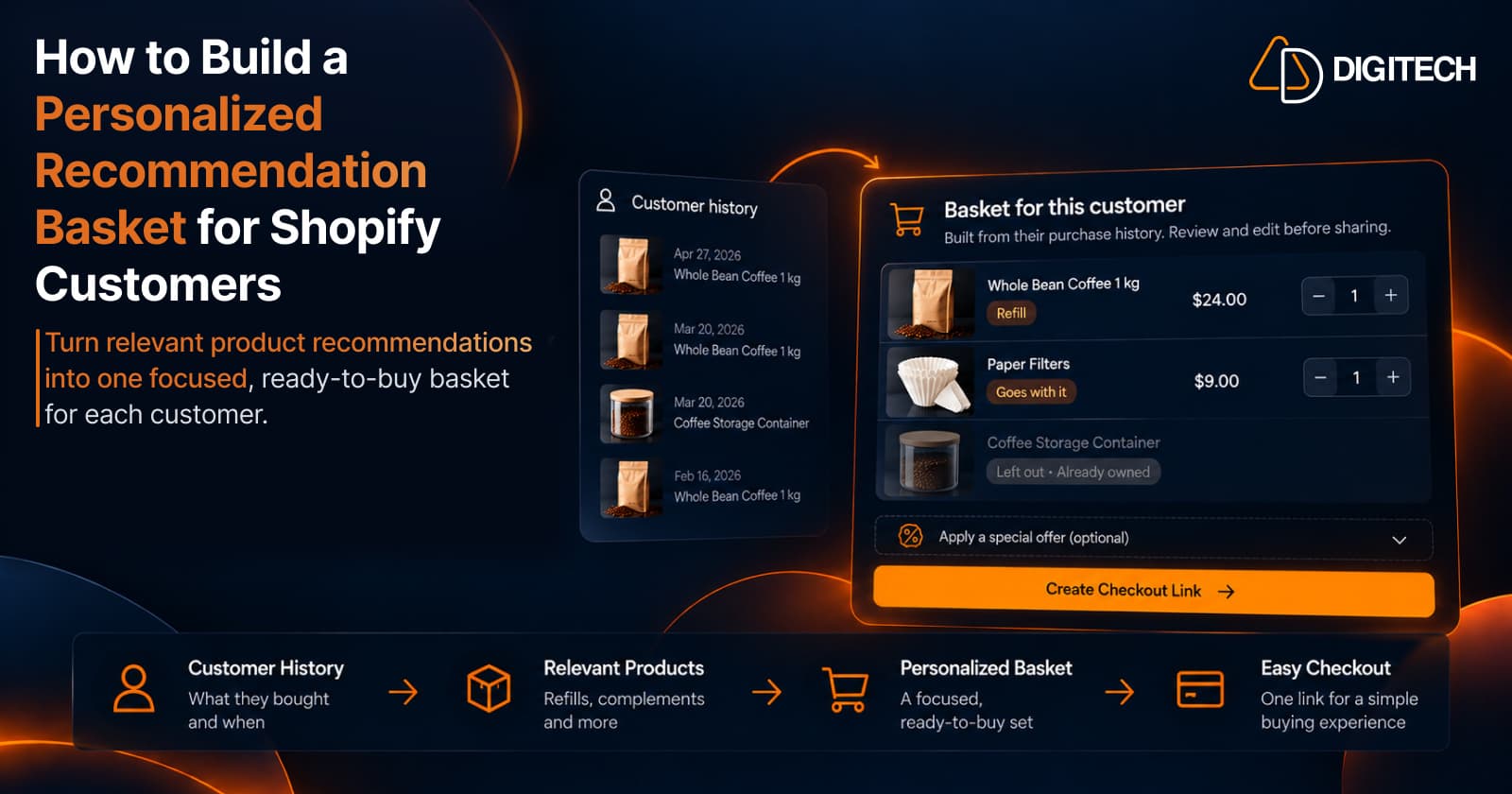
How to Build a Personalized Recommendation Basket for Shopify Customers
Learn how Shopify merchants can build personalized recommendation baskets using customer history, product relationships, timing, and product fit.
Read article
How to Use Purchase Timing to Recommend Products to Shopify Customers
Learn how Shopify merchants can use purchase timing, purchase frequency, recency, and customer history to make product recommendations more relevant.
Read article
How to Recommend Complementary Products to Existing Shopify Customers
Learn how to recommend complementary products to existing Shopify customers using purchase history, product relationships, timing, and customer context.
Read article