What to Recommend When a Customer's First Shopify Order Is Returned or Exchanged
A returned or exchanged first order changes what you know about a customer. Here's how Shopify merchants can read return reasons and recommend a relevant next product.
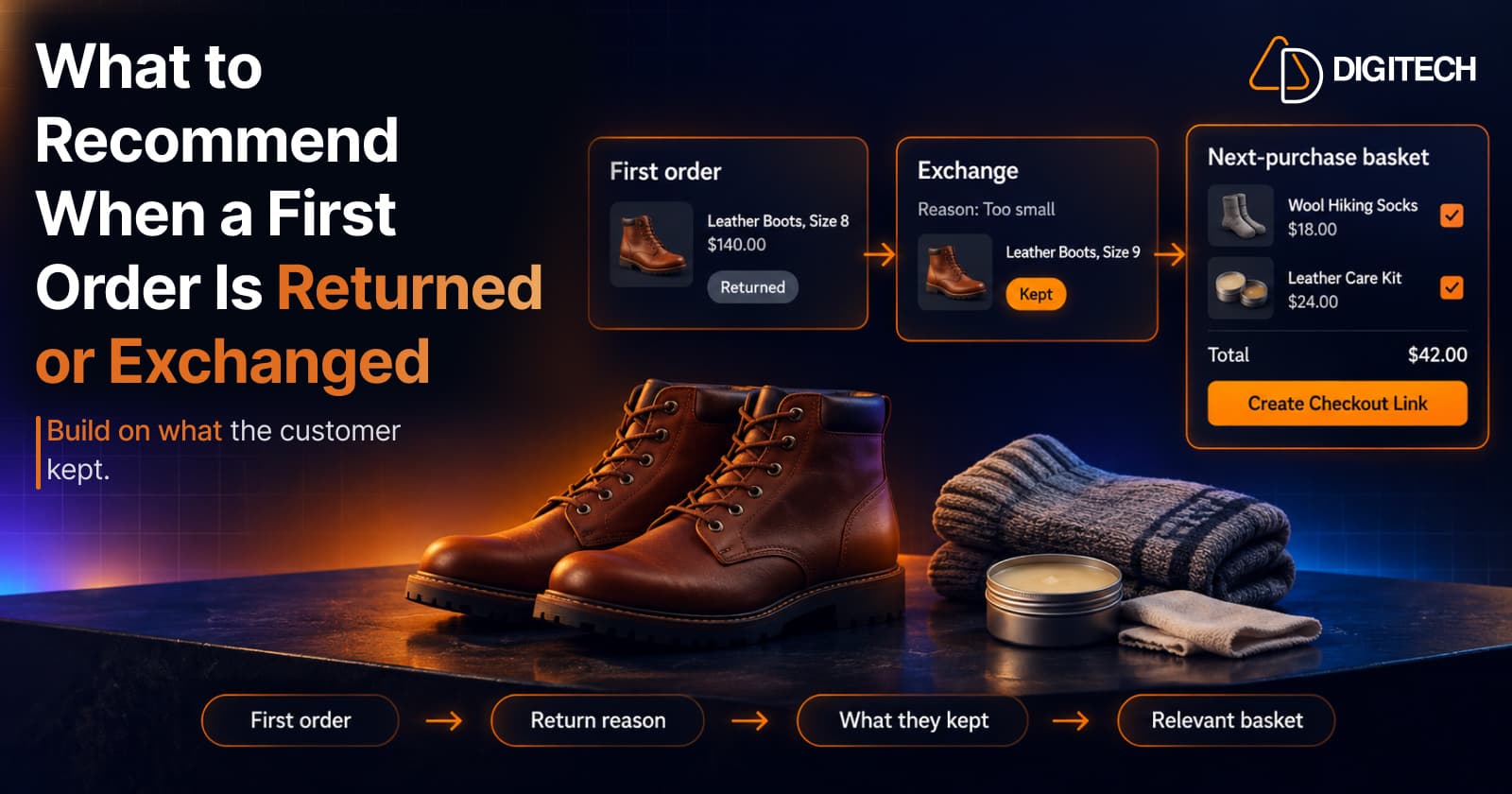
Returns are part of BFCM. Shopify's own Black Friday checklist says so directly, "Returns are part of the customer experience during BFCM", and suggests considering "extending your returns and exchanges policy during the holiday season."
That leaves a question most retention advice skips: what should you recommend to a customer whose first order came back? Purchase history says they bought a pair of boots. The return says the boots didn't work out. Recommend boot socks and a care kit as if nothing happened, and the suggestion is irrelevant at best.
This guide explains how a return or exchange changes what you know about a first-time customer, how to read the return reason, and when to recommend something next, or nothing yet. It builds on our guide to turning BFCM first-time buyers into repeat customers.
Why a Returned First Order Changes the Picture
A first order is already thin evidence, and most next-product advice, including our guide to recommending the next product to existing customers, assumes the customer kept what they bought. A return changes that in three ways:
- The customer doesn't own the item. Accessories and refills for a returned product don't fit.
- The reason matters more than the product. "Too small" and "not as described" call for very different next steps.
- The relationship is fragile. A customer who just went through a return is deciding whether to trust your store again.
An exchange is different. The customer kept a version of the product, which suggests they still wanted it and points to the size, colour or variant that's more likely to suit them. It's a useful signal, not proof; check the recorded reason.
Start With the Return Reason
Three terms are easy to mix up:
- Return: the customer sends an item back.
- Refund: money goes back to the customer. Shopify lets you refund without creating a return, so a refund doesn't always mean an item came back.
- Exchange: in Shopify, exchange items are added to a return, so the customer swaps an item for another product, size or variant.
Shopify's return flow includes a return reason. Since January 2026, Shopify suggests return reasons specific to the product's category, such as "Too big" or "Too small" for apparel, or "Taste," "Style" and "Weight" where those matter. Shopify says these appear in the admin, POS, self-serve returns and the Shop app.
Two details from Shopify's returns and exchanges documentation affect what you'll find:
- A refund without a return doesn't record a return reason. If your team refunds without creating a return, you lose the signal.
- Exchanges are built in. Merchants can add exchange items to a return in the admin; Shopify made exchanges for online orders available to all merchants in February 2024.
So the first practical step happens before any recommendation: create returns properly, with a reason, so the information exists.
Four Common Situations and What to Recommend
| Situation | What it tells you | What to recommend | What to avoid |
|---|---|---|---|
| Exchanged for another size | They likely still want the product; a better-fitting size | Complements for the item they kept, in that size | Suggesting the original size again |
| Returned: style or preference | The category may fit; that version didn't | An alternative in a different style, later | Accessories for the returned item |
| Returned: damaged or wrong item | The problem was yours, not their taste | Nothing until it's resolved | Any sales message before the fix |
| Partial return | Some items worked, some didn't | Based on the items they kept | Treating the whole order as owned |
1. Exchanged for a Different Size
Example: a customer bought leather boots in size 8, exchanged them for size 9, and kept them.
What to recommend: products that go with the boots they kept, such as wool socks or a leather care kit, and, for later clothing suggestions, their confirmed size. Our guide to recommending complementary products covers how to judge those pairings.
Why: an exchange is often the clearest signal you have, because the customer chose to keep the product in another size. It's still one data point; if they later return the new size too, treat it differently.
2. Returned Because of Style or Preference
Example: a customer returned a patterned cushion cover with the reason "Style" and kept the plain linen throw from the same order.
What to recommend: if anything, something that fits what they kept, such as a plain cushion cover that matches the throw. Not another patterned design.
Why: the return tells you what they didn't like; the kept item tells you what they did.
3. Returned Because It Was Damaged or Wrong
Example: a customer received a cracked ceramic vase and returned it.
What to recommend: nothing yet. Make sure the replacement or refund went smoothly. A sales message before that's resolved can read as careless.
Why: this return says little about their taste. It's a service problem, and the next contact should be about fixing it.
4. Partial Return
Example: a customer bought a cleanser and a moisturizer, and returned the moisturizer.
What to recommend: base the next suggestion on the cleanser they kept, such as a refill when it's likely to run out, not on the moisturizer.
Why: a partial return splits the order into evidence that worked and evidence that didn't.
When Not to Recommend Anything Yet
Some first orders should get no recommendation for a while:
- The return or replacement isn't finished.
- The customer complained about the product or the returns process.
- The reason suggests a quality issue with a product you'd otherwise recommend alongside it.
- The customer returned, or was refunded for, everything and kept nothing, so there's nothing to build on.
- The reason is missing or unclear. Review the return, the order and any support conversation before deciding; don't guess.
A single useful message, such as confirmation that the refund is done, does more for a second purchase than an early offer.
A Simple Workflow for Returned and Exchanged Orders
- Find first-time customers with a return or exchange on their first order.
- Read the return reason and note what they kept.
- Sort them: exchanged, preference return, damaged or wrong, or partial return.
- Hold off where the issue isn't resolved or the experience was poor.
- Choose the next product from what they kept, using the confirmed size or variant. Our guide to choosing the right products for each customer covers the filters, such as leaving out products they already own.
- Build a small basket and share it through a channel you're allowed to use.
- Measure the result separately from customers whose first order wasn't returned.
Where Curivo Fits
Curivo is our Shopify app for preparing a personalized next-purchase basket from a customer's purchase history:
- Build a basket by hand, or ask Curivo's AI for four recommendation options.
- Review and edit every basket. Check the order's returns and reasons in Shopify first, and leave out returned items and their accessories.
- Create a checkout link and share it through your own, permitted channel.
- Review analytics for activity and revenue attribution, where supported.
Whether a customer is ready for a recommendation after a return is your call, not the app's. It doesn't send SMS or WhatsApp messages or guarantee sales. If you use Curivo's automated offers (Starter and Growth plans), a fully refunded order is skipped, and you can exclude partially refunded orders with a payment status condition. It's available on the Shopify App Store, with a free plan.
How to Measure It
Compare customers whose first order had a return or exchange with those whose didn't:
- Second-purchase rate within a defined period, such as 90 days. Our guide to measuring repeat purchase rate covers how to define it.
- Returns on the recommended products, to check the next suggestion fit better.
- Exchanges versus refunds over time, since an exchange keeps the sale.
Small groups give noisy results, so treat early numbers with caution.
Common Mistakes
- Treating returned items as owned and recommending their accessories.
- Refunding without creating a return, so no reason is recorded.
- Ignoring the size or variant a customer kept after an exchange.
- Selling before resolving a damaged or wrong item.
- Reading one return as a verdict on a whole category.
Checklist
- Create returns with a reason, not refunds alone.
- Check what each first-time customer kept.
- Sort returns by reason before recommending.
- Use the confirmed size or variant from exchanges.
- Wait until damaged or wrong-item cases are resolved.
- Leave returned items out of "already owned".
- Measure returned and non-returned customers separately.
Conclusion
A return isn't the end of a customer relationship, but it changes the evidence. Read the reason, build on what the customer kept, and wait where the experience went wrong. A relevant recommendation after a well-handled return is far more useful than one that ignores it.
For the gift side of BFCM orders, see our guide to what to recommend after a gift purchase.
Sources
- Shopify: Black Friday Checklist 2026: 25 BFCM Prep Steps
- Shopify Changelog: Better insights with category-specific return reasons (January 16, 2026)
- Shopify Changelog: Retain more revenue with built-in exchanges on Shopify (February 28, 2024)
- Shopify Help Center: Creating returns and exchanges
Frequently asked questions
Should I recommend products to a customer who returned their first order?
Sometimes. If the return was about fit or a simple preference and it was handled well, a relevant suggestion can make sense. If the product was damaged, wrong or disappointing, resolve that first and wait before recommending anything.
Does a returned product count as something the customer owns?
No. Leave returned items out when you work out what a customer already owns. They may still be interested in that kind of product, just not that exact version.
What does an exchange tell me about a customer?
An exchange suggests the customer still wanted the product but needed a different size, colour or variant. It's a useful signal, not proof. Base any later recommendation on the item they kept and its size or variant, and check the recorded reason.
Where can I see why a customer returned an item in Shopify?
On the order's return. Shopify suggests return reasons specific to the product's category, such as Too big or Too small for apparel. A refund issued without a return doesn't record a return reason.
How does Curivo fit when a first order was returned?
Check the order's returns and reasons in Shopify before you build a basket. Curivo helps you build the basket from purchase history, and you review and edit every basket before creating a checkout link, so you decide what to leave out.
Turn Customer History Into Your Next Sale
See how Curivo helps Shopify merchants turn customer purchase history into personalized recommendations, ready-to-buy baskets, and measurable revenue.
Related reading
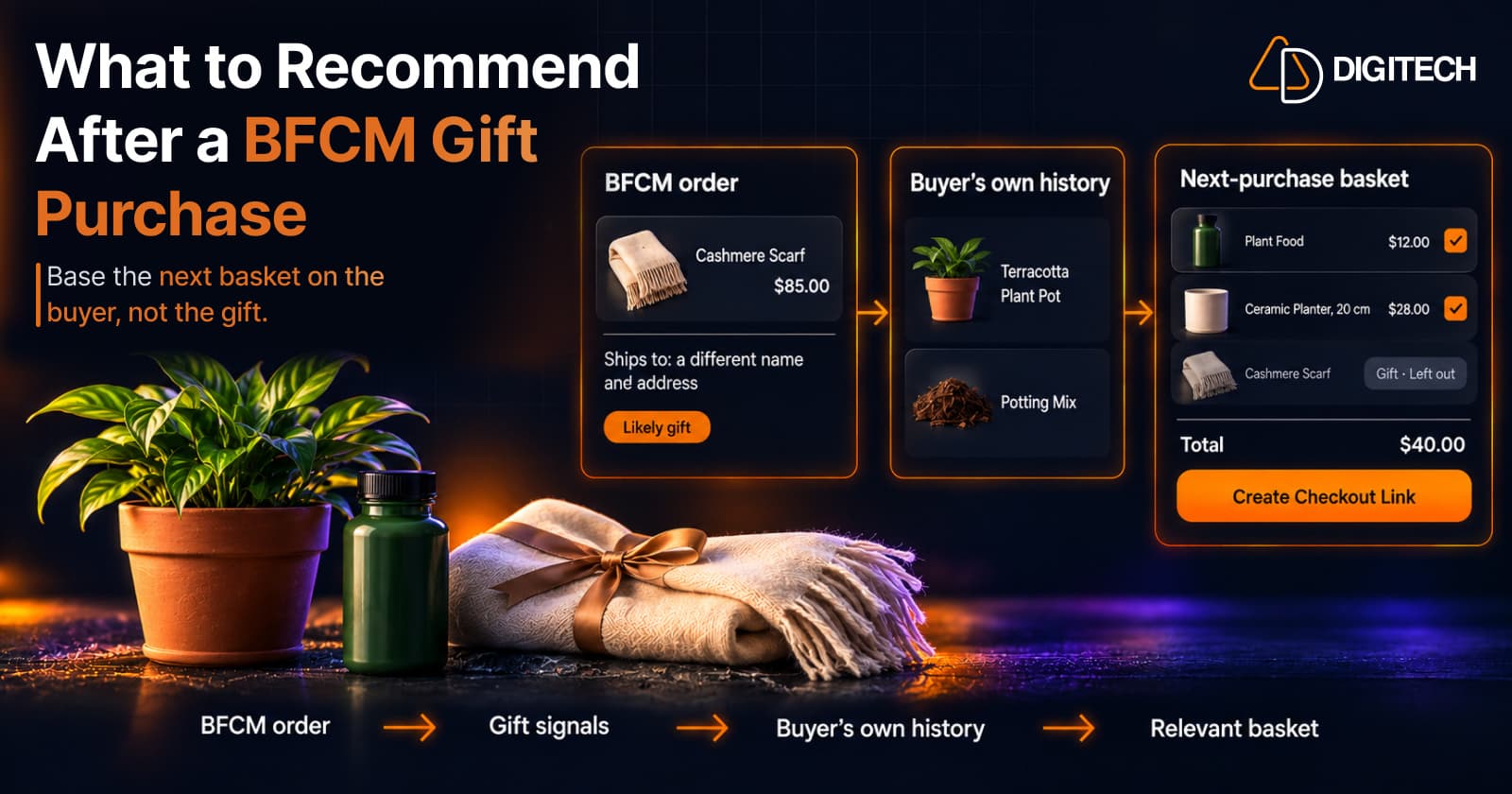
What to Recommend After a BFCM Gift Purchase: A Guide for Shopify Merchants
Some BFCM orders are gifts, which makes purchase history misleading. Here's how Shopify merchants can spot likely gift orders and recommend a relevant next product.
Read article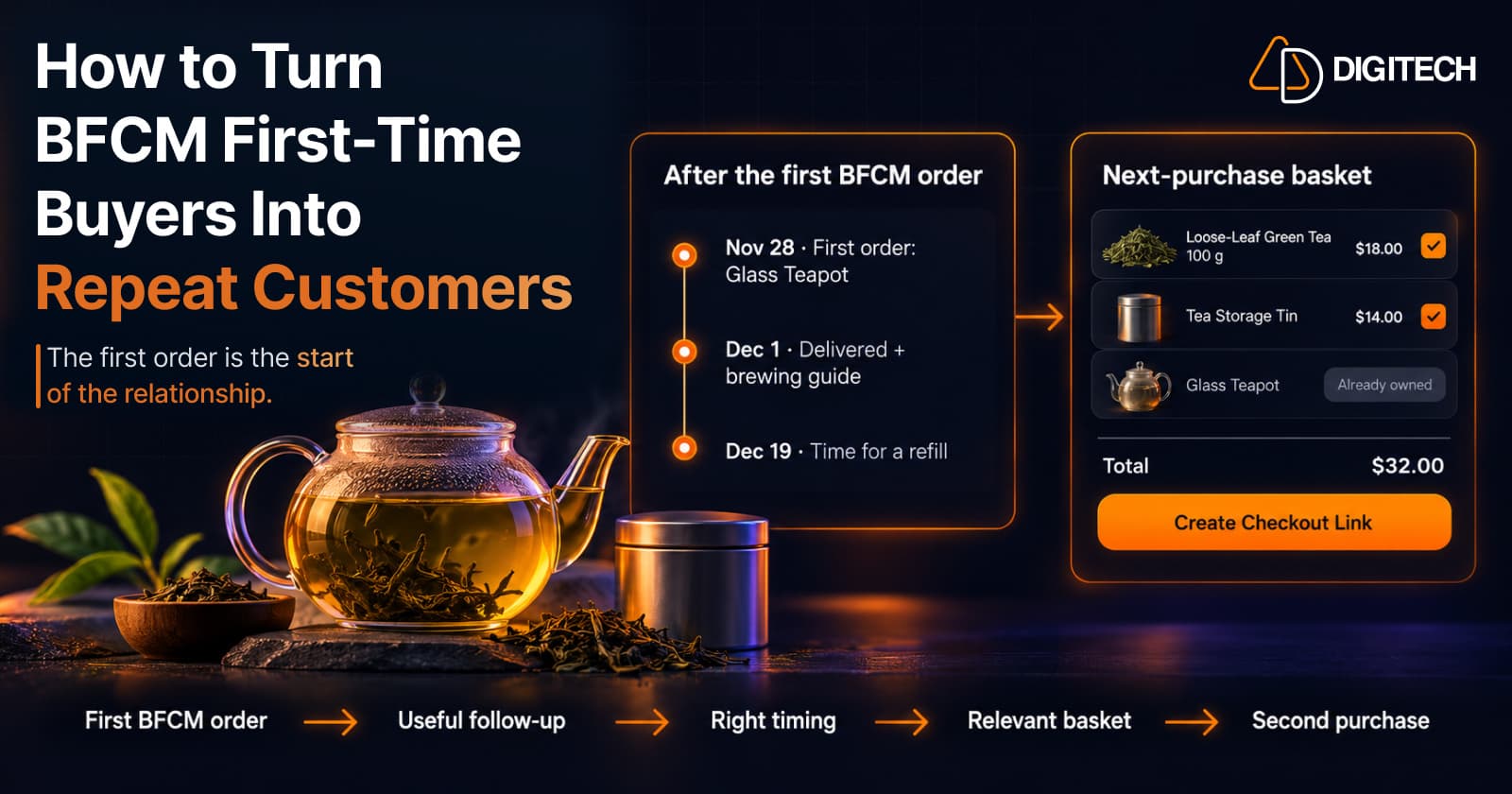
How to Turn BFCM First-Time Buyers Into Repeat Customers
A first BFCM order is the start of a customer relationship. Here's how to follow up with first-time buyers so a relevant second purchase becomes more likely.
Read article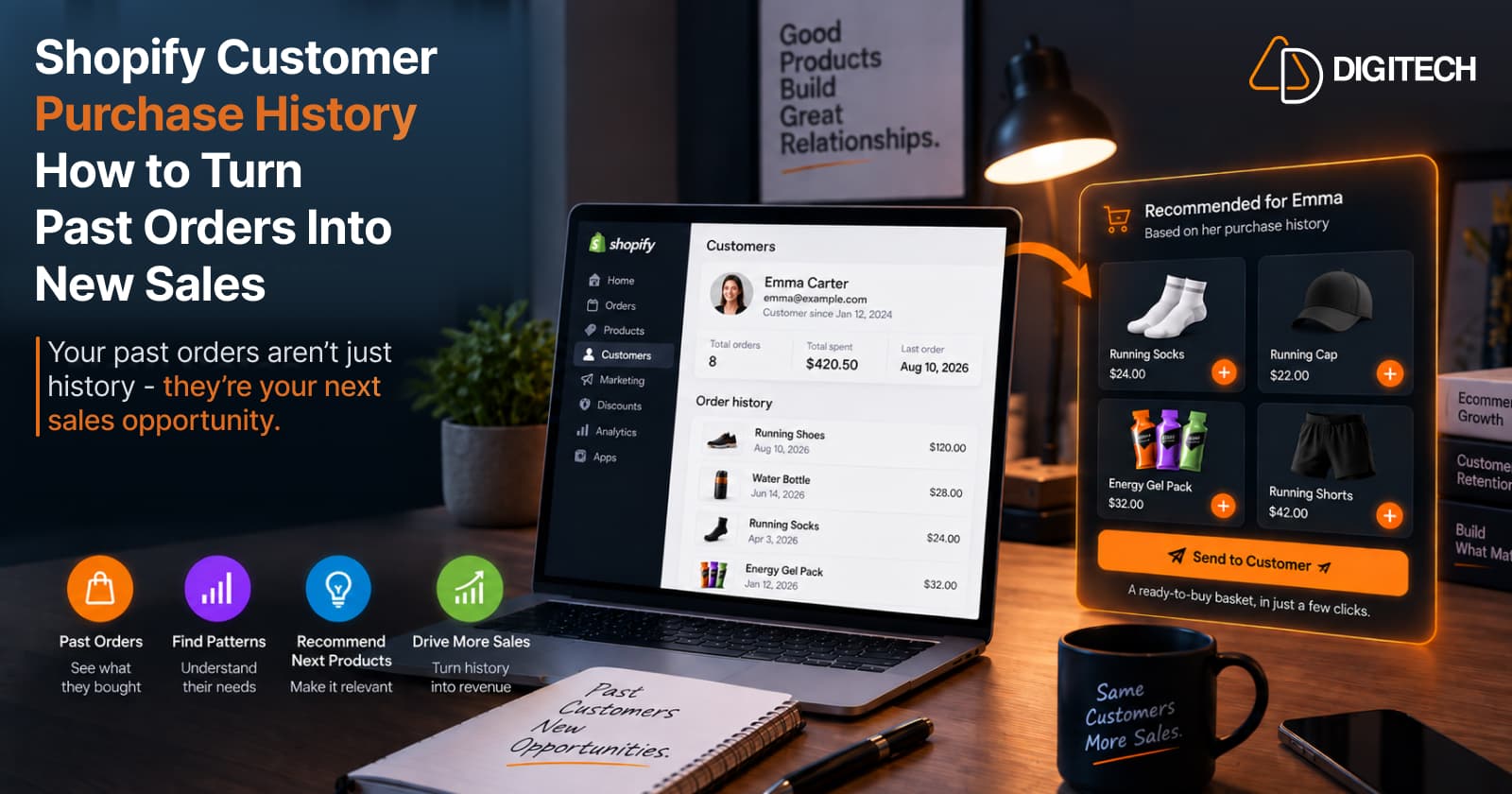
Shopify Customer Purchase History: How to Turn Past Orders Into New Sales
Learn how to use Shopify customer purchase history to identify relevant next products, create personalized recommendations, and increase repeat sales.
Read article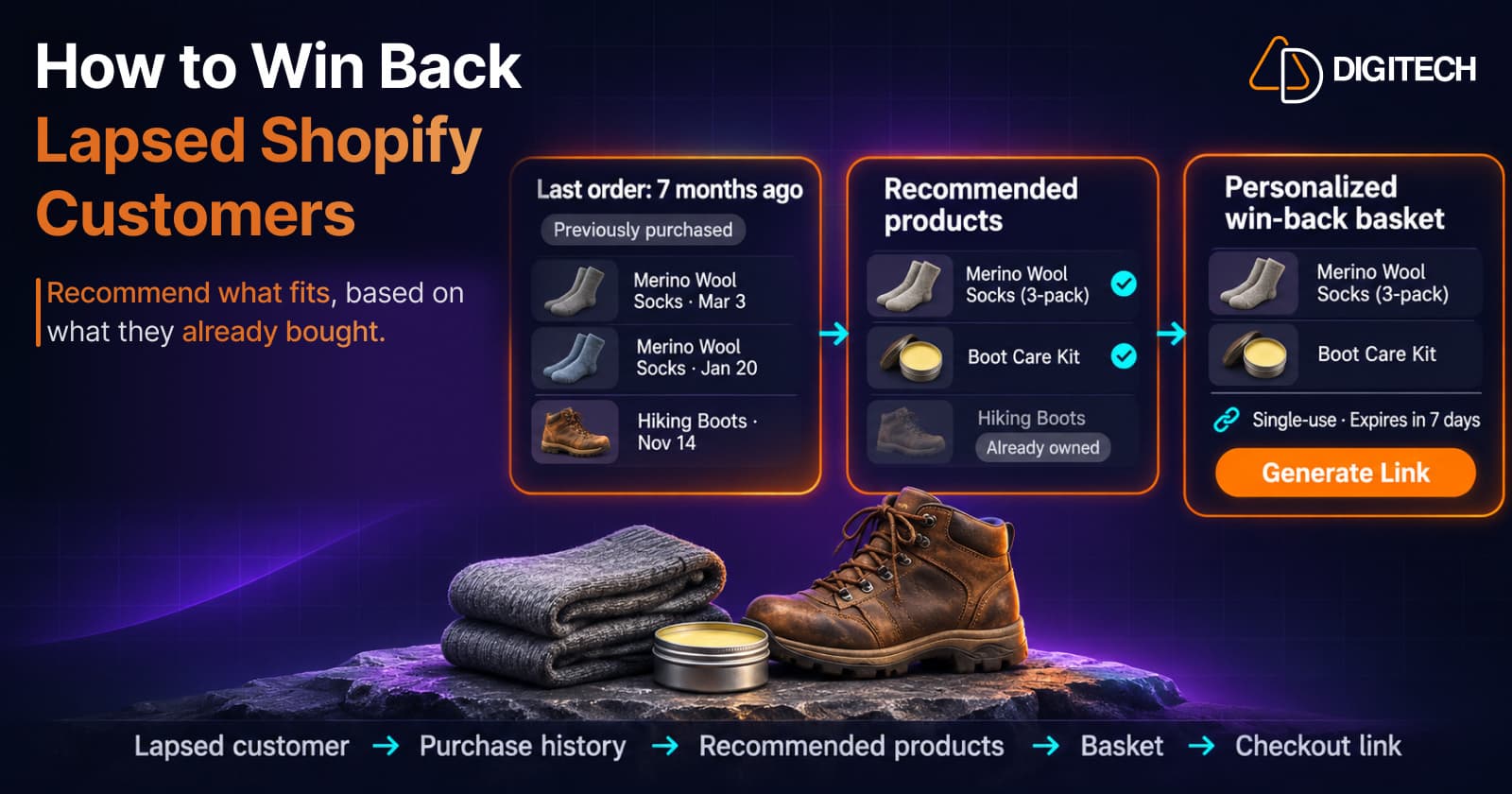
How to Win Back Lapsed Shopify Customers With Personalized Product Recommendations
A customer who used to buy from you and stopped is easier to bring back than a stranger is to win, if you give them a real reason. Here's how to find lapsed customers in Shopify, decide who to contact first, and build a win-back offer from what they already bought.
Read article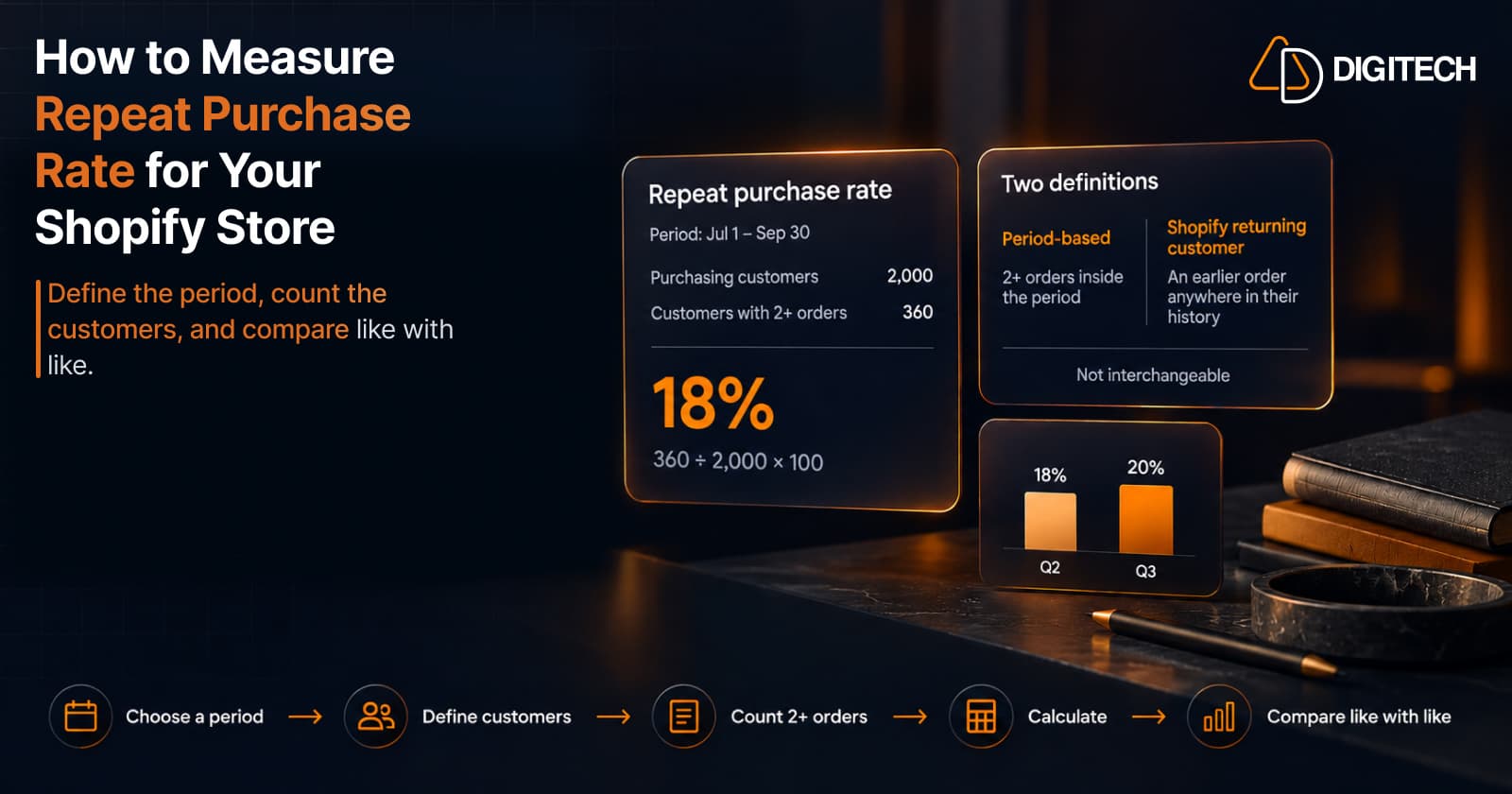
How to Measure Repeat Purchase Rate for Your Shopify Store
Learn how to calculate repeat purchase rate for a Shopify store, choose the right period and customer population, read the result carefully, and track the related retention metrics.
Read article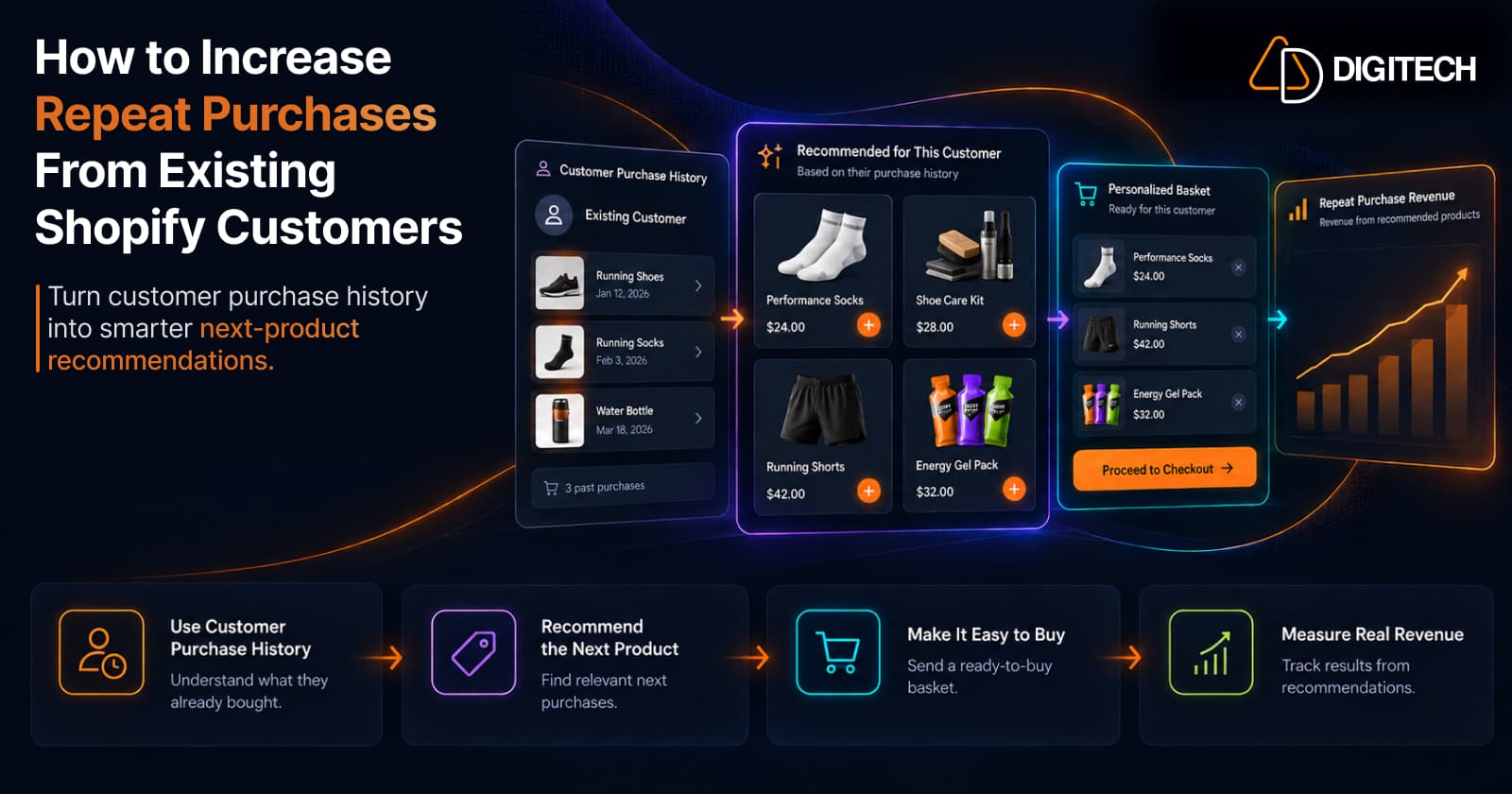
How to Increase Repeat Purchases From Existing Shopify Customers
Learn how to increase repeat purchases from existing Shopify customers using purchase history, personalized recommendations, smarter follow-ups, and measurable customer selling.
Read article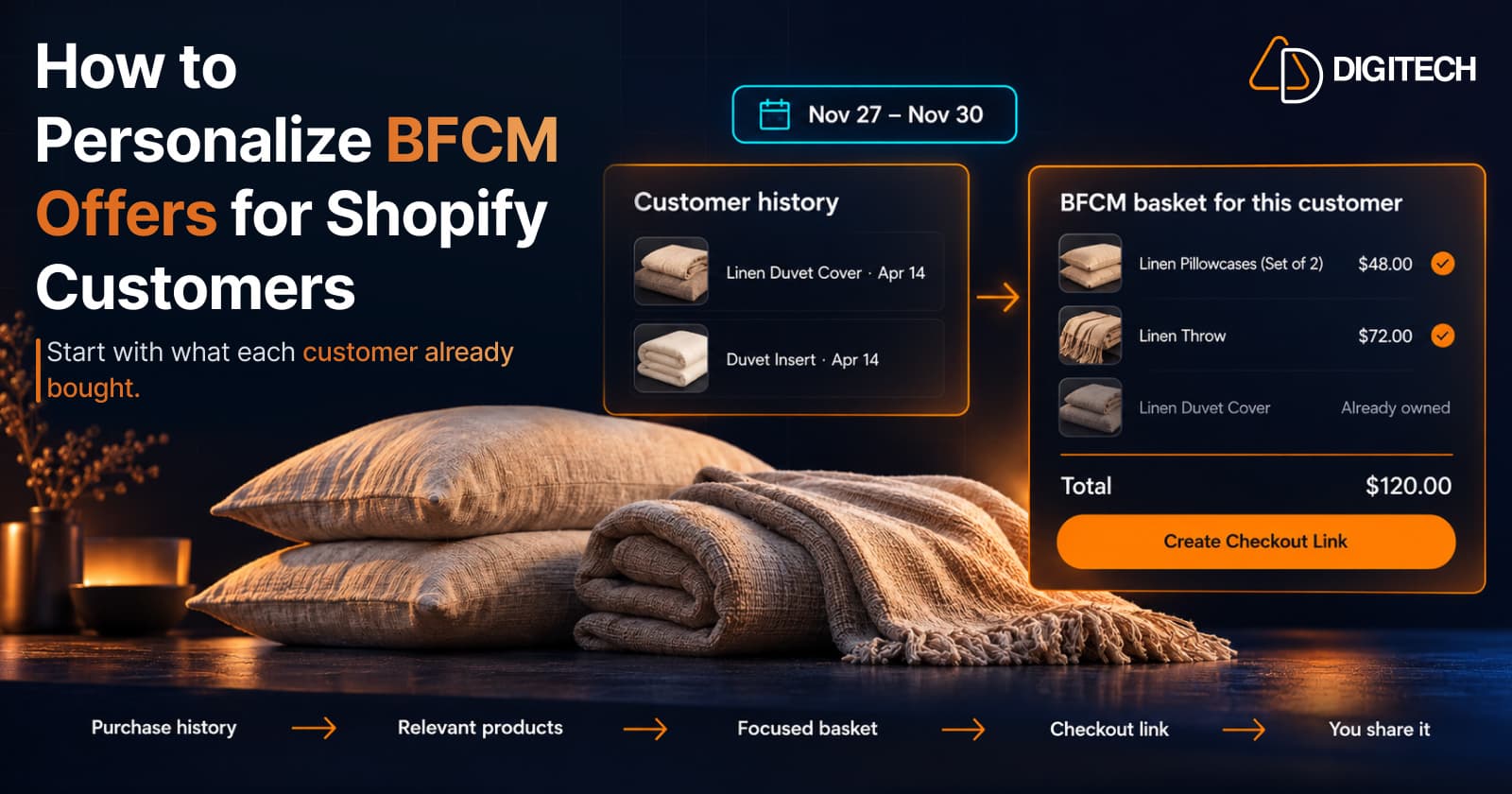
How to Personalize BFCM Offers for Shopify Customers
Use Shopify customer purchase history to build relevant BFCM offers for existing customers: what to check, five ways to personalize, and how to measure it.
Read article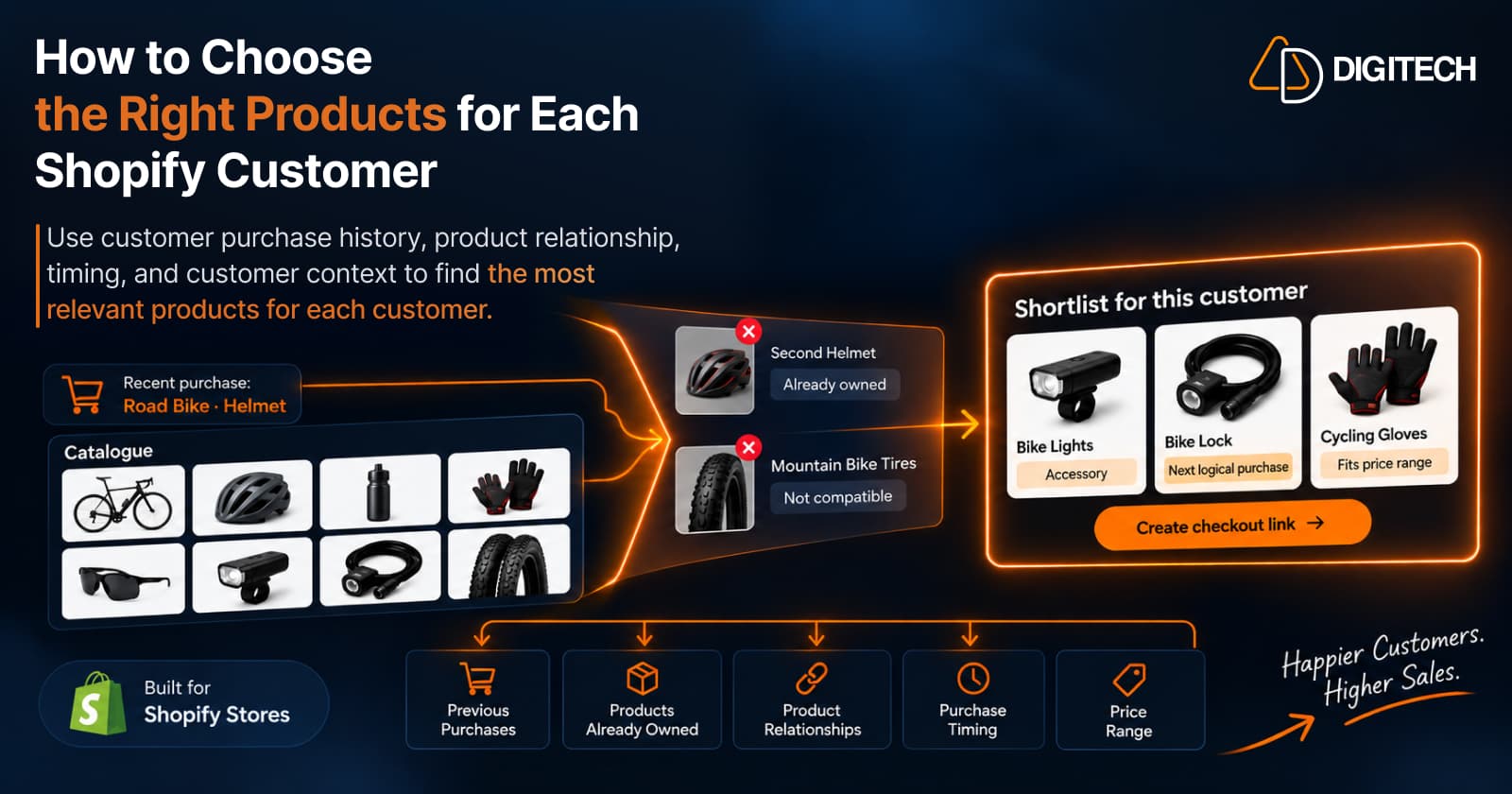
How to Choose the Right Products for Each Shopify Customer
Learn how Shopify merchants can choose more relevant products for each customer using purchase history, product relationships, timing, and customer context.
Read article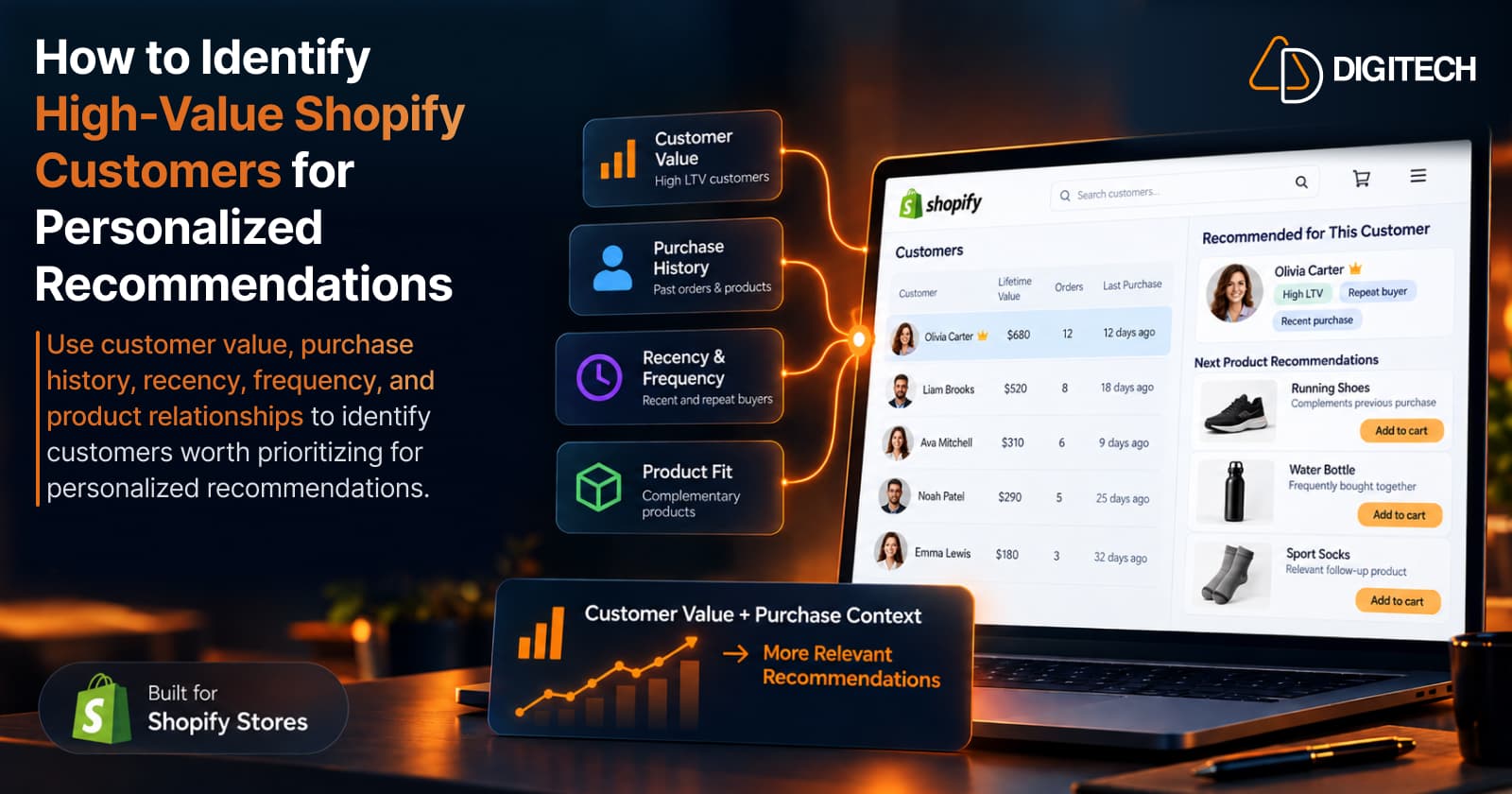
How to Identify High-Value Shopify Customers for Personalized Recommendations
How to identify high-value Shopify customers and real recommendation opportunities using purchase history, customer value, recency, and product relationships.
Read article