How to Identify High-Value Shopify Customers for Personalized Recommendations
How to identify high-value Shopify customers and real recommendation opportunities using purchase history, customer value, recency, and product relationships.
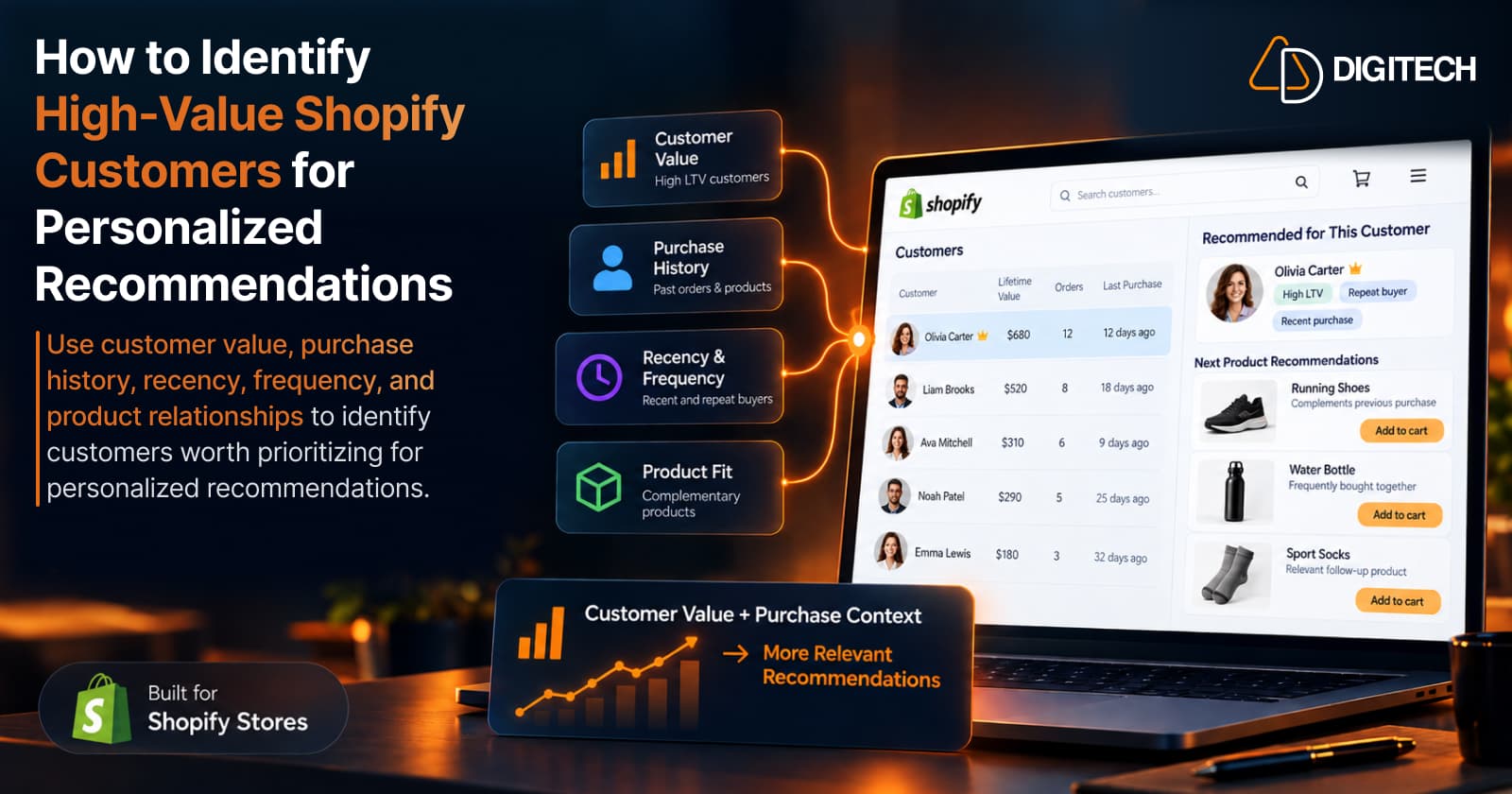
Most Shopify stores have more existing customers than anyone on the team could review one by one, and each order history says something about what that customer might want next.
The instinct is to start with the biggest spenders. Spend tells you who has been valuable. It doesn't tell you who has a relevant reason to buy something now. The more useful question is:
Which existing customer has a clear reason to buy something next, and what is it?
Customer value and recommendation opportunity are related, but they aren't the same thing. This guide covers how to tell them apart, which signals to look at, and how to shortlist the customers where a specific recommendation makes sense. It focuses on the step before recommending the next product: deciding who to recommend to.
Why High-Value Customers Deserve a Closer Look
Existing customers come with something anonymous visitors don't: context. Every past order records what someone chose, at what price, and when. That makes them a stronger starting point for a customer-specific recommendation than a shopper you know nothing about.
Customers who have ordered several times, or spent meaningfully, carry more of that context and are often more commercially important, which can make them more valuable to prioritize. It doesn't mean they'll buy, or that every high spender is a good candidate today.
Shopify already gives you several ways to see who these customers are:
- The Returning customers report lists customers with two or more orders, including their first and most recent order dates, number of orders, average spend per order, and total spent.
- The Customer cohort analysis report groups customers by first-order date, and Shopify suggests using it to find repeat purchasers and identify your most valuable customers.
- RFM customer analysis scores each customer from 1 to 5 on recency, frequency, and monetary value, using only your store's data, and sorts them into 11 groups such as Champions, Loyal, and At risk.
- Predicted spend tier (for stores with more than 100 sales) estimates each customer's future spending potential as High, Medium, or Low, based on how often and how recently they buy, how many orders they've placed, and their average order value compared with your store's average.
These tools are good at answering who. None of them tell you what to recommend. That second half is where purchase history comes in.
What Makes a Shopify Customer a Good Recommendation Opportunity?
A customer becomes a good candidate when there's a specific, relevant reason to show them something. That reason can come from several signals:
- A recent purchase
- Multiple previous purchases
- A consistent purchase pattern
- A complementary product they haven't bought
- A replenishment need
- A product upgrade opportunity
- High lifetime value
- A strong relationship with one category
- A gap in their previous purchases
- A clear next logical product
No single signal is the answer. High lifetime value with no obvious next product is weaker than it looks, while a modest spender who just bought half of a routine may be a strong opportunity. Consider the signals together.
7 Customer Signals Shopify Merchants Can Use
1. Customer lifetime value
Lifetime value describes how much a customer has been worth to your store. In Shopify, the closest native figures are total amount spent and, where available, predicted spend tier. It's a sensible way to decide whose time justifies a hand-built recommendation.
What it doesn't tell you is what to recommend. Two customers with identical lifetime spend can have nothing in common in what they bought. Use value to decide who deserves attention, then use purchase history to decide what to show them.
2. Number of orders
One order is a data point. Several orders show preferences: the categories someone returns to, the price range they're comfortable with, and the products they reorder. More context makes a relevant recommendation easier to find.
3. Purchase recency
A recent purchase is often the clearest trigger for a follow-up. Someone who bought a camera last week may need a memory card or a case now; someone who bought one three years ago probably doesn't. Shopify's segment editor can filter customers by last order date, which is a quick way to find recent buyers worth reviewing.
4. Purchase frequency
How often a customer buys can reveal timing. If someone reorders a consumable roughly every six weeks, the days before that point may be a sensible moment for a replenishment recommendation. Treat the rhythm as a pattern to check, not a schedule to enforce.
5. Product categories purchased
Category affinity narrows the catalogue. A customer who only buys from your skincare range is unlikely to need your kitchenware, however popular it is, so start from the categories they already buy.
6. Complementary products
Some purchases leave an obvious gap: a tent without a sleeping mat, a coffee grinder without beans, a serum without the moisturizer designed to follow it. Complementary products are often the most straightforward recommendations because the reason is visible in the order history.
7. Previous product relationships
Across your store, some patterns repeat: customers who buy Product A often go on to buy Product B. When a customer has A but not B, that relationship can indicate a relevant next step. Shopify's segment editor can find customers who bought one product and haven't bought another, optionally within a date range, which is a practical way to spot these gaps by hand. A pattern suggests relevance; it doesn't predict that a particular customer will buy.
Don't Prioritize Customers by Spending Alone
High customer value and high recommendation relevance are different things. Consider two fictional customers:
Customer A
- $2,000 lifetime spend
- One order: a single high-ticket product
- No obvious complementary purchase
Customer B
- $600 lifetime spend
- Four orders of related products
- Returns regularly
- Has an obvious next product
Sorted by spend, Customer A comes first. Sorted by recommendation relevance, Customer B may be the stronger opportunity. Neither is universally the better choice: if Customer A's purchase has a natural accessory, they could be an excellent opportunity. The goal is to find the customer-product combination where a recommendation makes sense, not simply the customer with the biggest number.
How to Find Recommendation Opportunities From Purchase History
A practical process, whether you work by hand or with a tool:
- Start with existing customers. Use reports or segments to shortlist returning customers, recent buyers, or a strong RFM group.
- Review their purchase history. What did they buy, when, and how often?
- Identify product relationships. What goes with what they already own?
- Look for timing or replenishment signals. Is something likely to be running low, or is a follow-up becoming relevant?
- Remove products they already own, unless it's something they reorder.
- Shortlist relevant next products. Three or four strong options are more useful than a long list.
- Build a small recommendation for that customer. A focused basket is easier to act on than a catalogue.
- Make it easy to act on. The fewer steps between the recommendation and checkout, the better.
For more on reading order history, see Shopify customer purchase history. For turning a shortlist into a basket, see how to create personalized product bundles.
A Simple Shopify Customer Prioritization Framework
This isn't a score. It's a way to connect each signal to the kind of recommendation it might support:
| Customer signal | What it tells you | Possible recommendation opportunity |
|---|---|---|
| High lifetime spend | The customer is commercially important | A hand-built recommendation, if there's a relevant product |
| Several orders | Clear preferences and price range | Products within their established categories |
| Recent purchase | A follow-up may be timely | Accessories or companions for what they just bought |
| Regular purchase rhythm | Possible replenishment timing | A refill or reorder before they run out |
| Strong category affinity | Where their interest lies | New or related items in that category |
| Owns Product A, not Product B | A known product relationship | Product B, if that relationship holds in your store |
| Lapsed after steady buying | Interest has cooled or needs have changed | A relevant reason to return, not a generic promotion |
Use it to think through a customer, not to rank your list mechanically.
Manual Customer Research vs. a Recommendation Workflow
By hand, the process looks like this:
Open customer → review orders → understand the products → browse the catalogue → choose products → build a basket → send a link → track the result
Manual selling works, and for a handful of high-value customers it can be the right approach. The work becomes time-consuming as the customer list grows. Each customer means re-reading an order history, assembling a cart, and remembering to check later whether anything sold. Across dozens of customers a week, research and tracking are usually the first things to slip.
How Curivo Helps Merchants Turn Customer Signals Into Recommendations
Curivo is AD Digitech's app for personalized customer recommendations for Shopify, available on the Shopify App Store. It isn't a segmentation tool or a storefront widget. It starts where this article ends: with one customer and their purchase history.
The workflow:
- Select a customer.
- Review their purchase history and customer context.
- Build a basket manually, or ask Curivo to suggest four recommendation options to compare.
- Review and edit the recommendation.
- Apply an optional discount or expiry where appropriate.
- Create a ready-to-buy basket as a Shopify draft order.
- Send the customer a direct checkout link through the channel you already use.
- Track the resulting activity and the revenue attributed to that recommendation.
The approach is AI selects. Your data grounds it. You decide. Suggestions are grounded in your store and product data and the customer's purchase context, and you review every basket before it goes anywhere. Curivo doesn't send messages or run automated campaigns on its own, and it doesn't currently integrate with WhatsApp, SMS, or email marketing platforms; you choose how the checkout link reaches the customer. The shorthand is Customer → Basket → Revenue, and the aim for every recommendation is Personal. Buyable. Measurable.
The Goal Is Not to Sell to Every Customer
Personalization isn't about producing more recommendations. It's about making the one you send more relevant to the person receiving it.
Customer → Context → Recommendation → Basket → Revenue
A handful of well-chosen recommendations for specific customers each week can be more useful operationally than a generic "you might also like" email to your whole list. They're easier to review, stand behind, and measure. That's what it means to turn your best customers into your next sale: not more messages, better-chosen ones.
A Practical Example
Here's a fictional haircare store to show how the signals combine.
The customer's history (a fictional returning customer):
- 18 weeks ago: Hydrating Shampoo (curly hair range)
- 12 weeks ago: Hydrating Shampoo + Curl Cream
- 6 weeks ago: Hydrating Shampoo
What the merchant notices:
- Category preference: every purchase comes from the curly hair range.
- Purchase rhythm: the shampoo is reordered roughly every six weeks, and the last order was six weeks ago.
- Complementary relationship: they use the shampoo and curl cream but have never bought the matching conditioner, which many of the store's customers buy alongside the shampoo.
- Lifetime value: moderate. On spend alone, this customer might not make a top-customer list.
Potential recommendation: Hydrating Shampoo (the likely reorder) + Curl Conditioner (the missing part of the routine).
The merchant builds a two-item basket, perhaps with a small discount on the conditioner, and sends a direct checkout link, so the customer can check out without searching for either product.
Nothing here predicts that the customer will buy. But every item has a clear reason, and that's what separates a customer-specific recommendation from a generic one.
Common Mistakes When Prioritizing Customers for Recommendations
- Recommending only to your highest spenders. Spend shows importance, not relevance.
- Ignoring purchase recency. The right product at the wrong time still misses.
- Recommending products the customer already owns, unless they're things people reorder.
- Showing too many products. A long list makes the next step unclear.
- Treating every customer the same. A one-size message ignores the context you have.
- Confusing popularity with relevance. A top seller isn't automatically right for this customer, which is the core of personalized vs. generic recommendations.
- Ignoring product relationships. Complements and follow-ons are often the clearest opportunities.
- Making the customer rebuild the basket. Every extra step is a chance to lose the sale.
- Not tracking what happened. Without results, you can't learn which signals work for your store.
How to Measure Whether Customer-Specific Recommendations Are Working
Track the path from recommendation to revenue:
- Recommendations sent
- Recommendation clicks
- Checkout starts
- Completed orders
- Revenue attributed to recommendations
- Repeat purchase activity among customers who received one
- Average order value of recommendation orders, where relevant
Not every Shopify setup can connect an order back to a specific recommendation automatically. Where the recommendation workflow supports attribution, use it. Otherwise, a unique link or discount code per recommendation gives you a workable manual record. Over time, compare which signals led to orders and prioritize those. This is one practical piece of the wider work of increasing repeat purchases from existing customers.
High-Value Customer vs. High-Opportunity Customer
High-value customer: someone who has generated meaningful commercial value for your store.
High-opportunity customer: someone for whom there's a clear, relevant reason to make a recommendation now.
The strongest opportunities often combine both: a valuable customer with an obvious next product. A high-opportunity customer with modest spend can still be worth contacting, and a high-value customer with no clear next product may be better left alone until there is one.
Frequently asked questions
What is a high-value customer in Shopify?
A customer who has generated meaningful value for your store, usually measured by total spent, number of orders, or both. Shopify's RFM analysis and predicted spend tier help identify them, but value alone doesn't tell you what to recommend.
How can Shopify merchants identify customers likely to buy again?
Look at recency, frequency, and past spend together. Shopify's Returning customers report, RFM groups, and predicted spend tier are useful starting points; purchase history shows whether a follow-up is relevant.
Should merchants recommend products to their highest-spending customers first?
Not automatically. High spend shows that a customer is important, not that a recommendation is relevant right now. Prioritize customers who combine meaningful value with a clear next product.
How does purchase history help with personalized product recommendations?
It shows what a customer bought, when, and how often. That reveals complementary gaps, replenishment timing, and category preferences, which narrow a large catalogue to a few products that make sense for that customer.
What customer data is useful for product recommendations?
Products purchased, order dates, number of orders, purchase frequency, total spend, and category preferences. Together they show both who is worth prioritizing and what might be relevant to recommend.
What is the difference between customer value and recommendation opportunity?
Customer value describes what a customer has been worth to your store. Recommendation opportunity describes whether there's a clear, relevant reason to recommend something to them now. The strongest cases have both.
Can Shopify merchants manually create personalized recommendations?
Yes. Review a customer's orders, choose relevant products, build a cart, and send a link. It works well for a few customers but becomes time-consuming as the list grows.
How does Curivo use customer purchase history?
Curivo starts with a selected customer and their purchase history. You build a basket or ask Curivo for four options, review and edit it, create a ready-to-buy basket, send a direct checkout link, and track the revenue attributed to that recommendation.
Turn Customer History Into Your Next Sale
See how Curivo helps Shopify merchants turn customer purchase history into personalized recommendations, ready-to-buy baskets, and measurable revenue.
Related reading
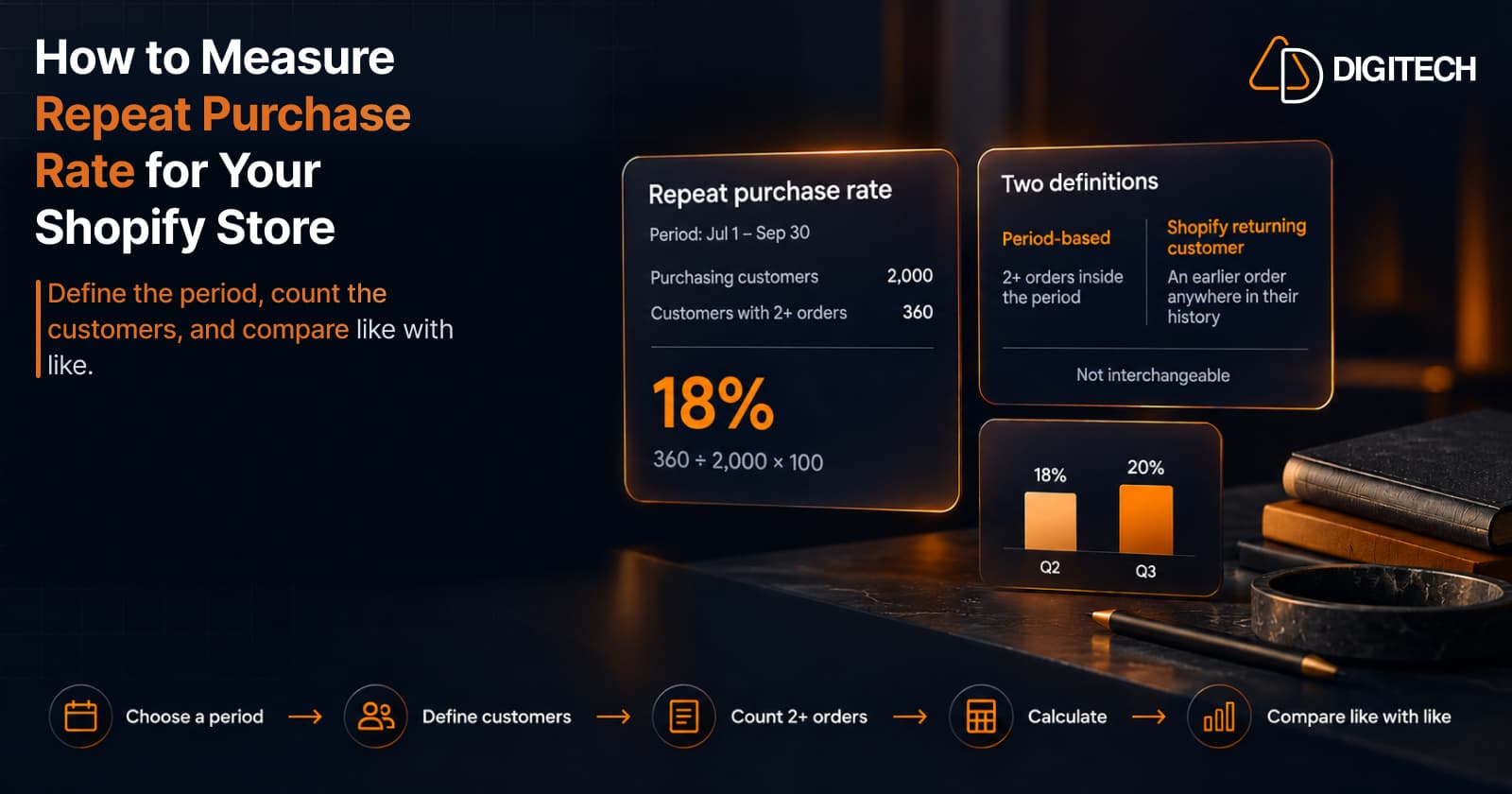
How to Measure Repeat Purchase Rate for Your Shopify Store
Learn how to calculate repeat purchase rate for a Shopify store, choose the right period and customer population, read the result carefully, and track the related retention metrics.
Read article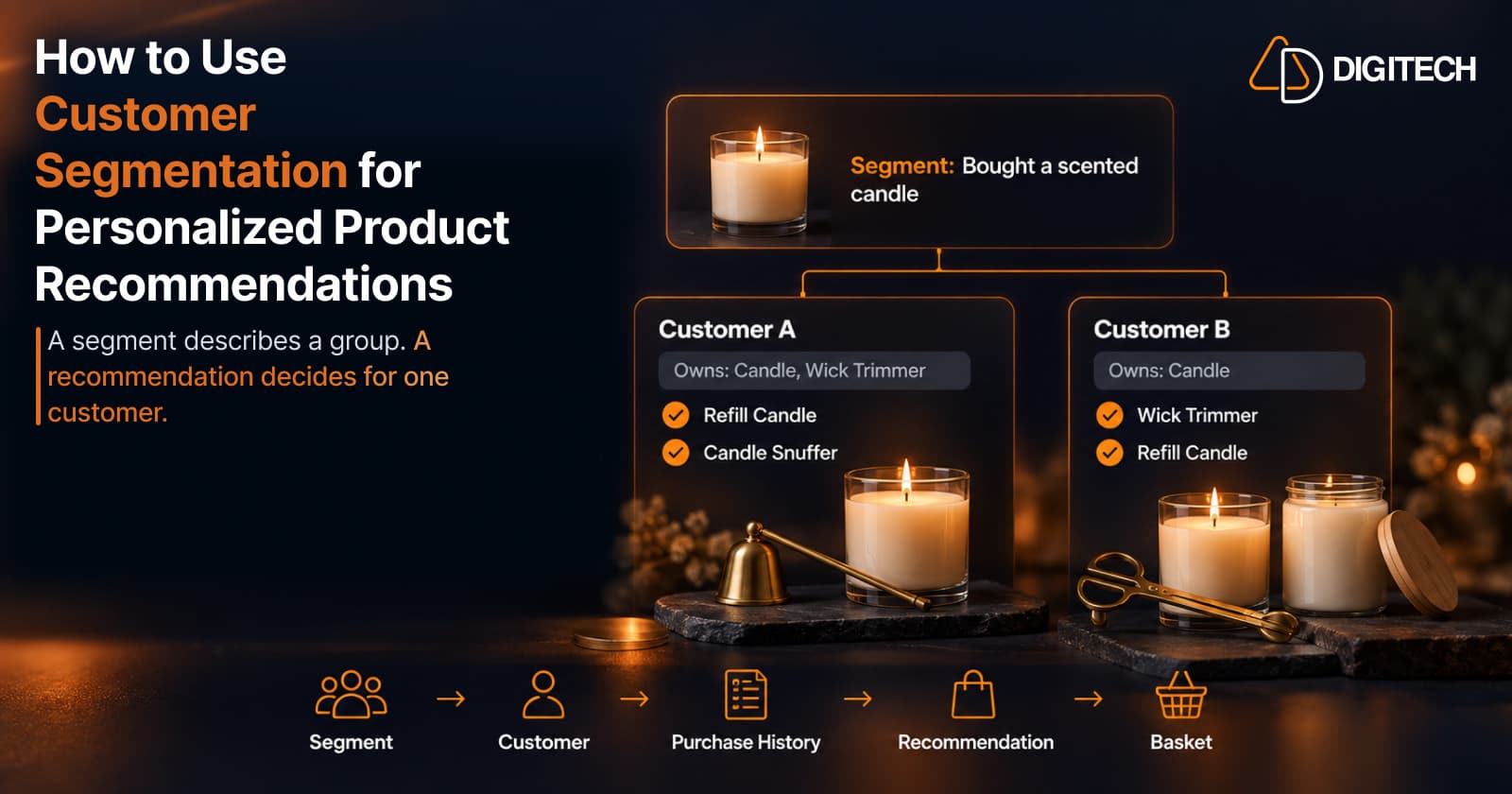
How to Use Customer Segmentation for Personalized Product Recommendations on Shopify
Learn how to use Shopify customer segments to make product recommendations more relevant, and how to turn a segment-level insight into a recommendation for one customer.
Read article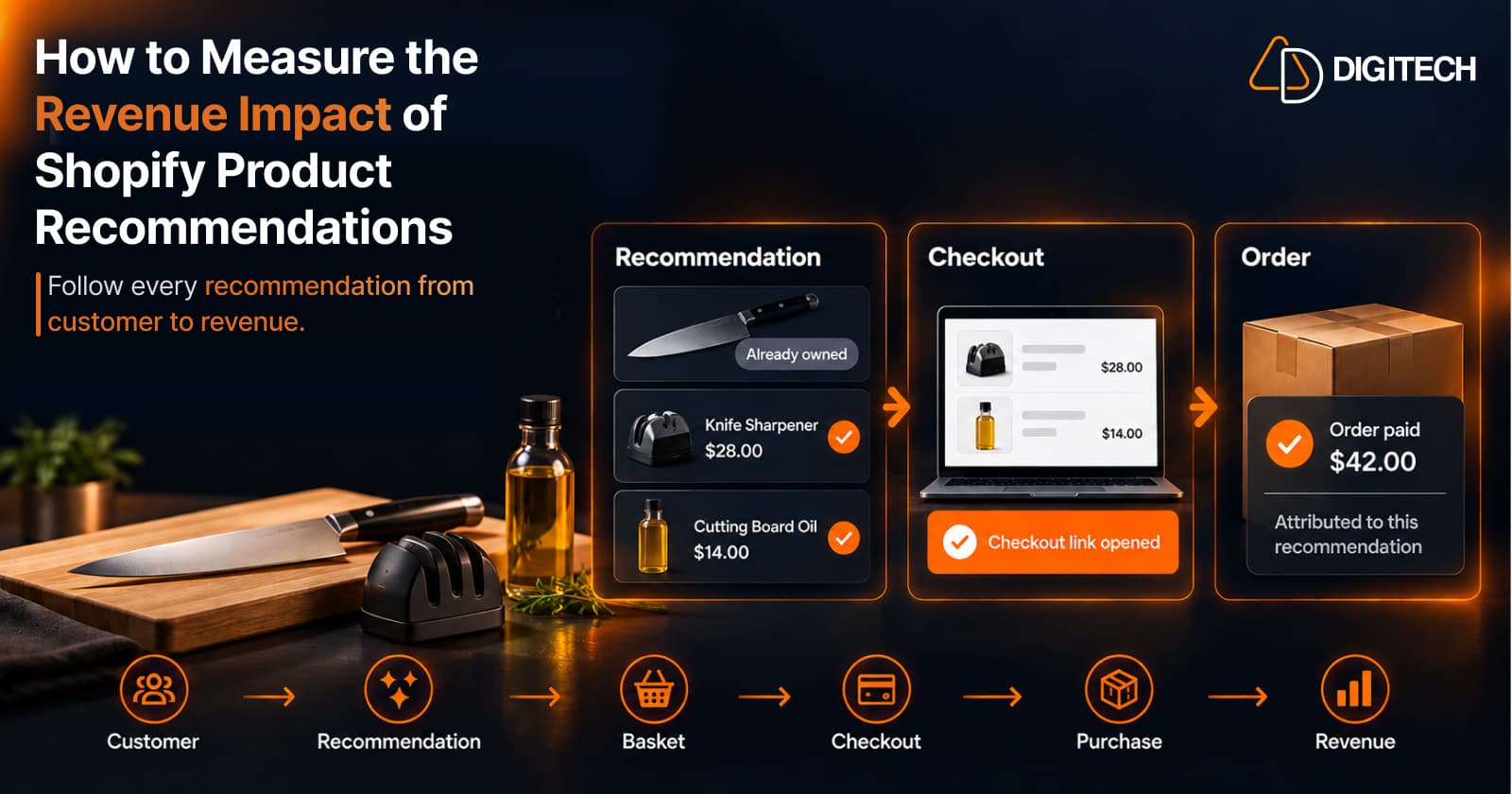
How to Measure the Revenue Impact of Shopify Product Recommendations
Learn how Shopify merchants can measure product recommendation performance, track checkout activity, attribute revenue, and improve personalized recommendations.
Read article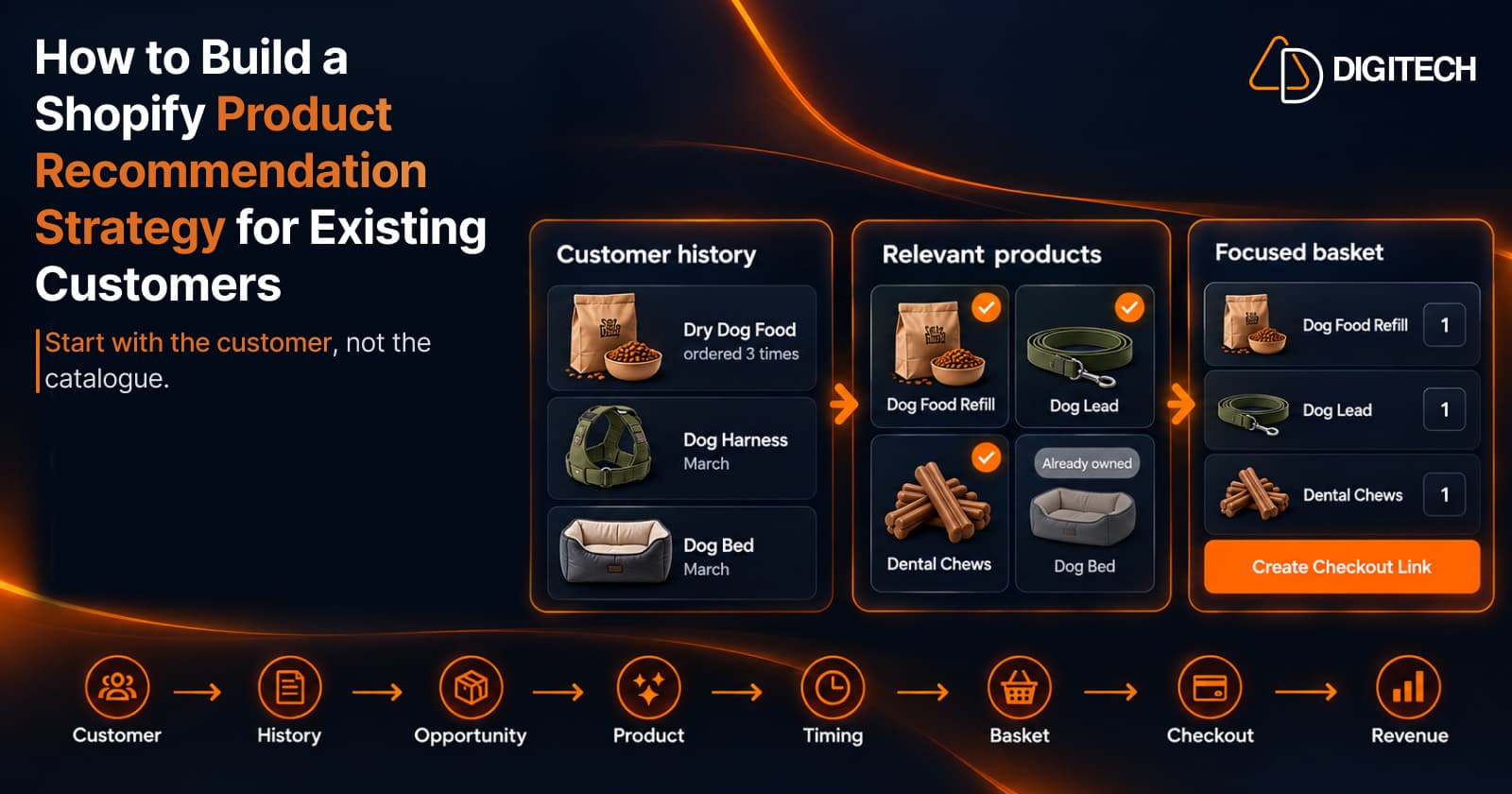
How to Build a Shopify Product Recommendation Strategy for Existing Customers
Learn how to build a Shopify product recommendation strategy using customer history, product relationships, timing, and personalized recommendations.
Read article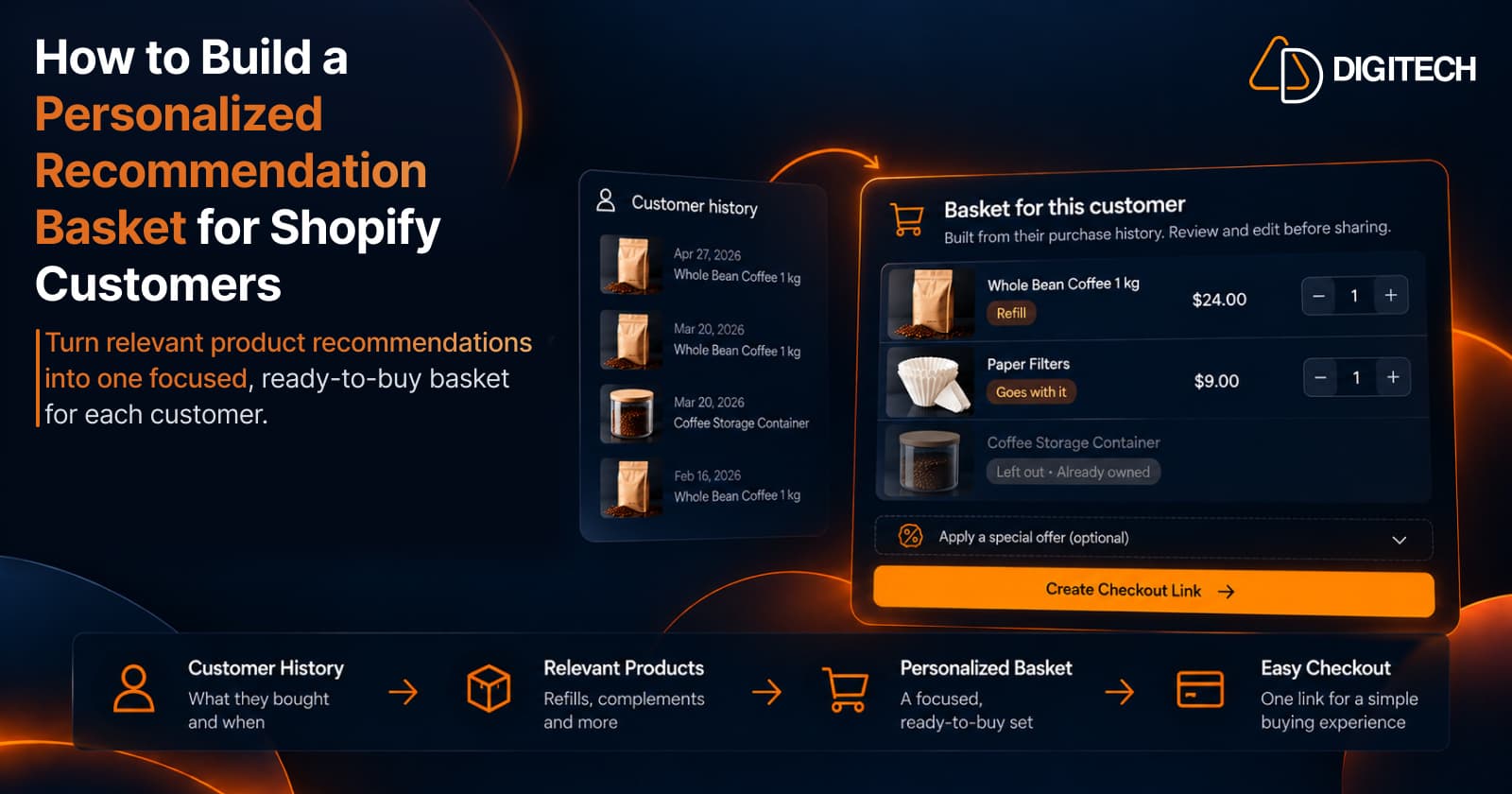
How to Build a Personalized Recommendation Basket for Shopify Customers
Learn how Shopify merchants can build personalized recommendation baskets using customer history, product relationships, timing, and product fit.
Read article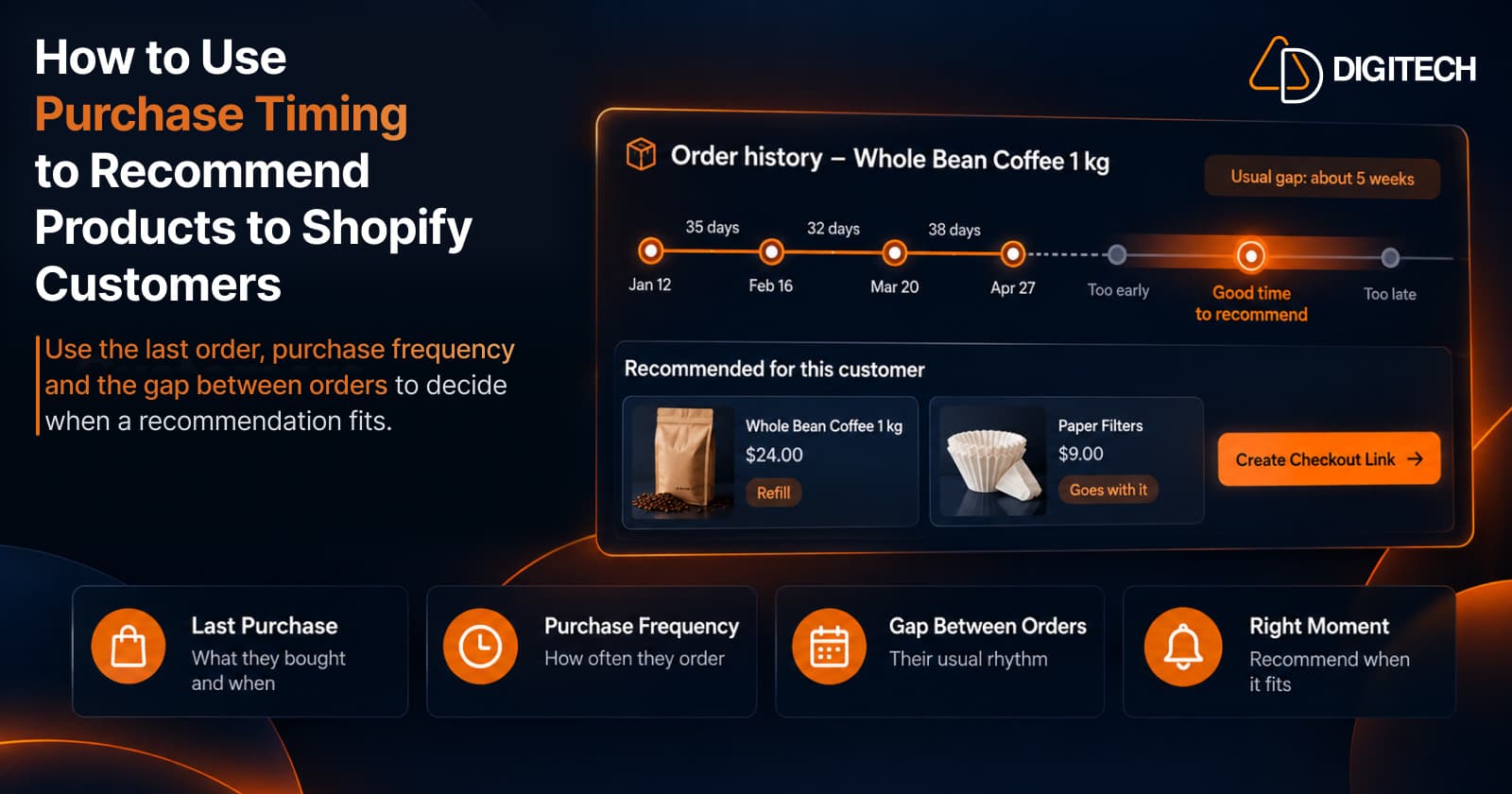
How to Use Purchase Timing to Recommend Products to Shopify Customers
Learn how Shopify merchants can use purchase timing, purchase frequency, recency, and customer history to make product recommendations more relevant.
Read article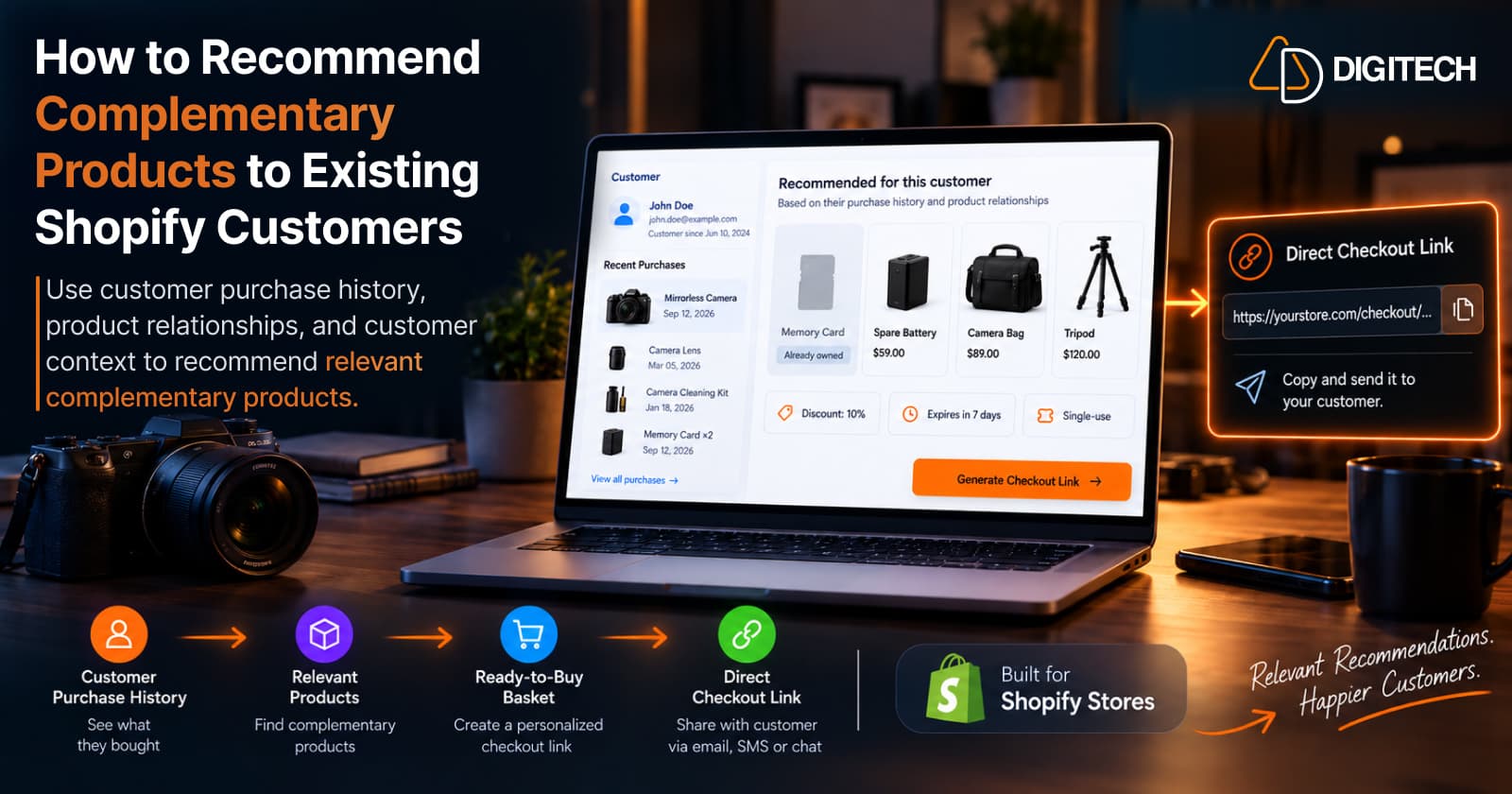
How to Recommend Complementary Products to Existing Shopify Customers
Learn how to recommend complementary products to existing Shopify customers using purchase history, product relationships, timing, and customer context.
Read article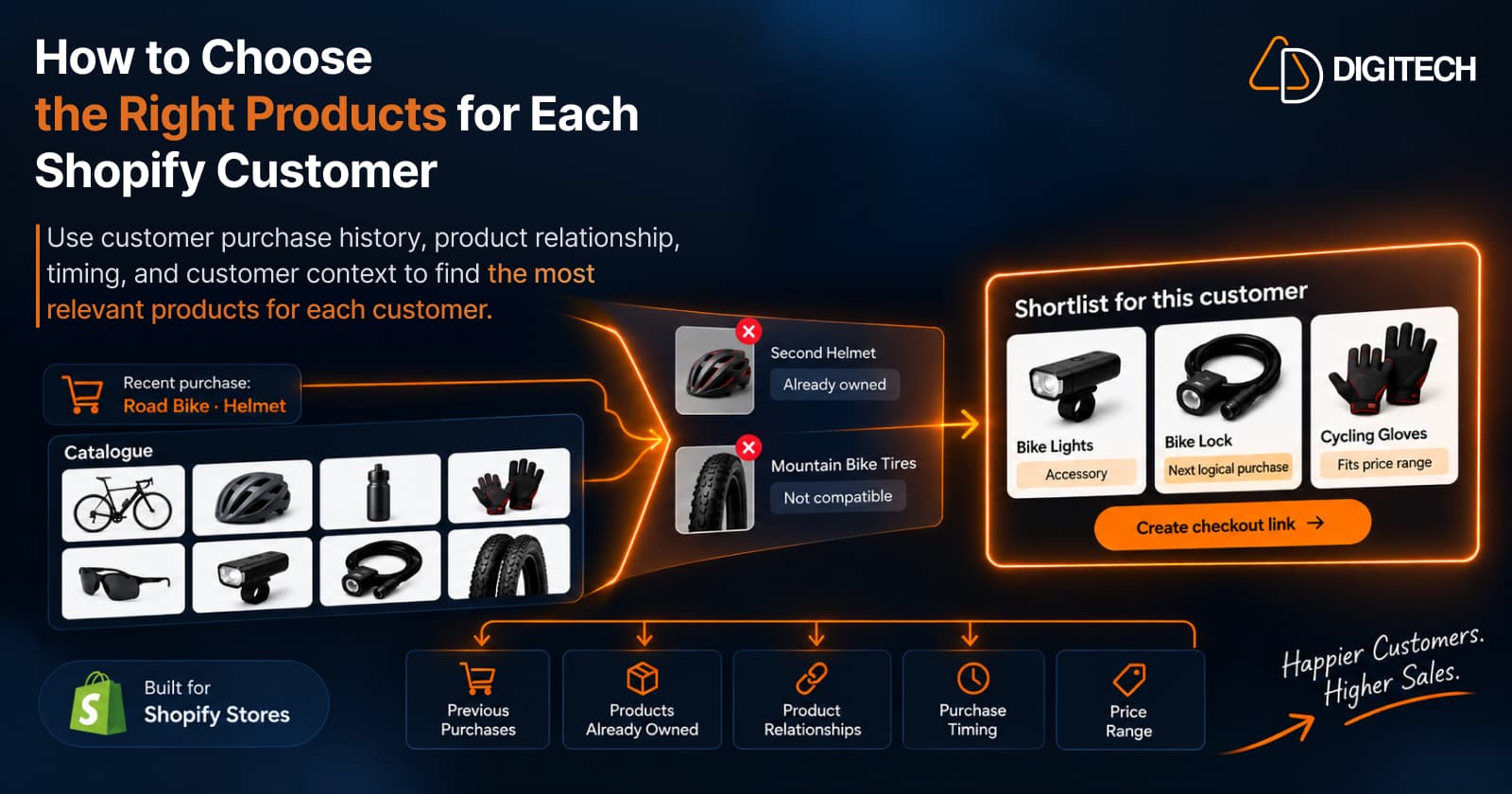
How to Choose the Right Products for Each Shopify Customer
Learn how Shopify merchants can choose more relevant products for each customer using purchase history, product relationships, timing, and customer context.
Read article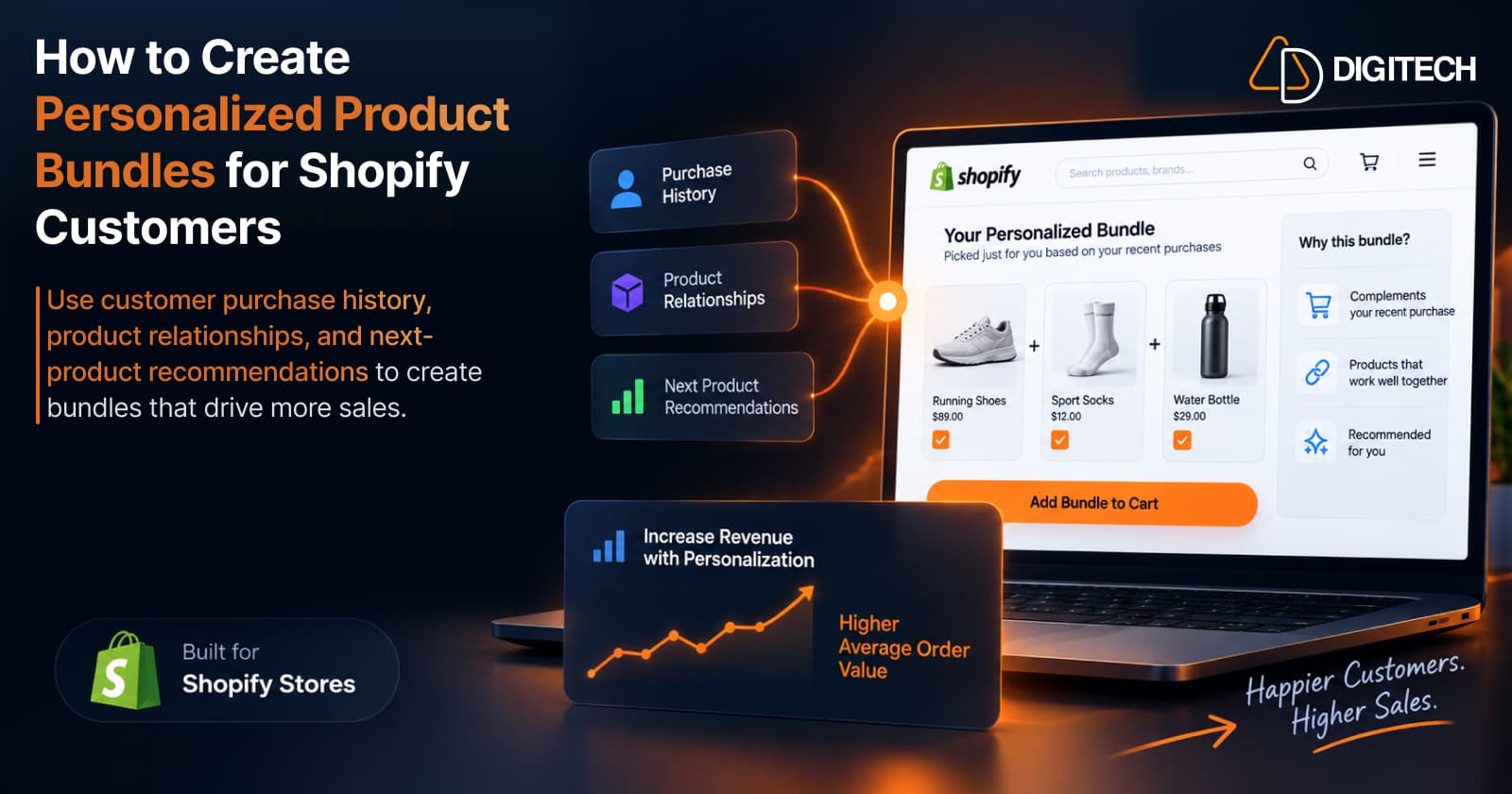
How to Create Personalized Product Bundles for Shopify Customers
Learn how to create personalized Shopify product bundles using customer purchase history, product relationships, and relevant next-product recommendations.
Read article