How to Recommend the Next Product to Existing Shopify Customers
Learn how to recommend the next product to existing Shopify customers using purchase history, complementary products, timing, and personalized recommendations.
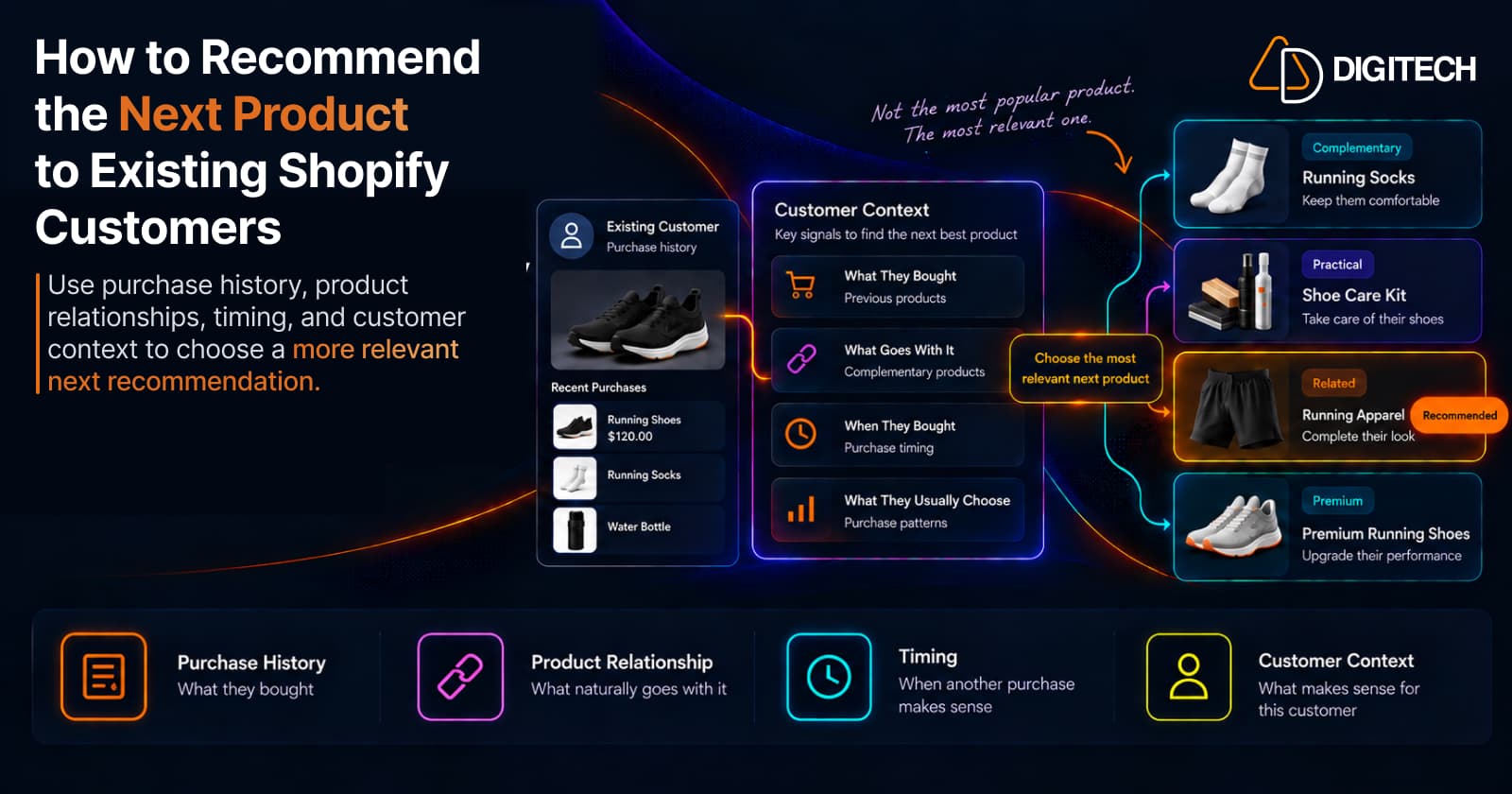
You have the customer. You have their previous orders, your catalogue, and a genuine opportunity for another sale. The hard part isn't finding someone to sell to. It's answering one specific question: what should this customer buy next?
Our first article covered the strategic side, how to increase repeat purchases from existing Shopify customers. This one is the tactical follow-up. It's about the decision itself: how to look at a single customer and choose a next product that actually fits, instead of showing them the same generic suggestions everyone else sees. Personalized recommendations start with understanding one customer's history, so that's where we'll start too.
Why the next product matters
Recommending another product isn't about displaying more products. Adding a "you might also like" row to everything is easy; making a suggestion that fits is the part that earns a second order.
The difference is context. Compare two messages:
- "Here are some products."
- "Based on what you already bought, this is a logical next product."
The first is noise. The second reads as considered, because it connects to something the customer already chose. A recommendation that ignores purchase history is just merchandising pointed at a stranger. A recommendation grounded in it is the start of a relationship.
Start with what the customer already bought
Purchase history is the first signal, and it's richer than a single line of "bought X." For one customer, look at:
- The specific products they bought.
- The categories those sit in.
- The sequence of purchases over time.
- The frequency of ordering.
- The price range they're comfortable spending.
- The basket patterns, what tends to be bought together.
None of this guarantees the right answer. History is a signal that narrows the field, not a formula that picks the winner. But it turns "which of my 4,000 products?" into "which of these six make sense for this person?", and that's a question you can actually answer well. Clean, well-structured product data is what makes those signals readable in the first place.
Look for the next logical purchase
Once you've read the history, look for the next logical purchase: the product that follows naturally from what the customer owns.
Take a customer who recently bought a pair of running shoes. Instead of showing them a generic list of the store's most popular products, the merchant can consider what naturally follows that purchase: performance socks, a shoe-care kit, or relevant running apparel. Each connects to the first order in an obvious way.
But context and timing decide which one. A first-time buyer and a customer on their third pair of the same shoe are in very different places, and the same "next product" won't fit both. The goal isn't a fixed rule that everyone who buys shoes gets socks. It's asking, for this specific customer, which follow-on actually makes sense given their previous purchases, the timing, and everything else you know about them.
Use complementary products
A large share of good next-product recommendations are simply complementary items: products used together, accessories, add-ons, care products, or the piece that completes an existing purchase.
A camera implies a memory card. A coffee grinder implies beans. A sofa implies the cushions and throws that finish the room. The relationship is built into the products, so the recommendation almost writes itself, and understanding how your catalogue relates through a sensible product taxonomy makes those pairings easier to spot at scale.
The discipline here is relevance over volume. The aim isn't to surround the first purchase with everything vaguely related. It's to pick the one or two items that genuinely complete it.
Consider purchase timing
A product can be the right recommendation and still be wrong today. Timing matters as much as relevance.
Think about:
- Replenishment intervals. A consumable a customer buys monthly is relevant on a rough cadence, not the day after they stocked up.
- Seasonal relevance. Some products only make sense at certain times of year.
- Product lifecycle. A durable item paired with a wear-out part suggests a follow-on months later, not immediately.
- Time since the last purchase. How long it's been shapes whether a nudge feels helpful or premature.
Made concrete: a customer who reorders the same coffee every few weeks is a strong candidate for a well-timed replenishment nudge as they'd normally be running low, while the exact same nudge sent days after they restocked just reads as spam. The signal isn't only what they buy, it's when.
You don't need precise data science to use timing well. You need to avoid the obvious misses: recommending a refill to someone who just bought three, or a summer product in the middle of winter.
Don't recommend the same product to everyone
This is the core of the whole idea. A single generic recommendation strategy misses the context that makes an existing customer valuable.
Contrast the two questions:
- "Customers who bought X also bought Y." Aggregate, anonymous, the same for everyone who viewed the product.
- "This customer bought X, previously bought Z, and has a relevant next purchase given that history." Specific to the person.
The aggregate version is genuinely useful for storefront discovery, where a visitor benefits from seeing common pairings. But for a customer you already know, you can do better than the average. Their history is exactly the context a generic block throws away.
Use multiple recommendation options
Often there isn't one right answer, there are a few reasonable ones. Giving yourself a small set of differentiated options, rather than forcing a single pick, usually leads to a better final choice:
- A practical option: the obvious next purchase.
- A complementary option: the item that completes what they have.
- A premium option: a considered step up for a customer who's ready.
- An alternative option: something drawn from their broader pattern.
Seeing a few distinct directions side by side is faster and sharper than starting from a blank page, and it lets you match the recommendation to what you actually know about the customer instead of settling for the first idea that comes to mind. You don't need many, just a few genuinely different, genuinely relevant choices to pick from.
Keep the merchant in control
Personalization should support your judgment, not replace it. You know things the data doesn't: that an item is low on stock, that a customer mentioned a preference, that a new collection just landed, that a particular bundle makes more sense this month.
So the recommendation workflow should let you review the options, edit the products, choose the final basket, apply an optional discount, and decide whether and how to send it. The right division of labour is simple: AI selects, your data grounds it, you decide. Automation handles the tedious sorting; the final call stays with the person who knows the business.
Make the recommendation easy to buy
Choosing the right product is only half the job. If acting on it is hard, the recommendation leaks.
A customer shouldn't have to search for each product, rebuild a basket, guess what you intended, or click through several pages to get there. Every one of those steps is a chance to drift away. The closer the recommendation sits to checkout, the more likely it becomes an order. A curated, ready-to-buy basket, the products already gathered and ready to purchase, removes that friction and turns a suggestion into a decision the customer can make in a couple of taps.
Measure what happens after the recommendation
If you can't see what a recommendation did, you can't get better at making them. Measure the outcome, not just the effort.
The signals worth connecting:
- The recommendation was sent.
- The customer acted on it, where that's visible.
- A checkout or order followed.
- Revenue was generated.
The valuable move is tying a specific recommendation to the specific order it produced, rather than only watching store-level totals move. That recommendation-level attribution tells you which suggestions actually convert, so the next recommendation is informed by real outcomes instead of guesswork. Over time it becomes a feedback loop: the recommendations that turn into orders show you which patterns hold for your catalogue and your customers, and each round of suggestions gets a little sharper than the last.
Common mistakes when recommending products
Most recommendation problems come from a short list of avoidable errors:
- Recommending the same products to everyone. A single generic suggestion ignores the individual purchase history that makes an existing customer worth more than a stranger.
- Recommending unrelated products. If the suggestion doesn't make sense in the customer's context, it reads as noise. Relevance is the whole point.
- Showing too many products. A wall of options makes the next step less clear; a focused choice is easier to act on.
- Ignoring purchase timing. A product can be relevant in general but wrong right now. Send the nudge when it's actually useful.
- Making customers rebuild the basket. Every extra step between the recommendation and checkout is a chance to lose the sale.
- Measuring clicks but not sales. Opens and clicks feel like progress, but only the resulting order tells you whether the recommendation generated revenue.
- Letting automation replace your judgment. Automation should narrow the options, not make the final call for you.
Each is easy to make and easy to fix once you're choosing products as a deliberate decision rather than a default block.
A practical 5-step framework
Compressed, the whole process is five steps:
- Start with what the customer already bought. Read the history before the catalogue.
- Identify the most logical next purchase. Replenishment, complementary, or a step up, given their context.
- Create a small set of relevant options. A few differentiated choices, not one guess or a wall of products.
- Turn the selected recommendation into an easy-to-buy basket. Get it as close to checkout as possible.
- Measure the revenue generated and learn from it. Attribute the outcome so the next recommendation is sharper.
Run that loop consistently for real customers and the quality compounds over time.
How Curivo helps Shopify merchants recommend the next product
This is the exact decision Curivo is built around. Curivo starts with an individual customer and their purchase history, not a generic storefront block, and helps you answer "what should this customer buy next?" for that specific person.
From there you have two paths. You can build the basket yourself, using the customer's history as your guide. Or you can ask Curivo to suggest four options: one generation returns four complete recommendation proposals for you to review. Either way, you edit the products, assemble the personalized basket, and send it straight to checkout, then Curivo connects the recommendation back to the resulting order so you can see the revenue it generated.
A point worth being clear about: Curivo does not send customer identity to the AI. The selection is grounded in your store and product data plus the customer's purchase context, and the AI's job is to pick from relevant candidate products. You keep final control of every basket before it reaches anyone. It's automated help with the sorting, not automated selling.
Conclusion
The best next-product recommendation isn't the most popular item in your store. It's the one that makes the most sense for the individual customer in front of you. That's a repeatable decision: start with what they bought, consider what logically comes next, make the recommendation easy to buy, keep yourself in control of the final choice, and measure what happens so the next one is sharper.
The goal isn't to recommend more products. It's to make the next recommendation more relevant, by asking the only question that matters for a repeat sale: what should this customer buy next?
Frequently asked questions
How do I decide what product to recommend to an existing Shopify customer?
Start with the individual customer's purchase history rather than the whole catalogue. Read what they bought, in what category, at what price, and how recently, then look for the next logical purchase: a replenishment, a complementary item, or a considered step up. Narrow it to a small set of relevant options, choose one, and make it easy to buy.
How does purchase history help choose the next product?
Past orders are signals, not answers. They tell you the categories a customer buys, the price range they're comfortable with, what tends to go together in their baskets, and roughly when they might buy again. Those signals narrow thousands of products down to a handful that actually make sense for that person.
Should I recommend the same product to every customer?
No. A single generic recommendation ignores what each customer has already bought. 'Customers who bought X also bought Y' is useful for storefront discovery, but for an existing customer you can do better by starting from their own history and choosing a next product that fits it.
How can I measure whether a product recommendation worked?
Connect the recommendation to the order it produced. Track that a recommendation was sent, whether the customer acted on it, and whether it led to a checkout and revenue, so you can attribute sales to specific recommendations instead of only watching store-level totals. That recommendation-level view is how you learn what to recommend next time.
How does Curivo choose the next product?
Curivo starts with an individual customer and their purchase history. You can build the basket yourself, or ask Curivo to suggest four recommendation options in one generation, then review and edit before sending. Curivo does not send customer identity to the AI; the selection is grounded in your store and product data plus the customer's purchase context, and you keep final control of what goes out.
What is a next logical purchase?
It's the product that makes sense as a follow-on to what a customer already owns. Depending on the item, that might be a refill of a consumable, an accessory that completes the first purchase, or a natural upgrade. The point is that it connects to the previous order rather than being a random popular product.
Turn Customer History Into Your Next Sale
See how Curivo helps Shopify merchants turn customer purchase history into personalized recommendations, ready-to-buy baskets, and measurable revenue.
Related reading
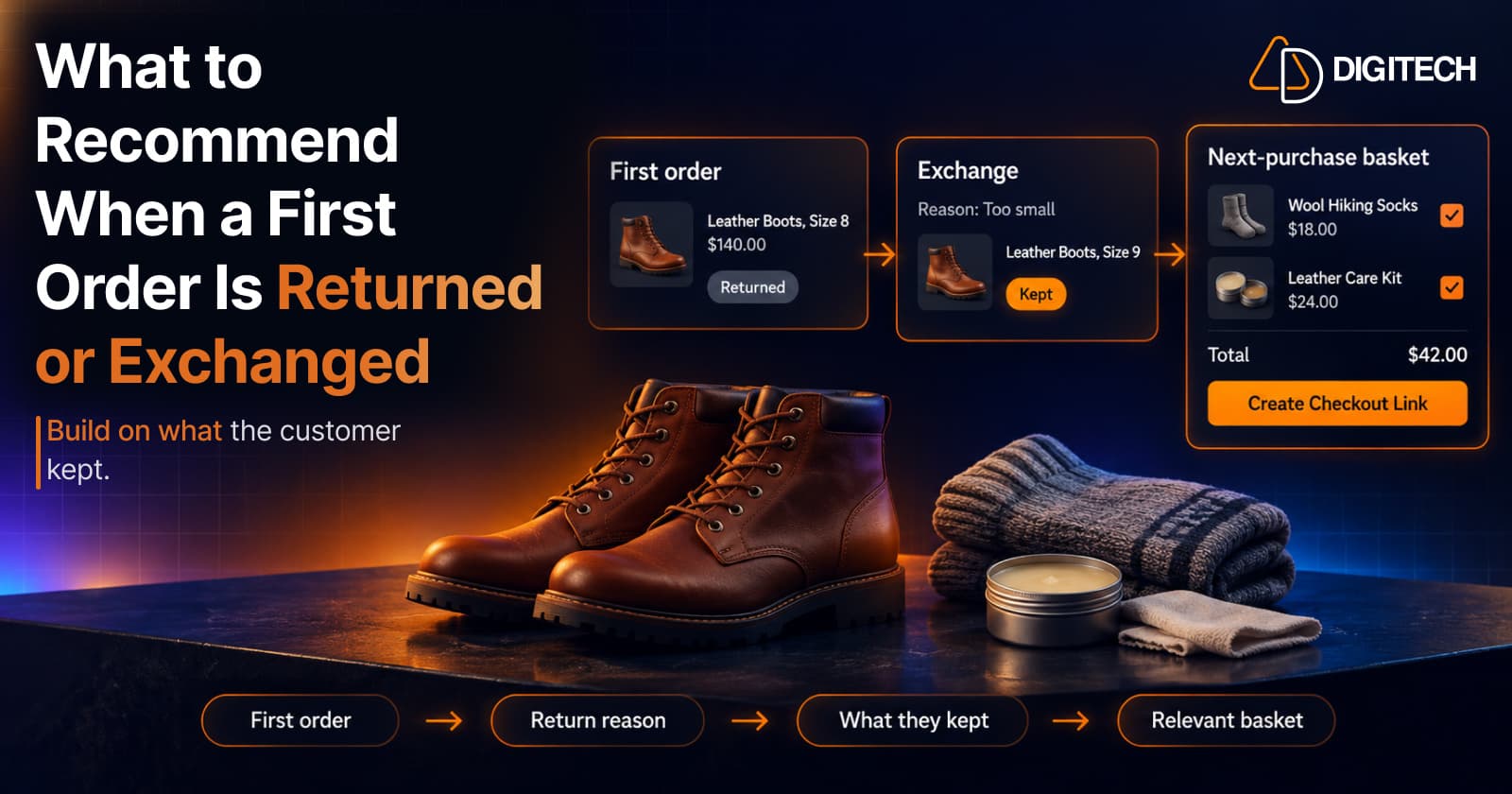
What to Recommend When a Customer's First Shopify Order Is Returned or Exchanged
A returned or exchanged first order changes what you know about a customer. Here's how Shopify merchants can read return reasons and recommend a relevant next product.
Read article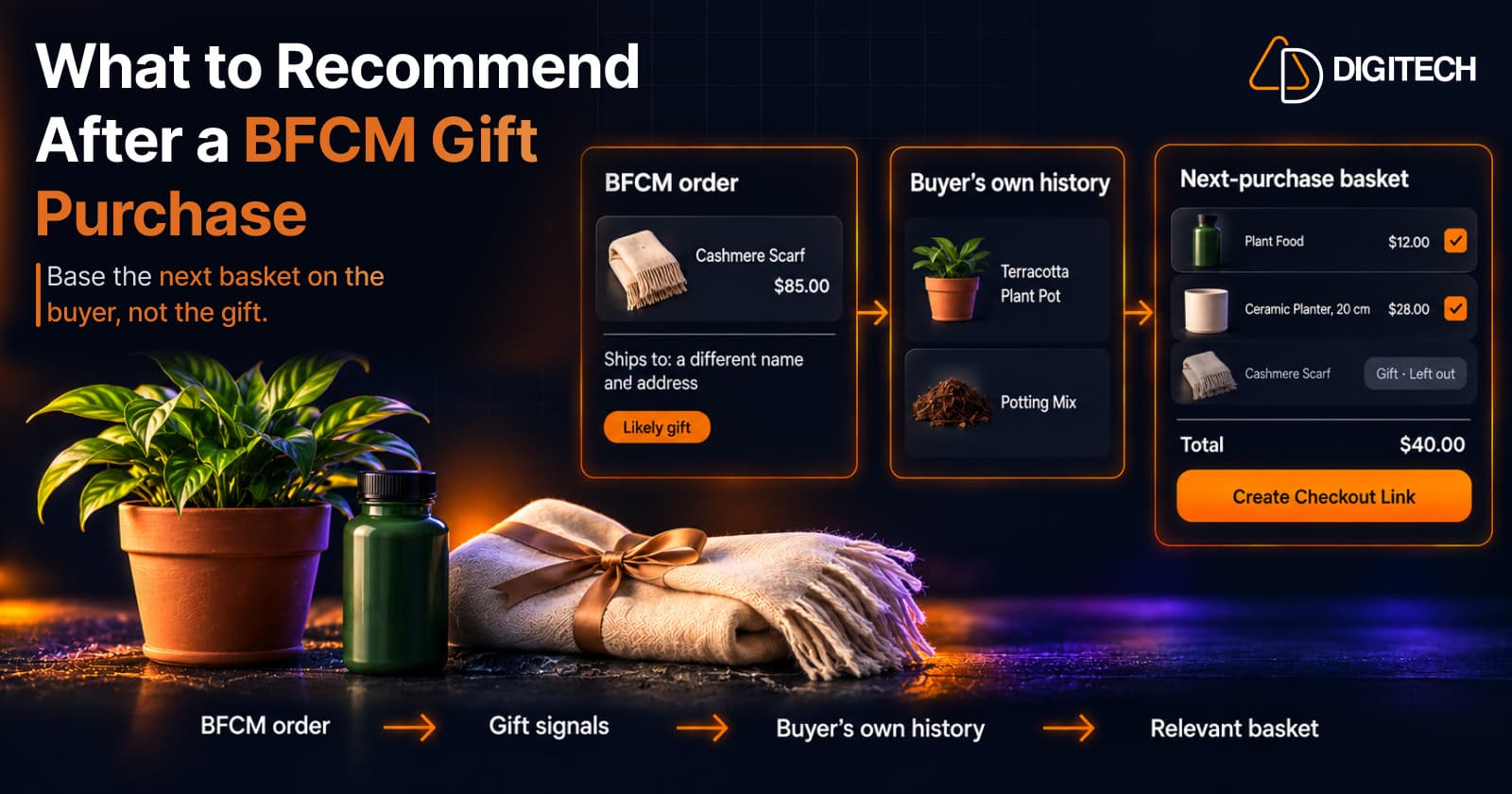
What to Recommend After a BFCM Gift Purchase: A Guide for Shopify Merchants
Some BFCM orders are gifts, which makes purchase history misleading. Here's how Shopify merchants can spot likely gift orders and recommend a relevant next product.
Read article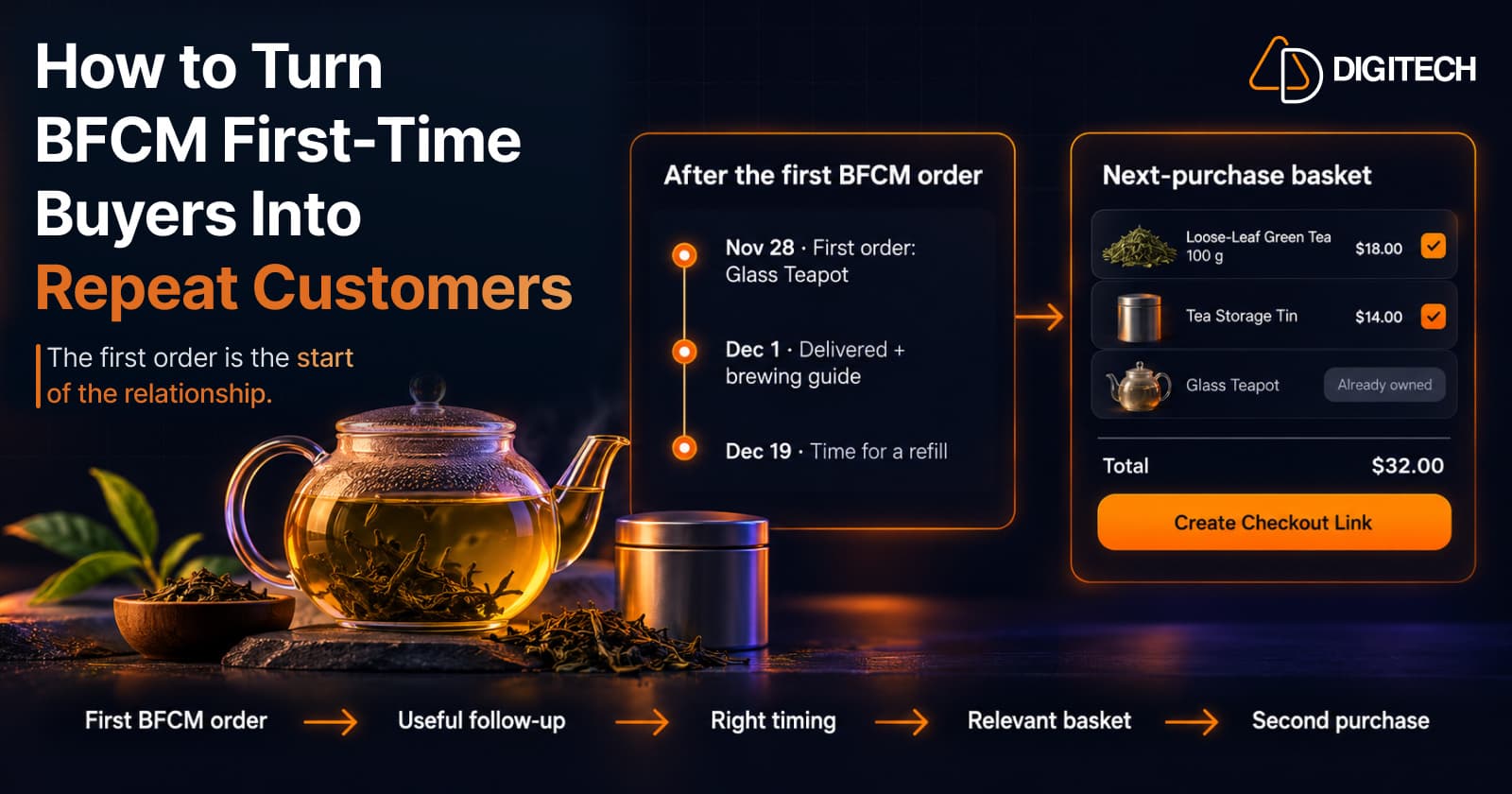
How to Turn BFCM First-Time Buyers Into Repeat Customers
A first BFCM order is the start of a customer relationship. Here's how to follow up with first-time buyers so a relevant second purchase becomes more likely.
Read article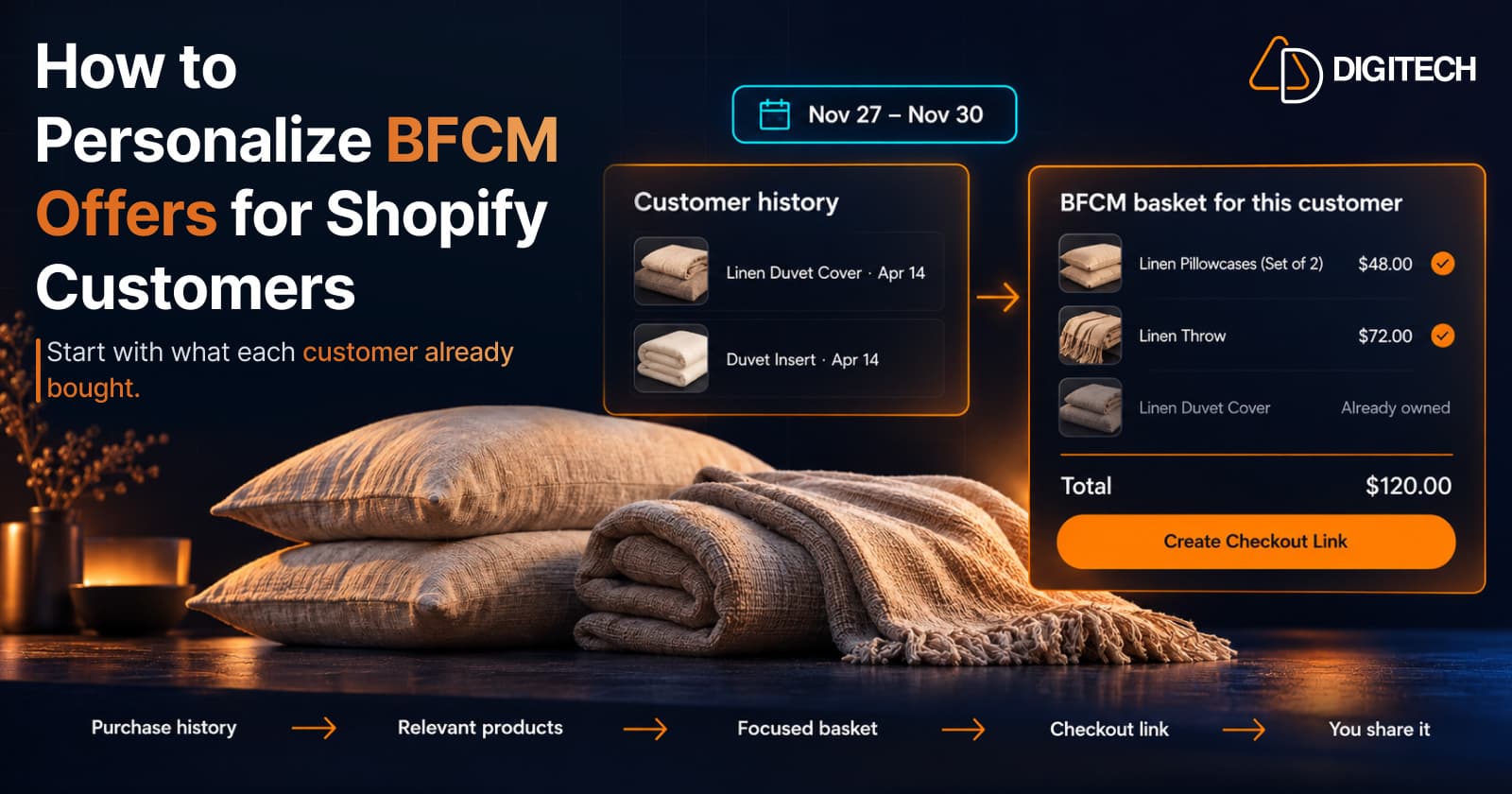
How to Personalize BFCM Offers for Shopify Customers
Use Shopify customer purchase history to build relevant BFCM offers for existing customers: what to check, five ways to personalize, and how to measure it.
Read article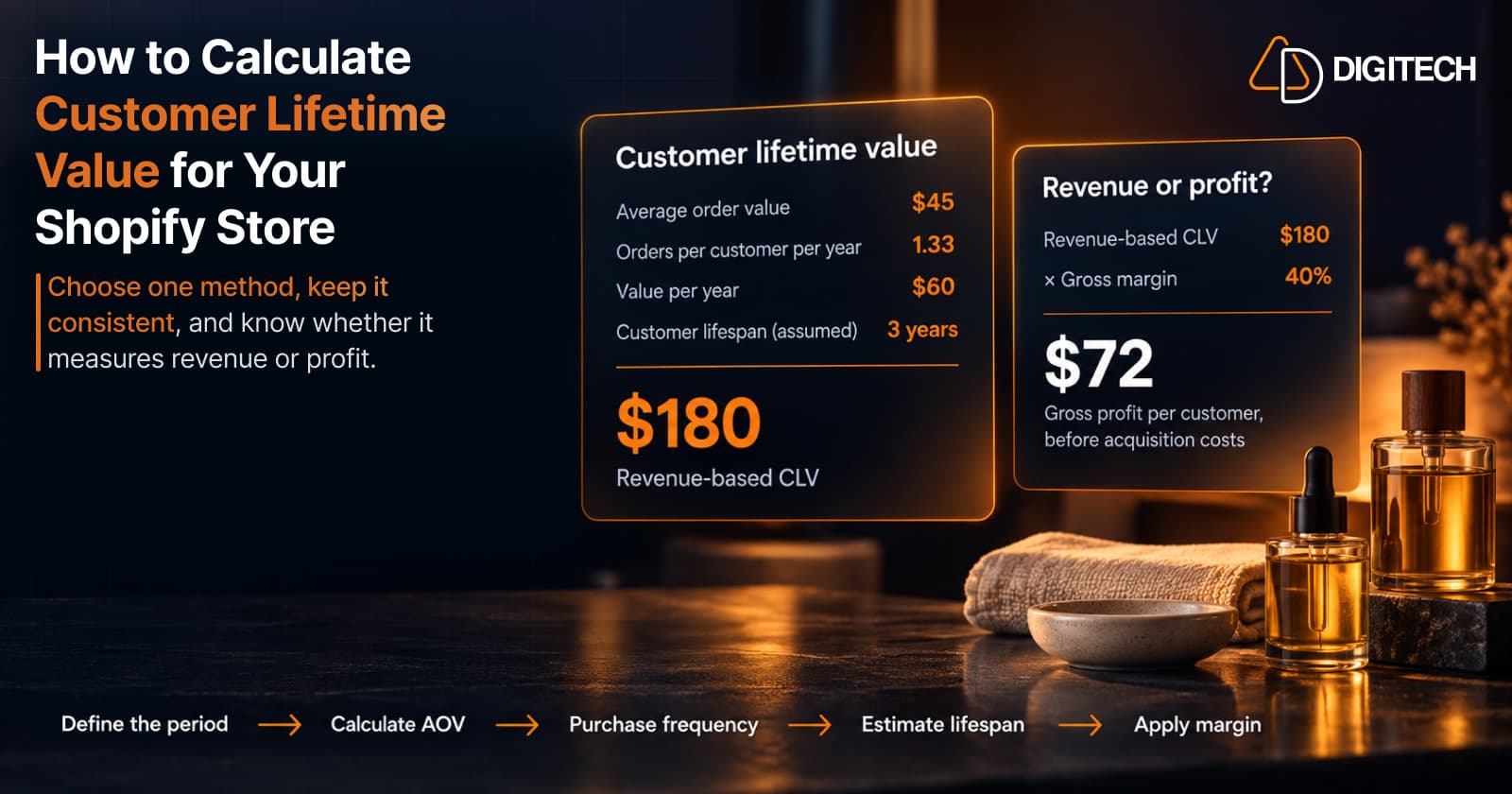
How to Calculate Customer Lifetime Value for Your Shopify Store
Learn how to calculate customer lifetime value for a Shopify store, choose between revenue and profit-based CLV, find the data in Shopify, and avoid common mistakes.
Read article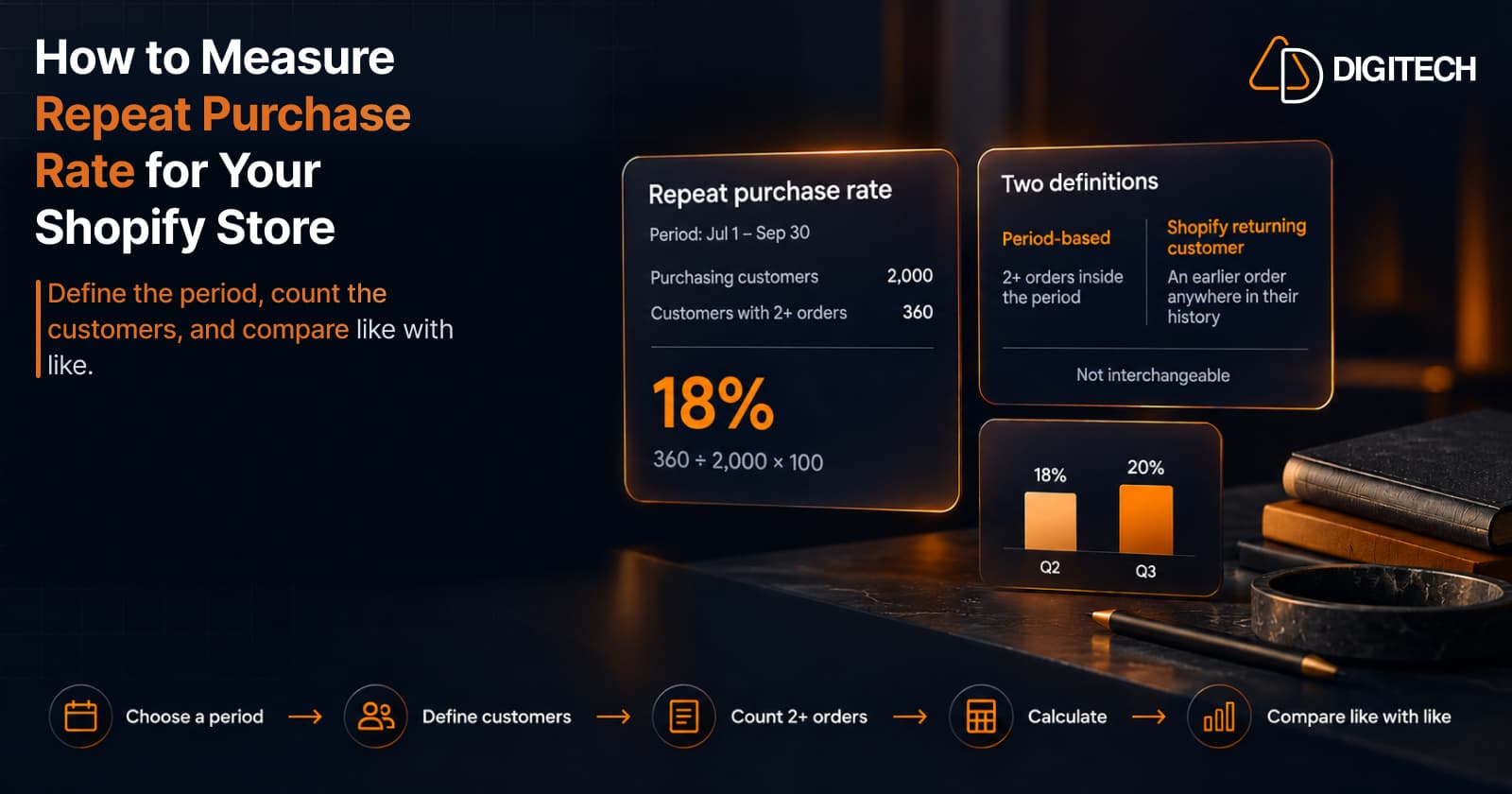
How to Measure Repeat Purchase Rate for Your Shopify Store
Learn how to calculate repeat purchase rate for a Shopify store, choose the right period and customer population, read the result carefully, and track the related retention metrics.
Read article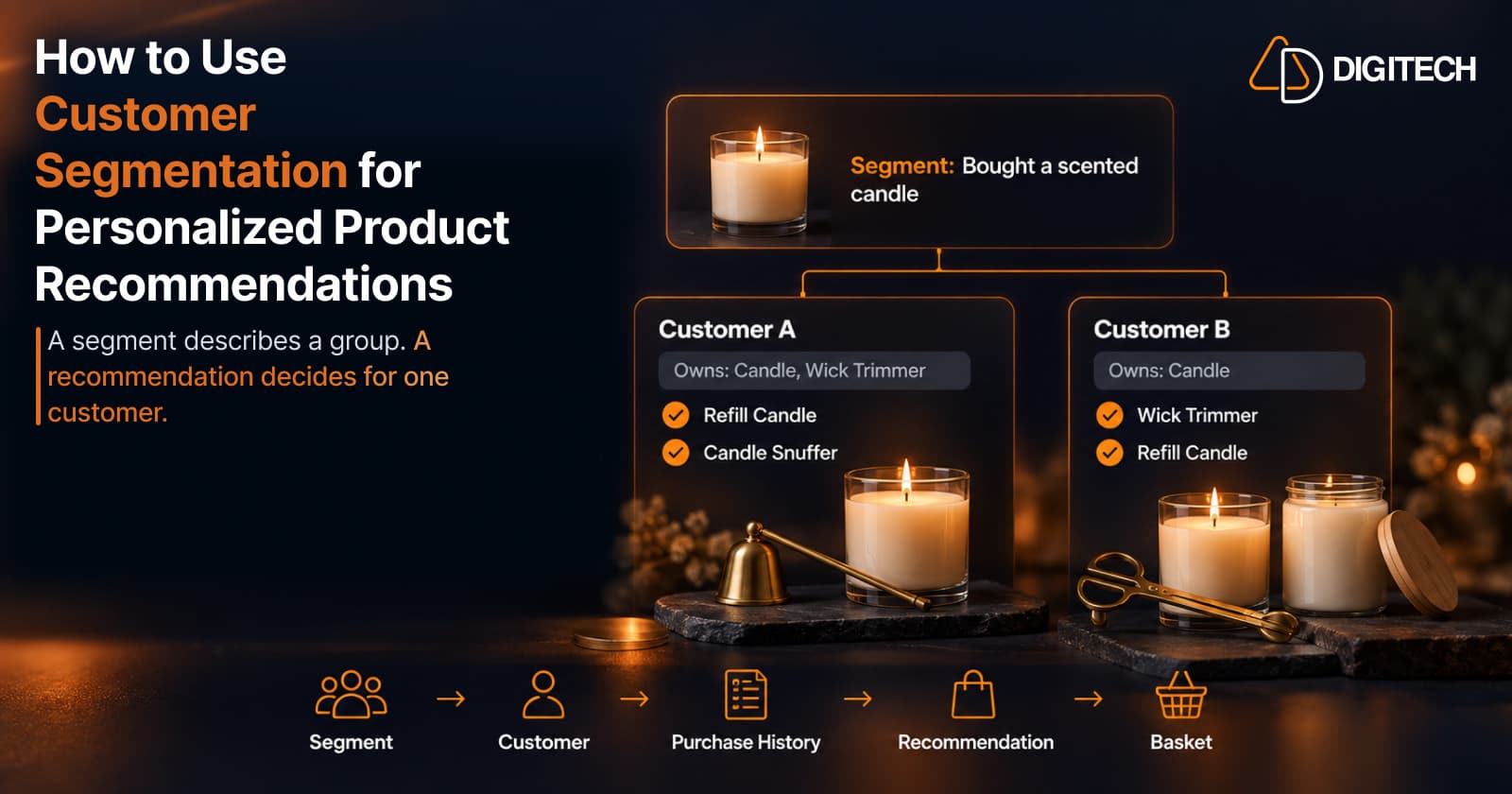
How to Use Customer Segmentation for Personalized Product Recommendations on Shopify
Learn how to use Shopify customer segments to make product recommendations more relevant, and how to turn a segment-level insight into a recommendation for one customer.
Read article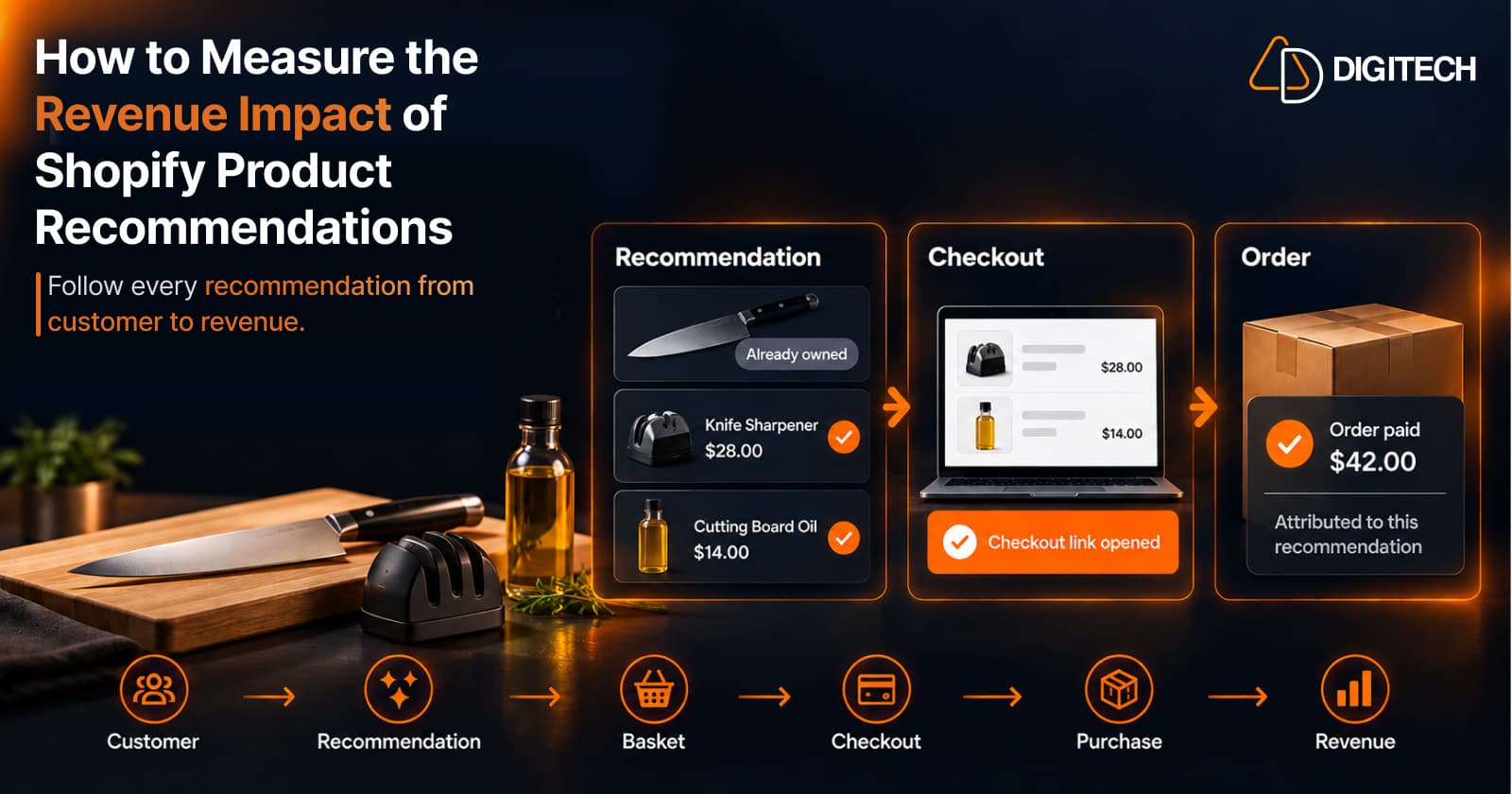
How to Measure the Revenue Impact of Shopify Product Recommendations
Learn how Shopify merchants can measure product recommendation performance, track checkout activity, attribute revenue, and improve personalized recommendations.
Read article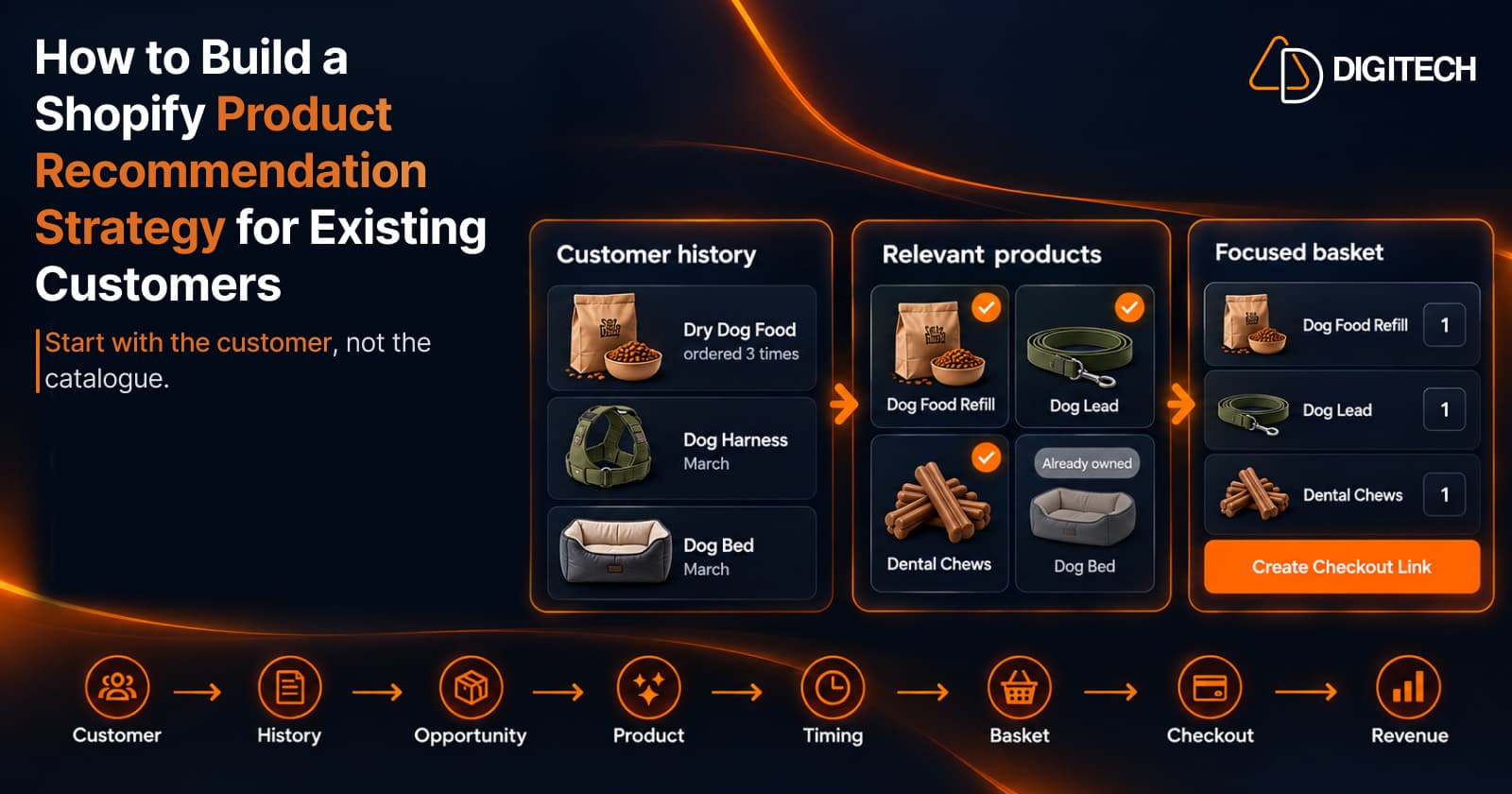
How to Build a Shopify Product Recommendation Strategy for Existing Customers
Learn how to build a Shopify product recommendation strategy using customer history, product relationships, timing, and personalized recommendations.
Read article