Personalized vs. Generic Product Recommendations for Shopify Stores
Generic vs personalized product recommendations for Shopify: what each one is, when to use them, and how a customer's purchase history makes recommendations more relevant.
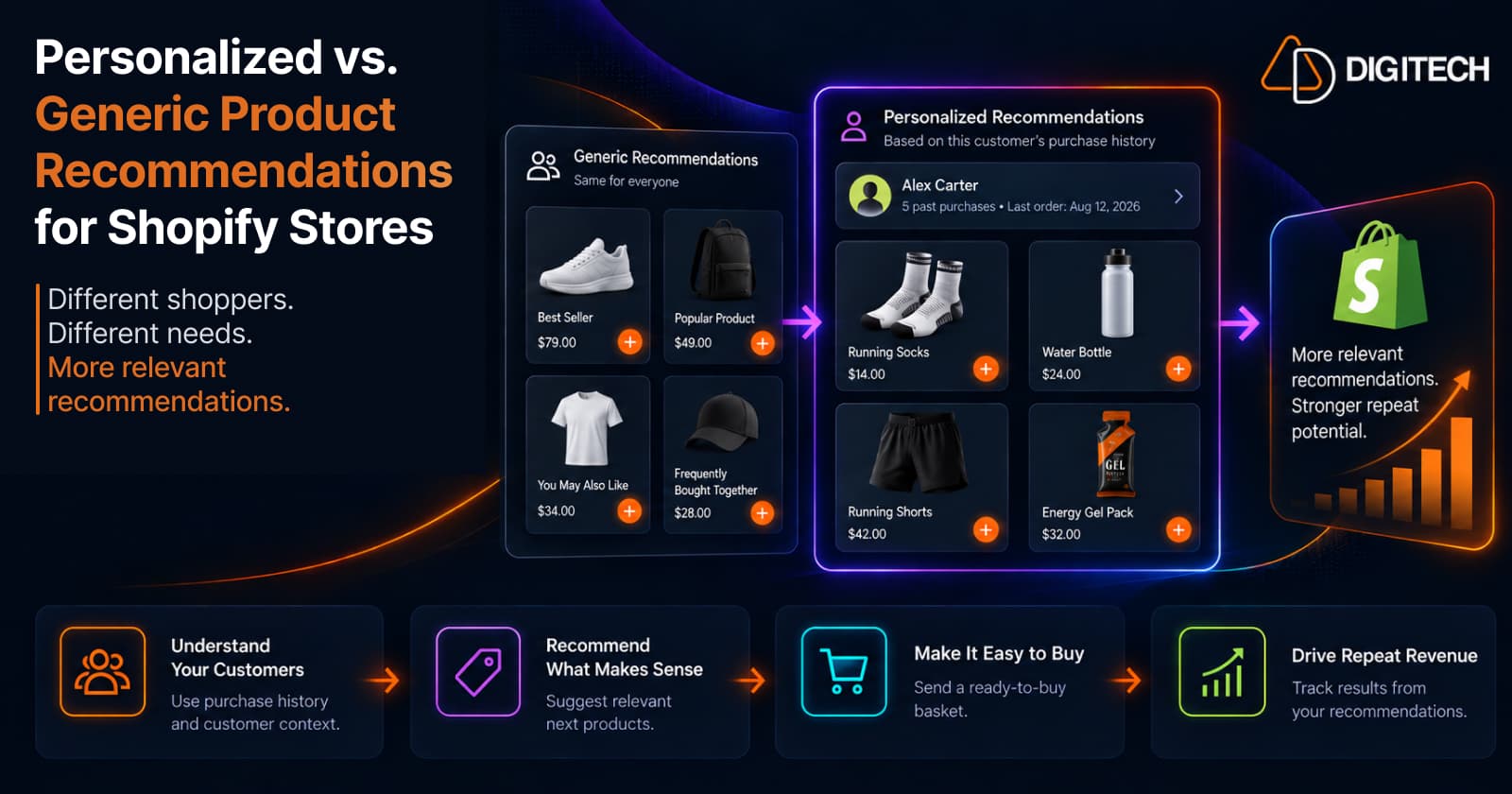
Product recommendations are everywhere in ecommerce — the "you may also like" row, the "customers also bought" block, the best-sellers carousel. They're so common that it's easy to treat them all as the same thing. They aren't. The real difference isn't where a recommendation appears; it's how much it knows about the customer looking at it.
Some recommendations are generic: they answer "what's generally relevant or popular for shoppers?" Others are personalized: they answer "what makes sense for this customer, based on what we already know about them?" Both have a place. This guide explains what each one is, when each works best, and why an existing customer's purchase history can make a recommendation far more relevant — without turning your store into a wall of suggestions.
What Are Generic Product Recommendations?
A generic recommendation is based on your catalogue and broad shopper behaviour, not on the individual viewing it. Everyone in the same context tends to see the same thing. Common examples:
- Best sellers — your most popular products overall.
- Frequently bought together — items that commonly appear in the same order.
- Popular or trending products — what's selling right now.
- Recently viewed — products the current session looked at.
- Related products — items in the same category or of the same type.
- "You may also like" — a broad similarity suggestion.
The strength of these is that they need little or no customer history. A first-time visitor with no account and no orders can still get a sensible best-sellers row. For discovery — helping someone find their way into a large catalogue — generic recommendations do real work. They surface proven products, provide social proof, and give shoppers a starting point when neither you nor they know exactly what they're looking for yet.
What Are Personalized Product Recommendations?
A personalized recommendation uses context specific to the individual customer. Instead of "what's popular?", it asks "what fits this person?" The signals that make it personal:
- Previous purchases — what they've actually bought.
- Product preferences — the categories, styles, and price ranges they lean toward.
- Purchase frequency — how often they buy, and roughly when they're due again.
- Product relationships — what naturally pairs with what they already own.
- Purchase timing — where they are in a replenishment or usage cycle.
- Customer behaviour — the pattern their orders form over time.
The more of this context a recommendation uses, the further it moves from "here's something popular" toward "here's something that makes sense for you." For existing customers, the good news is that most of this context is data the store already has: order history. You don't need to know everything about a customer to make a more relevant suggestion — you need to use what their past orders already tell you. Even a single previous order is a meaningful signal: it reveals a category the customer buys, a price point they're comfortable with, and a product that other items naturally complement.
Personalized vs. Generic Recommendations: What's the Difference?
Neither approach is universally better. They're built for different situations:
| Generic recommendations | Personalized recommendations | |
|---|---|---|
| Customer context | None or broad | The individual customer |
| Data used | Catalogue + aggregate behaviour | That customer's history and behaviour |
| Recommendation logic | "What's popular or related?" | "What fits this customer?" |
| Typical use case | Discovery for new/unknown shoppers | Relevance for known customers |
| Level of relevance | Broad | Specific — when the data is there |
| Best stage of journey | First visit, browsing | Returning, post-purchase, repeat |
| Repeat-purchase potential | Lower on its own | Higher when history is used well |
| Merchant control | Rule- or algorithm-driven | Can keep a human in the loop |
Read this as a question of fit, not a scoreboard. Generic recommendations are strong when you know little about the shopper; personalized ones are strong when you know a lot. The mistake is using one where the other belongs — a best-sellers row on a homepage and a history-based suggestion for a returning customer aren't competing, they're answering different questions at different moments.
When Generic Recommendations Make Sense
Generic recommendations are the right tool when you don't yet know the person:
- First-time visitors — there's no history to personalize on.
- Anonymous shoppers — not logged in, no identity attached.
- Large product catalogues — best sellers cut through choice overload.
- Homepage and product-page discovery — broad entry points into the store.
- Best-seller discovery — social proof helps a new shopper commit.
- Broad merchandising — seasonal pushes and category launches aimed at everyone.
In all of these, the shopper is effectively a stranger. A popular, relevant-to-most product is a genuinely good answer — it's the best you can do without more context, and often that's plenty.
When Personalized Recommendations Make More Sense
Personalized recommendations pay off once you actually know something about the customer:
- Existing customers — you have their purchase history.
- Repeat-purchase businesses — where the second and third orders matter as much as the first.
- Complementary products — accessories and add-ons to something they already own.
- Consumables and replenishment — coffee, skincare, pet food, supplements.
- Accessories — the item that completes a previous purchase.
- Stores with meaningful purchase history — enough orders to see a real pattern.
- High-consideration products — where a relevant nudge beats a popular one.
This is also the territory where repeat purchases from existing Shopify customers become a real growth lever. Once a customer has bought once, their history is the context that makes the next recommendation land. The pattern is consistent: the more history a customer has with you, the more a one-size-fits-all block leaves on the table, and the more a specific, well-timed suggestion stands out from the generic recommendations every other store is sending them.
Why Purchase History Changes the Recommendation
Here's the difference made concrete. Suppose Customer A buys a pair of running shoes.
A generic system, knowing only the catalogue, might recommend other popular running shoes — but the customer just bought a pair, so that suggestion misses. A history-aware approach considers what naturally follows the purchase: running socks, a shoe-care kit, relevant running apparel, or a hydration accessory — and how long it's been since the order.
The same shift applies across very different stores:
- Skincare — someone who bought a cleanser and moisturizer is a natural candidate for the matching serum or an SPF, plus a well-timed replenishment nudge as the bottle runs low, not the day after they restocked.
- Coffee — a customer who reorders beans every few weeks is better served by a timely refill than by "our most popular roast."
- Pet products — a buyer of a specific dog-food formula may want the same formula on a cadence, alongside treats or a supplement that fits.
- Fashion — someone who bought a jacket often wants the pieces that complete the outfit, not another jacket.
In every case, purchase history turns "what's popular?" into "what's the logical next step for this person?" Deciding what that next step actually is — the practical selection — is the focus of our guide to recommending the next product to existing customers.
The Problem With Showing the Same Recommendations to Everyone
A best seller is, by definition, popular — but popular for the store isn't the same as relevant to the person. Show the same top-sellers block to every customer and some of them are looking at products they already own, or products that don't match what they buy.
That's the key idea: popularity and relevance are not always the same thing. A product can be your number-one seller and still be the wrong suggestion for a customer who bought it last month.
This doesn't make generic recommendations bad. They're not — they're simply blind to the individual, which is fine when you don't know the individual. The waste happens when you do know the customer and still show them the same thing as everyone else. At that point, their history is context sitting unused.
Picture a coffee subscriber who buys the same medium roast every month. A store-wide best-sellers block may keep showing them that exact roast — a product they already buy on repeat — instead of the grinder, the filters, or the darker blend they've never tried. The suggestion is genuinely "popular," and almost useless for that particular person. Relevance is what closes that gap.
A Simple Framework for More Relevant Recommendations
You don't need special software to apply the idea. For a known customer, work through this:
- Start with what the customer bought. Their order history is the best context you have.
- Understand the product relationship. What pairs with, completes, or refills what they own?
- Consider purchase timing. Is it replenishment time, or too soon to ask again?
- Consider their previous choices. The price range, category, and style they lean toward.
- Keep the recommendation focused. One or a few relevant options, not a wall of products.
- Make it easy to purchase. The fewer steps between the suggestion and checkout, the better it converts.
- Measure the resulting purchase. Tie the recommendation to the order it produced, and learn from what worked.
Run this consistently for customers you already know, and relevance improves without adding noise — no algorithm required.
Should Shopify Stores Use Generic or Personalized Recommendations?
It isn't either/or. Most stores benefit from both, applied where each one fits:
- Use generic recommendations for discovery — new visitors, anonymous sessions, homepage and product-page browsing, and surfacing proven products.
- Use personalized recommendations when you have purchase history — returning customers, post-purchase moments, replenishment, and complementary offers.
A practical way to think about it: generic recommendations help unknown shoppers find their footing; personalized recommendations help known customers feel understood. Neither approach "wins." They cover different moments in the customer journey, and a healthy store usually uses each in its place.
How Curivo Uses Customer Purchase History
Curivo is built for the personalized side of that split — specifically for existing customers you already know something about. It helps Shopify merchants:
- Select an existing customer
- Review their purchase history
- Get personalized next-product recommendations
- Build or edit a ready-to-buy basket
- Send it directly to checkout
- Track the revenue generated from the recommendation
There are two ways to work. You can build the basket yourself, using the customer's history as your guide. Or you can ask Curivo to suggest four options, then review and edit them before anything is sent.
The positioning is deliberate: AI selects. Your data grounds it. You decide. The recommendation is grounded in your store and product data plus the customer's purchase context, and you keep control of every basket before it reaches anyone — reviewing, editing, or replacing whatever is suggested. It's automated help with the sorting, not automated selling, which matters when the recommendation is going to a customer you've already earned.
Final Takeaway
Generic recommendations help shoppers discover products. Personalized recommendations help you make a recommendation more relevant to a specific customer. Both matter, and they do different jobs — one for the shoppers you don't know yet, one for the customers you do.
The goal isn't to recommend more products. It's to recommend products that make more sense for the customer in front of you. And for an existing customer, their purchase history is the context that gets you there.
Frequently asked questions
What are personalized product recommendations?
Personalized product recommendations use context specific to an individual customer — such as their previous purchases, the categories and price ranges they favour, how often they buy, and how items relate to each other — to suggest products that fit that person, rather than products that are simply popular across all shoppers.
What is the difference between personalized and generic product recommendations?
Generic recommendations answer 'what's generally relevant or popular for shoppers?' using catalogue data and aggregate behaviour, so most people see the same thing. Personalized recommendations answer 'what makes sense for this specific customer?' using that customer's own history and behaviour. One is built for discovery; the other for relevance to someone you already know.
How do Shopify stores personalize product recommendations?
The most accessible source of personalization is data the store already has: customer purchase history. By looking at what a customer bought, what pairs with it, and roughly when they might buy again, a merchant can suggest a relevant next product instead of a generic popular one. Tools can assist, but the underlying signal is the customer's own order history.
Can Shopify product recommendations use customer purchase history?
Yes. For existing customers, purchase history is one of the most useful inputs for a recommendation. It shows the categories and price ranges a customer is comfortable with, what tends to go together in their orders, and when they may be due to buy again — which narrows a large catalogue down to a handful of relevant options.
Are personalized recommendations useful for repeat customers?
They're often most useful there. A repeat customer already has a purchase history, so recommendations can build on it — complementary products, replenishment of consumables, or the next logical step — rather than repeating best sellers the customer may already own. Results still depend on relevance and timing, not personalization alone.
Should a Shopify store use generic and personalized recommendations together?
Usually, yes. They cover different moments. Generic recommendations help new or anonymous shoppers discover products when you know little about them; personalized recommendations make suggestions more relevant once you have a customer's purchase history. Most stores benefit from using each where it fits rather than choosing only one.
Turn Customer History Into Your Next Sale
See how Curivo helps Shopify merchants turn customer purchase history into personalized recommendations, ready-to-buy baskets, and measurable revenue.
Related reading
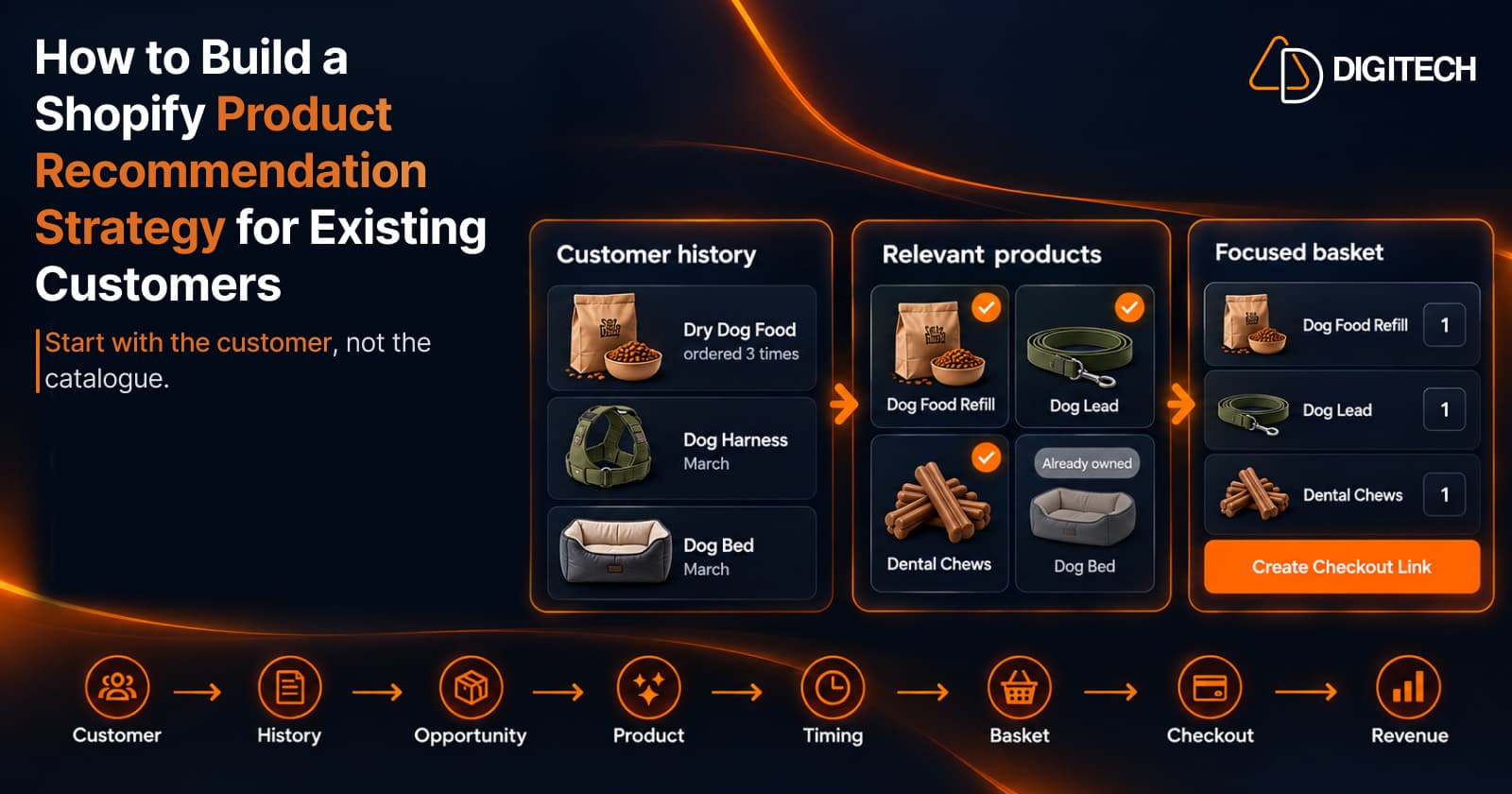
How to Build a Shopify Product Recommendation Strategy for Existing Customers
Learn how to build a Shopify product recommendation strategy using customer history, product relationships, timing, and personalized recommendations.
Read article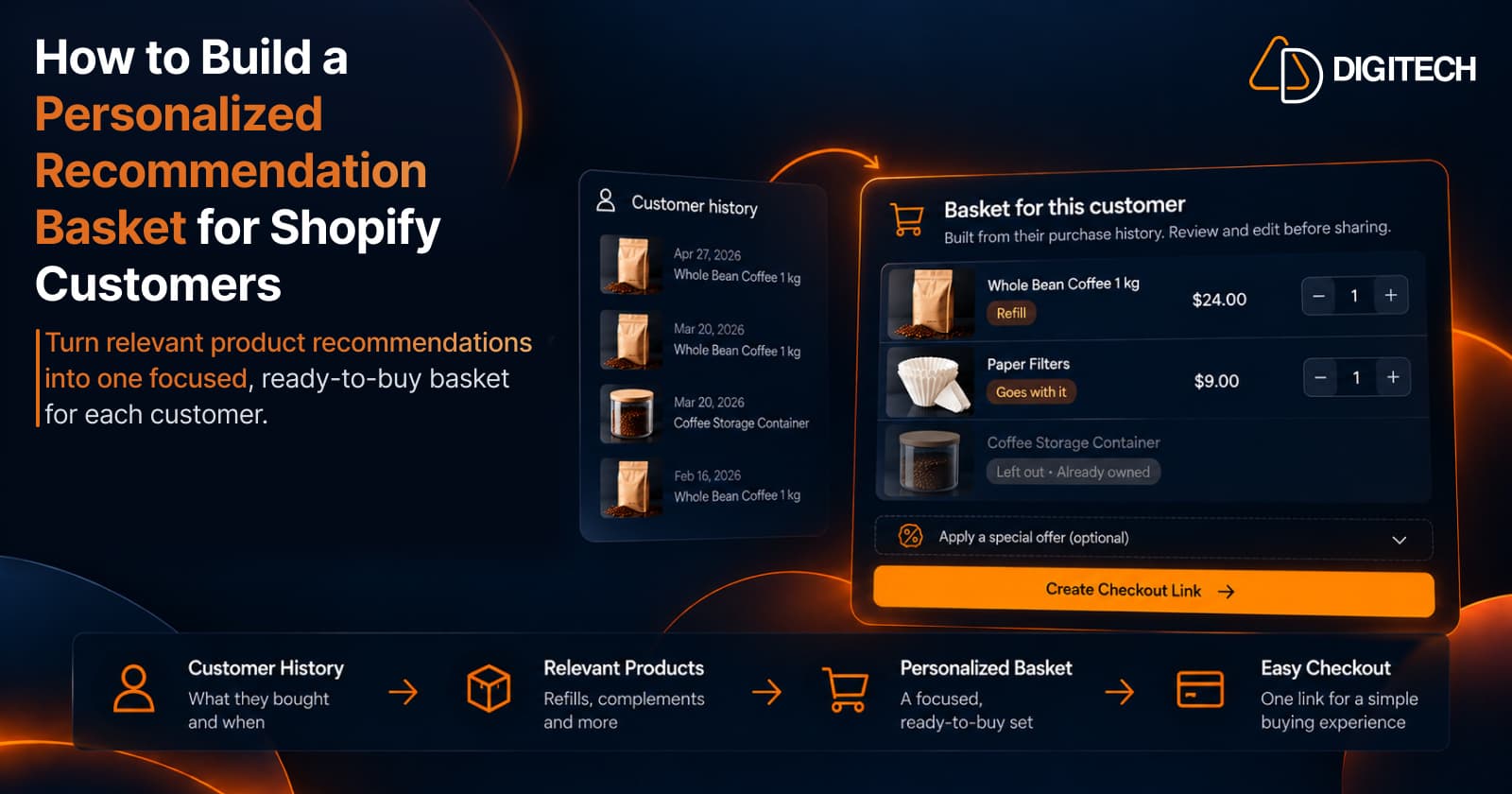
How to Build a Personalized Recommendation Basket for Shopify Customers
Learn how Shopify merchants can build personalized recommendation baskets using customer history, product relationships, timing, and product fit.
Read article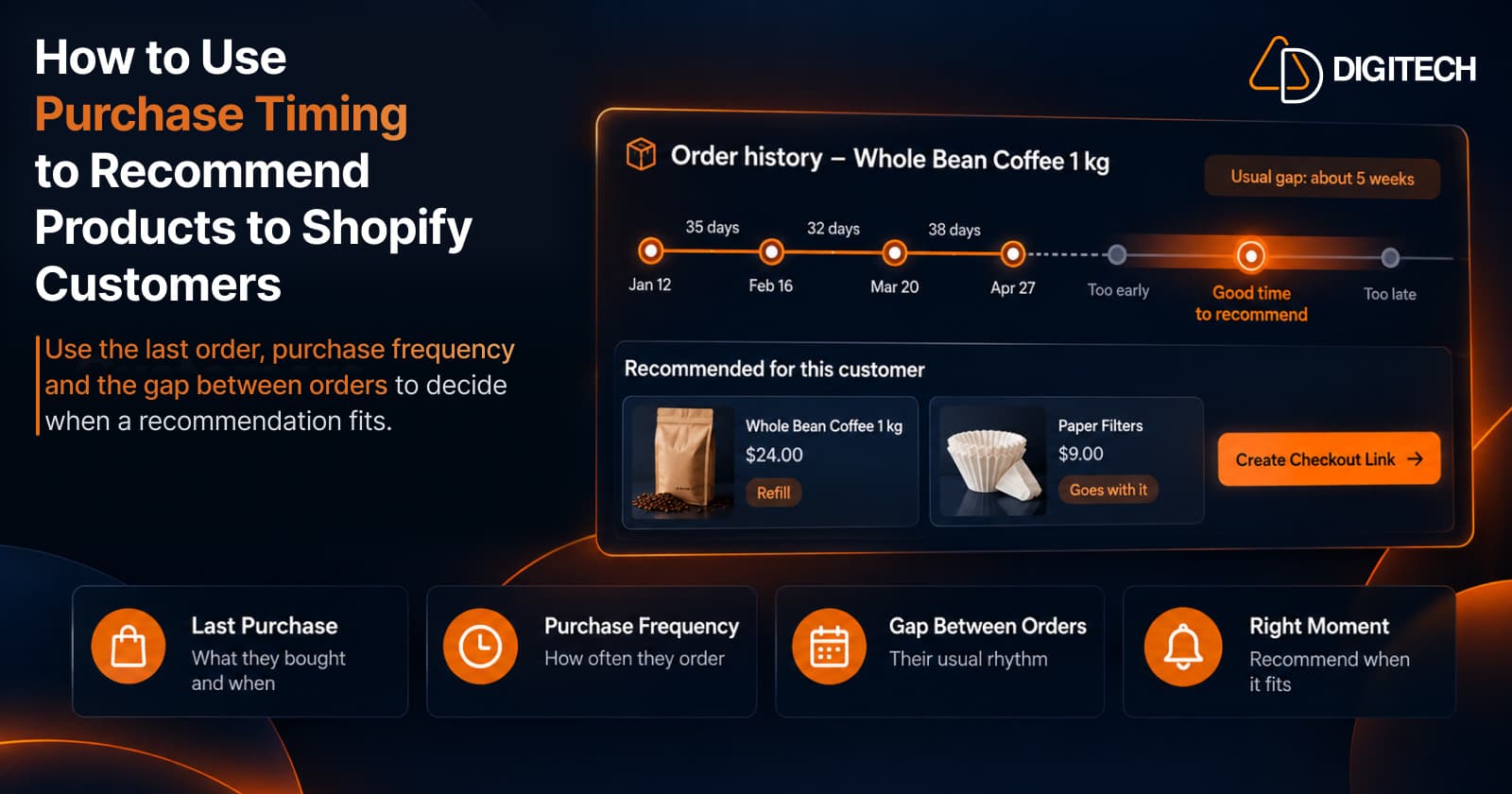
How to Use Purchase Timing to Recommend Products to Shopify Customers
Learn how Shopify merchants can use purchase timing, purchase frequency, recency, and customer history to make product recommendations more relevant.
Read article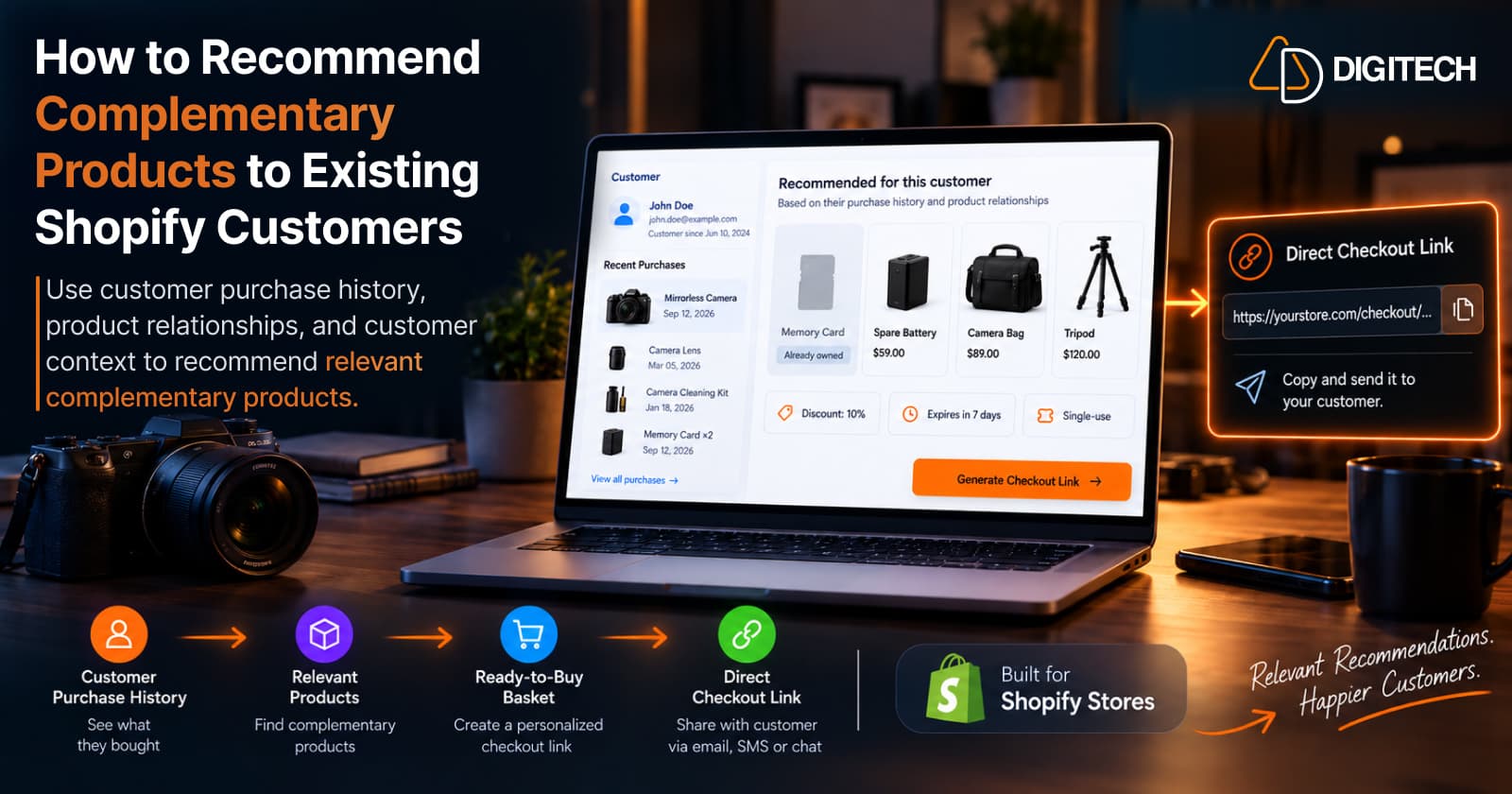
How to Recommend Complementary Products to Existing Shopify Customers
Learn how to recommend complementary products to existing Shopify customers using purchase history, product relationships, timing, and customer context.
Read article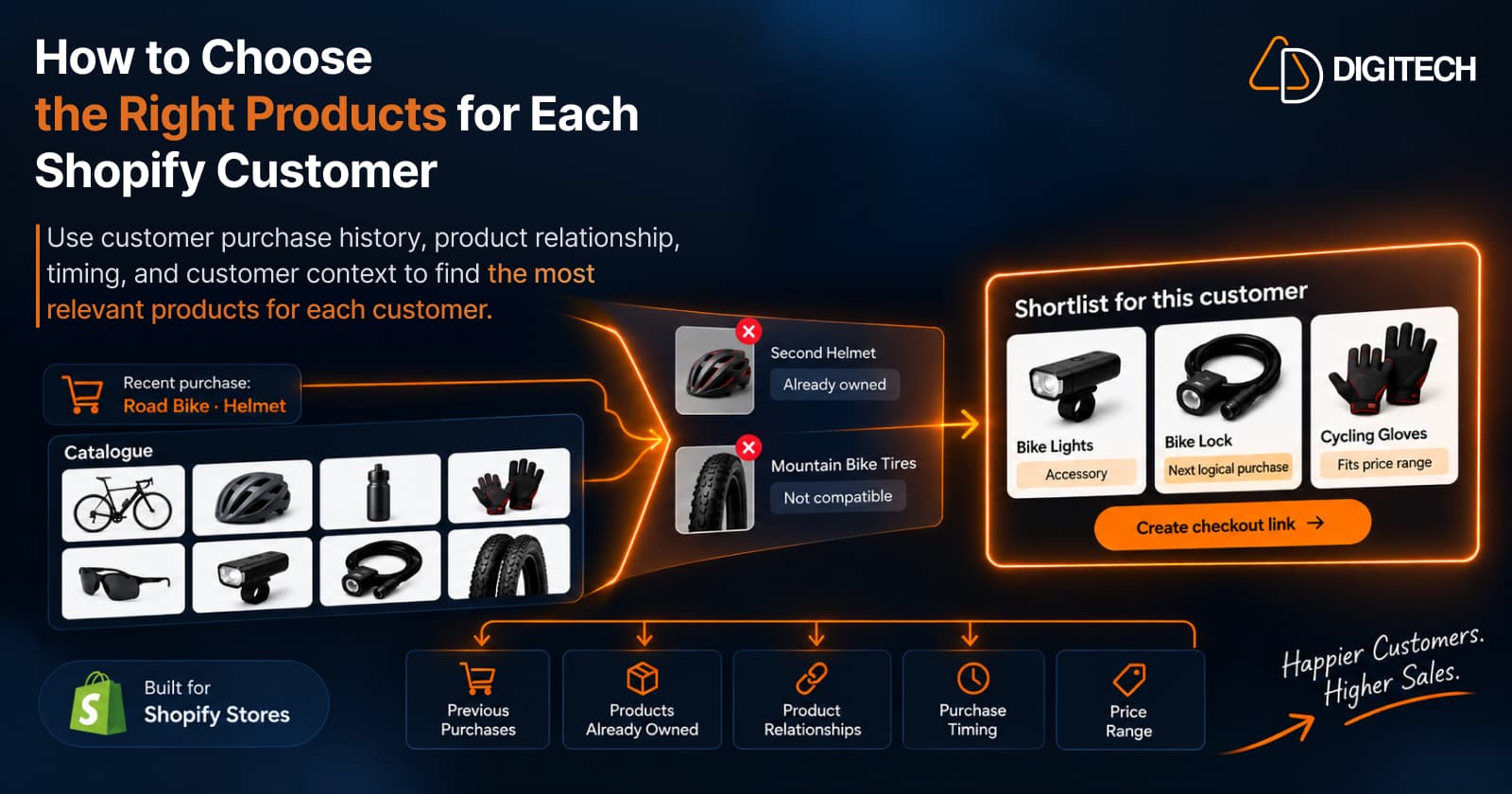
How to Choose the Right Products for Each Shopify Customer
Learn how Shopify merchants can choose more relevant products for each customer using purchase history, product relationships, timing, and customer context.
Read article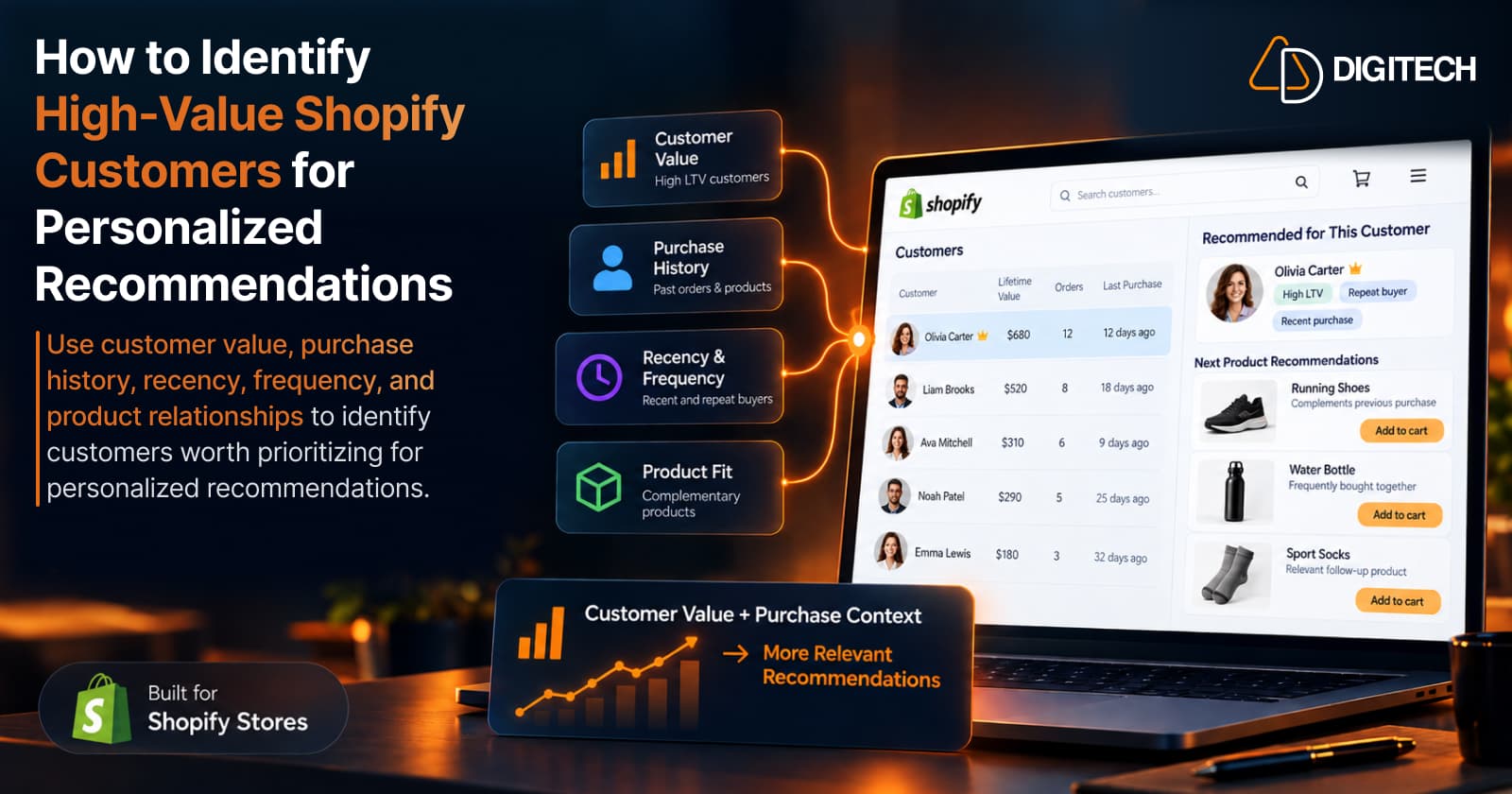
How to Identify High-Value Shopify Customers for Personalized Recommendations
How to identify high-value Shopify customers and real recommendation opportunities using purchase history, customer value, recency, and product relationships.
Read article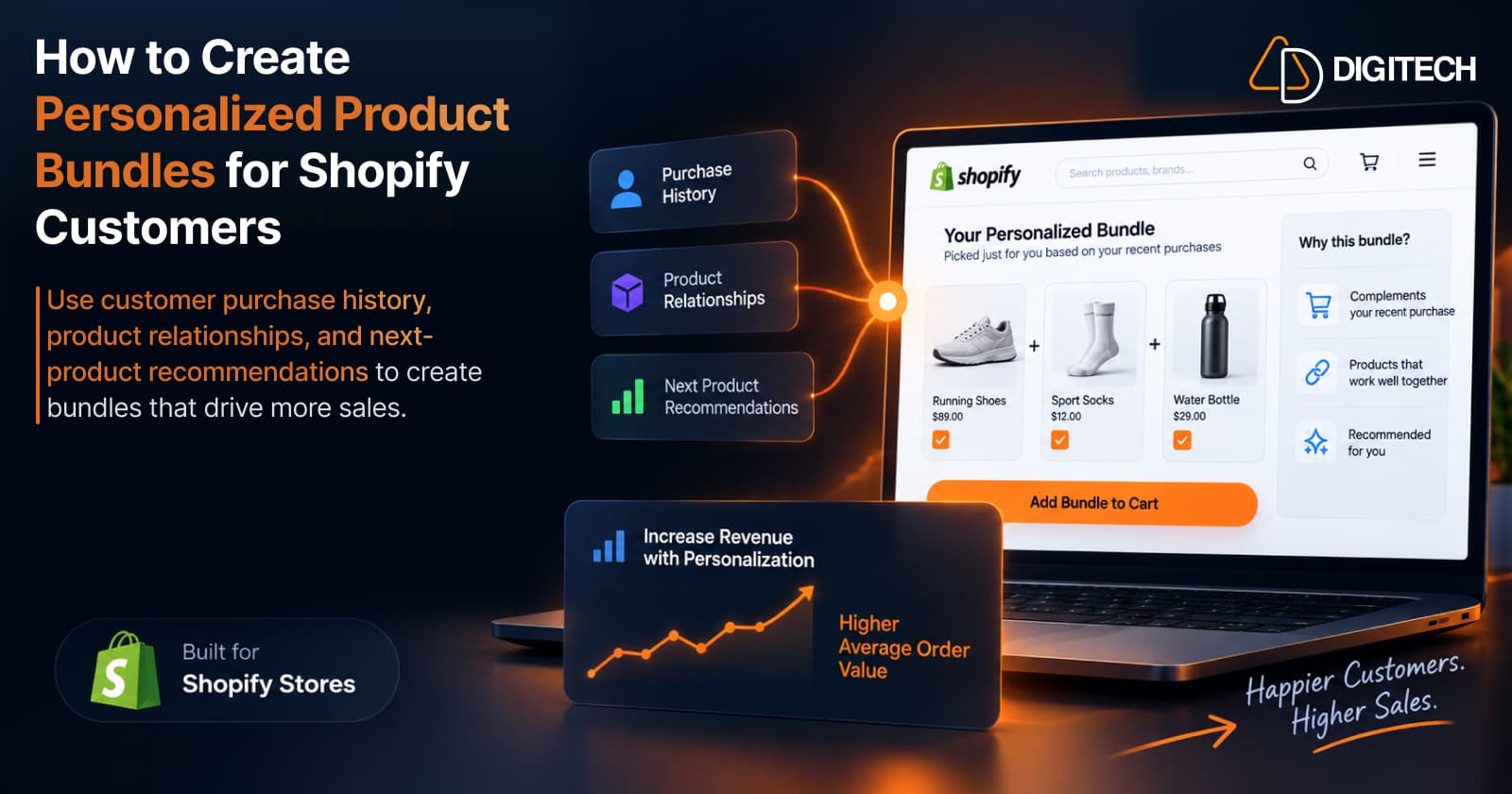
How to Create Personalized Product Bundles for Shopify Customers
Learn how to create personalized Shopify product bundles using customer purchase history, product relationships, and relevant next-product recommendations.
Read article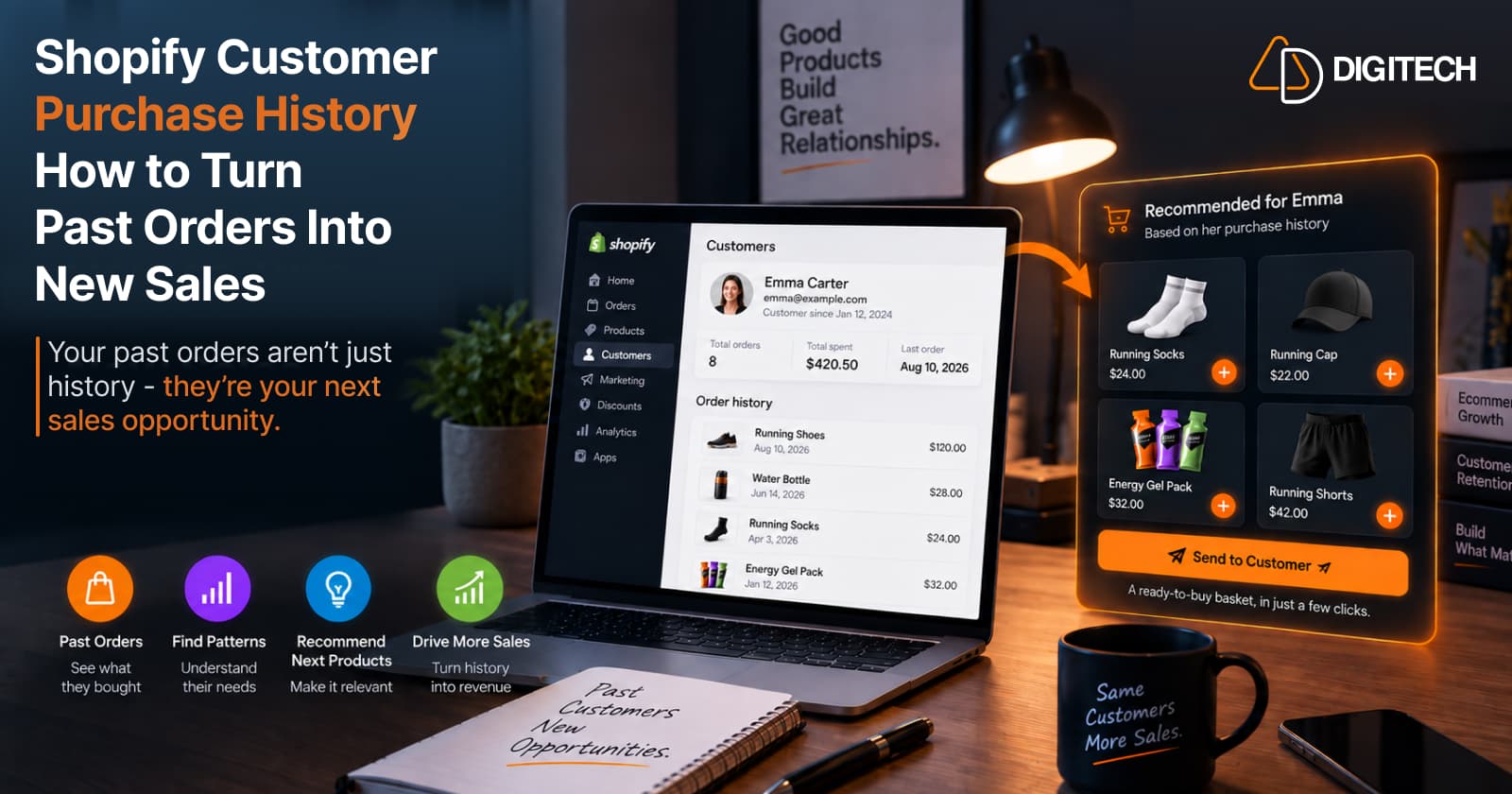
Shopify Customer Purchase History: How to Turn Past Orders Into New Sales
Learn how to use Shopify customer purchase history to identify relevant next products, create personalized recommendations, and increase repeat sales.
Read article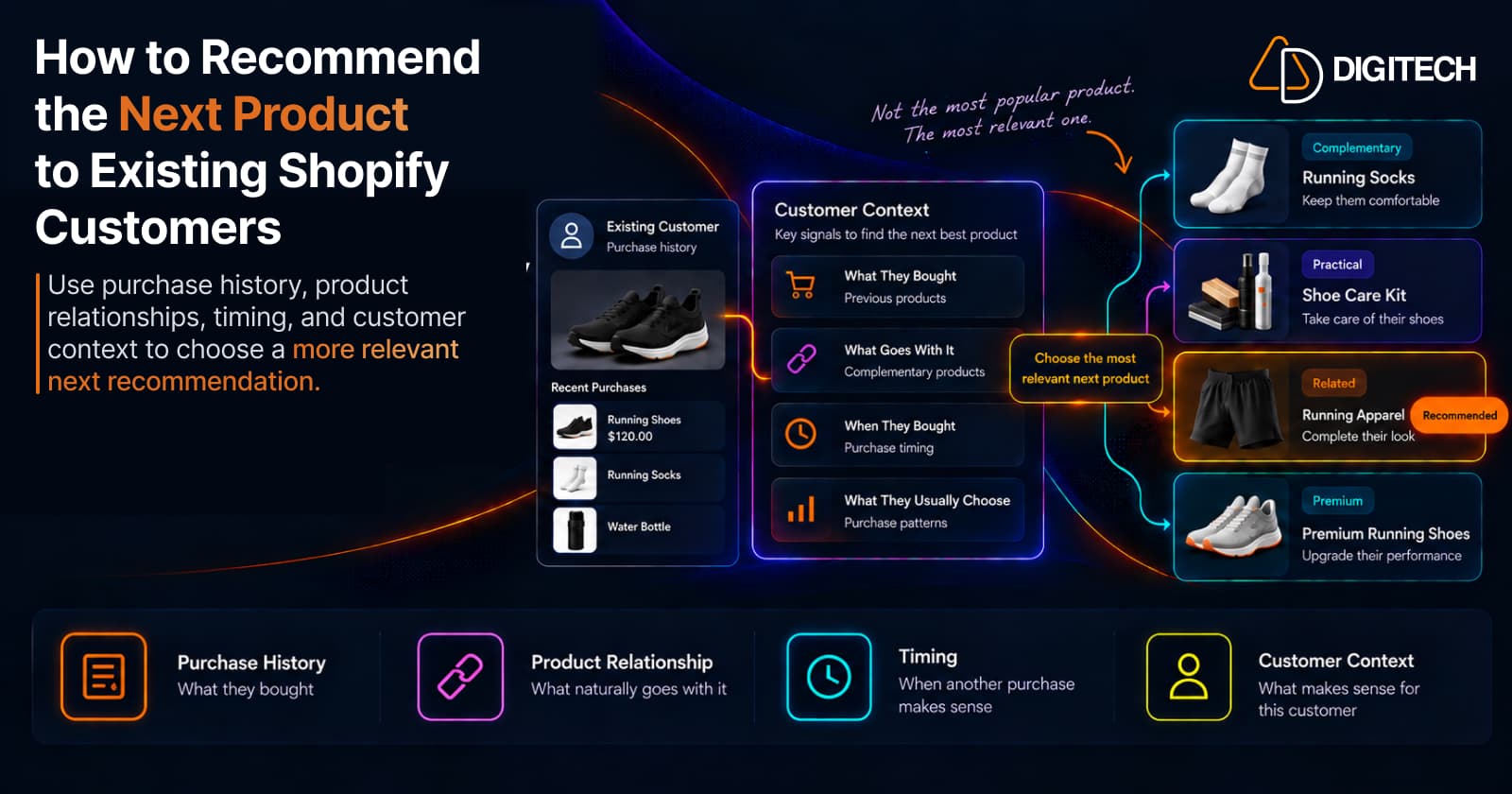
How to Recommend the Next Product to Existing Shopify Customers
Learn how to recommend the next product to existing Shopify customers using purchase history, complementary products, timing, and personalized recommendations.
Read article