What to Recommend After a BFCM Gift Purchase: A Guide for Shopify Merchants
Some BFCM orders are gifts, which makes purchase history misleading. Here's how Shopify merchants can spot likely gift orders and recommend a relevant next product.
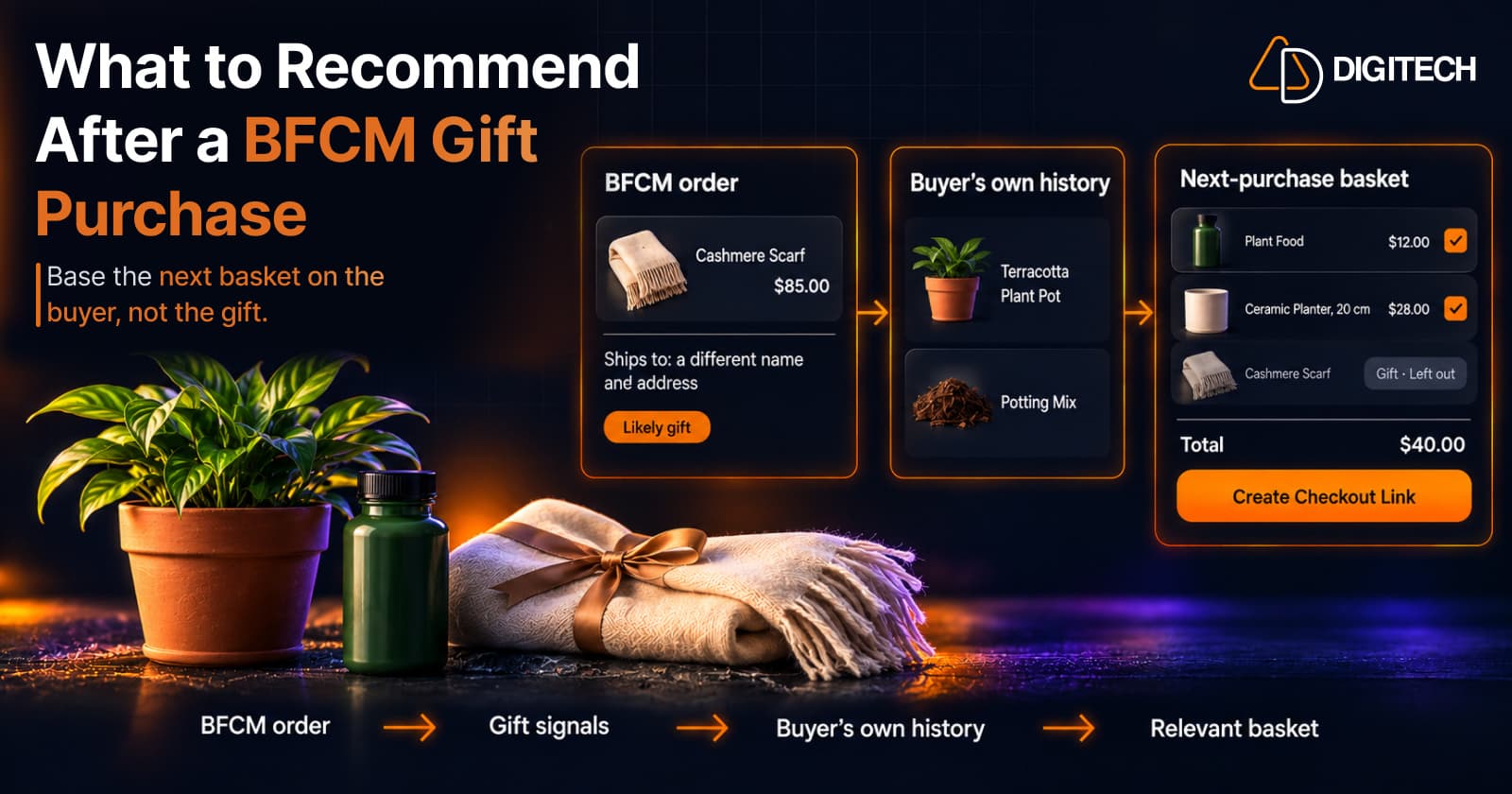
Black Friday falls on November 27, 2026, and Cyber Monday on November 30. Shopify's own BFCM campaigns guide describes shoppers looking for deals as they "get ahead of gift buying, or treat themselves". For many stores, that means some BFCM orders weren't for the person who placed them.
That creates a quiet problem after the sale. Purchase history is the best guide to what a customer might want next, but a gift order describes someone else. Recommend a refill for a scarf the customer gave away, and the recommendation is irrelevant, however well it's timed.
Two people are involved in every gift order. The buyer placed the order and is your customer. The recipient received the gift and may use it, but usually isn't your customer, and you know little or nothing about them. Every recommendation in this guide is for the buyer.
This guide covers how to spot orders that were probably gifts, what to recommend to the buyer instead, and how to keep gift purchases from distorting your next-purchase recommendations. For the wider post-BFCM picture, see our guide to turning BFCM first-time buyers into repeat customers.
Why Gift Purchases Mislead Purchase History
Recommendations built from purchase history assume the customer bought the product for themselves. Most of the time, that's a fair assumption. A gift breaks it in three ways:
- The need belongs to someone else. A customer who buys a dog harness as a gift doesn't need dog treats.
- The price may not reflect their usual spend. People often spend more, or less, on a gift than on themselves.
- The category may be new to them. A gift can be the only product a customer has ever bought from a category.
None of this makes the order useless. It just means the order answers a different question: not "what does this customer need?" but "what does this customer buy for other people?"
How to Spot an Order That Was Probably a Gift
You usually can't know for certain. These signals, taken together, make a gift more likely:
- A different shipping name or address. An order sent to another person at another address is the clearest everyday signal. A different address alone isn't enough; the customer may simply have sent it to work.
- A gift card sent to a recipient. Shopify's gift card recipient fields let customers enter a recipient email, and optionally a name, message and "Send on" date. They need a supported theme: the free Online Store 2.0 themes from version 9.0.0, such as Dawn and the Horizon family, but not vintage themes.
- A gift message or gift wrap, if your store collects them.
- Gift-oriented products, such as gift sets, gift boxes or items from a gift guide.
- A product that doesn't fit the customer's history. A cashmere scarf from someone who has only ever bought plant pots and potting mix.
- Several of the same item in different sizes or variants, which can mean several recipients.
The more signals point the same way, the safer it is to treat the order as a gift. When they conflict, don't guess; base your next recommendation on the rest of the customer's history.
Two Different Questions After a Gift Order
| Question | Recommendation | |
|---|---|---|
| The buyer's own needs | What does the buyer need for themselves? | Based on their own, non-gift purchases |
| The buyer's next gift | What might the buyer give someone again? | Based on what they bought as gifts, and when |
Both questions are about the buyer. The recipient's needs, such as refills or accessories for the gift, only become relevant if the recipient becomes your customer and buys from you themselves. Even then, you won't have their history at first, so base recommendations on the known gift product and its natural complements, not on preferences you'd have to guess. Most next-purchase recommendations should answer the first question. The second is useful in the run-up to another gifting occasion, and only if the customer has a history of buying gifts from you.
What to Recommend After a Likely Gift Purchase
1. Recommend From the Buyer's Own History
When it fits: the customer has bought from you before for themselves.
Example: a customer has bought plant pots and potting mix twice this year. On Black Friday they ordered a cashmere scarf, shipped to a different name and address. Their next recommendation should come from the plant side of their history, such as plant food or a larger pot, not from the scarf.
Watch for: recommending accessories for the gift. Those belong to the recipient.
2. Use the Gift as a Gifting Signal, Not a Need
When it fits: the customer has bought gifts from you more than once, or before a clear gifting occasion.
Example: a customer who bought a scarf as a gift in November might respond to a similar gift idea in a later season, framed as a gift, not as something for them. If they're likely to give to the same person again, the known gift can suggest a complementary one, such as gloves to match the scarf, without guessing what the recipient likes.
Watch for: assuming every gift buyer will buy gifts again. One gift order is a weak pattern.
3. Wait Before Building on a New Customer's Gift Order
When it fits: the customer's only order is the gift.
Example: a first-time BFCM customer bought a gift box shipped to someone else. You know almost nothing about their own needs.
What to do: keep the follow-up useful and light, such as delivery or care information, rather than a product recommendation. Shopify's BFCM checklist warns to be "careful not to over-communicate, since purchasers are likely getting order-related emails in the days following BFCM."
4. Leave Gift Items Out of Replenishment and Timing
When it fits: the gift was a consumable or had a natural refill cycle.
Example: a customer bought a bag of coffee beans as a gift. A refill reminder five weeks later goes to the buyer, who isn't the one drinking it.
What to do: exclude likely gift orders when you look at purchase timing and replenishment.
A Simple Workflow for Gift-Aware Recommendations
- Find the BFCM orders you plan to follow up on.
- Check each order for gift signals: shipping name and address, gift card recipient, gift message or wrap, gift products, fit with the customer's history.
- Separate the buyer's own purchases from likely gift purchases.
- Choose the question: a recommendation for the buyer, or a gift idea for a later occasion.
- Build the recommendation from the relevant part of their history. Our guide to choosing the right products for each customer covers the filters, such as leaving out products the customer already owns.
- Pick the timing, after the holiday rush for most gift buyers.
- Share it only through a channel you're allowed to use. Shopify's checklist reminds merchants to make sure "you have consent to send promotional emails."
Mistakes to Avoid
- Treating every BFCM order as a self-purchase.
- Recommending refills or accessories for a gift to the person who gave it.
- Calling an order a gift on one weak signal, such as a different address alone.
- Changing a customer's price range because of one expensive or cheap gift.
- Sending gift ideas to every BFCM buyer, whether or not they bought gifts.
- Following up too soon, while BFCM order emails are still arriving.
Where Curivo Fits
Curivo is our Shopify app for preparing a personalized next-purchase basket from a customer's purchase history:
- Review the customer's purchase history before building anything, including orders that look like gifts.
- Build a basket by hand, or ask Curivo's AI for four recommendation options.
- Review and edit every basket. If an order looks like a gift, you decide whether its products belong in the basket. Curivo doesn't detect gifts for you.
- Create a checkout link and share it through your own, permitted channel.
- Review analytics for activity and revenue attribution, where supported.
Curivo doesn't send emails, SMS or WhatsApp messages, and it doesn't run automated campaigns or guarantee sales. It's available on the Shopify App Store, with a free plan.
How to Measure Whether It Works
Compare follow-ups to BFCM buyers whose orders looked like gifts with those whose orders didn't:
- Second-purchase rate within a defined period, such as 90 days. Our guide to measuring repeat purchase rate covers how to define it.
- Which part of their history the next order came from: their own purchases or another gift.
- Returns and complaints about irrelevant recommendations.
Keep the definitions the same from one period to the next, and treat small groups with caution.
Conclusion
A BFCM gift order tells you who a customer buys for, not what they need. Spot likely gifts, base the next recommendation on the customer's own purchases, and save gift ideas for customers who've shown they buy gifts. A recommendation that fits the person reading it does more than one perfectly timed for someone else.
For the other side of BFCM personalization, see our guide to personalizing BFCM offers for existing customers.
Sources
- Shopify: BFCM Campaigns: 13 Strategies for 2026
- Shopify: Black Friday Checklist 2026: 25 BFCM Prep Steps
- Shopify Help Center: Add recipient fields to your gift card products
Frequently asked questions
How can I tell if a Shopify order was a gift?
You usually can't be certain. Useful signals include a shipping name or address that differs from the customer's own, a gift card sent to a recipient, a gift message, gift wrap or a product that doesn't fit anything else the customer has bought. Treat them as hints, not proof.
Should I recommend refills or accessories for a gift item to the person who bought it?
Usually not. The buyer doesn't use the item, so refills and accessories are more relevant to the recipient. Base the buyer's next recommendation on what they've bought for themselves.
Do gift purchases help with recommendations at all?
Yes, as a different kind of signal. They show what the customer buys for other people, which can help when they shop for gifts again. They say much less about what the customer needs.
Does Shopify mark orders as gifts?
Not for ordinary products, as far as Shopify's documentation describes. Gift card products can include recipient fields, such as the recipient's email, name, a message and a send date, if your theme supports them. For other products, any gift information depends on what your store collects, such as a gift message or gift wrap option.
Can Curivo detect gift orders?
No. Curivo uses a customer's purchase history to help you build a next-purchase basket, and you review and edit every basket. If an order looks like a gift, you decide whether to leave that product out.
Turn Customer History Into Your Next Sale
See how Curivo helps Shopify merchants turn customer purchase history into personalized recommendations, ready-to-buy baskets, and measurable revenue.
Related reading
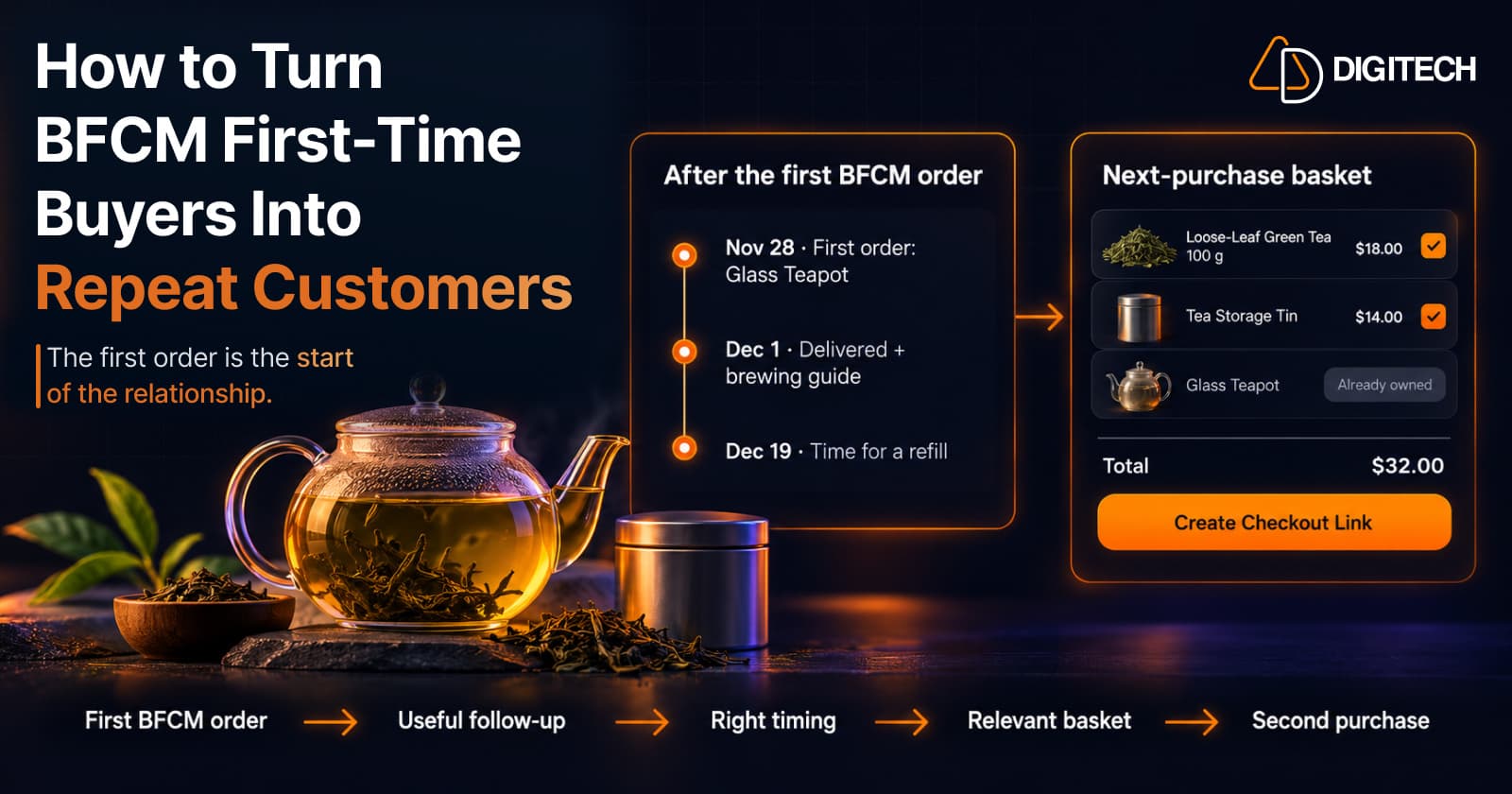
How to Turn BFCM First-Time Buyers Into Repeat Customers
A first BFCM order is the start of a customer relationship. Here's how to follow up with first-time buyers so a relevant second purchase becomes more likely.
Read article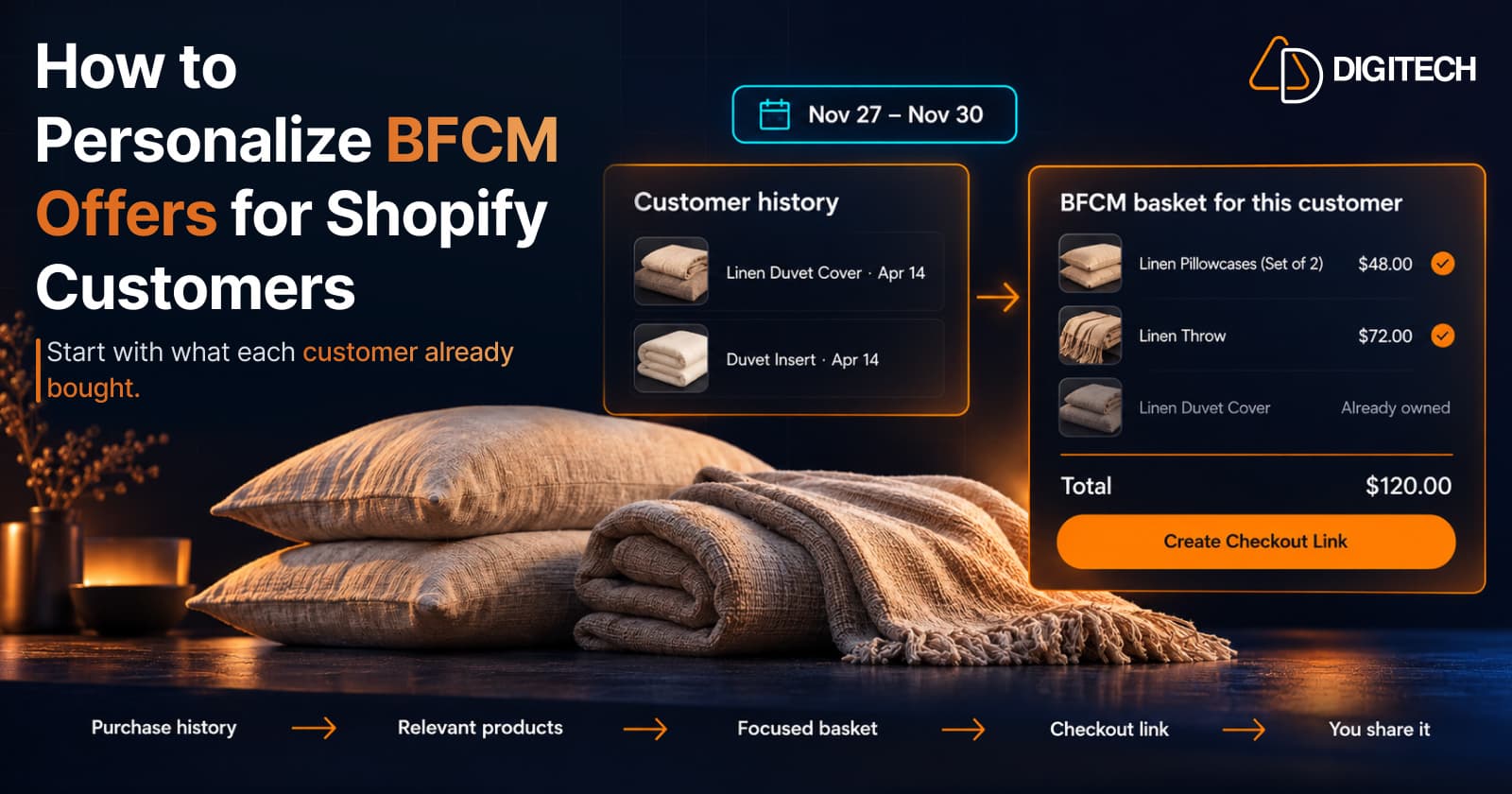
How to Personalize BFCM Offers for Shopify Customers
Use Shopify customer purchase history to build relevant BFCM offers for existing customers: what to check, five ways to personalize, and how to measure it.
Read article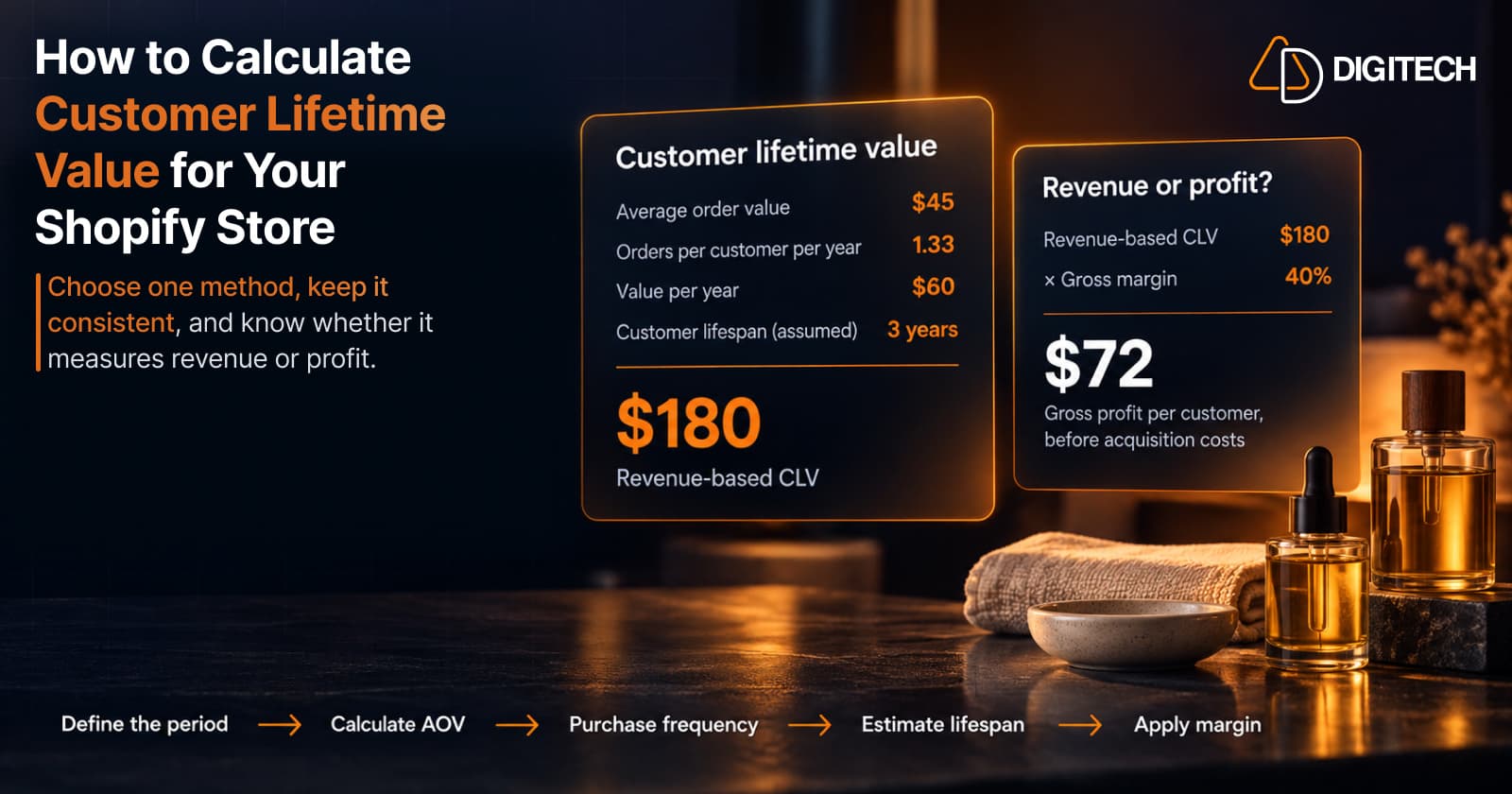
How to Calculate Customer Lifetime Value for Your Shopify Store
Learn how to calculate customer lifetime value for a Shopify store, choose between revenue and profit-based CLV, find the data in Shopify, and avoid common mistakes.
Read article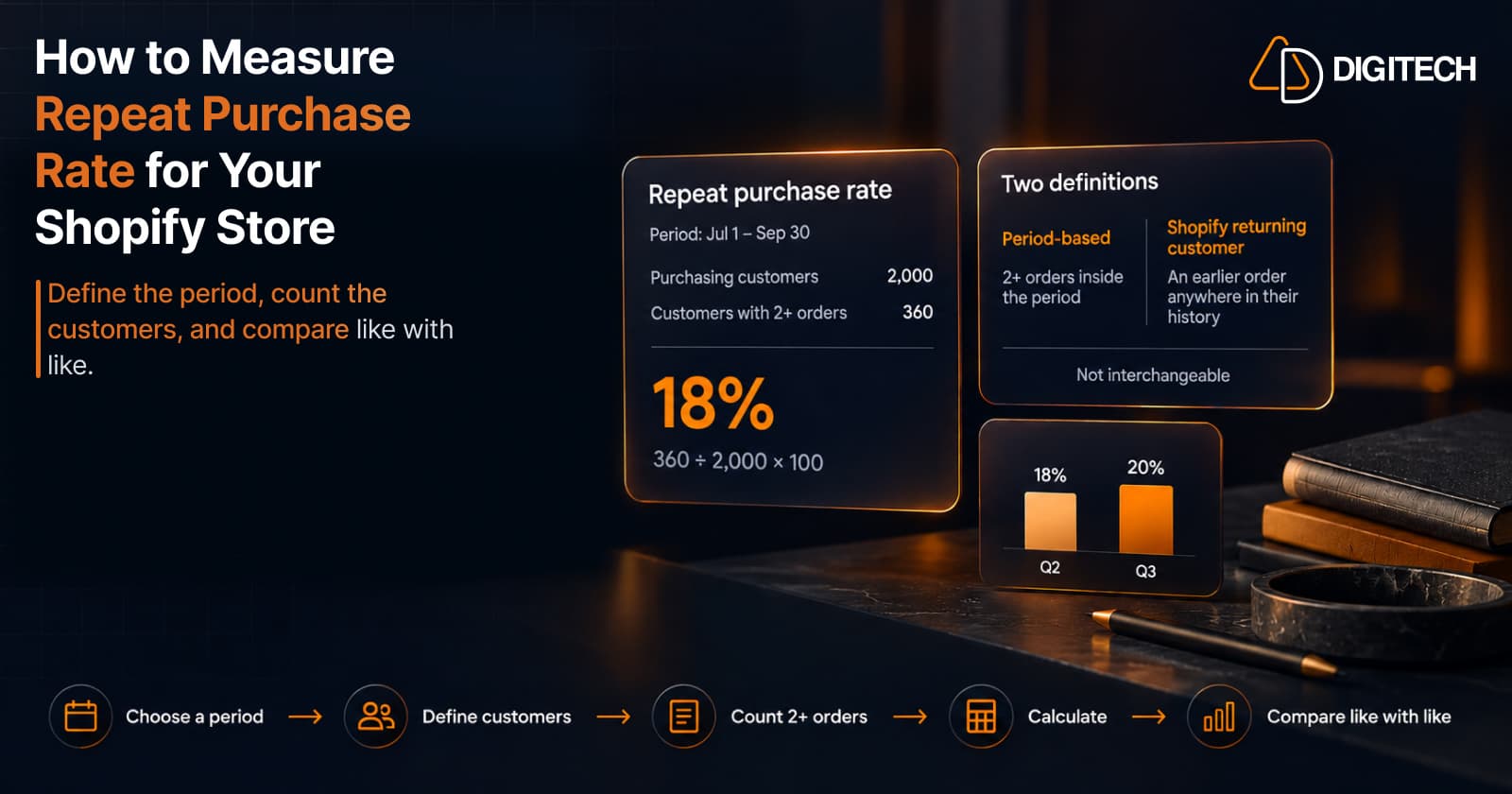
How to Measure Repeat Purchase Rate for Your Shopify Store
Learn how to calculate repeat purchase rate for a Shopify store, choose the right period and customer population, read the result carefully, and track the related retention metrics.
Read article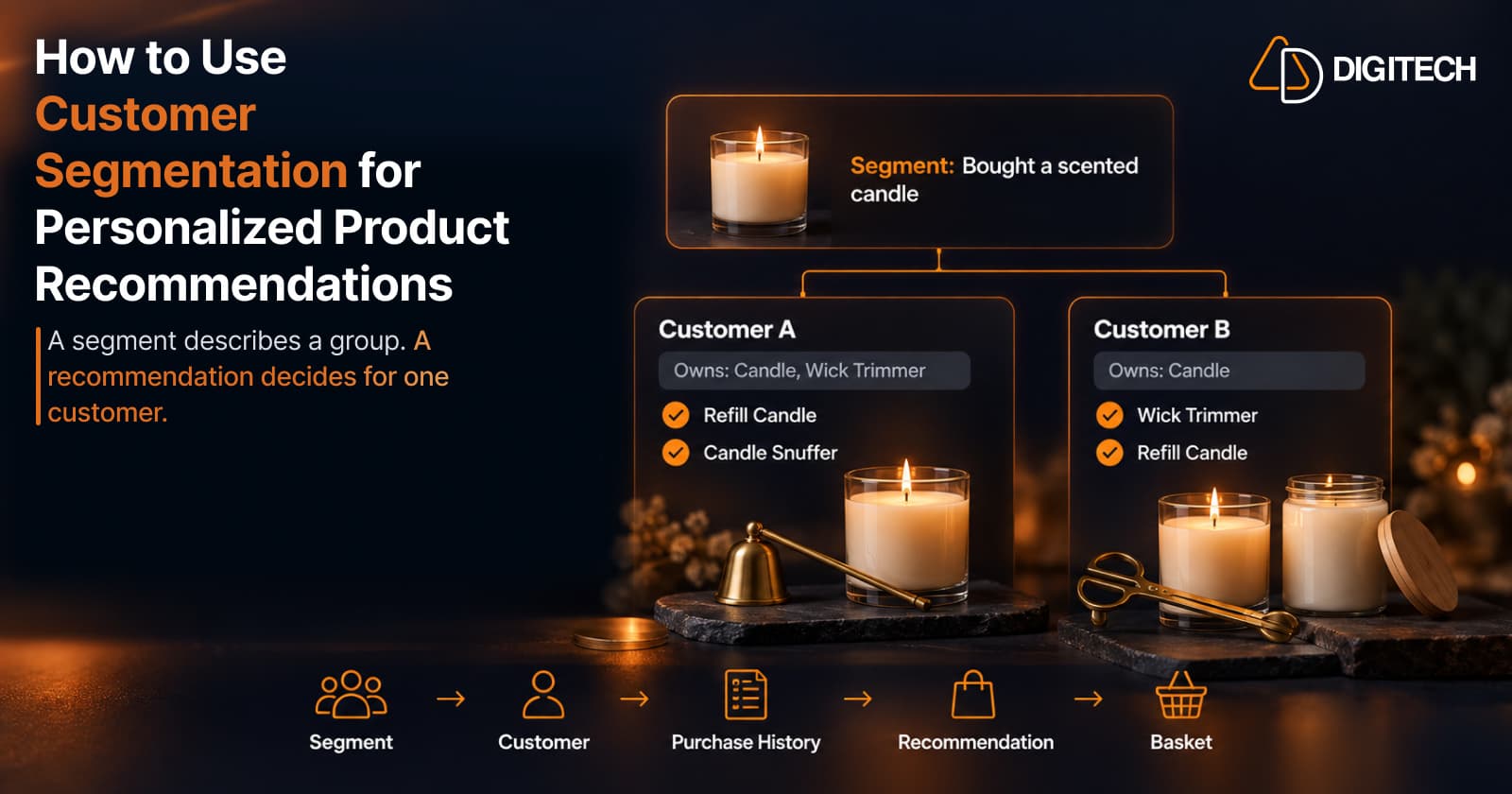
How to Use Customer Segmentation for Personalized Product Recommendations on Shopify
Learn how to use Shopify customer segments to make product recommendations more relevant, and how to turn a segment-level insight into a recommendation for one customer.
Read article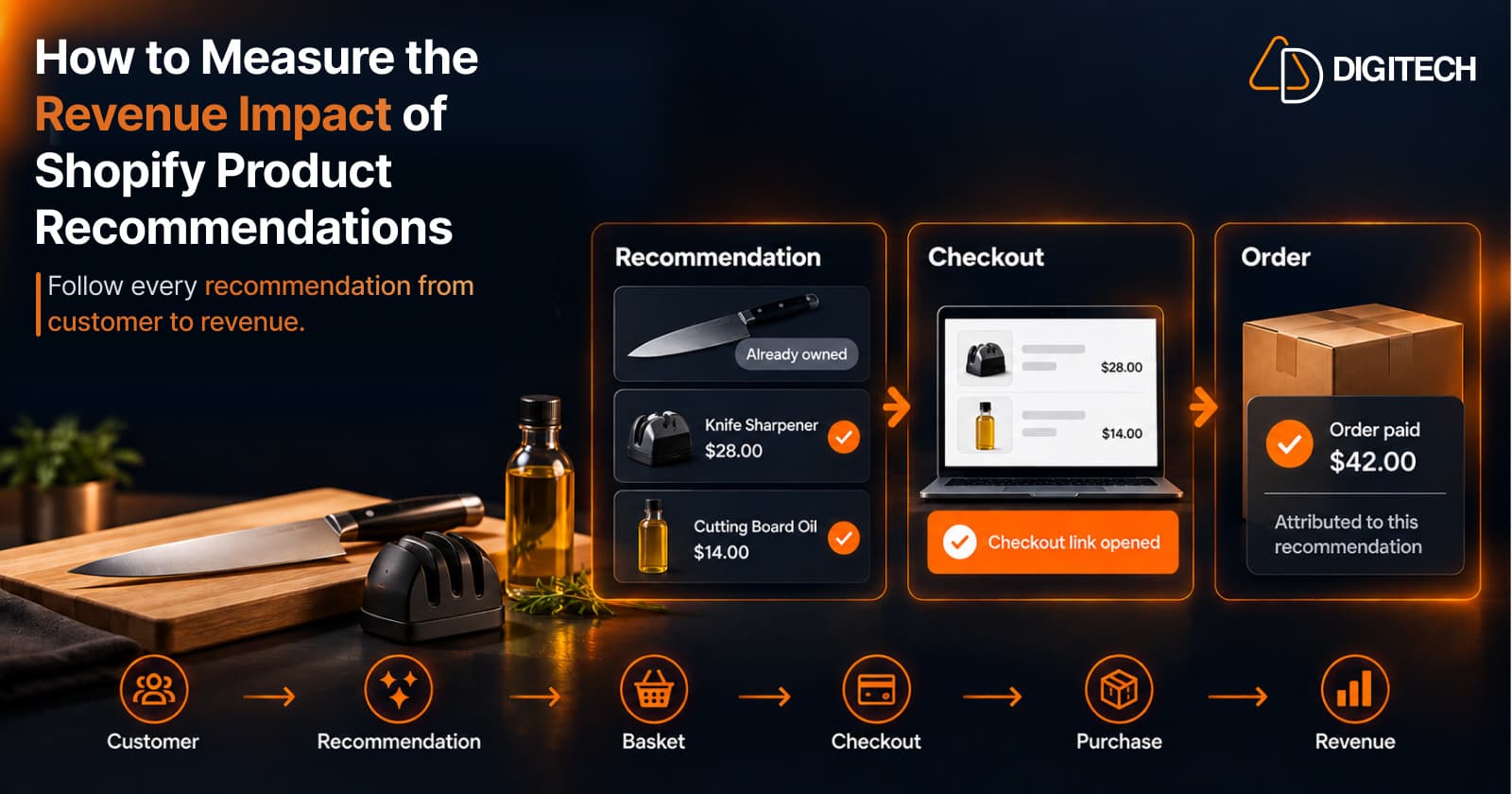
How to Measure the Revenue Impact of Shopify Product Recommendations
Learn how Shopify merchants can measure product recommendation performance, track checkout activity, attribute revenue, and improve personalized recommendations.
Read article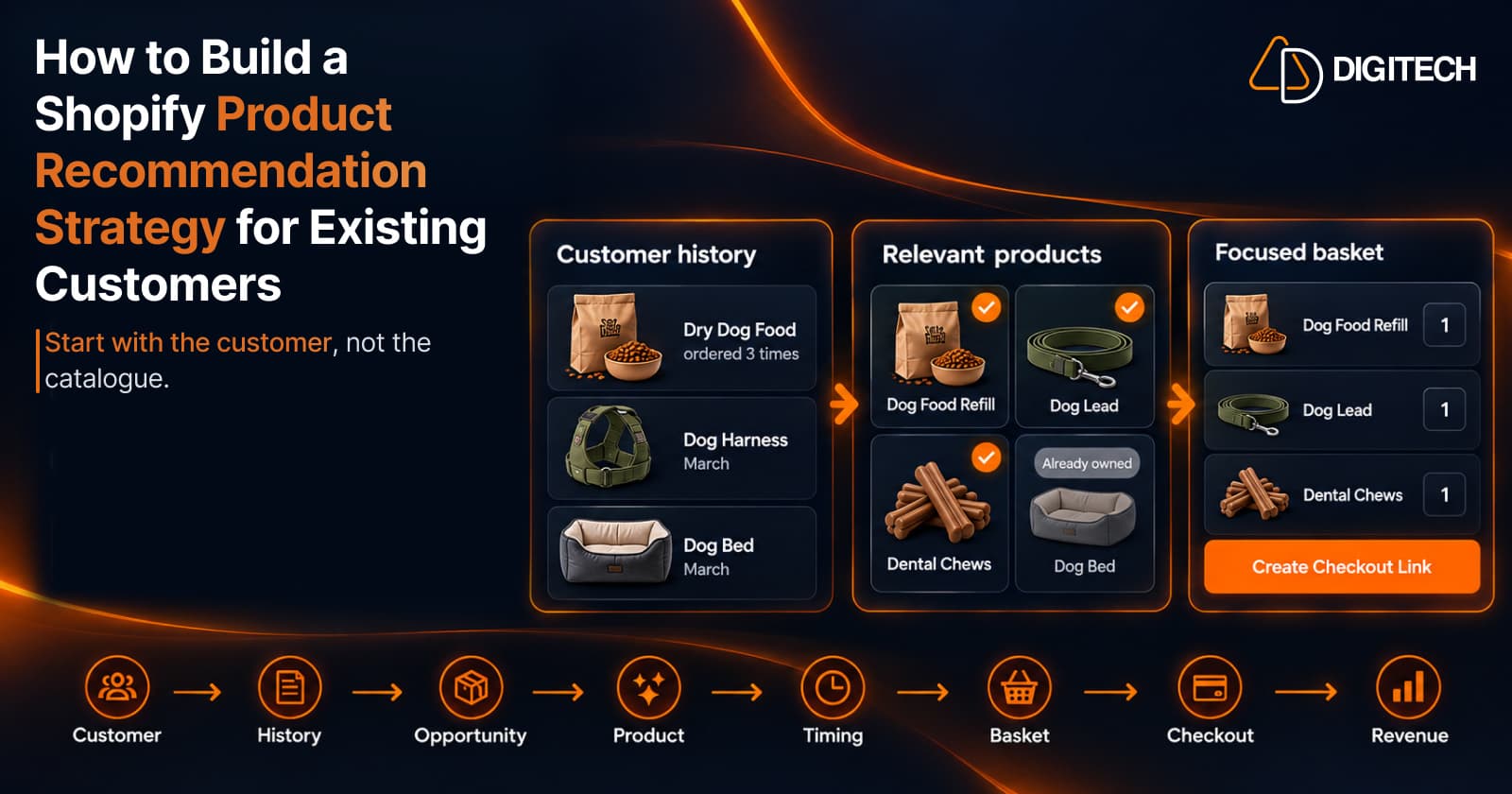
How to Build a Shopify Product Recommendation Strategy for Existing Customers
Learn how to build a Shopify product recommendation strategy using customer history, product relationships, timing, and personalized recommendations.
Read article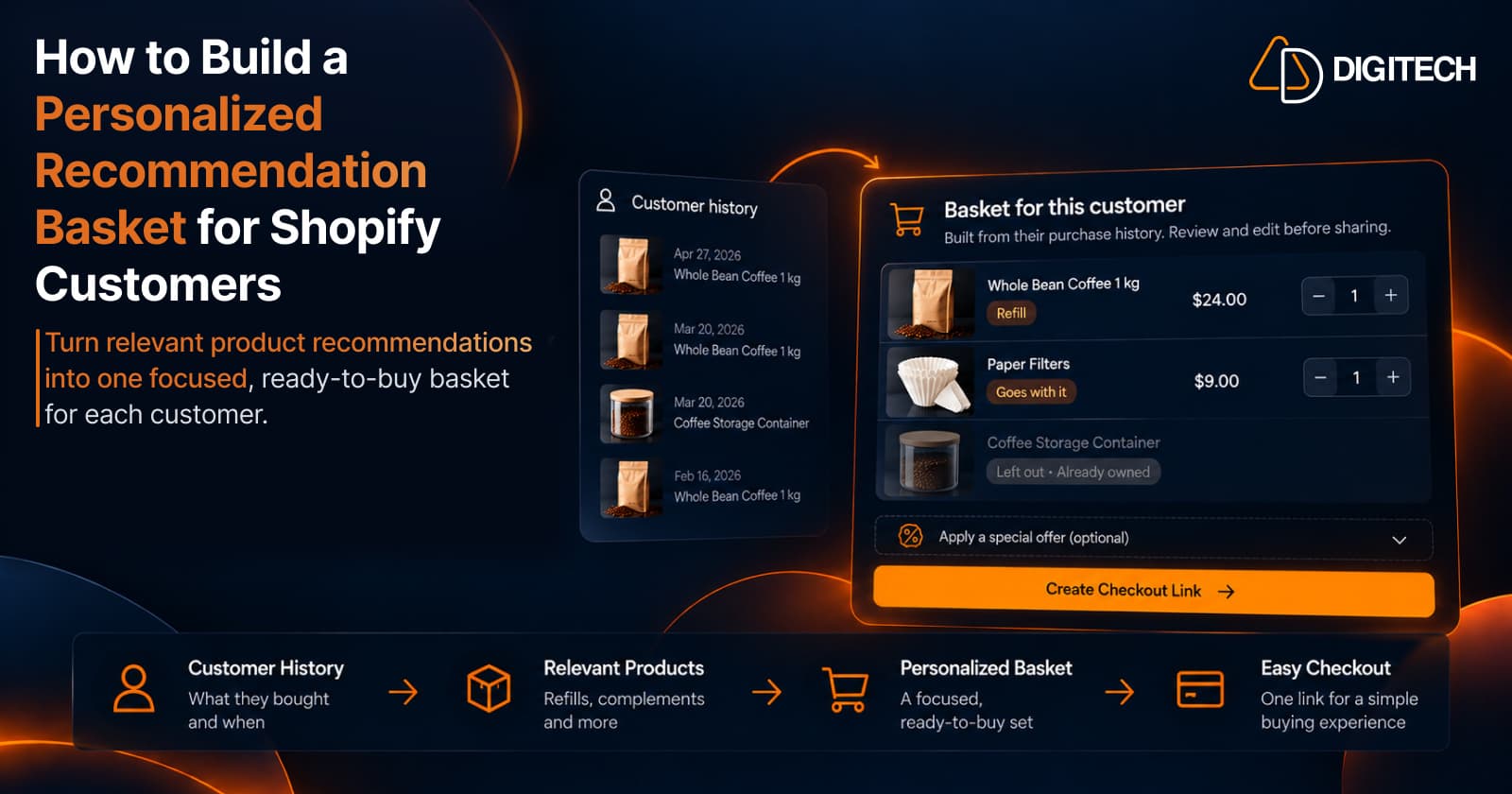
How to Build a Personalized Recommendation Basket for Shopify Customers
Learn how Shopify merchants can build personalized recommendation baskets using customer history, product relationships, timing, and product fit.
Read article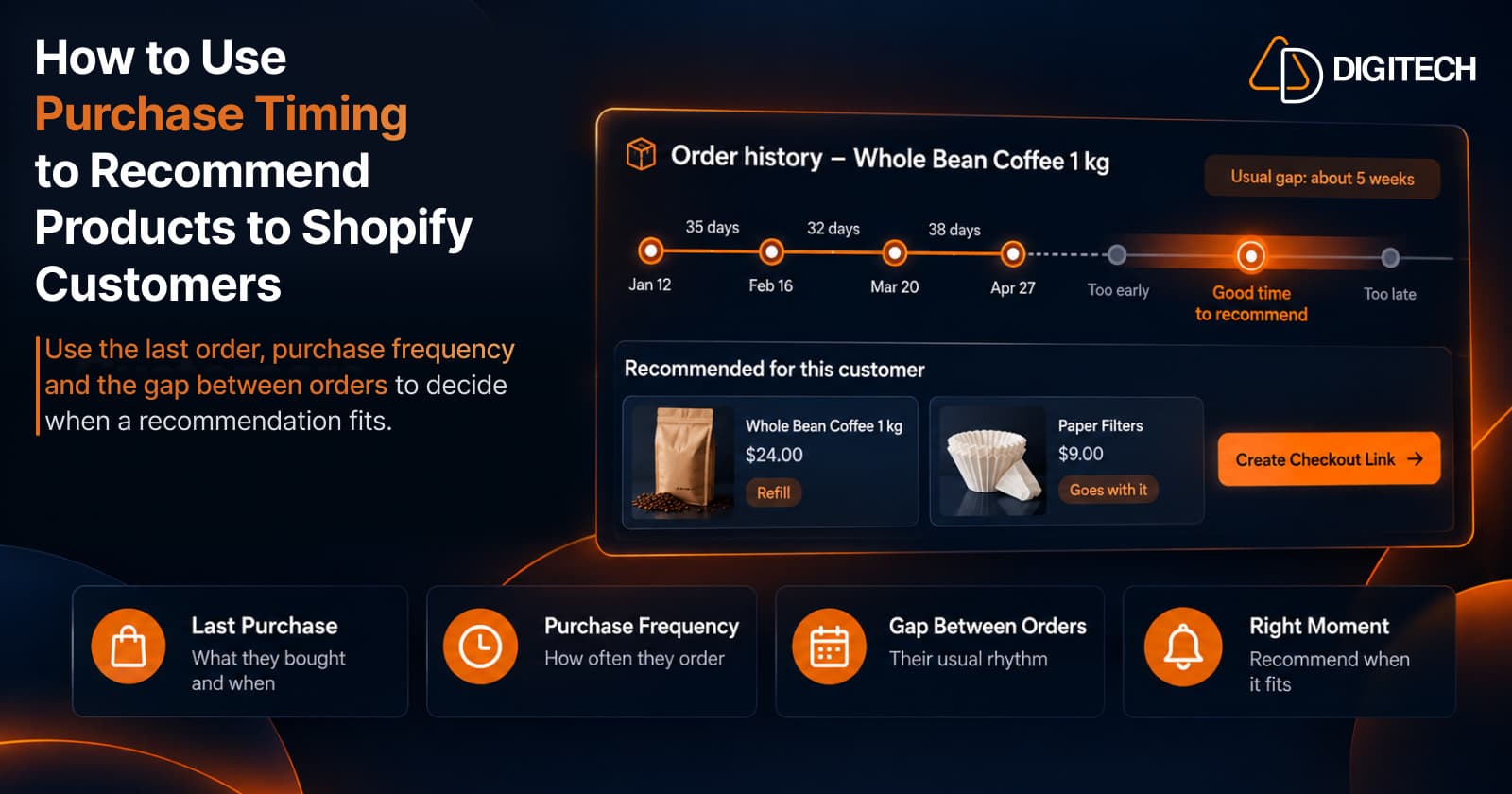
How to Use Purchase Timing to Recommend Products to Shopify Customers
Learn how Shopify merchants can use purchase timing, purchase frequency, recency, and customer history to make product recommendations more relevant.
Read article