How to Measure Repeat Purchase Rate for Your Shopify Store
Learn how to calculate repeat purchase rate for a Shopify store, choose the right period and customer population, read the result carefully, and track the related retention metrics.
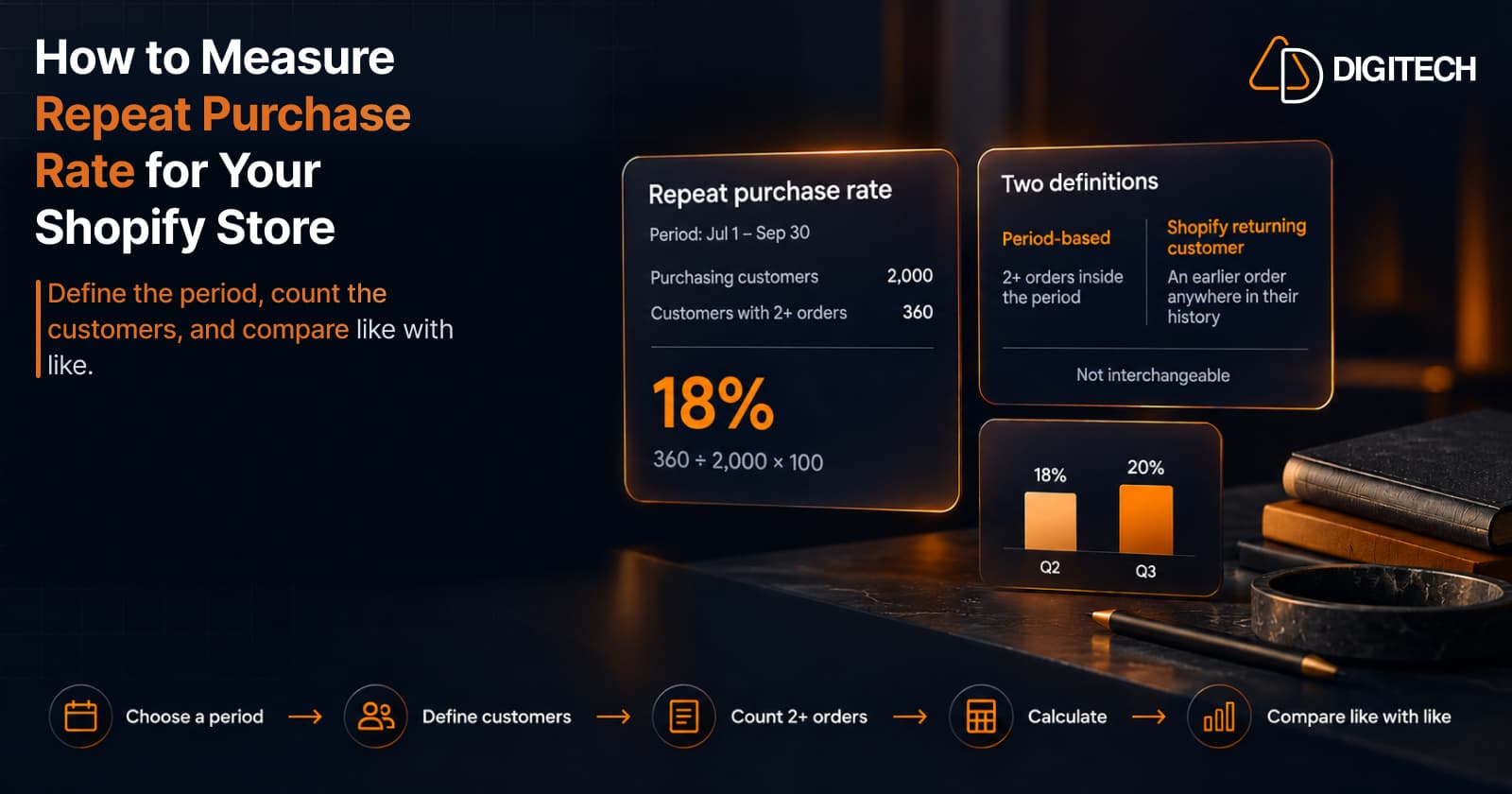
Most Shopify stores can tell you how many orders they took last month. Fewer can tell you how many of those customers had bought before, or will buy again. That difference matters: a store that depends entirely on new customers has to keep paying to find them.
Repeat purchase rate is one of the simplest ways to see whether customers come back. It's useful, but it's only one part of the retention picture. This guide covers how to measure repeat purchase rate for a Shopify store, how to define it so the number means something, and how to read it without over-reading it.
What Is Repeat Purchase Rate?
Repeat purchase rate is the share of customers who bought more than once within a defined period.
Two choices decide what the number means:
- The period. A quarter, a year, the last 12 months. A customer who reorders every two months will show up as a repeat customer in a year but perhaps not in a single month.
- The customer population. All customers who purchased in the period? Only customers whose first order fell in it? Including or excluding wholesale and test orders?
It's easy to confuse with related measures:
| Measure | What it answers |
|---|---|
| Repeat purchase rate | What share of customers bought more than once in this period? |
| Customer retention rate | Of a group of customers, how many came back in later periods? |
| Repeat order count | How many orders came from customers who had ordered before? |
| Repeat purchase frequency | How many times, on average, do returning customers buy? |
They're related, but they answer different questions.
How to Calculate Repeat Purchase Rate
A common definition is period-based:
Period-based Repeat Purchase Rate = (Customers with more than one purchase during the defined period ÷ Eligible purchasing customers during that same period) × 100
- The numerator counts customers, not orders: eligible customers who placed two or more orders inside the period. A customer with five orders counts once.
- The denominator counts every eligible customer who bought at least once in the period, including those who bought only once.
- The reporting window is the same for both: orders before or after it don't count.
- Eligibility is your rule for who's included, for example retail customers with at least one paid order, excluding test and wholesale orders.
Illustrative example. A store chooses the period July 1 to September 30 and includes all retail customers who placed at least one paid order.
- 2,000 customers purchased in the period.
- 360 of them placed two or more orders in the period.
- 360 ÷ 2,000 = 0.18.
- 0.18 × 100 = 18%.
Shopify's Definition of a Returning Customer
Shopify's customer reports use a different idea. Shopify defines a returning customer as "a customer who placed an order, and whose order history already includes at least one order", and says the data in customer reports "is based on the entire order history of the new customers in the report, not only the orders that were placed during the selected timeframe."
That produces a different measurement from the period-based rate:
- Period-based rate: did the customer buy twice or more inside the period?
- Shopify's returning customer: did the customer order in the period with at least one earlier order anywhere in their history?
Illustrative example. A customer first bought last year and placed one order this quarter. Shopify counts them as a returning customer. The period-based formula doesn't count them as a repeat purchaser for this quarter, because they bought only once in it.
Neither measurement is wrong, and they aren't interchangeable. Some tools also define the population by first order date. Write down which definition you use and keep it the same.
How to Measure Repeat Purchase Rate for a Shopify Store
- Choose a reporting period that fits how often your products are bought. Consumables may suit a quarter; furniture may need a year or more.
- Define which customers are included: retail only, all channels, excluding test and wholesale orders, or not.
- Identify customers with more than one purchase in that period.
- Calculate the rate using the formula above.
- Record the result and compare it with comparable periods: the same length, and ideally the same season.
Depending on your plan and setup, Shopify customer reports can help. They include Returning customers (also useful for identifying high-value customers), One-time customers, New vs returning customers (first-time and returning customers for a period) and Customer cohort analysis, which groups customers by first order date and can show customer retention rate by week, month or quarter. None of these reports is labelled as the period-based formula above, so treat them as inputs, not a ready-made answer. You can also export customer and order data, or use an analytics tool. Whichever you use, check how it defines a returning customer before comparing its number with your own.
Example: Reading a Repeat Purchase Rate Report
Illustrative example, not a benchmark. A fictional homewares store measures two quarters with the same definition:
| Q2 | Q3 | |
|---|---|---|
| Purchasing customers | 2,000 | 2,400 |
| Customers with 2+ orders | 360 | 480 |
| Repeat purchase rate | 18% | 20% |
The rate rose two points. That could mean customers came back more often. It could also mean:
- The mix changed. If Q3 brought more customers who buy consumables, the rate would rise without anything else improving.
- Timing shifted. A September sale may have pulled orders forward from Q4.
- Seasonality. Q3 may naturally include more gifting or restocking.
The number tells you what changed, not why. To learn why, look at which customers drove the change and compare with the same quarter last year.
Five Mistakes That Can Distort Your Measurement
- Changing the reporting window between comparisons. A 30-day rate and a 90-day rate aren't comparable. Fix the window and keep it.
- Mixing incompatible customer populations. Including wholesale in one period and not the next makes the trend meaningless. Write the inclusion rules down.
- Comparing stores with very different repurchase cycles. A coffee store and a mattress store shouldn't share a target. Compare your store with itself.
- Treating the rate as proof of satisfaction. Customers may return because there's no alternative, or because of a discount. Pair it with reviews, returns and support data.
- Assuming a higher rate means higher profit. Customers can come back with smaller or heavily discounted orders. Check order value and margin alongside it.
Related Metrics Worth Tracking
Each answers a different question:
- Repeat purchase rate: what share of customers bought more than once in a period?
- Customer retention rate: of a defined group, how many returned in later periods? Shopify's Customer cohort analysis can show this by first-order cohort.
- Time between purchases: how long customers wait before ordering again. Useful for knowing when a return is realistic; reading the gap between orders shows how to work it out per customer.
- Average order value: how much each order is worth, for new and returning customers separately.
- Customer lifetime value: what a customer is worth over their relationship with you. Estimates vary with the method, so state yours.
- Repeat-customer revenue share: how much of your revenue comes from customers who have ordered before.
None of these can stand in for another. A store can have a rising repeat rate and falling repeat-customer revenue at the same time.
How to Use the Results
Use the rate to point you at the right question, not to give the answer:
- If few customers return, look at the customer experience, product fit and how often the product is naturally needed. Some categories simply aren't bought often.
- If customers return but spend less, examine order value and product mix among returning customers.
- If the time between purchases is growing, check whether the category has a long or changing usage cycle before assuming something went wrong.
- If a campaign coincides with a change, compare appropriate cohorts or periods, such as customers who saw it against similar customers who didn't, before crediting the campaign.
For ways to act on what you find, how to increase repeat purchases from existing customers covers the strategy side.
How Curivo Fits Into the Broader Picture
Repeat purchase rate measures an outcome across the whole store. It doesn't tell you which follow-up, offer or recommendation led a customer back.
Curivo works at a different level. It helps merchants build personalized recommendations for individual existing customers and, where supported, tracks the activity and revenue attributed to each recommendation. That gives you a recommendation-level view to read alongside your store-level repeat rate, as covered in measuring the revenue impact of product recommendations. One doesn't replace the other.
Conclusion
Repeat purchase rate is simple to calculate and easy to misread. Define the period and the customers, write the definition down, and compare like with like. Then read it next to retention, time between purchases, order value and revenue share. Measured this way, it becomes a reliable signal of whether customers come back, and a starting point for asking why.
Frequently asked questions
How do I calculate repeat purchase rate?
Divide the number of customers who made more than one purchase in your chosen period by the number of eligible customers who purchased in that period, then multiply by 100. Write down how you define the period and the customers, and keep that definition the same for every comparison.
Is repeat purchase rate the same as customer retention rate?
No. Repeat purchase rate looks at how many customers bought more than once in a period. Customer retention rate usually follows a group of customers over time and asks how many came back in later periods.
Does Shopify show repeat purchase rate?
Shopify's customer reports include Returning customers, One-time customers, New vs returning customers and Customer cohort analysis, which can show customer retention rate. Shopify says its customer report data is based on the entire order history, not only orders in the selected timeframe, so a Shopify returning customer isn't the same as a customer with two orders in your period. Check the definition before comparing it with your own calculation.
What is a good repeat purchase rate?
There isn't one number that fits every store. It depends on what you sell and how often customers naturally need it. Compare your store with itself over comparable periods rather than with a general benchmark.
Does a higher repeat purchase rate mean higher profit?
Not necessarily. Customers can return with smaller orders, or because of discounts that cost margin. Read the rate alongside order value and revenue from returning customers.
Turn Customer History Into Your Next Sale
See how Curivo helps Shopify merchants turn customer purchase history into personalized recommendations, ready-to-buy baskets, and measurable revenue.
Related reading
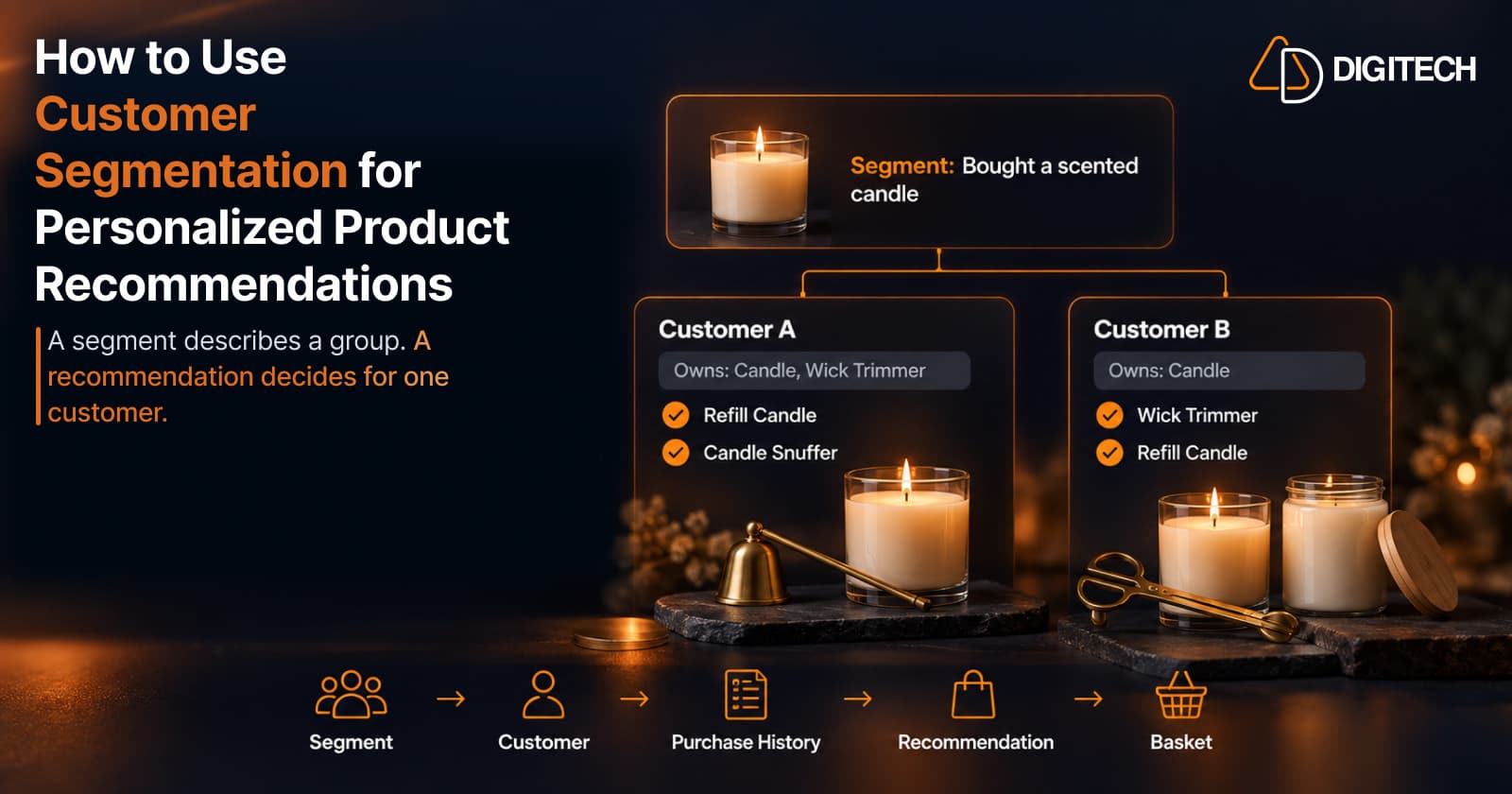
How to Use Customer Segmentation for Personalized Product Recommendations on Shopify
Learn how to use Shopify customer segments to make product recommendations more relevant, and how to turn a segment-level insight into a recommendation for one customer.
Read article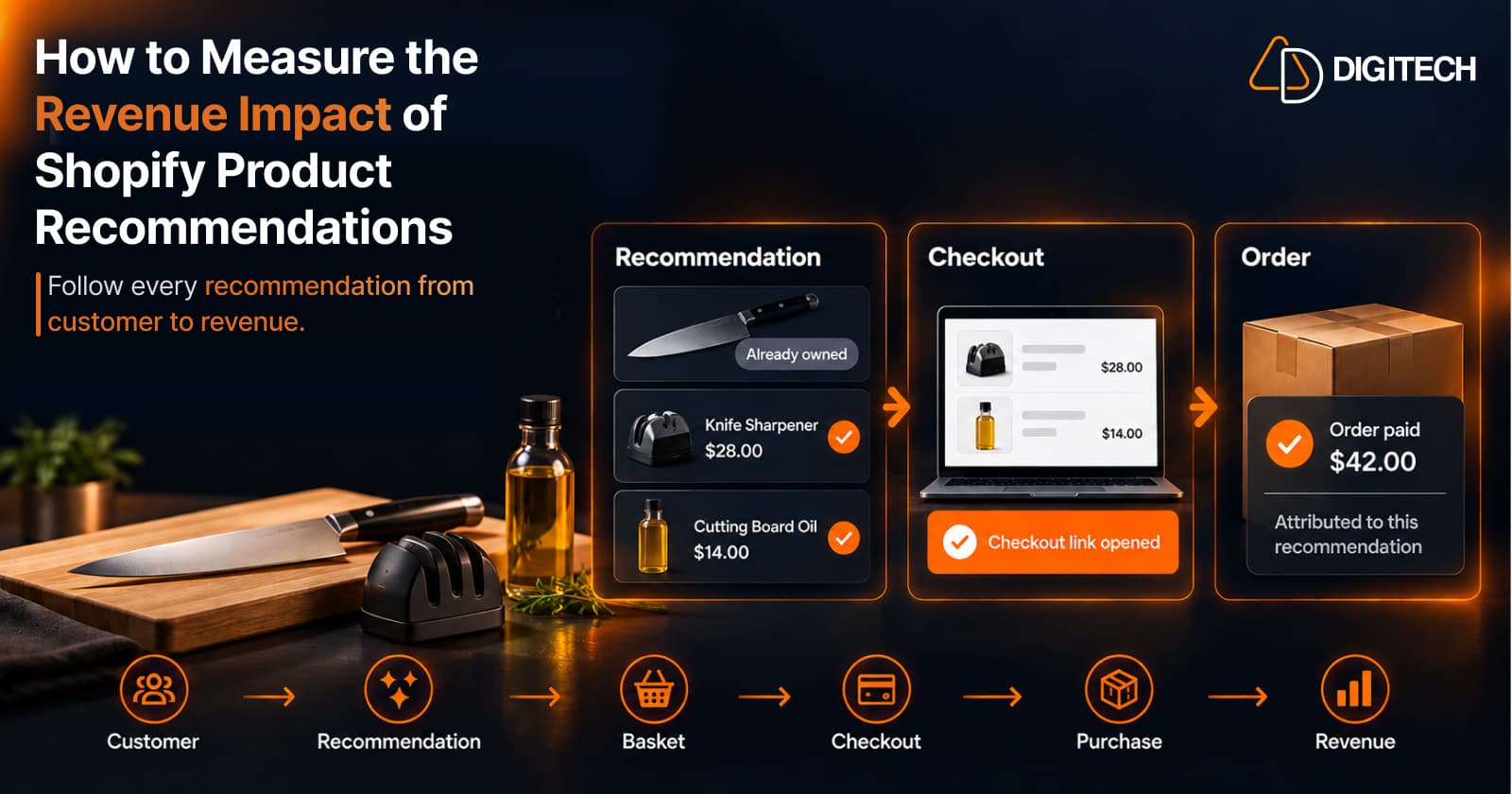
How to Measure the Revenue Impact of Shopify Product Recommendations
Learn how Shopify merchants can measure product recommendation performance, track checkout activity, attribute revenue, and improve personalized recommendations.
Read article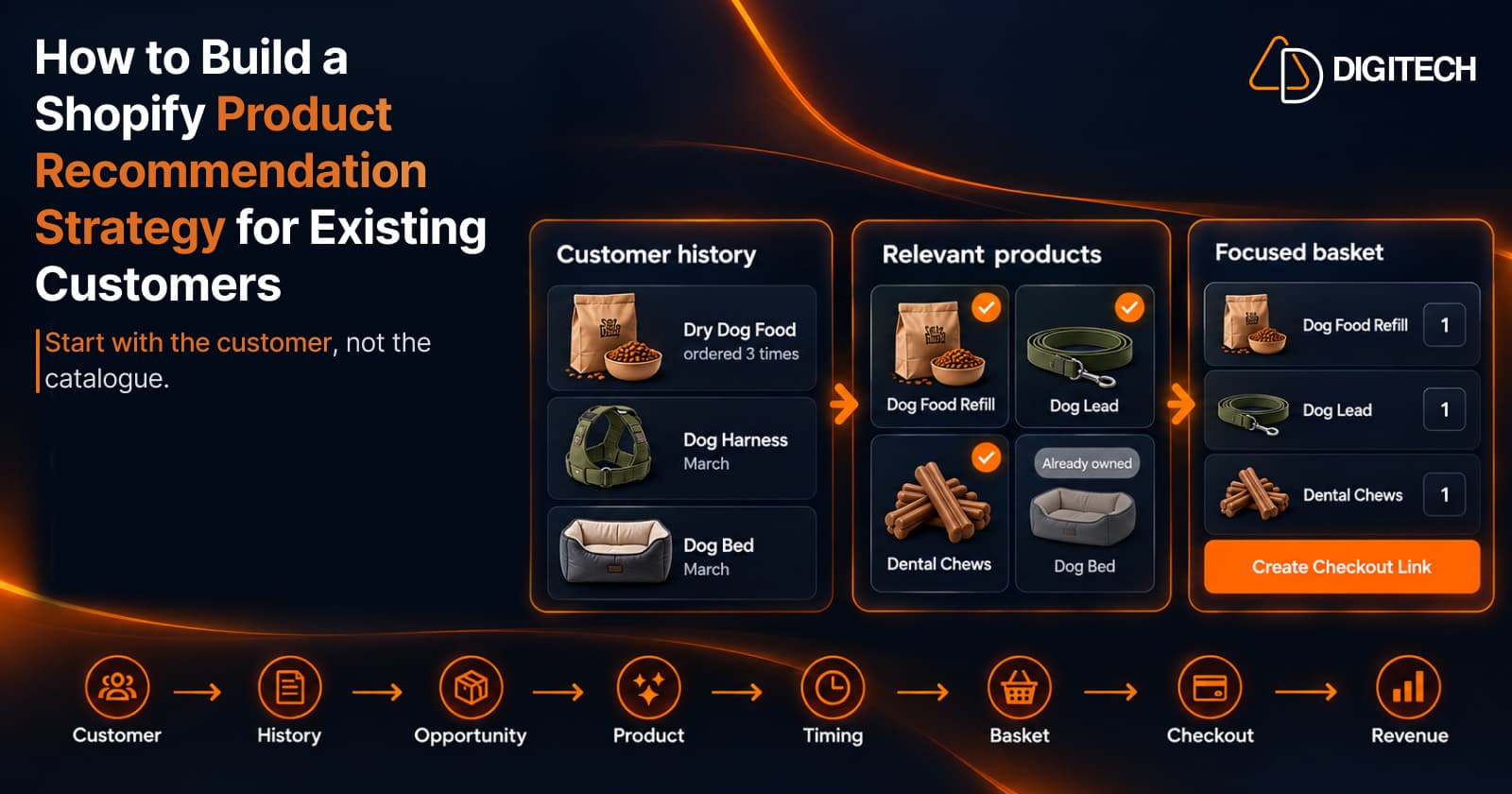
How to Build a Shopify Product Recommendation Strategy for Existing Customers
Learn how to build a Shopify product recommendation strategy using customer history, product relationships, timing, and personalized recommendations.
Read article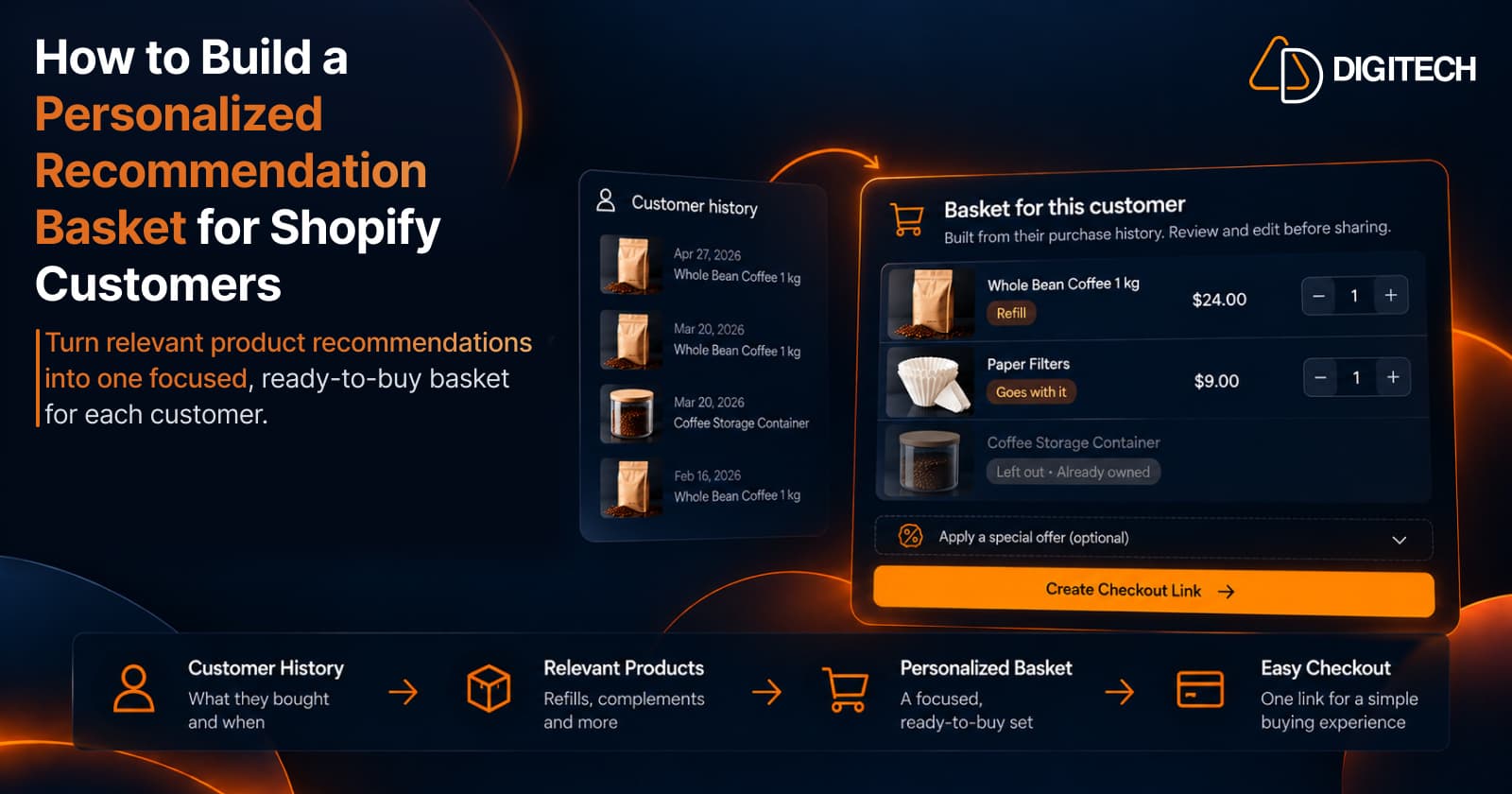
How to Build a Personalized Recommendation Basket for Shopify Customers
Learn how Shopify merchants can build personalized recommendation baskets using customer history, product relationships, timing, and product fit.
Read article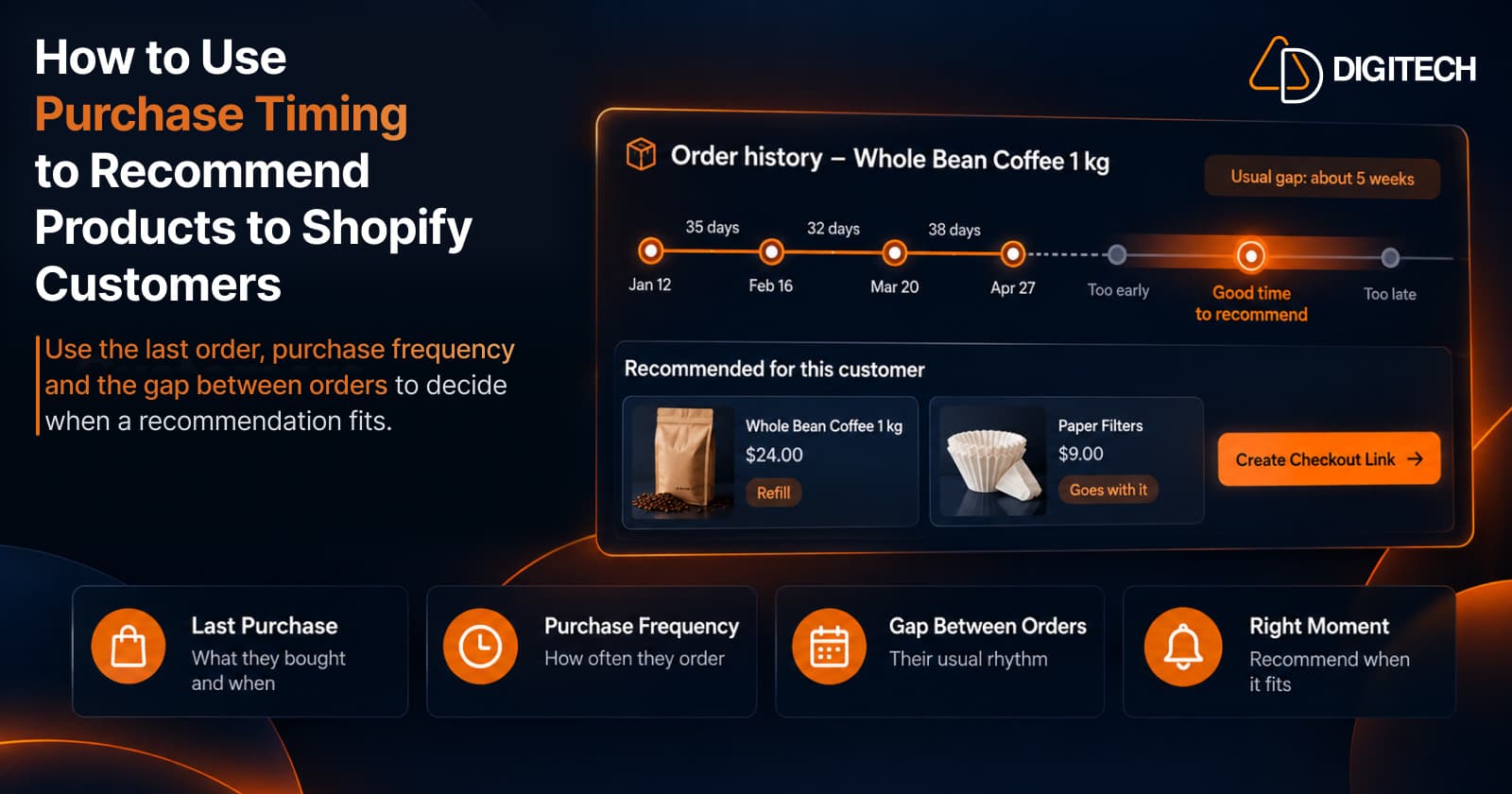
How to Use Purchase Timing to Recommend Products to Shopify Customers
Learn how Shopify merchants can use purchase timing, purchase frequency, recency, and customer history to make product recommendations more relevant.
Read article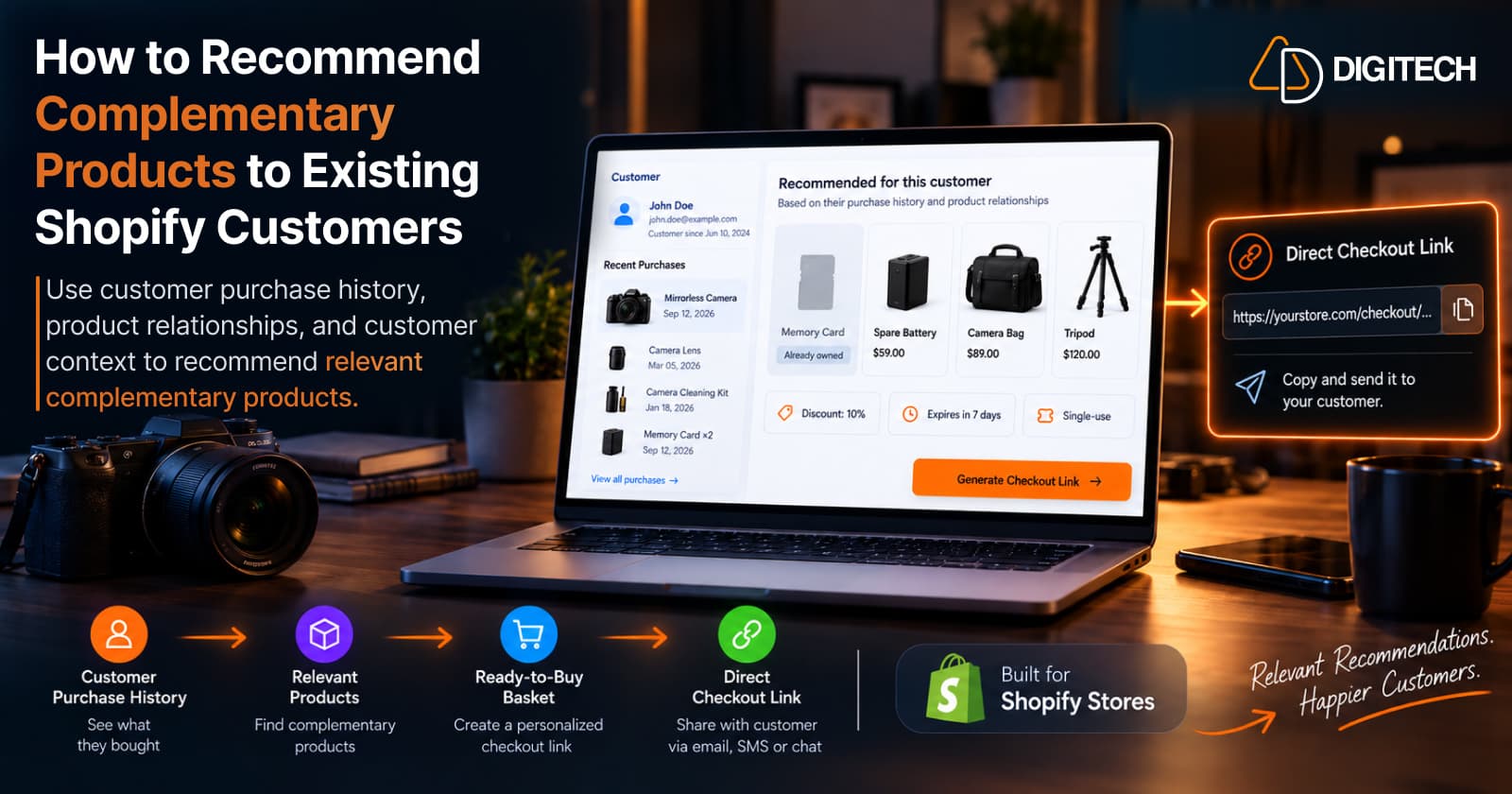
How to Recommend Complementary Products to Existing Shopify Customers
Learn how to recommend complementary products to existing Shopify customers using purchase history, product relationships, timing, and customer context.
Read article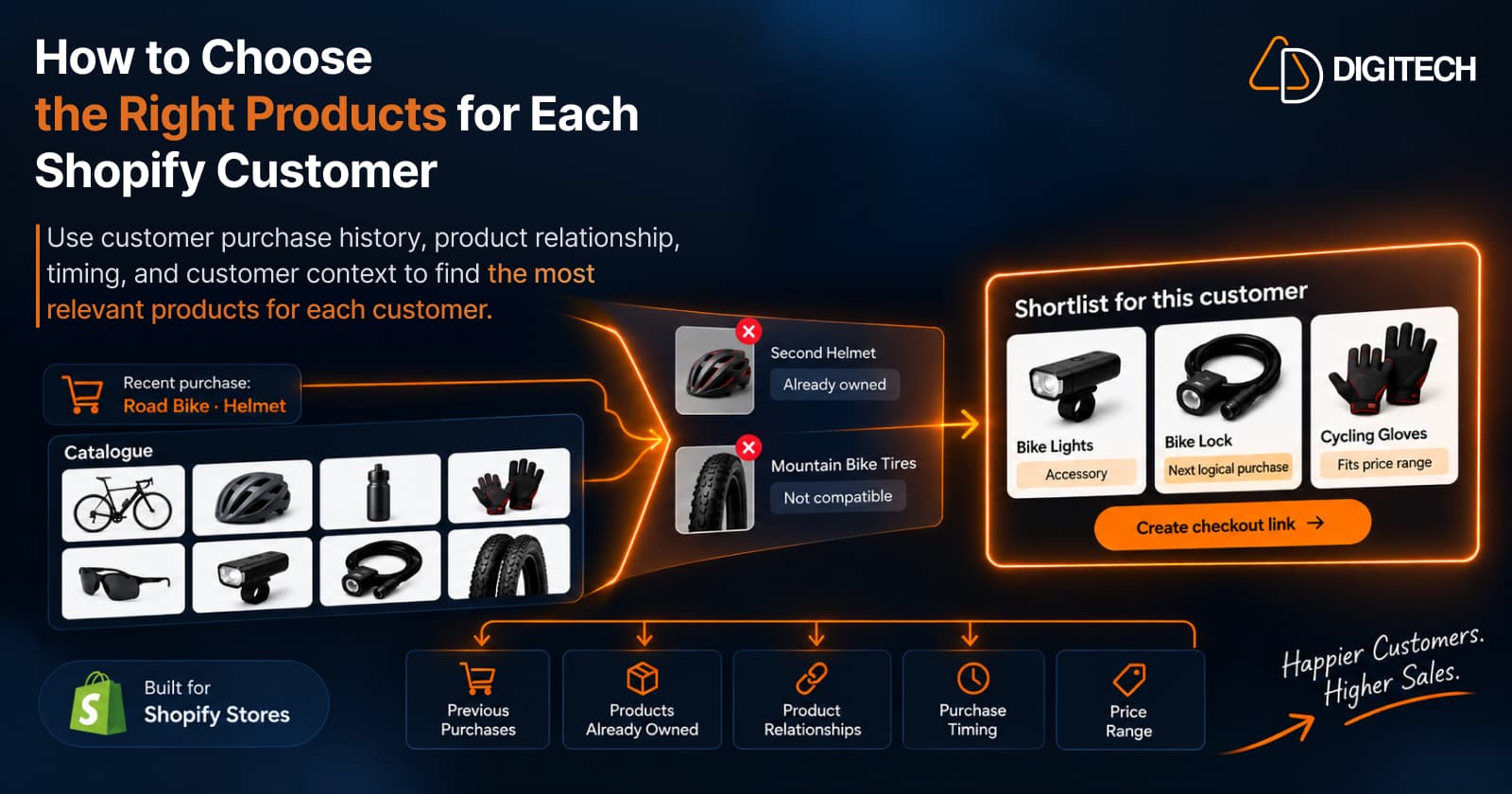
How to Choose the Right Products for Each Shopify Customer
Learn how Shopify merchants can choose more relevant products for each customer using purchase history, product relationships, timing, and customer context.
Read article
How to Identify High-Value Shopify Customers for Personalized Recommendations
How to identify high-value Shopify customers and real recommendation opportunities using purchase history, customer value, recency, and product relationships.
Read article
How to Create Personalized Product Bundles for Shopify Customers
Learn how to create personalized Shopify product bundles using customer purchase history, product relationships, and relevant next-product recommendations.
Read article