How to Use Customer Segmentation for Personalized Product Recommendations on Shopify
Learn how to use Shopify customer segments to make product recommendations more relevant, and how to turn a segment-level insight into a recommendation for one customer.
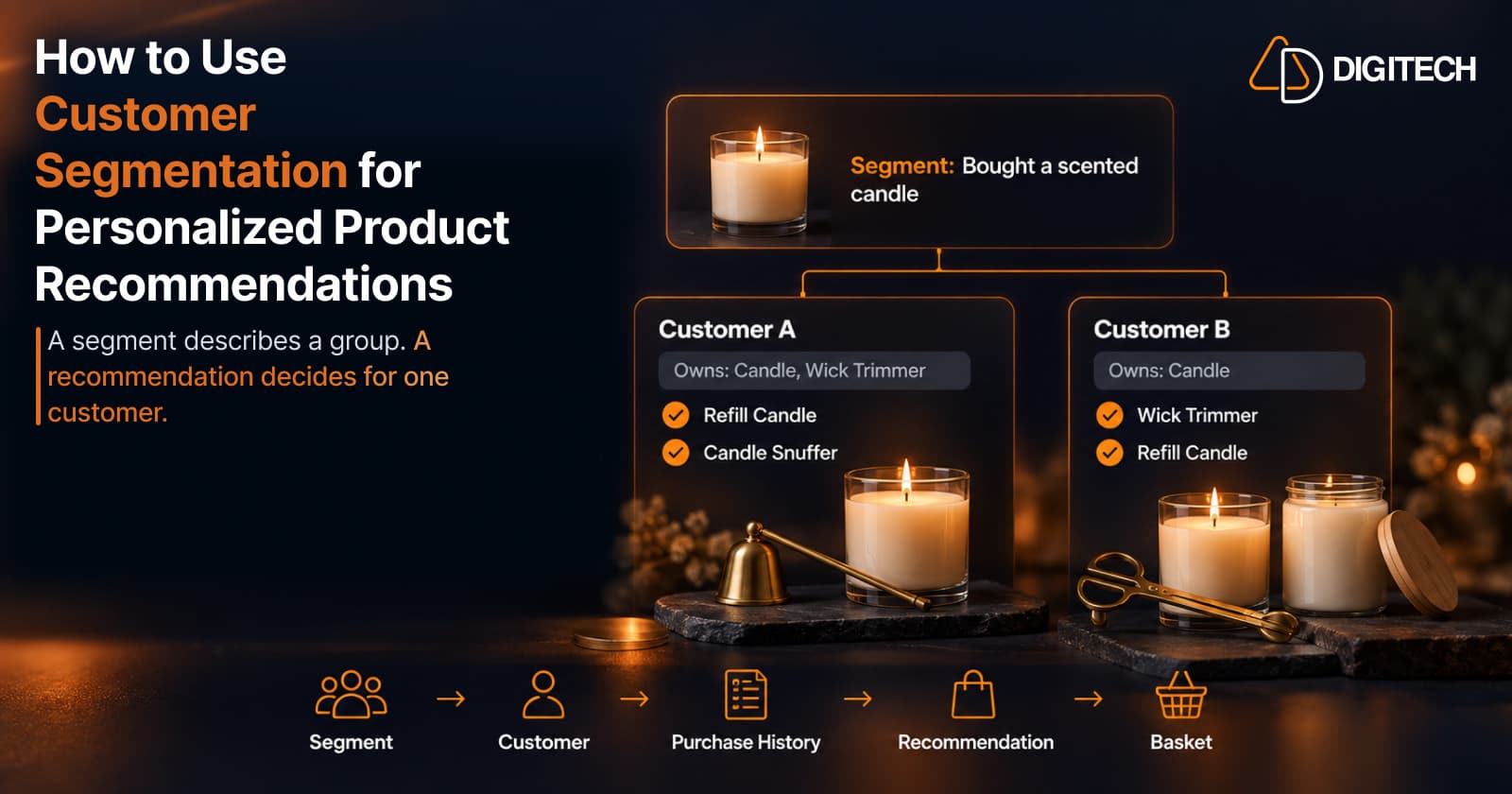
Customer segmentation is one of the most useful tools a Shopify merchant has for making recommendations more relevant. It turns "all customers" into groups you can reason about: new buyers, repeat buyers, people who bought from one category.
But a segment is still a group. It tells you something about many customers at once. A personalized recommendation has to answer a narrower question: what should this customer buy next?
This guide covers how to use customer segments to make product recommendations more relevant, which segments are worth starting with, and how to turn a segment-level insight into a recommendation for one person.
What Is Customer Segmentation?
Customer segmentation is grouping customers who share characteristics. In Shopify, segments are built from filters such as how many orders a customer has placed, how much they've spent, when they last ordered and which products they bought.
Shopify describes segments as "dynamic, rule-based customer lists." Customers are added to or removed from a segment automatically as they start or stop meeting its criteria.
Useful filters for recommendation work include:
- Products purchased: customers who bought a specific product, or products with a specific tag, optionally within a date range. You can include or exclude buyers, so you can find customers who bought one product but not another.
- Number of orders and amount spent: how often and how much a customer has bought.
- First and last order date: when the relationship started and when it was last active.
- RFM group: Shopify's recency, frequency and monetary groups, such as Champions, Loyal, At risk and Dormant.
- Predicted spend tier: High, Medium or Low, available once a store has made more than 100 sales.
Why Segmentation Makes Product Recommendations More Relevant
Recommending the same products to every customer ignores what you already know about them. Segmentation is the first step away from that.
- It narrows the problem. "What should customers who bought from our camping range buy next?" is easier to answer than "what should everyone buy?"
- It surfaces patterns. A segment can show what customers like these tend to need after a first purchase.
- It helps prioritize. You can't review every customer by hand. A segment tells you where to start.
- It keeps recommendations grounded in data, rather than in what you happen to want to sell.
Segmentation doesn't decide the recommendation for you. It gives you a better-defined group to decide for.
Customer Segmentation vs. Personalized Recommendations
This is the distinction that matters most.
A segment describes a group. "Customers who bought running shoes" is a segment. Everyone in it shares one fact.
A personalized recommendation decides for one person. "Customer A bought running shoes three months ago and already owns running socks, so recommend a recovery product and a pair of replacement insoles" is a personalized recommendation.
Two customers in the same segment can need very different things:
- One bought running shoes as a beginner and needs the basics.
- Another is on their fourth pair and owns every accessory you sell.
A recommendation made to the segment as a whole would fit neither of them well.
| Customer segment | Personalized recommendation | |
|---|---|---|
| Describes | A group of customers | One customer |
| Based on | A shared characteristic | That customer's purchase history and context |
| Answers | Who should I look at? | What should this person buy next? |
| Example | Customers who bought running shoes | Customer A: recovery product and insoles, not socks they already own |
Segmentation tells you where to look. Personalization decides what to recommend once you're looking at one customer.
6 Shopify Customer Segments You Can Use for Better Recommendations
You don't need all six. Start with the ones your own customer data supports.
1. New Customers
Who: customers with one order, often filtered by a recent first order date. What you learn: what brought them to the store. Recommendation that may fit: a product that complements the first purchase, or the natural next step in the same category. Caveat: one order is thin evidence. Don't assume the first purchase defines their taste.
2. Repeat Customers
Who: customers with two or more orders. What you learn: what they come back for, and how often. Recommendation that may fit: a replenishment of what they reorder, or a related product they haven't tried. Caveat: repeat buyers can be loyal to one product. Don't push them away from what works for them. How to increase repeat purchases covers this group in depth.
3. High-Value Customers
Who: customers with a high amount spent, or in RFM groups such as Champions or Loyal. What you learn: who has trusted the store most. Recommendation that may fit: a carefully chosen next product, reviewed before it's sent. Caveat: customer value isn't the same as recommendation opportunity. A big spender may have already bought everything relevant. How to identify high-value customers explains the difference.
4. Customers Who Bought a Specific Product or Category
Who: customers who bought a specific product, or any product with a specific product tag. What you learn: what they own, which is the most direct signal for a recommendation. Recommendation that may fit: complements, accessories, refills or care products for that purchase. Caveat: a purchase isn't always for the buyer. Gifts and returns can make it misleading.
5. Customers Who Haven't Purchased Recently
Who: customers whose last order was some time ago, or in RFM groups such as At risk or Dormant. What you learn: who has gone quiet. Recommendation that may fit: a replenishment if their past orders suggest one is due, or something new in a category they bought from. Caveat: some customers simply finished their need. A recommendation won't bring back someone who has moved on. Timing matters here, as covered in using purchase timing.
6. Customers Interested in a Particular Category
Who: customers who bought products tagged with a category, or who carry a customer tag you set. What you learn: a broader interest, beyond one product. Recommendation that may fit: a product from the same category they don't own yet. Caveat: interest here is inferred from purchases or tags you maintain. Keep the tags accurate, or the segment drifts.
How to Turn a Customer Segment Into an Individual Recommendation
A segment is the starting point. The recommendation comes from working through one customer:
Segment → Customer → Purchase History → Product Relationship → Recommendation → Basket
- Start with a segment that matches a question you want to answer, such as customers who bought running shoes in the last six months.
- Pick one customer from it.
- Read their purchase history: what they bought, when, and how often.
- Find the product relationship: what goes with what they own, what they'll run out of, what comes next.
- Decide the recommendation, leaving out anything they already own.
- Build a basket of a few relevant products they can buy in one step.
Repeat for the next customer. The segment stays the same; the recommendation changes with each person. How to choose the right products for each customer covers step 5 in detail.
How Purchase History Improves Segmented Recommendations
Purchase history is what turns a segment into an individual decision. Within one segment, it shows:
- What each customer already owns, so you don't recommend it again.
- How recently they bought, so the recommendation arrives at a sensible time.
- How often they reorder, which points to replenishment.
- Which categories they've explored, and which they haven't.
- The price range they buy in, so the recommendation fits.
The segment narrows the field. The history decides the product. Shopify customer purchase history goes deeper on reading these signals.
Common Mistakes When Using Customer Segmentation for Recommendations
- Making segments too broad. "Everyone who ordered this year" is barely a segment.
- Recommending products customers already own. A segment hides individual history unless you check it.
- Treating every customer in a segment identically. That's a segment-wide promotion, not a personalized recommendation.
- Ignoring product relationships. Popular isn't the same as relevant to what someone bought.
- Using outdated customer information. Tags and categories you maintain by hand go stale.
- Recommending too many products. A few relevant products beat a long list.
- Failing to measure outcomes. Without tracking, you can't tell which segments respond.
A Practical Framework for Shopify Merchants
- Choose one question to answer, such as what customers who bought from one category need next.
- Build a segment for it in Shopify, using the filters that match.
- Keep it focused. A smaller, well-defined segment is easier to act on.
- Work through customers one at a time, starting with those most likely to need something now.
- Check each customer's purchase history and remove products they already own.
- Choose two or three relevant products based on product relationships and timing.
- Make it easy to buy, ideally as a ready-to-buy basket rather than separate links.
- Measure what happens: baskets, checkouts, orders and revenue, compared by segment.
- Refine the segment based on what you learn.
For step 8, measuring the revenue impact of recommendations explains how to connect a recommendation to the order it produced.
How Curivo Can Help
Curivo works at the customer level: the step after segmentation. You can use Shopify segments to decide which customers to look at, then use Curivo to build the recommendation for each one.
The workflow:
- Select a customer.
- Review their purchase history and customer context.
- Build a basket yourself, or ask Curivo to suggest four options.
- Review and edit the recommendation.
- Optionally add a discount, an expiry or single-use controls.
- Create a Shopify draft order with a direct checkout link.
- Share the basket with the customer through the channel you already use.
- Track recommendation activity and revenue attribution, where supported.
There are two ways to build the recommendation:
- Build it yourself. You choose the products. It doesn't use an AI generation, and it's unlimited on every plan.
- Suggest four options. One AI generation returns four complete options, grounded in your store's customer and product data. You choose one and edit it.
Either way, you review the recommendation before it reaches the customer: AI selects. Your data grounds it. You decide.
Curivo doesn't send messages or run campaigns for you, and it isn't a storefront widget. It's available on the Shopify App Store.
The Takeaway
Customer segmentation helps you understand groups of customers. Personalized recommendations go one step further: they look at one customer and decide what's relevant for that person.
Use segments to decide where to look. Use purchase history to decide what to recommend.
Frequently asked questions
What is customer segmentation on Shopify?
It's grouping customers who share characteristics, such as number of orders, amount spent or products purchased. Shopify describes segments as dynamic, rule-based customer lists: customers are added or removed automatically as they meet or stop meeting the criteria.
How does customer segmentation improve product recommendations?
It narrows the question. Instead of recommending to every customer at once, you work with a group that shares a relevant trait, such as everyone who bought from one category. That makes it easier to decide which products are likely to fit.
Is a customer segment the same as a personalized recommendation?
No. A segment describes a group, such as customers who bought running shoes. A personalized recommendation decides what one specific customer should buy next, based on that person's purchase history and what they already own.
Which Shopify segments are most useful for recommendations?
It depends on your store. Common starting points are new customers, repeat customers, customers who bought a specific product or category, customers who haven't ordered recently, and high-value customers. Use the segments your own data supports.
Can I use Shopify segments to find customers who bought one product but not another?
Yes. Shopify's customer segments can be built from purchase-related criteria, by product or product tag and optionally by date, and can include or exclude customers who bought something. That lets you find customers who bought one product but not a related one.
How do I know if segmented recommendations are working?
Track each recommendation through to checkout and revenue, then compare results by segment. Clicks alone don't show whether a recommendation helped generate a sale.
Build More Relevant Recommendations From the Customers You Already Have
Use Curivo to turn customer purchase history into personalized recommendations, ready-to-buy baskets, and measurable revenue.
Related reading
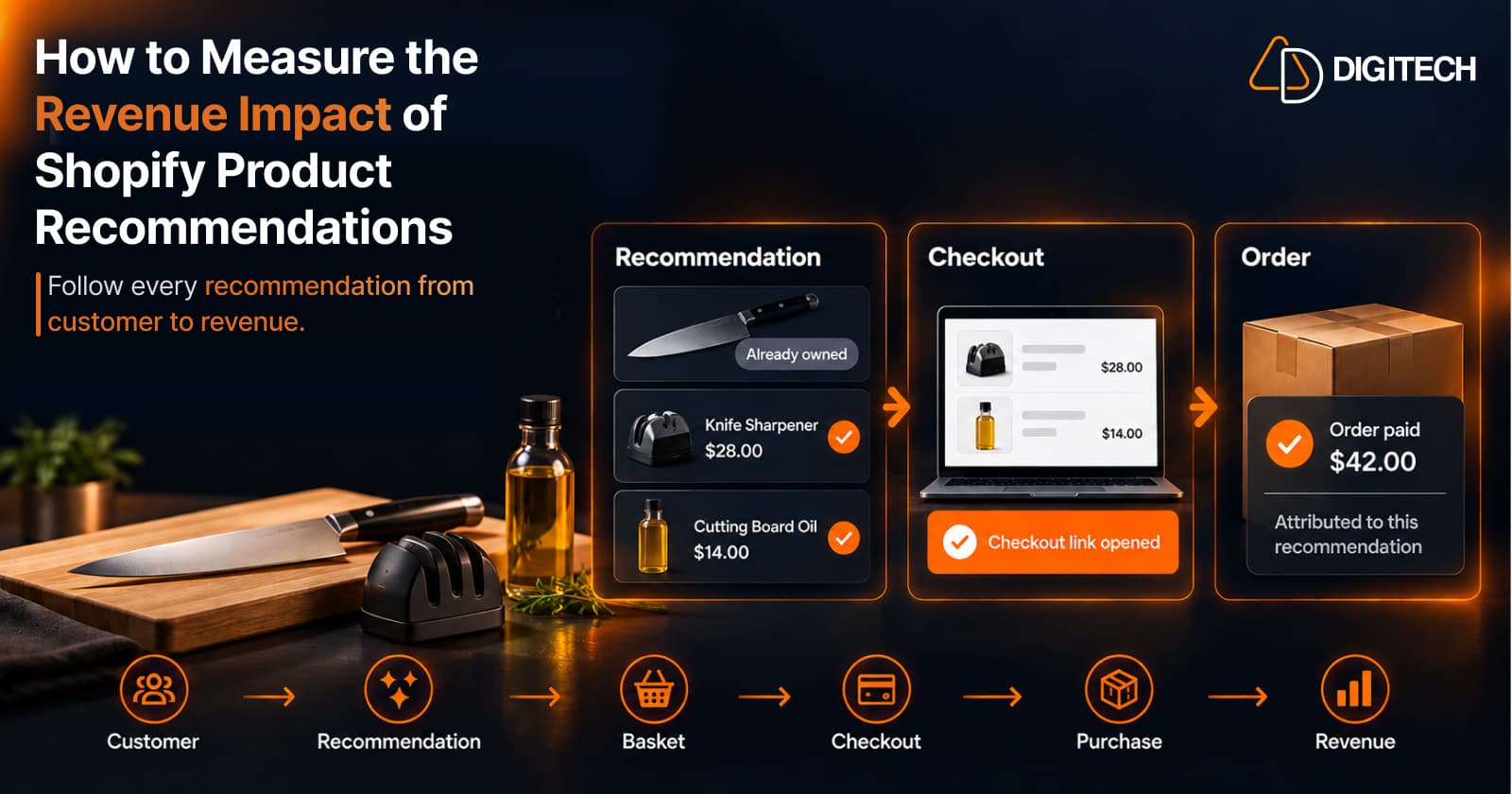
How to Measure the Revenue Impact of Shopify Product Recommendations
Learn how Shopify merchants can measure product recommendation performance, track checkout activity, attribute revenue, and improve personalized recommendations.
Read article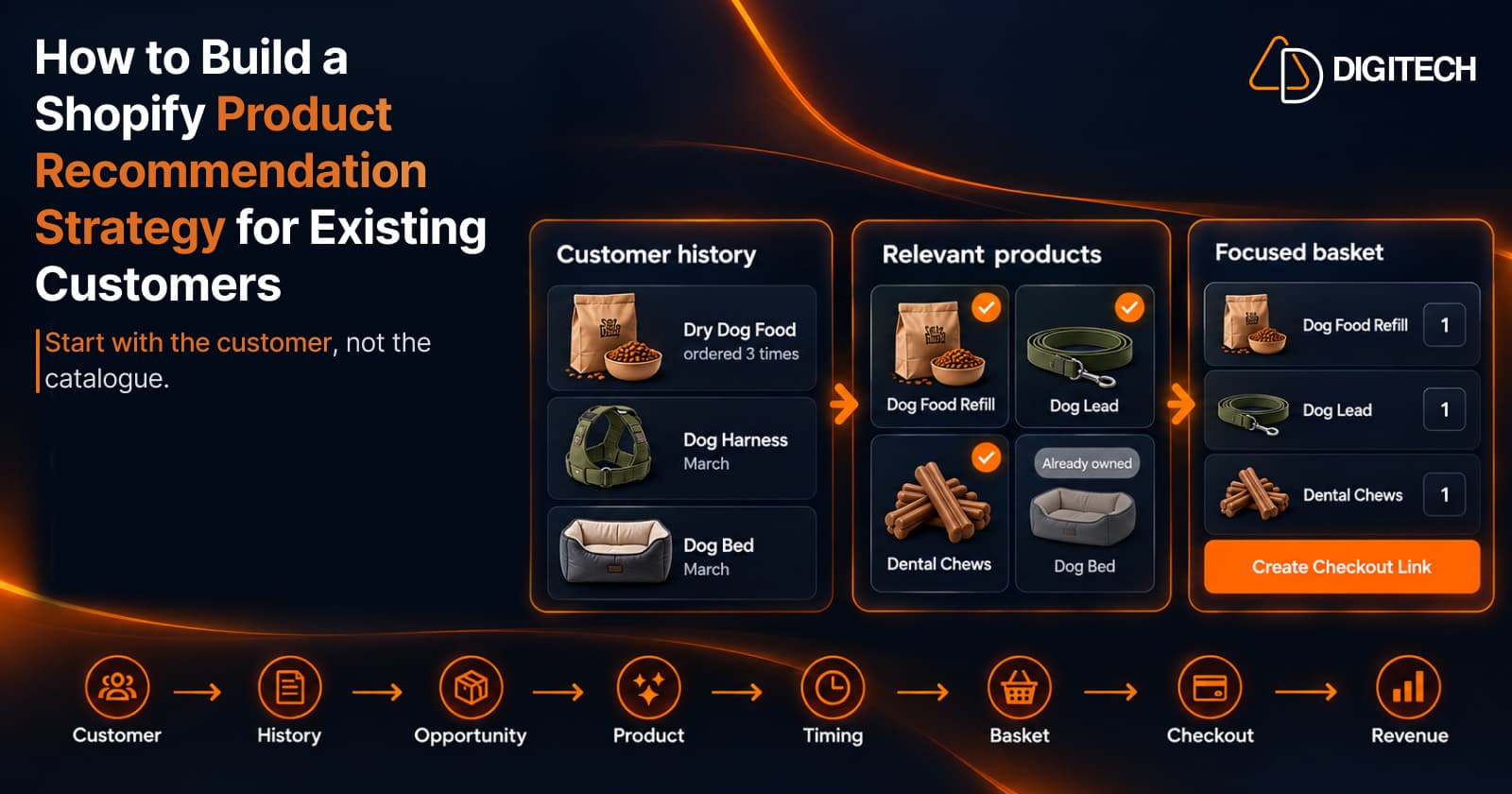
How to Build a Shopify Product Recommendation Strategy for Existing Customers
Learn how to build a Shopify product recommendation strategy using customer history, product relationships, timing, and personalized recommendations.
Read article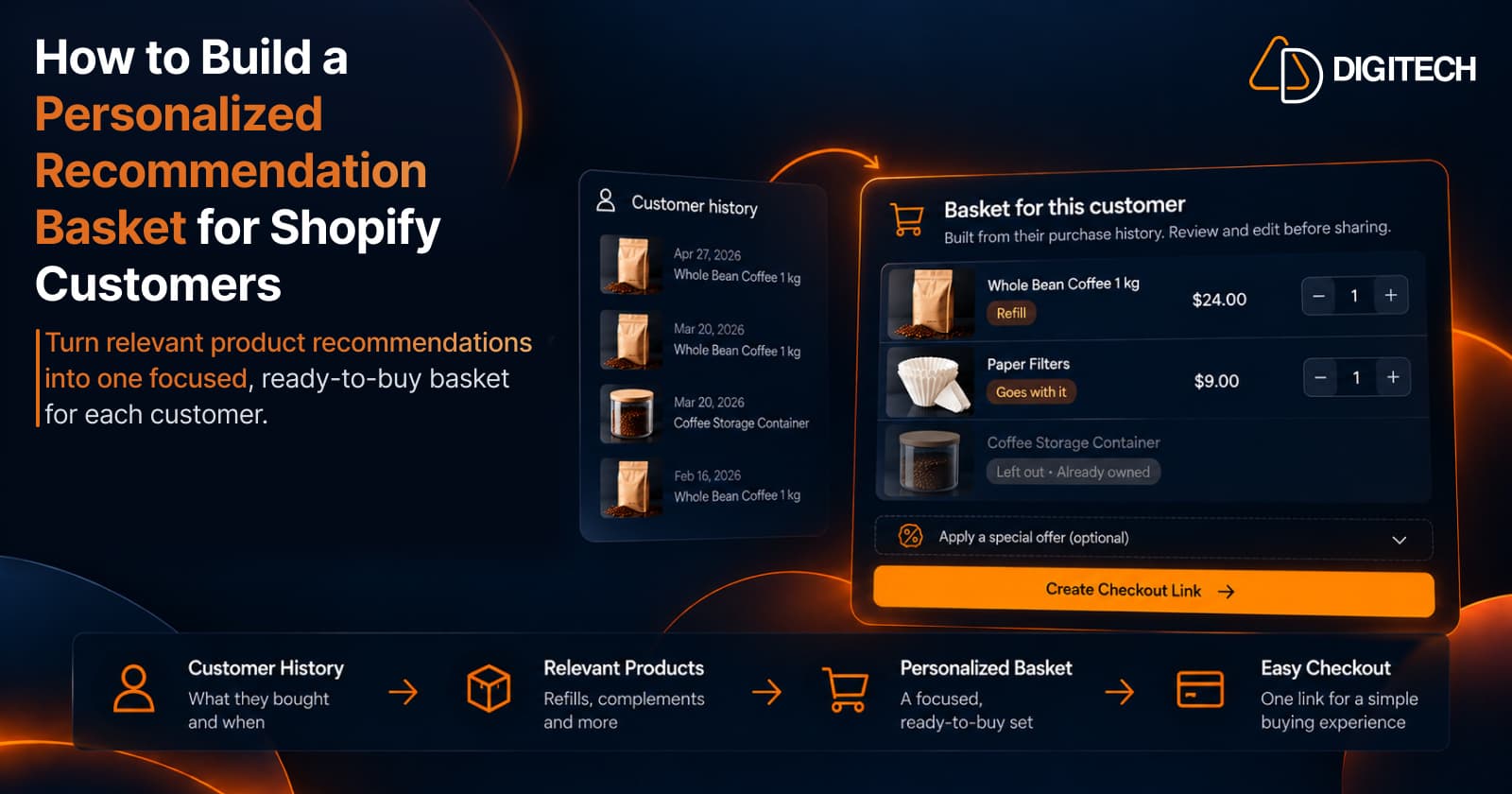
How to Build a Personalized Recommendation Basket for Shopify Customers
Learn how Shopify merchants can build personalized recommendation baskets using customer history, product relationships, timing, and product fit.
Read article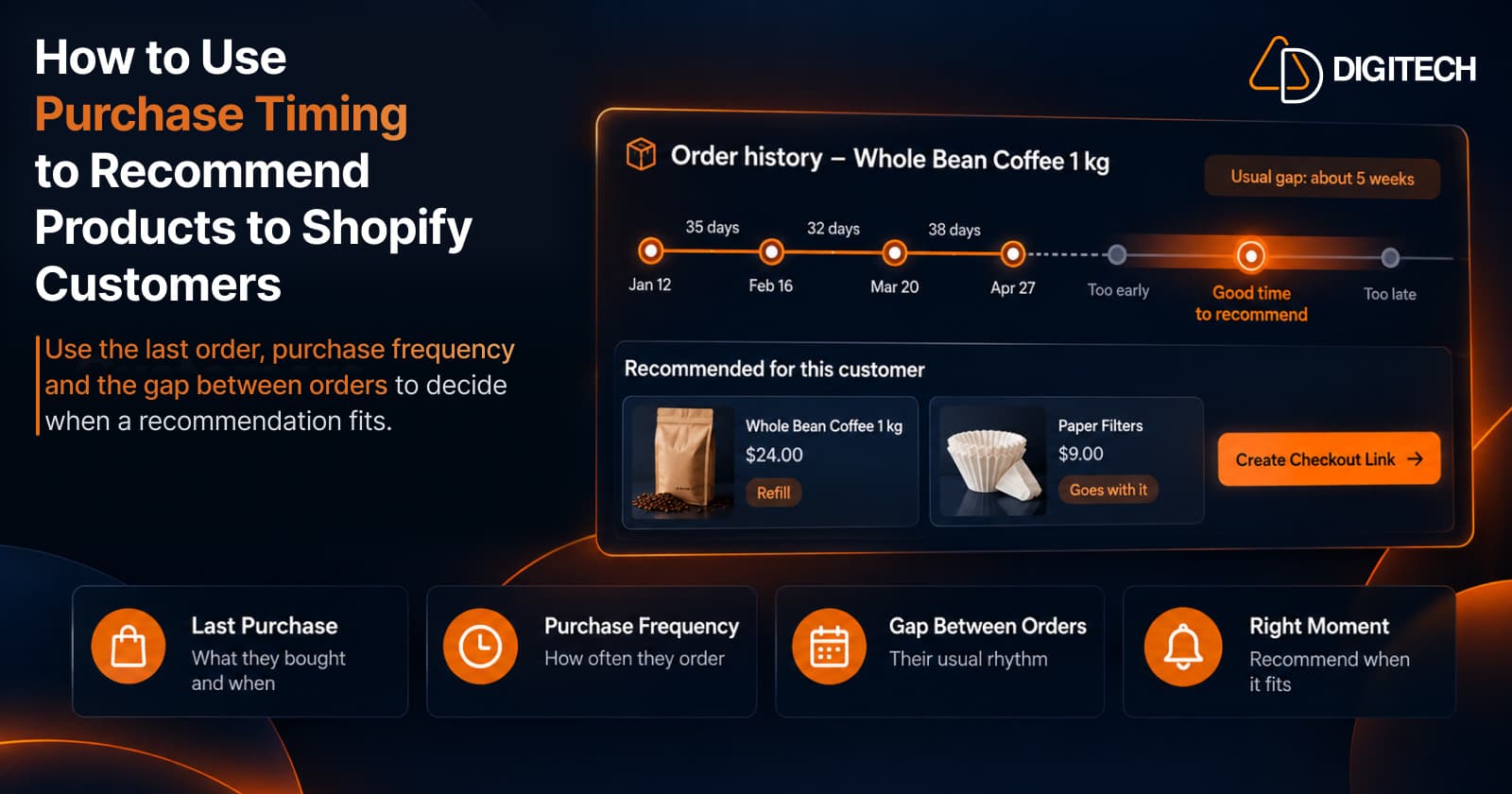
How to Use Purchase Timing to Recommend Products to Shopify Customers
Learn how Shopify merchants can use purchase timing, purchase frequency, recency, and customer history to make product recommendations more relevant.
Read article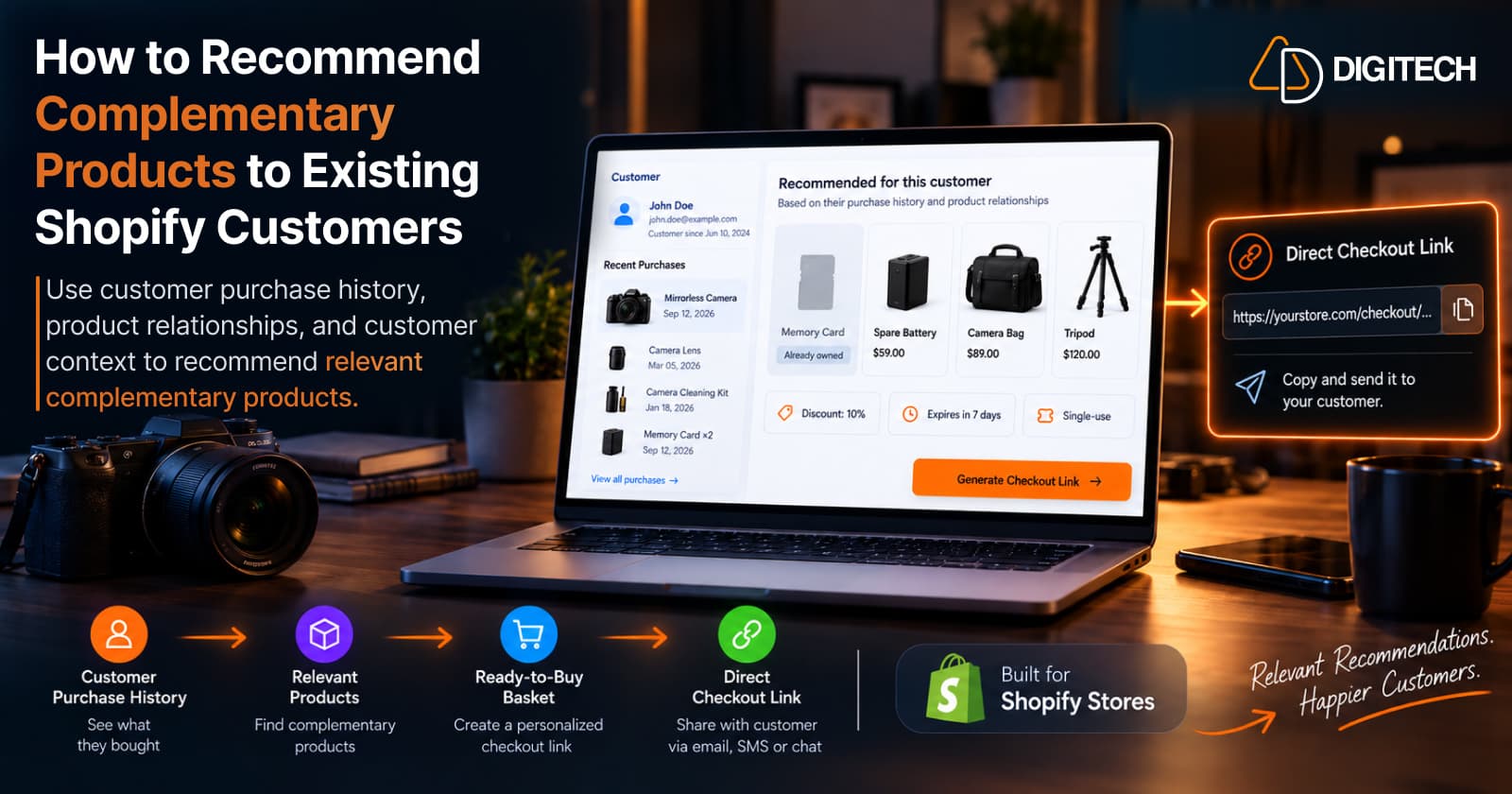
How to Recommend Complementary Products to Existing Shopify Customers
Learn how to recommend complementary products to existing Shopify customers using purchase history, product relationships, timing, and customer context.
Read article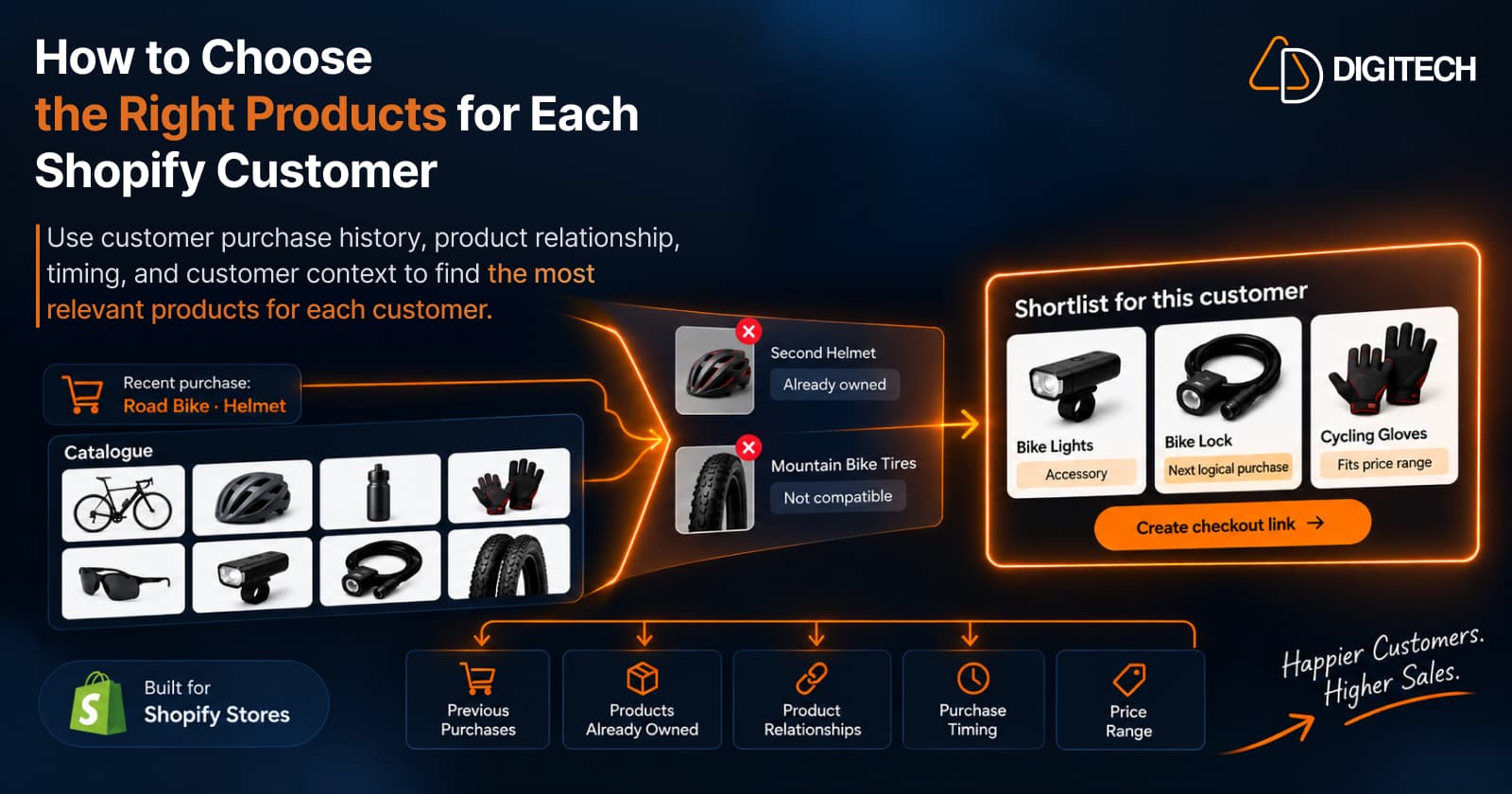
How to Choose the Right Products for Each Shopify Customer
Learn how Shopify merchants can choose more relevant products for each customer using purchase history, product relationships, timing, and customer context.
Read article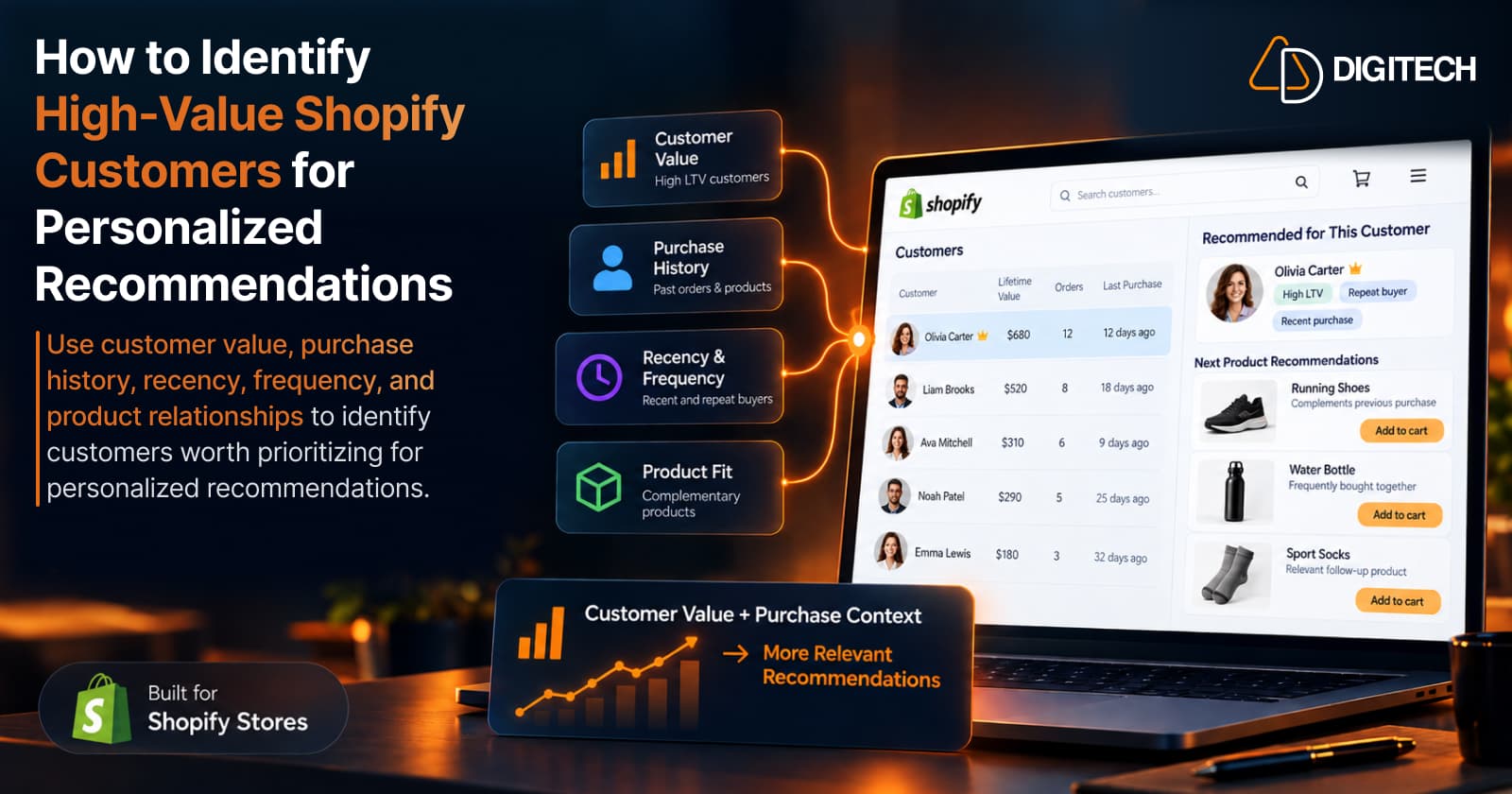
How to Identify High-Value Shopify Customers for Personalized Recommendations
How to identify high-value Shopify customers and real recommendation opportunities using purchase history, customer value, recency, and product relationships.
Read article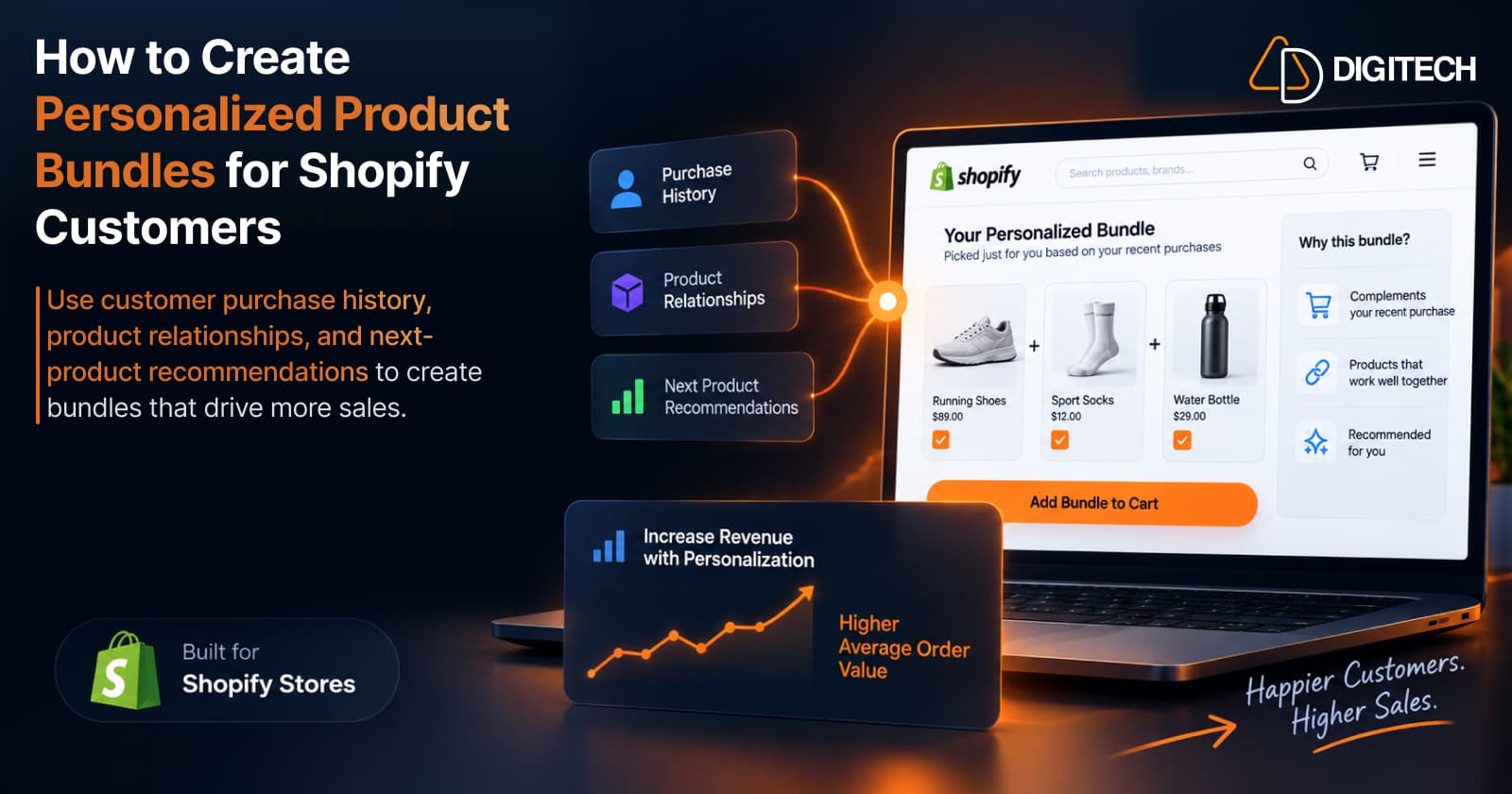
How to Create Personalized Product Bundles for Shopify Customers
Learn how to create personalized Shopify product bundles using customer purchase history, product relationships, and relevant next-product recommendations.
Read article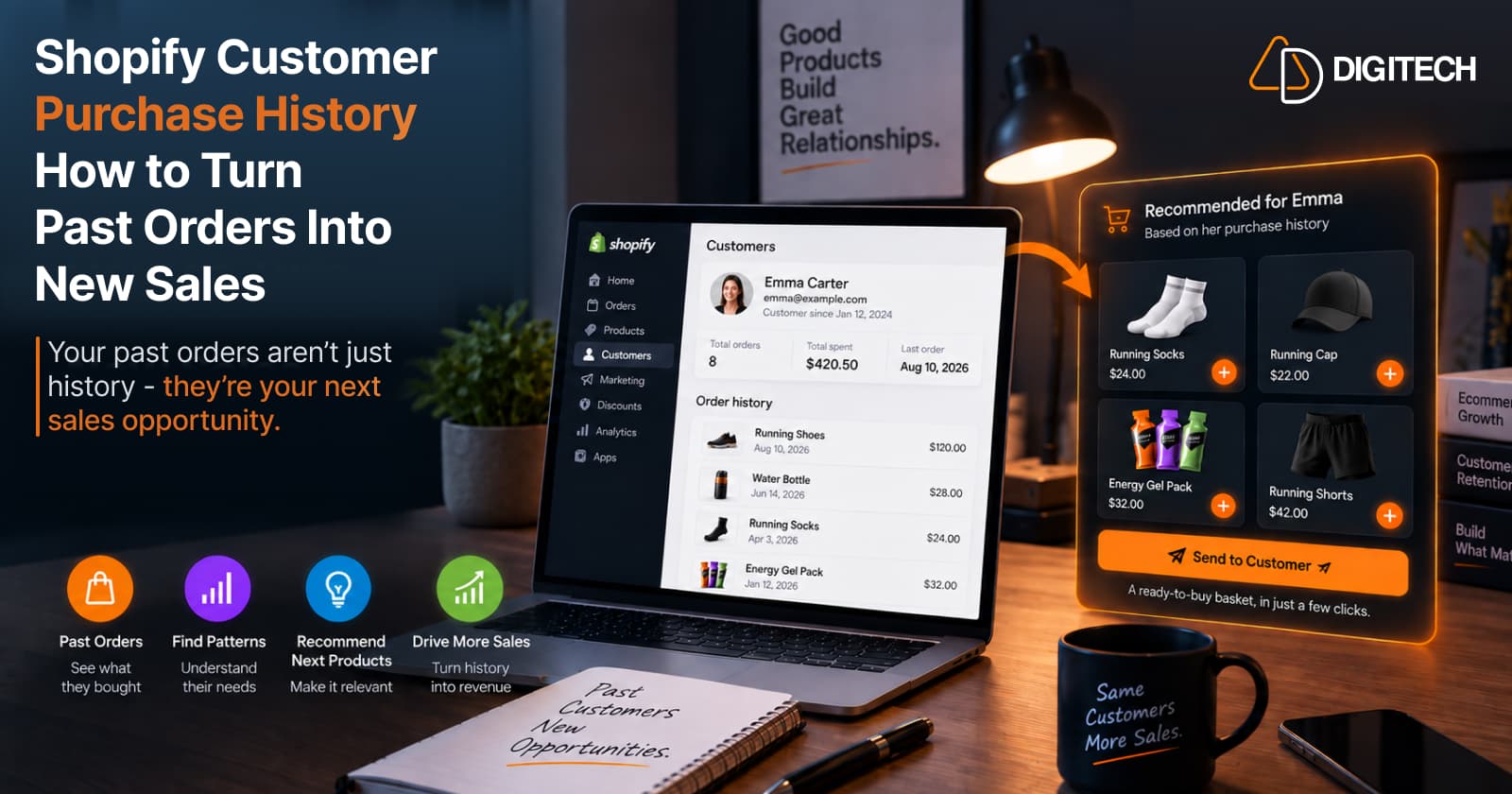
Shopify Customer Purchase History: How to Turn Past Orders Into New Sales
Learn how to use Shopify customer purchase history to identify relevant next products, create personalized recommendations, and increase repeat sales.
Read article