How to Calculate Customer Lifetime Value for Your Shopify Store
Learn how to calculate customer lifetime value for a Shopify store, choose between revenue and profit-based CLV, find the data in Shopify, and avoid common mistakes.
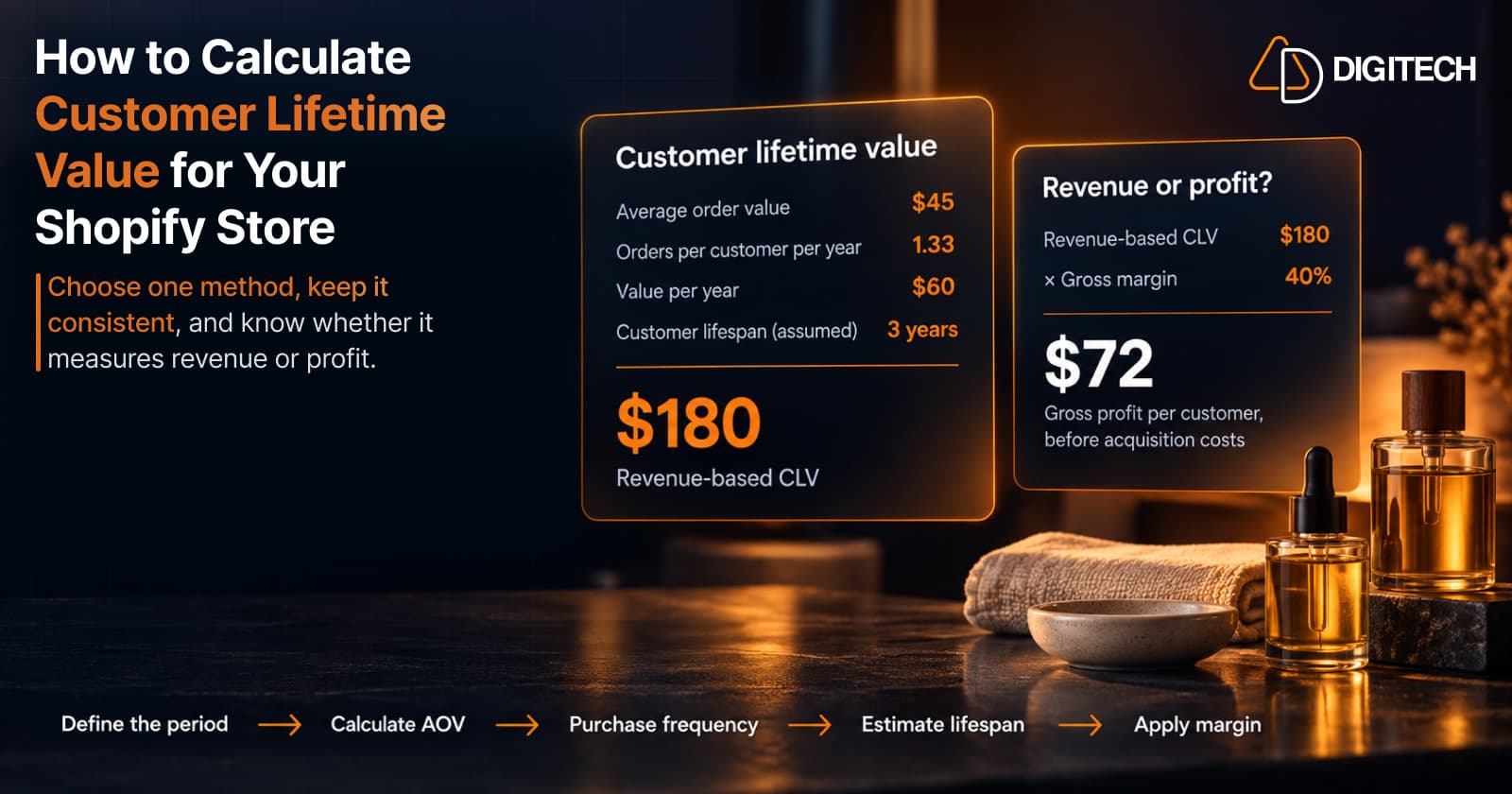
Most Shopify stores track what they sold last month. Fewer can say what a customer is worth over the whole time they buy from the store. That second number changes decisions: how much you can spend to acquire a customer, which customers deserve more attention, and whether repeat purchases are adding up to anything.
That number is customer lifetime value. This guide covers what it is, three ways to calculate it, where to find the data in Shopify, and how to use the result without over-reading it.
What Is Customer Lifetime Value?
Customer lifetime value (CLV, also called LTV) is the total value a customer brings your store over the relationship. Shopify's own guide to CLV describes it as "the total amount a customer spends with your business over the entire relationship."
It answers questions a single order can't: is a customer worth more than they cost to acquire, and are some groups worth more than others?
Two distinctions matter before you calculate anything:
- Historical vs predictive. Historical CLV measures what customers have already spent. Predictive CLV estimates what they will spend. A historical average is a fact about the past; a prediction is an estimate that can be wrong.
- Revenue vs profit. Revenue-based CLV counts what customers paid. Profit-based CLV counts what you kept after costs. They answer different questions and shouldn't be compared directly.
Why Customer Lifetime Value Matters for Shopify Stores
CLV can help you:
- Judge long-term customer value, not just first-order value.
- Set acquisition budgets. If you know what a customer is worth, you know roughly what you can afford to pay for one.
- Understand retention and buying patterns, such as whether customers return and how often.
- Compare customer groups, for example customers acquired in different months or through different channels.
- Inform marketing and merchandising decisions.
CLV is one input, not a verdict: a high CLV doesn't guarantee profit if costs are higher still.
How to Calculate Customer Lifetime Value
There's no single correct formula; the right one depends on your data and your question. Whichever you choose, keep it the same every time you calculate.
Method 1: Simple Historical Revenue-Based CLV
CLV = Revenue from a group of customers ÷ Number of customers in that group, over a defined period.
- Define the period, such as the last 12 months.
- Define the group. Either all customers who bought in the period, or a cohort, such as customers whose first order was in January.
- Define the revenue, for example net sales after discounts and refunds, excluding taxes and shipping.
- Keep both sides consistent. The revenue and the customer count must cover the same customers and the same period.
It's entirely historical: it shows what that group was worth over that period, not over a lifetime.
Method 2: Average Order Value × Purchase Frequency × Customer Lifespan
CLV = Average order value × Purchase frequency × Customer lifespan
- Average order value (AOV): revenue ÷ number of orders in the period.
- Purchase frequency: orders ÷ unique customers in the same period. Over 12 months, this is orders per customer per year.
- Customer lifespan: how long a typical customer keeps buying, in the same unit as frequency. With annual frequency, use years.
Shopify's guide stresses the same point: "annual purchase frequency goes with customer lifespan measured in years."
The assumptions matter. The formula treats AOV and frequency as steady over the whole lifespan, and the lifespan itself is usually an estimate, especially for a young store. That makes this method partly predictive.
Method 3: Profit-Based Customer Lifetime Value
Profit-based CLV = Revenue-based CLV × Margin
- Gross margin (revenue minus cost of goods, as a percentage) gives a gross-profit CLV. Shopify's guide calls this "margin-adjusted CLV" and notes it's "gross profit before acquisition costs and other operating expenses."
- Contribution margin goes further, also subtracting variable costs such as fulfillment, shipping you absorb, payment fees and returns handling (and discounts or refunds, if your revenue figure doesn't already exclude them).
Profit-based CLV is usually the better number to compare with what you spend acquiring customers, because acquisition is paid for out of profit, not revenue. Neither margin includes acquisition costs or fixed overheads, so compare the result with CAC separately.
| Method | Measures | Best for | Main limitation |
|---|---|---|---|
| Historical revenue | Past revenue per customer | A quick, factual baseline | Only covers the chosen period |
| AOV × frequency × lifespan | Estimated lifetime revenue | Planning and budgeting | Relies on an assumed lifespan |
| Profit-based | Estimated lifetime profit | Comparing with acquisition costs | Needs reliable cost data |
A Practical Customer Lifetime Value Example
Hypothetical example, not a benchmark or real Shopify data. A homewares store looks at the last 12 months. Revenue means net sales, excluding taxes and shipping, and customers means every unique customer who ordered in those 12 months:
- Revenue: $90,000
- Orders: 2,000
- Unique customers: 1,500
- Gross margin: 40%
- Estimated customer lifespan: 3 years (an assumption)
Step 1, AOV: $90,000 ÷ 2,000 = $45.
Step 2, purchase frequency: 2,000 ÷ 1,500 = 1.33 orders per customer per year (1.333…, rounded).
Step 3, annual value per customer: $45 × 1.333… = $60 (using the rounded 1.33 gives $59.85). That's also the historical revenue-based CLV for these 12 months ($90,000 ÷ 1,500).
Step 4, lifetime revenue CLV: $60 × 3 years = $180 per customer.
Step 5, profit-based CLV: $180 × 0.40 = $72 gross profit per customer.
What this tells the merchant: on these assumptions, an average customer generates about $72 of gross profit over three years, before acquisition and other costs. What it doesn't tell them: whether customers really stay three years, whether new customers will behave like past ones, or what any individual customer will do.
Where to Find the Data in Shopify
Shopify's customer reports and related tools give you most of the inputs, but no single CLV figure:
Data Shopify provides directly:
- Returning customers and One-time customers reports, with each customer's number of orders, average spent per order and total spent "including taxes, discounts, shipping, and any refunds."
- Customer cohort analysis, which groups customers by first order date. Its metrics include customer retention rate, net sales and average order value, with intervals of weeks, months or quarters.
- Cohort projections. Select Amount spent per customer and turn on Show projections to see estimated future spend per cohort. This needs 24 months of data, and Shopify cautions that "Projections aren't a guarantee of future sales."
- Predicted spend tier, which groups customers as High, Medium or Low spending potential. Your store must have made over 100 sales. It's a segment, not a dollar CLV.
Metrics you calculate yourself:
- Purchase frequency, customer lifespan, the CLV formula itself, and any margin adjustment. Note that Shopify's customer report totals include taxes and shipping, so decide whether your CLV should.
Analyses that need exports or other tools:
- Profit-based CLV needs cost data, which usually lives outside Shopify's customer reports. Export orders or customers (the customer CSV includes Total Spent and Total Orders) and calculate in a spreadsheet, or use an analytics app. Check any app's CLV definition before comparing its numbers with yours.
Report availability can differ by plan, so check your admin.
How to Use CLV to Make Better Ecommerce Decisions
- Compare cohorts. Customers acquired in a holiday sale may be worth less over a year than customers acquired at full price. Compare cohorts over equal periods.
- Weigh CLV against customer acquisition cost. If profit-based CLV doesn't comfortably exceed what you pay to acquire a customer, growth costs more than it returns. Our guide to Shop Campaigns analytics covers how CAC is calculated.
- Evaluate retention work. Track whether CLV for comparable cohorts changes after a retention initiative; other factors change too.
- Prioritize segments. Customer groups with higher value may justify more attention. Value isn't the same as opportunity, though, as identifying high-value customers explains.
- Check whether repeat purchasing adds value. A rising repeat purchase rate only helps CLV if those repeat orders are profitable.
Common Customer Lifetime Value Calculation Mistakes
- Mixing revenue and profit. Comparing a revenue CLV with a profit-based CAC target, or the reverse, makes acquisition look cheaper or dearer than it is.
- Using inconsistent time periods. Annual frequency with a lifespan in months gives a meaningless answer.
- Treating AOV as CLV. AOV is the value of one order; CLV covers all of a customer's orders.
- Confusing repeat purchase rate with CLV. Repeat rate counts how many customers returned; CLV measures how much they were worth.
- Ignoring discounts, refunds or margins where they matter to the decision.
- Treating a historical average as a prediction. Past customers may not behave like future ones.
- Comparing cohorts of different ages. An older cohort has simply had more time to buy.
- Assuming correlation proves cause. If CLV rose after a campaign, other changes may explain it.
How Personalized Product Recommendations Can Support Customer Value
CLV is shaped by whether customers come back and what they buy when they do. One approach merchants test to encourage additional purchases is recommending products that fit what each customer already bought.
Curivo, by AD Digitech, is a Shopify app for that kind of customer-level recommendation. Merchants review a customer's purchase history, build a personalized basket themselves or ask Curivo to suggest four options, review and edit the selection, and create a direct checkout link to share with the customer. Where supported, Curivo tracks recommendation activity and revenue attributed to each recommendation, as covered in measuring the revenue impact of product recommendations.
Curivo doesn't calculate or predict CLV, and a recommendation doesn't guarantee another purchase. It's one tool to test, measured against your own CLV and repeat purchase results. It's available on the Shopify App Store.
Conclusion
Customer lifetime value is simple to calculate and easy to misuse. Choose one method, write down its period, customer group and whether it measures revenue or profit, and keep it the same. Read it next to acquisition cost, repeat purchase rate and margin, not on its own.
A practical next step: export the last 12 months of orders, calculate AOV and purchase frequency for that period, and work out a historical CLV. Then add your gross margin to see what that value looks like in profit.
Frequently asked questions
What is a good customer lifetime value for a Shopify store?
There isn't one figure that fits every store. A useful CLV comfortably covers what it costs to acquire and serve a customer, which depends on your margins and business model. Compare your CLV over time and against acquisition costs, not a general benchmark.
Is CLV the same as LTV?
Yes. CLV and LTV are two names for the same idea. What matters more is the method behind the number: revenue or profit, historical or predicted.
How do you calculate CLV for an ecommerce business?
A common method is average order value × purchase frequency × customer lifespan, using matching time units. Multiply by gross margin for a profit-based estimate. A simpler historical version divides a group's revenue by its number of customers over a set period.
What is the difference between CLV and customer acquisition cost?
CLV estimates what a customer is worth to your store over time. Customer acquisition cost (CAC) is what you spend to win a new customer. Comparing the two, ideally with profit-based CLV, shows whether acquiring customers pays back.
Can Shopify calculate customer lifetime value automatically?
Shopify doesn't report a single CLV figure in its customer reports. It provides the inputs, such as amount spent per customer, average order value and orders per customer, plus cohort projections and predicted spend tiers where available. You combine them yourself or use an analytics app.
How often should a Shopify merchant review CLV?
Quarterly suits most stores, with a fuller review once a year. Use the same method each time so results are comparable.
Turn Customer History Into Your Next Sale
See how Curivo helps Shopify merchants turn customer purchase history into personalized recommendations, ready-to-buy baskets, and measurable revenue.
Related reading
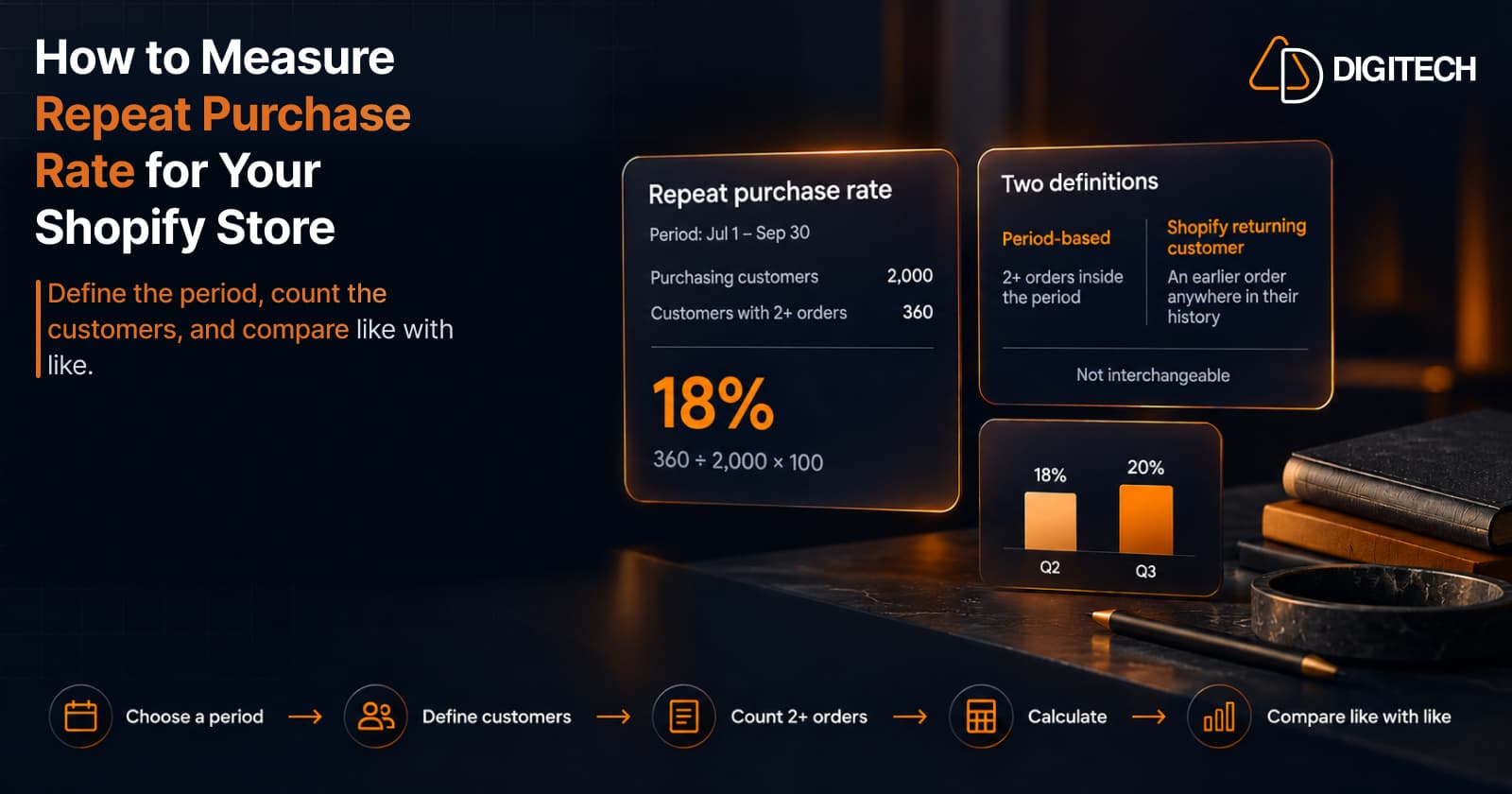
How to Measure Repeat Purchase Rate for Your Shopify Store
Learn how to calculate repeat purchase rate for a Shopify store, choose the right period and customer population, read the result carefully, and track the related retention metrics.
Read article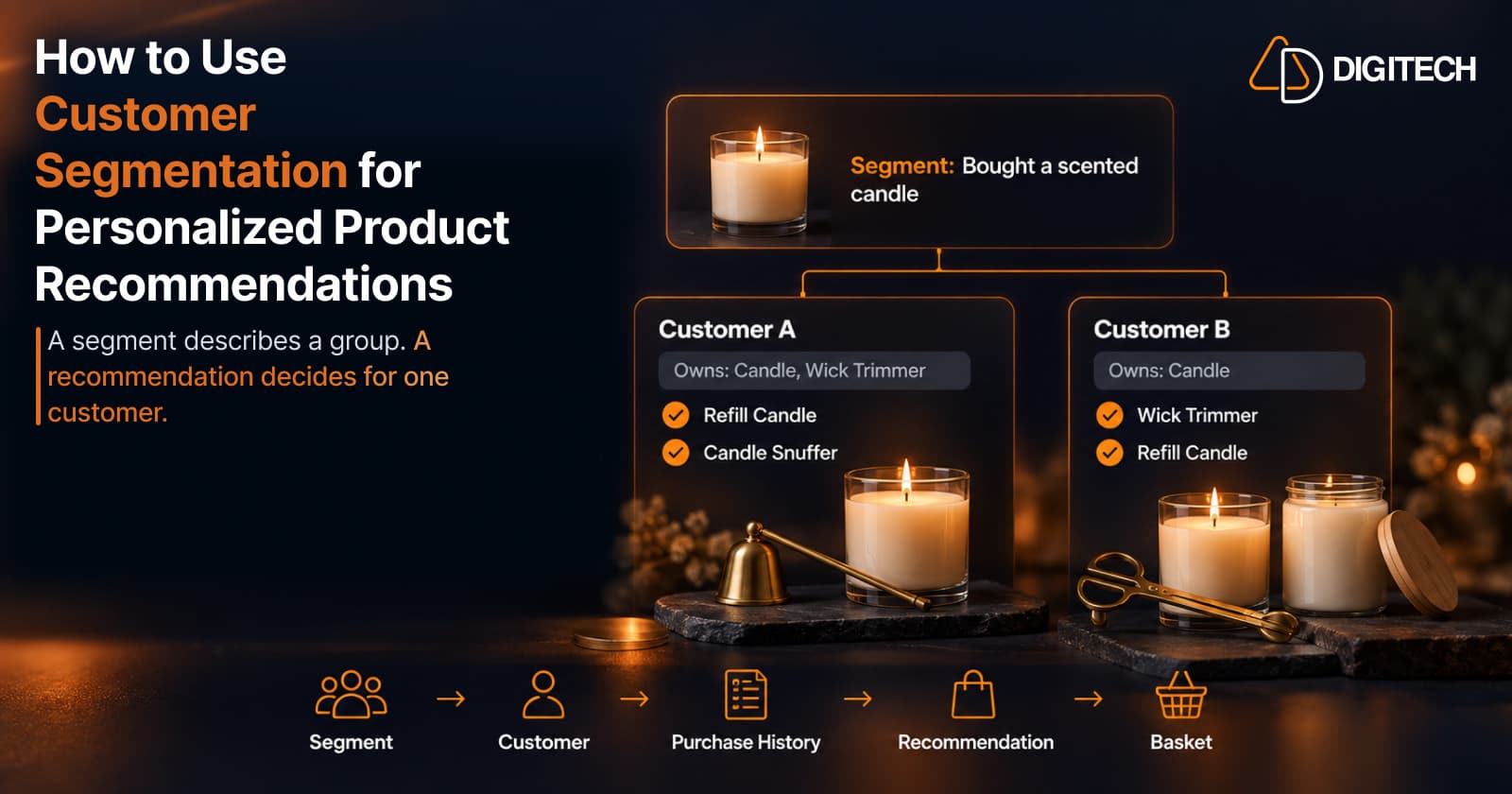
How to Use Customer Segmentation for Personalized Product Recommendations on Shopify
Learn how to use Shopify customer segments to make product recommendations more relevant, and how to turn a segment-level insight into a recommendation for one customer.
Read article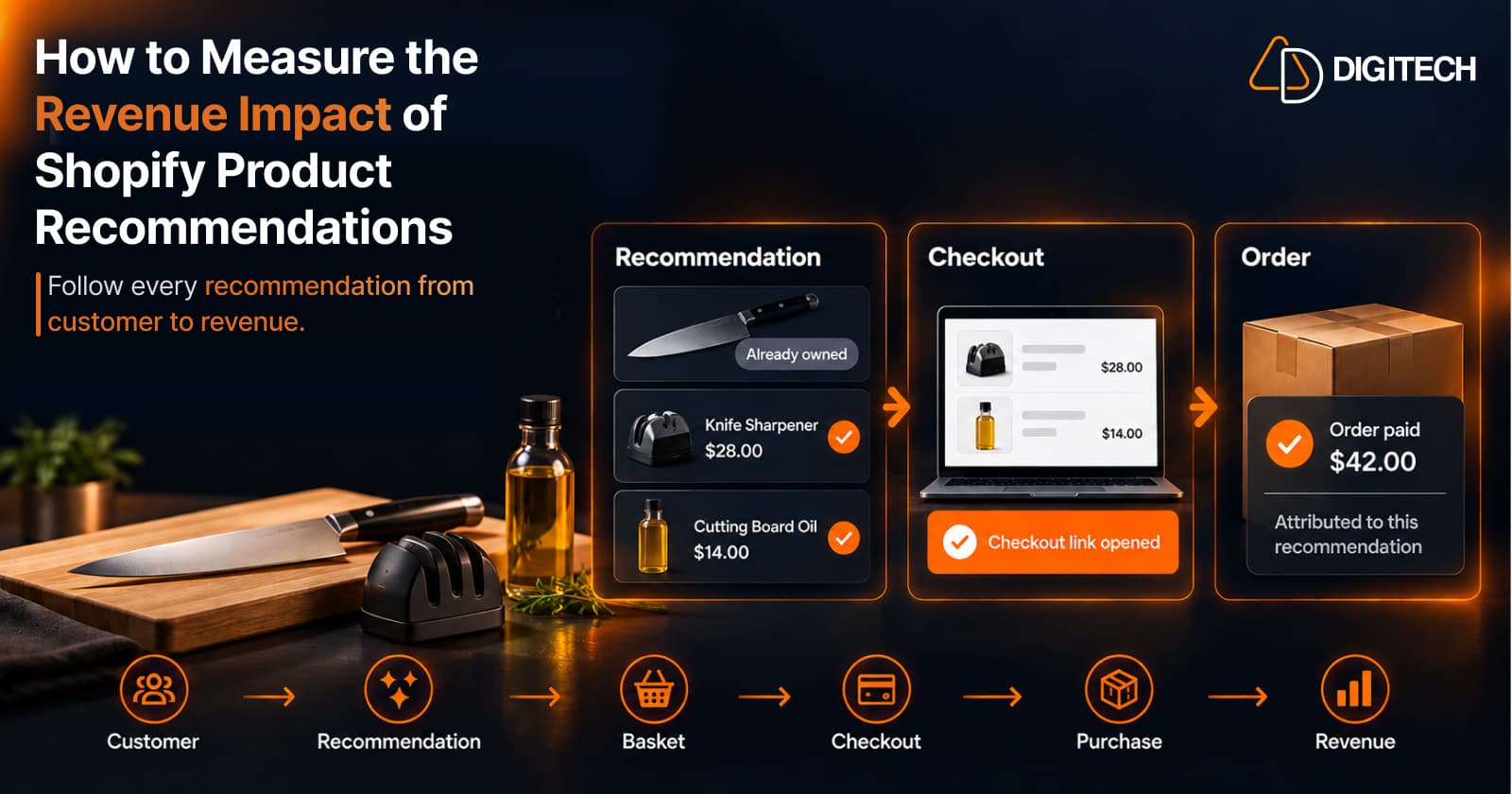
How to Measure the Revenue Impact of Shopify Product Recommendations
Learn how Shopify merchants can measure product recommendation performance, track checkout activity, attribute revenue, and improve personalized recommendations.
Read article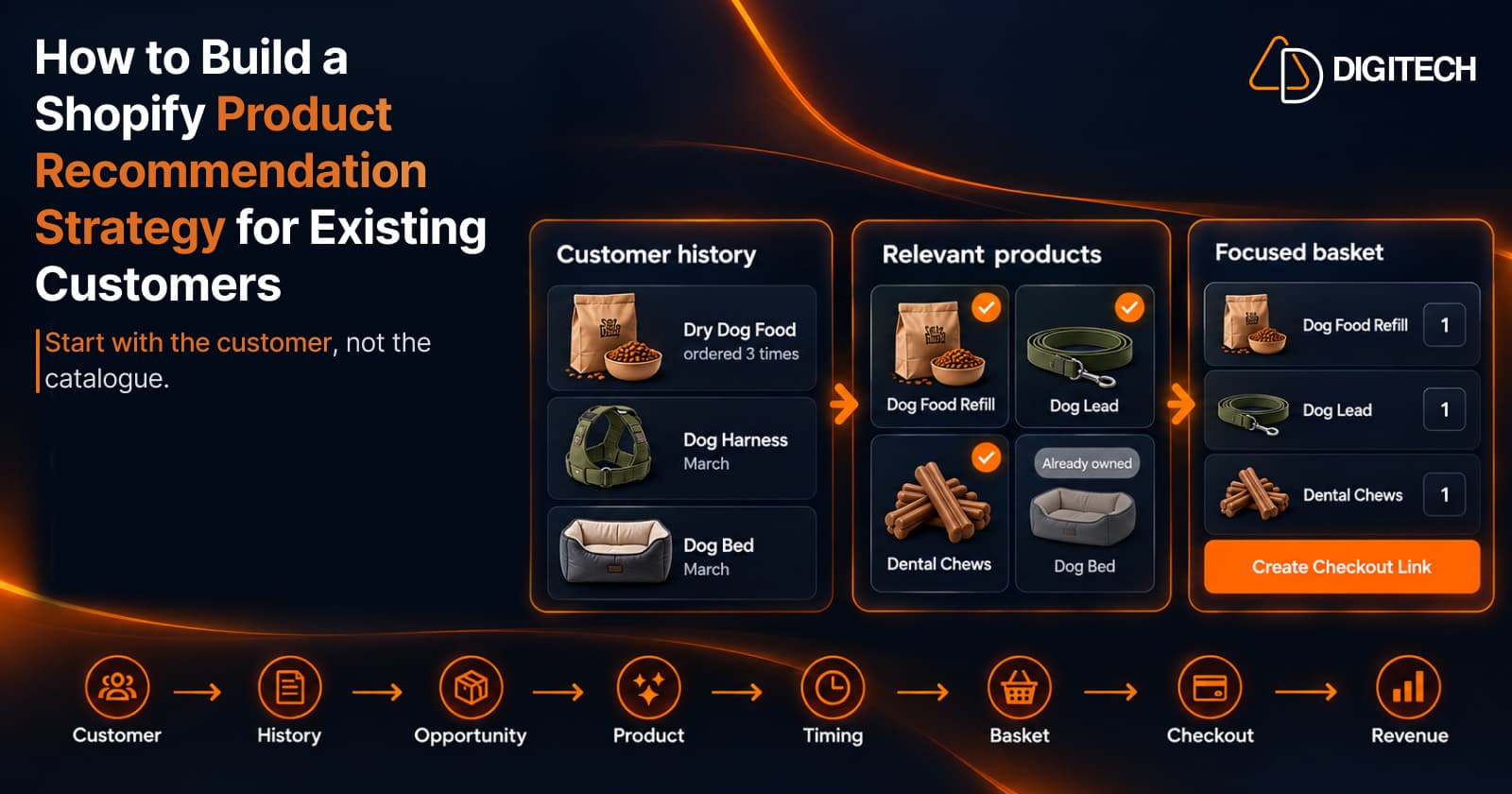
How to Build a Shopify Product Recommendation Strategy for Existing Customers
Learn how to build a Shopify product recommendation strategy using customer history, product relationships, timing, and personalized recommendations.
Read article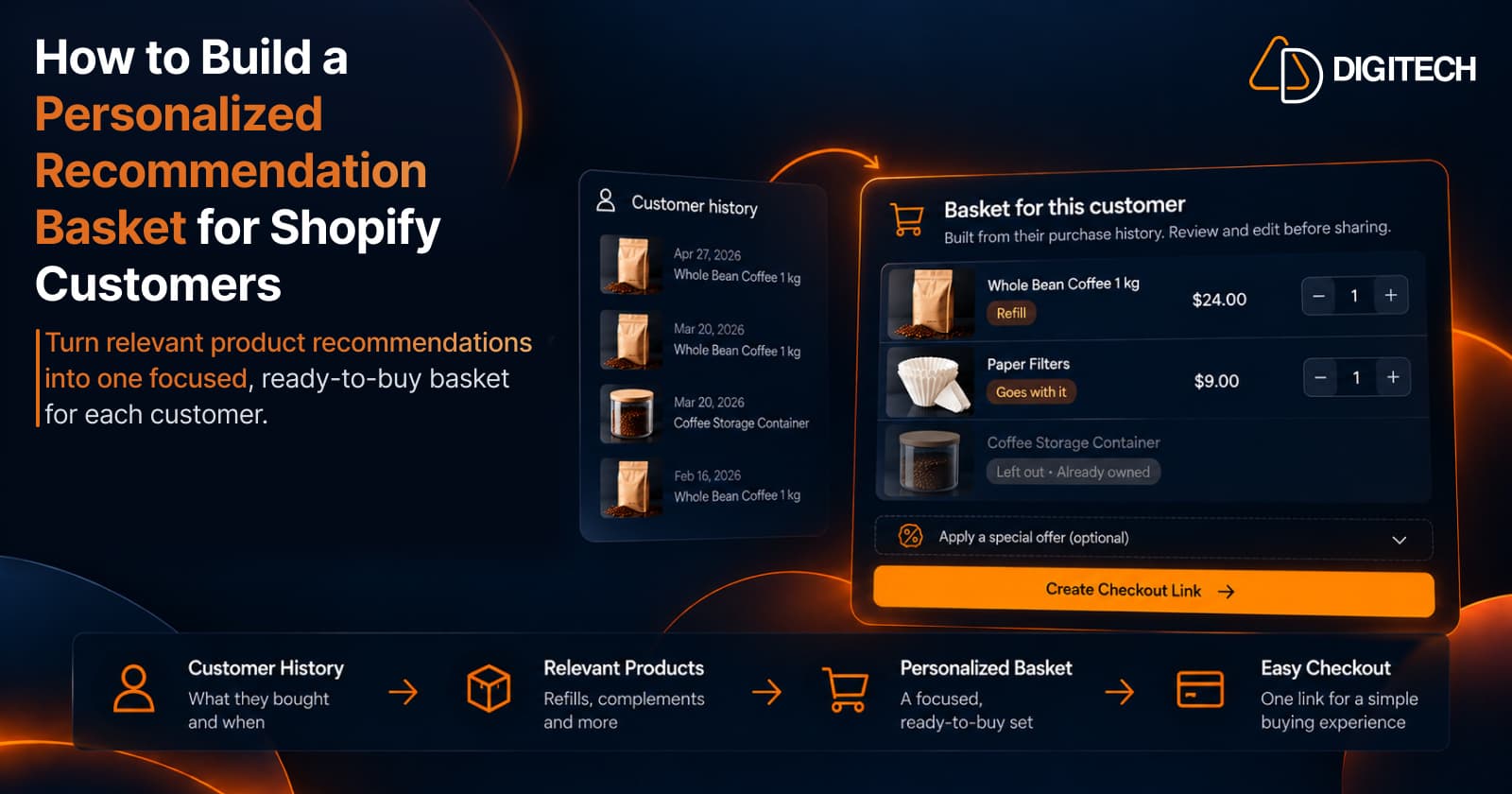
How to Build a Personalized Recommendation Basket for Shopify Customers
Learn how Shopify merchants can build personalized recommendation baskets using customer history, product relationships, timing, and product fit.
Read article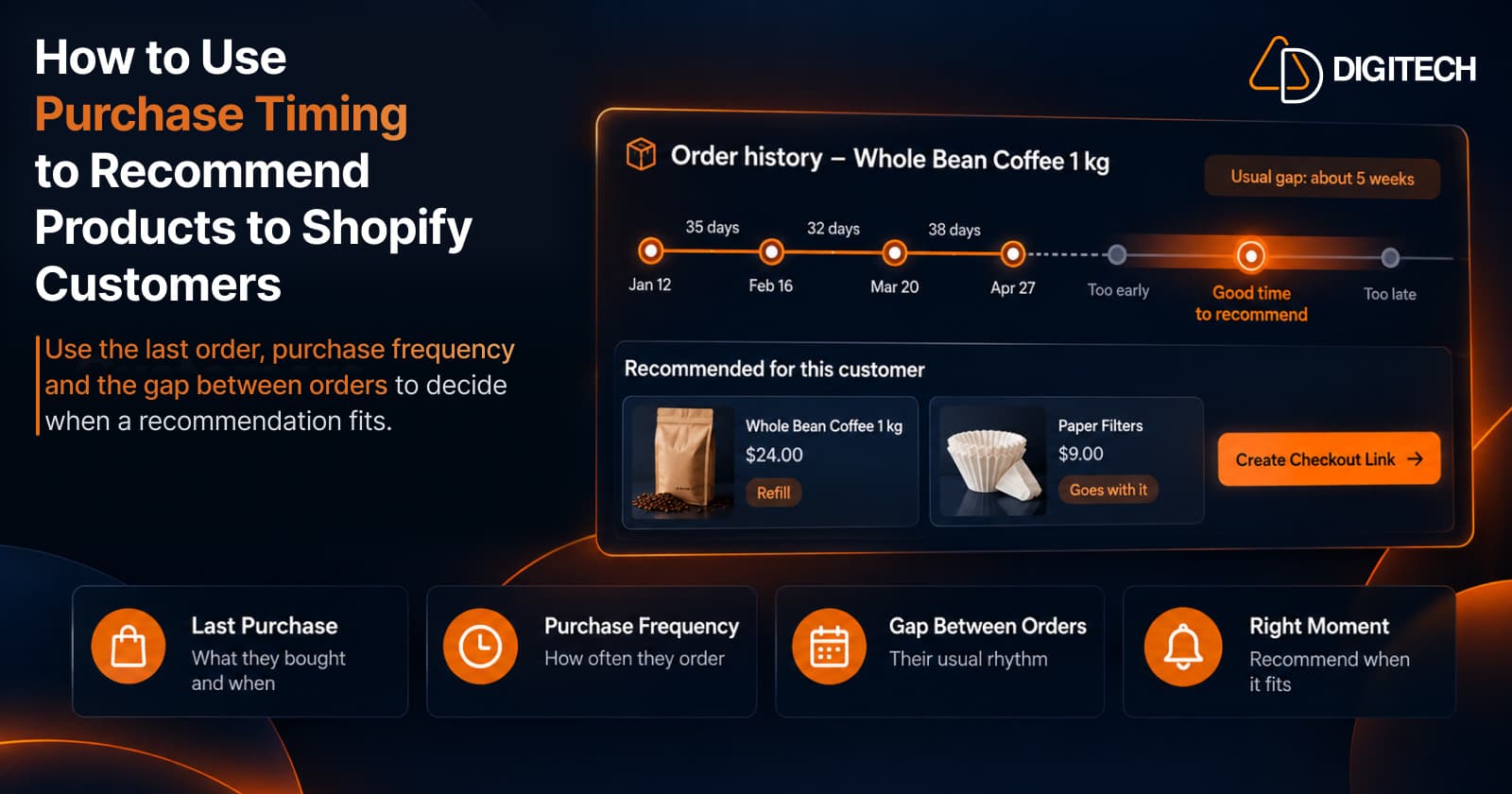
How to Use Purchase Timing to Recommend Products to Shopify Customers
Learn how Shopify merchants can use purchase timing, purchase frequency, recency, and customer history to make product recommendations more relevant.
Read article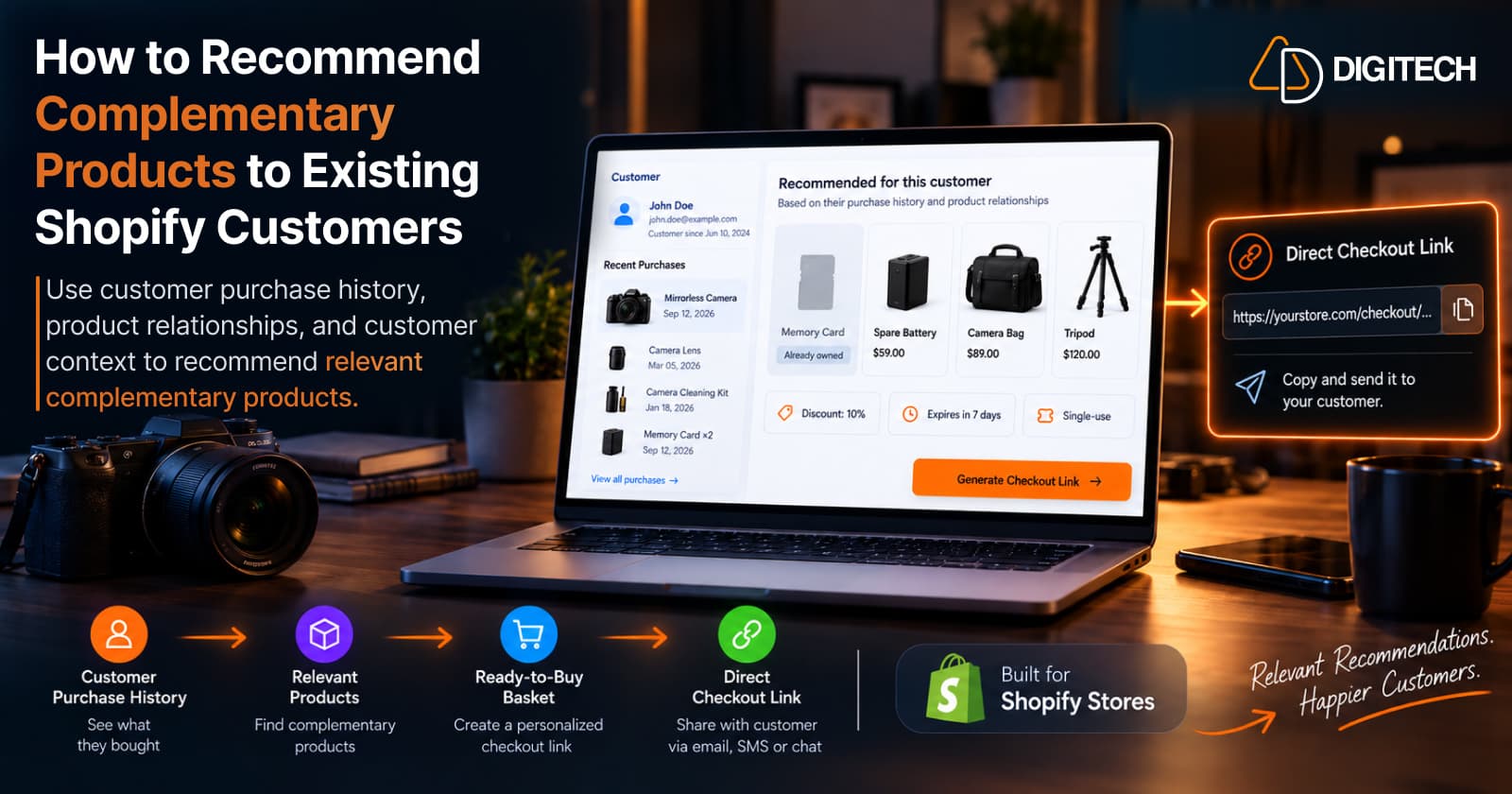
How to Recommend Complementary Products to Existing Shopify Customers
Learn how to recommend complementary products to existing Shopify customers using purchase history, product relationships, timing, and customer context.
Read article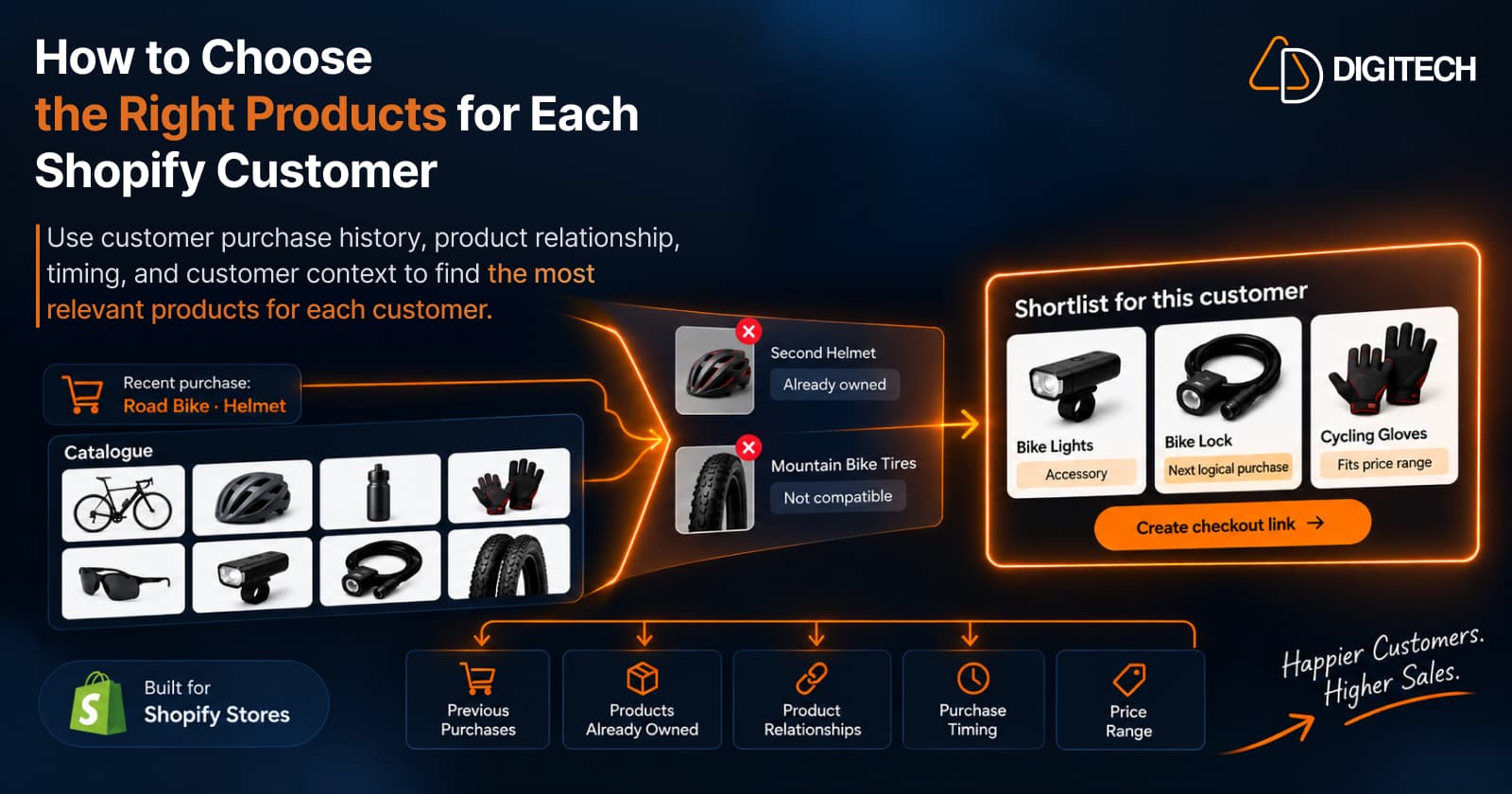
How to Choose the Right Products for Each Shopify Customer
Learn how Shopify merchants can choose more relevant products for each customer using purchase history, product relationships, timing, and customer context.
Read article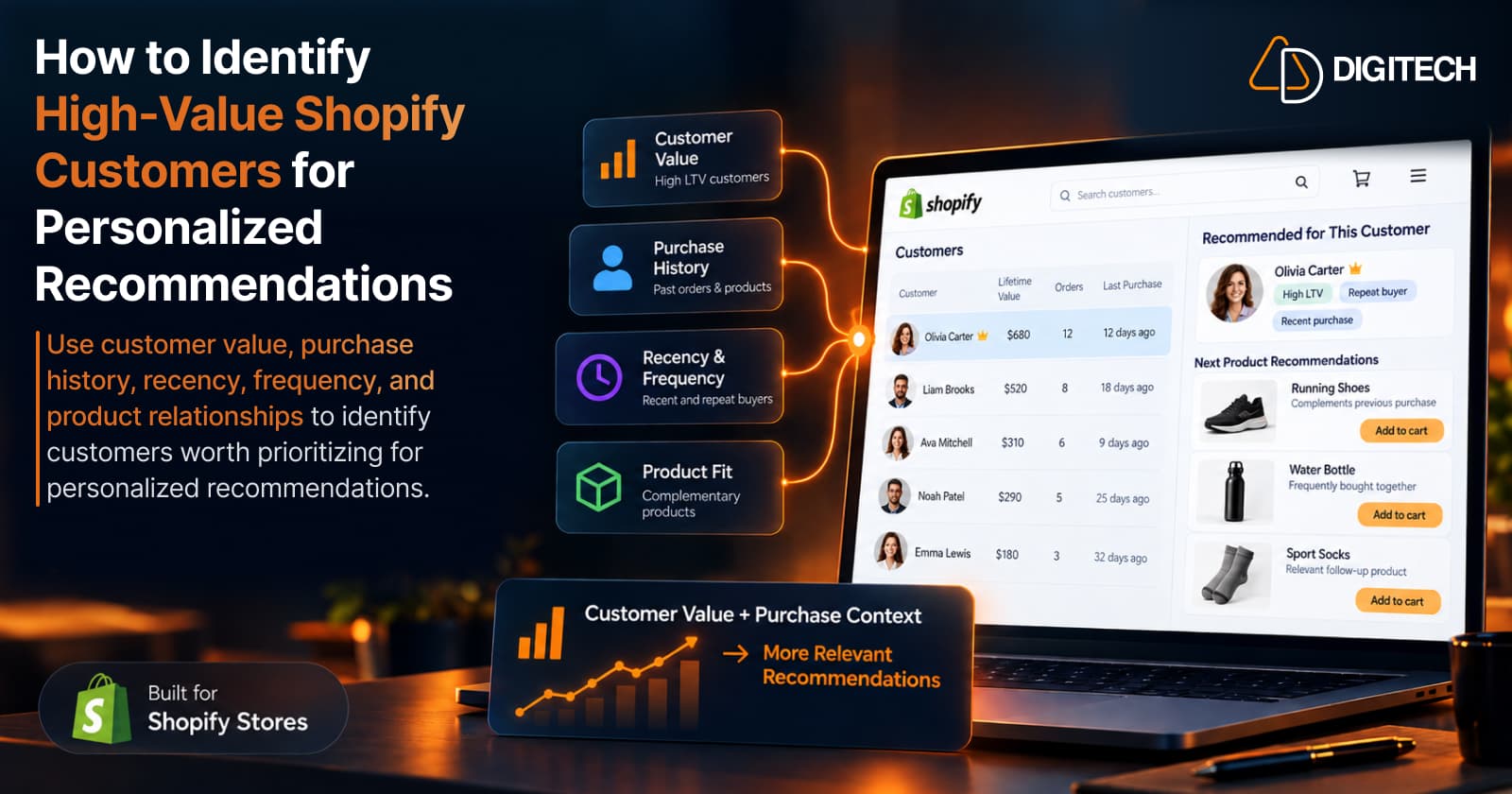
How to Identify High-Value Shopify Customers for Personalized Recommendations
How to identify high-value Shopify customers and real recommendation opportunities using purchase history, customer value, recency, and product relationships.
Read article