How to Increase Repeat Purchases From Existing Shopify Customers
Learn how to increase repeat purchases from existing Shopify customers using purchase history, personalized recommendations, smarter follow-ups, and measurable customer selling.
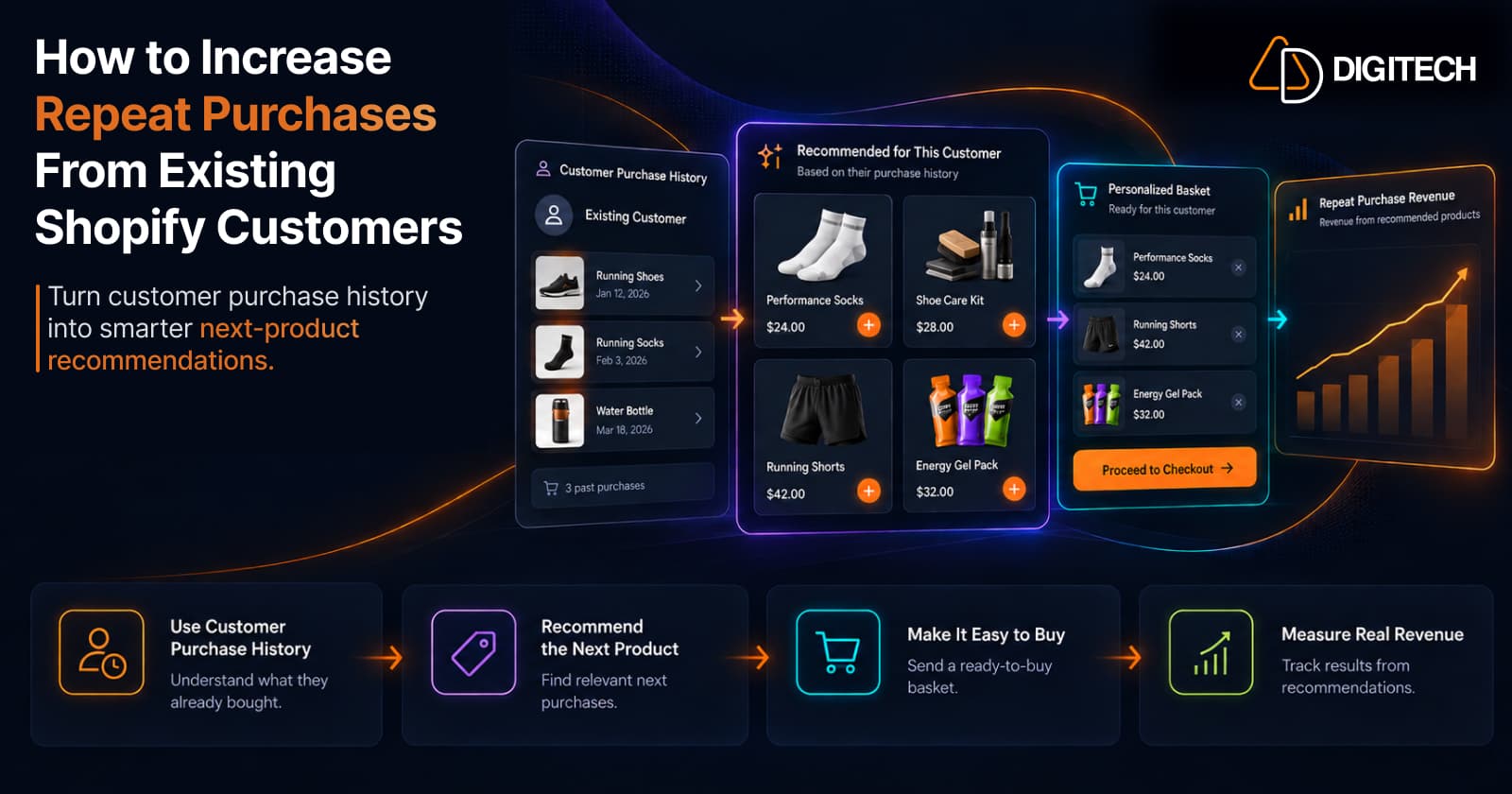
Getting a customer to place their first order is the hard part. By the time someone completes checkout, they've already discovered your brand, trusted it enough to hand over payment, received the product, and formed an opinion. They've also left behind something useful: a record of what they bought.
Most stores treat that record as history. It's better understood as a signal. The question that matters for an existing customer usually isn't the broad "how do I get customers to come back?" It's the specific one: what should I sell them next? Every Shopify store already holds a partial answer in its order data. This article is about turning that data into relevant next-purchase opportunities — practically, and without guessing.
Why repeat purchases matter
An existing customer is not a cold prospect. The first purchase already happened, which removes a lot of friction: they know the brand, they've used the product, and they've been through your checkout once already. That context is the advantage.
It means your next offer doesn't have to start from zero. Instead of introducing yourself and hoping something lands, you can make a suggestion grounded in what this person has actually done. Relevance is the point here — not a blanket claim that existing customers are always cheaper or more profitable to sell to, but the simple fact that you know more about them than you know about a stranger, and you should use it. (If you've invested in Shopify customer accounts, you've already built the foundation this relies on.)
Start with what the customer already bought
The instinct when trying to sell more is to reach for the catalogue — the bestsellers, the new arrivals, the current promotion. For an existing customer, that's the wrong starting point. Start with their history instead.
Say a customer bought running shoes and performance socks. You don't need to show them your entire range. A handful of logical next products almost writes itself: running shorts, shoe care, a recovery product, a complementary accessory. The purchase already tells you they're a runner who's willing to spend on gear.
The same move works across very different stores:
- Coffee → a different blend to try, or brewing accessories.
- Skincare → a complementary step in the same routine.
- Furniture → the pieces that complete the room they've started.
None of this requires exotic data. It requires looking at the individual customer's orders before looking at the catalogue — the same instinct behind good post-purchase upsells, applied to the next visit rather than the current cart.
Find the customer's next logical purchase
"What comes next" isn't one pattern — it's a few. Recognising which one applies to a given customer makes the recommendation obvious.
Replenishment
Products people naturally buy again on a rough cadence — coffee, skincare, supplements, food, household consumables. The next purchase is often the same purchase, timed well.
Complementary products
Products that work together. A camera and a memory card. Shoes and a care kit. A sofa and the cushions, throws, or side table that go with it. The first purchase implies the second.
Progression
A logical step up from what they own — starter to advanced, basic to premium, a single product to the fuller collection. This suits stores where customers grow into a range over time.
Personal preference
Earlier orders quietly reveal taste: a colour, a size, a scent, a price band, a category they keep returning to. Those preferences narrow the field so your suggestion feels chosen, not scattershot.
The goal across all four isn't to recommend more products. It's to recommend the products that make sense for that customer.
Don't recommend the same thing to everyone
There's a meaningful difference between "customers who bought this also bought…" and "what should this customer buy next?"
The first is aggregate. It's genuinely useful for storefront discovery — an anonymous visitor browsing a product page benefits from seeing what commonly pairs with it. But a known customer gives you more to work with than a browsing session does.
Picture two customers who both bought the same espresso machine. Customer A has also bought decaf beans and a milk frother over the past few months. Customer B bought a single bag of a strong single-origin and nothing since. "Also bought" would show them the same accessories. Their histories point in different directions — a gentle replenishment nudge for one, a bolder blend to re-engage the other. Same product, different next step, because you're starting from the person rather than the page.
Use purchase history as a selling signal
Purchase history is usually filed under reporting. It's more valuable read as a set of signals about what to sell next. Looked at that way, past orders can surface:
- products commonly bought after another product
- category relationships across the catalogue
- likely replenishment windows
- individual preferences
- plausible next purchases
A simple way to hold it in your head:
Previous purchase → customer behaviour → potential next product → personalized recommendation → purchase
Each arrow is a small, answerable question. What did they buy? What does that suggest about them? What would fit next? How do we frame it? Did they act? You don't need a data science team to walk that line for one customer — you need the discipline to actually do it, and the product data to be clean enough that the relationships are visible.
Made concrete: a customer buys a pair of premium running shoes. Instead of the generic bestsellers every visitor sees, you read that purchase as a signal and suggest what genuinely fits — running socks, a shoe-care product, a complementary training accessory. The next product is easy to say yes to because it clearly belongs with what they just bought, and that ease is exactly what nudges a one-time buyer toward a repeat purchase.
Make the recommendation easy to buy
This is where good intentions quietly leak revenue. A merchant identifies three great products for a customer and sends three links. Now the customer has to open each one, compare them, decide, pick variants, add to cart, and check out. Every step is a chance to drift away.
A recommendation is only as good as how easy it is to act on. The difference is between:
Recommendation → product page → (the customer rebuilds everything)
and:
Recommendation → ready-to-buy basket → checkout
When the merchant can turn a recommendation into a curated basket the customer can buy in a couple of taps, the suggestion stops being homework and becomes an offer. The closer the recommendation sits to checkout, the more likely it is to become an order.
Give merchants control over the recommendation
Personalization shouldn't mean handing every decision to an algorithm. The merchant usually knows things the data doesn't: that a product is out of stock, that a new collection just launched, that this particular customer has a known preference, that a certain bundle simply makes more sense this month.
So the useful model isn't full automation. It's:
Data + AI assistance + merchant judgment.
Let the data and a bit of AI narrow thousands of possibilities down to a few sensible options — then let the person who knows the business make the final call. That balance keeps recommendations both efficient and sane.
Consider multiple recommendation options
One recommendation assumes there's only one right answer. Often there are several reasonable directions for the same customer, and the merchant is best placed to pick between them:
- Essentials — the practical, obvious next purchase.
- Complete the set — the complementary products that finish what they started.
- Upgrade — a higher-value alternative for a customer who's ready for it.
- Explore — something drawn from their broader pattern, to widen the relationship.
Seeing a few distinct options side by side is faster than starting from a blank page, and it lets the merchant match the suggestion to what they know about the customer rather than settling for the first idea.
Personalize the reason behind the recommendation
Personalization isn't only about which products you show. It's also about why — and saying the why out loud.
Compare "here are some products you might like" with "you picked up X last time, so we pulled together a few things that go with it." The second gives the customer a reason the recommendation exists. It reads as considered rather than random, and it answers the quiet question every shopper asks: why am I seeing this? The context does a lot of the persuading.
Measure whether recommendations actually generate revenue
Merchants send recommendations in all sorts of ways — email, SMS, WhatsApp, DMs, a note in a sales conversation, a few product links. The channel matters less than the question that usually goes unanswered: did the customer actually buy?
Without a way to connect a recommendation to the order it produced, you're left guessing which suggestions work. The chain you want to be able to see is:
customer → recommendation → checkout → order → revenue
When you can trace that line, recommendation-level attribution stops being a nice-to-have. It tells you which personal recommendations turned into sales, so you can do more of what works and quietly drop what doesn't. This is the same reconciliation instinct behind reading your Shopify Payments activity — follow the money back to its source.
Focus on existing customers before chasing more traffic
Most growth energy goes into acquisition: more traffic, more ads, more reach. That's fair — new customers matter. But a store with an existing base has a second question available to it that costs nothing in ad spend.
Alongside "how do I get more visitors?", ask "what can I sell to the customers I already have?" This isn't a claim that existing customers are always worth more than new ones. It's that they're an opportunity many stores leave sitting untouched while they pour budget into the top of the funnel.
A simple framework for increasing repeat purchases
Five steps, in order:
- Identify — find the customers who have already purchased.
- Understand — review their purchase history and buying context.
- Recommend — choose products that make sense for that specific customer.
- Make it buyable — turn the recommendation into an easy path to checkout.
- Measure — track whether the recommendation generated revenue.
Compressed to its spine, the whole thing is:
Customer → history → recommendation → basket → revenue
It's deliberately simple. The value is in doing it consistently for real customers, not in the sophistication of the diagram.
Where AI can help
A store with a large catalogue can't review every customer's history by hand. This is where AI earns its place — not by inventing products out of thin air, but by sifting real inputs into a shortlist a person can act on.
The useful inputs are all things your store already has:
- previous purchases
- product categories and relationships
- price ranges
- purchase timing
- the products currently available to sell
AI can weigh those and organise sensible options. It shouldn't be trusted to know exactly what a customer wants or to promise a lift — no honest tool can. The right division of labour is straightforward: AI selects, your data grounds it, you decide.
Common mistakes when trying to increase repeat purchases
Even with the right intent, a handful of traps quietly undo the effort:
- Showing the same recommendation to every customer. A single "you might also like" block treats a loyal repeat buyer and a one-time shopper identically, and throws away the context their history gives you.
- Recommending unrelated products. A suggestion with no connection to what the customer bought reads as noise. Relevance is the entire point — without it, you're just adding clutter.
- Giving customers too many choices instead of a clear next option. A wall of products pushes the decision back onto the customer. A focused, sensible suggestion is far easier to act on than a catalogue.
- Making customers rebuild their basket themselves. Sending a list of links and leaving the customer to find products, pick variants, and assemble a cart adds friction at the exact moment you want less of it.
- Measuring clicks or engagement instead of actual revenue. Opens and clicks feel like progress, but the only question that matters is whether the recommendation led to an order — and to know that, you have to connect it to the sale.
The goal isn't more recommendations — it's better recommendations
A Shopify store rarely needs to show existing customers more products. Showing more is easy; most stores already have widgets for it. The harder and more valuable thing is identifying which products are genuinely relevant to a specific customer right now.
Get that right and the rest follows naturally: purchase history leads to a relevant recommendation, the recommendation becomes an easy basket, the basket becomes a checkout, and the checkout becomes revenue you can actually attribute.
Turning customer history into the next sale
This is the exact problem Curivo was built for. Curivo helps Shopify merchants turn an individual customer's purchase history into personalized product recommendations — starting from the customer rather than from a generic storefront widget.
Inside Curivo, a merchant can review a customer's purchase history, generate recommendation options (or build one by hand), choose and edit the products, assemble a personalised basket, send it directly to checkout, and then see the revenue attributed back to that recommendation. It keeps the merchant in control of every basket while doing the tedious part — sorting the catalogue into a few sensible options — for them. If that's the workflow your store is missing, Explore Curivo.
The bottom line
Your existing customers already tell you a great deal about what they might want next. The opportunity is turning that information into an action rather than leaving it in a report.
Start with what they purchased. Look for the next logical product. Keep the merchant in control of the final choice. Make the recommendation easy to buy. Then measure what actually happened, and repeat what works.
The real opportunity isn't simply getting another customer. It's knowing what to sell the customer you already have.
Frequently asked questions
What is a repeat purchase in ecommerce?
A repeat purchase is any order placed by a customer who has already bought from your store before. It's a signal that the customer trusts the brand enough to come back — and their earlier orders give you context for what to recommend next.
How can Shopify merchants increase repeat purchases?
Start with the customers you already have. Review a customer's purchase history, identify the products that logically come next for that person (replenishment, complementary items, or a considered upgrade), make the recommendation easy to buy, and track whether it actually led to an order so you can repeat what works.
How can purchase history be used for product recommendations?
Past orders reveal patterns — what a customer bought, what tends to be purchased together, what gets replenished, and what price range and preferences they lean toward. You can use those signals to suggest a next product that fits the individual customer rather than a generic bestseller.
What is the difference between personalized recommendations and 'Customers Also Bought'?
'Customers also bought' is aggregate storefront discovery — useful for anonymous visitors browsing a page. Personalized recommendations start from one known customer and their own purchase history, so the suggestion answers 'what should THIS customer buy next?' rather than 'what do people generally buy with this?'
How can merchants measure revenue from product recommendations?
Connect the recommendation to the order it produced. If you can trace a specific recommendation through to the customer's checkout and completed order, you can attribute revenue to it — and see which recommendations actually generate sales instead of guessing.
Turn Customer History Into Your Next Sale
See how Curivo helps Shopify merchants turn customer purchase history into personalized recommendations, ready-to-buy baskets, and measurable revenue.
Related reading
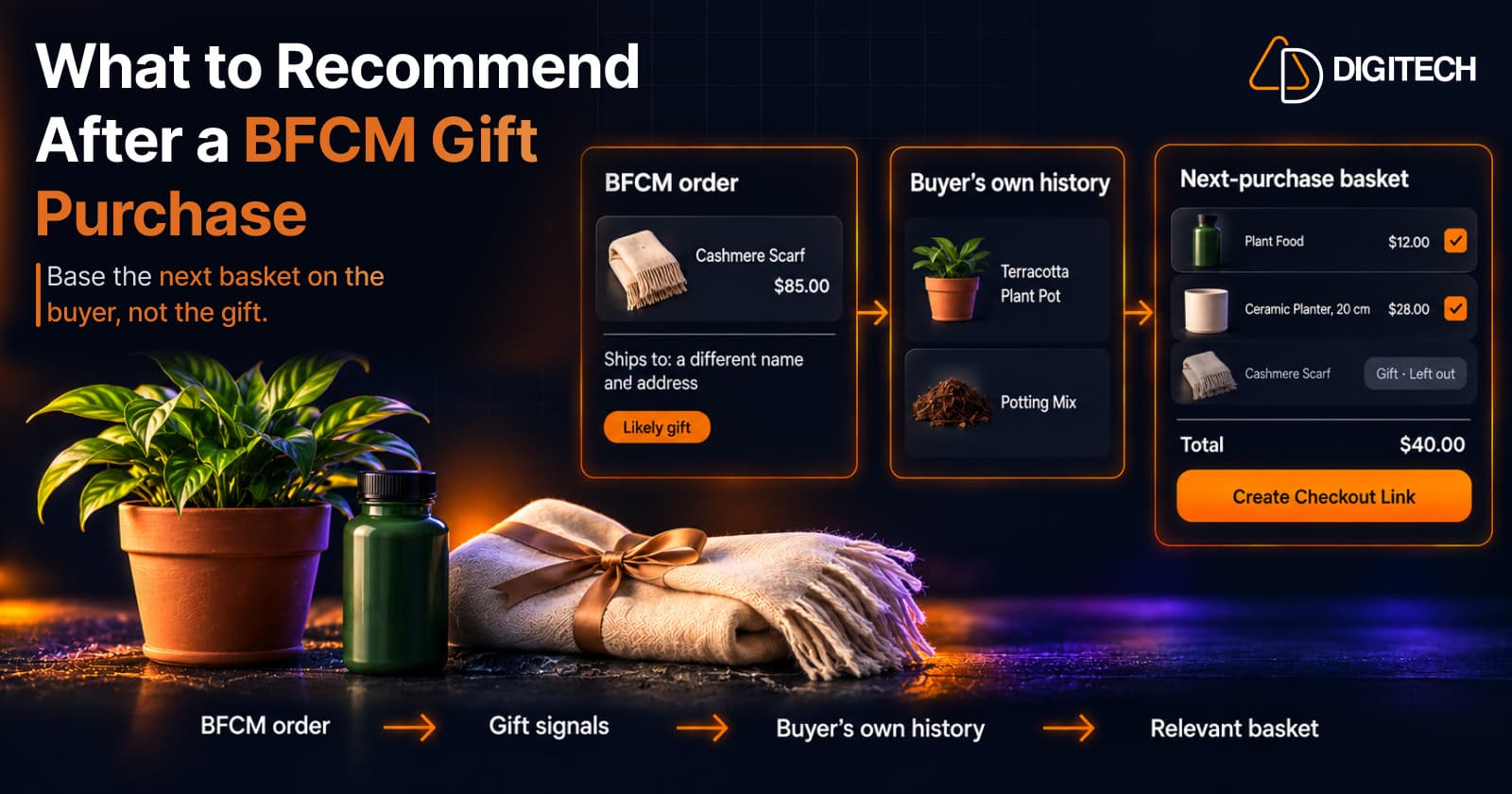
What to Recommend After a BFCM Gift Purchase: A Guide for Shopify Merchants
Some BFCM orders are gifts, which makes purchase history misleading. Here's how Shopify merchants can spot likely gift orders and recommend a relevant next product.
Read article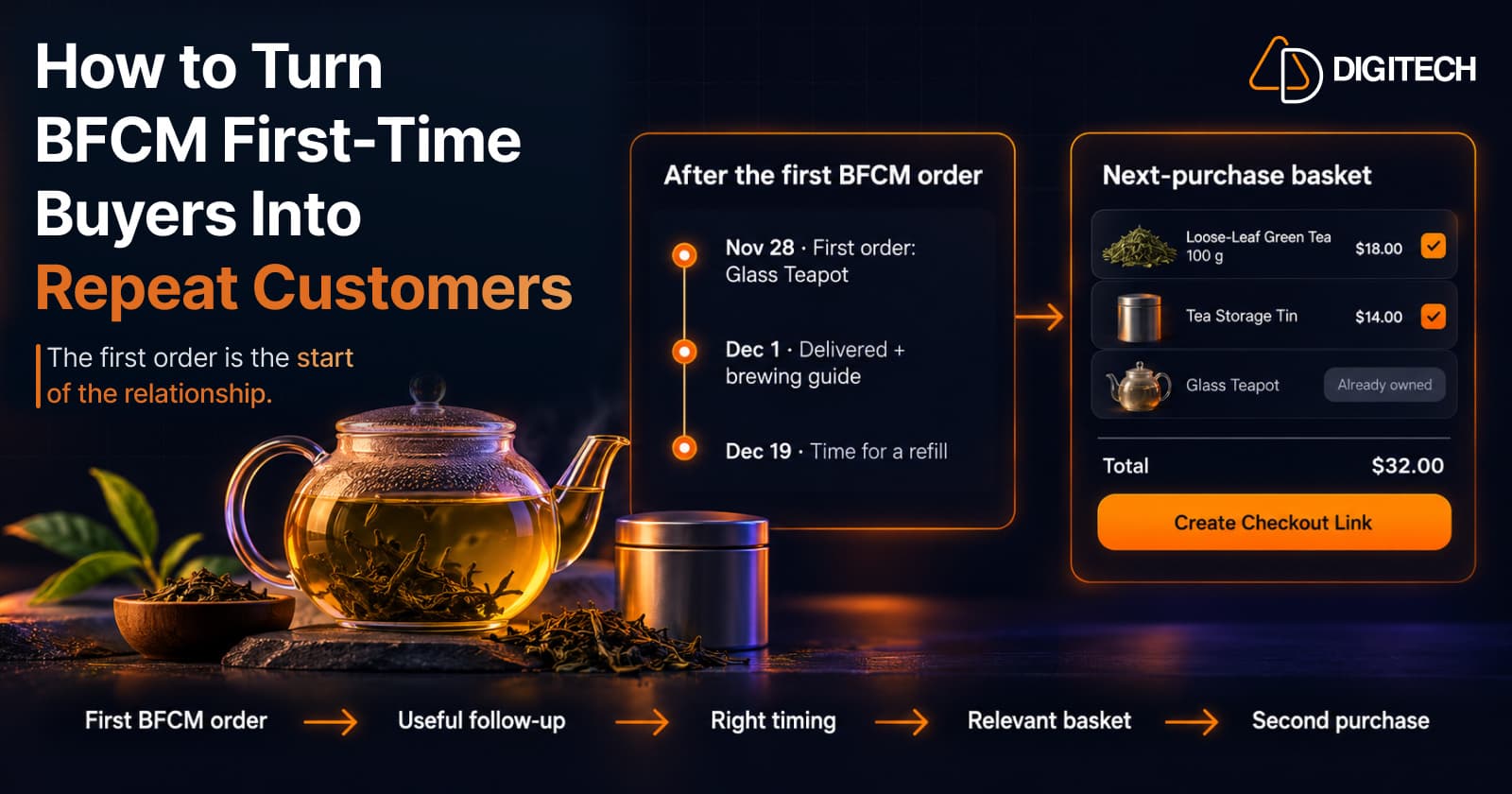
How to Turn BFCM First-Time Buyers Into Repeat Customers
A first BFCM order is the start of a customer relationship. Here's how to follow up with first-time buyers so a relevant second purchase becomes more likely.
Read article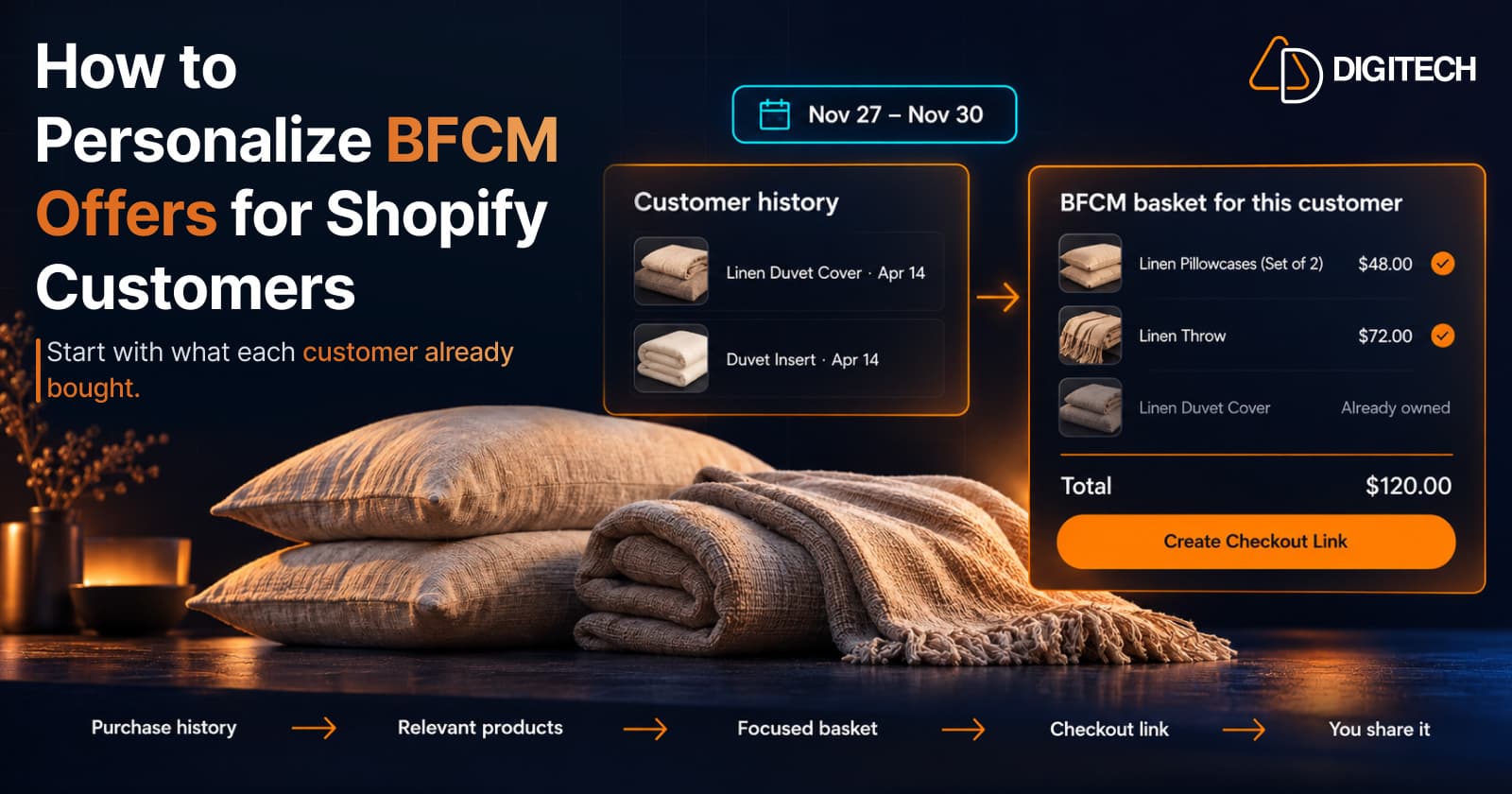
How to Personalize BFCM Offers for Shopify Customers
Use Shopify customer purchase history to build relevant BFCM offers for existing customers: what to check, five ways to personalize, and how to measure it.
Read article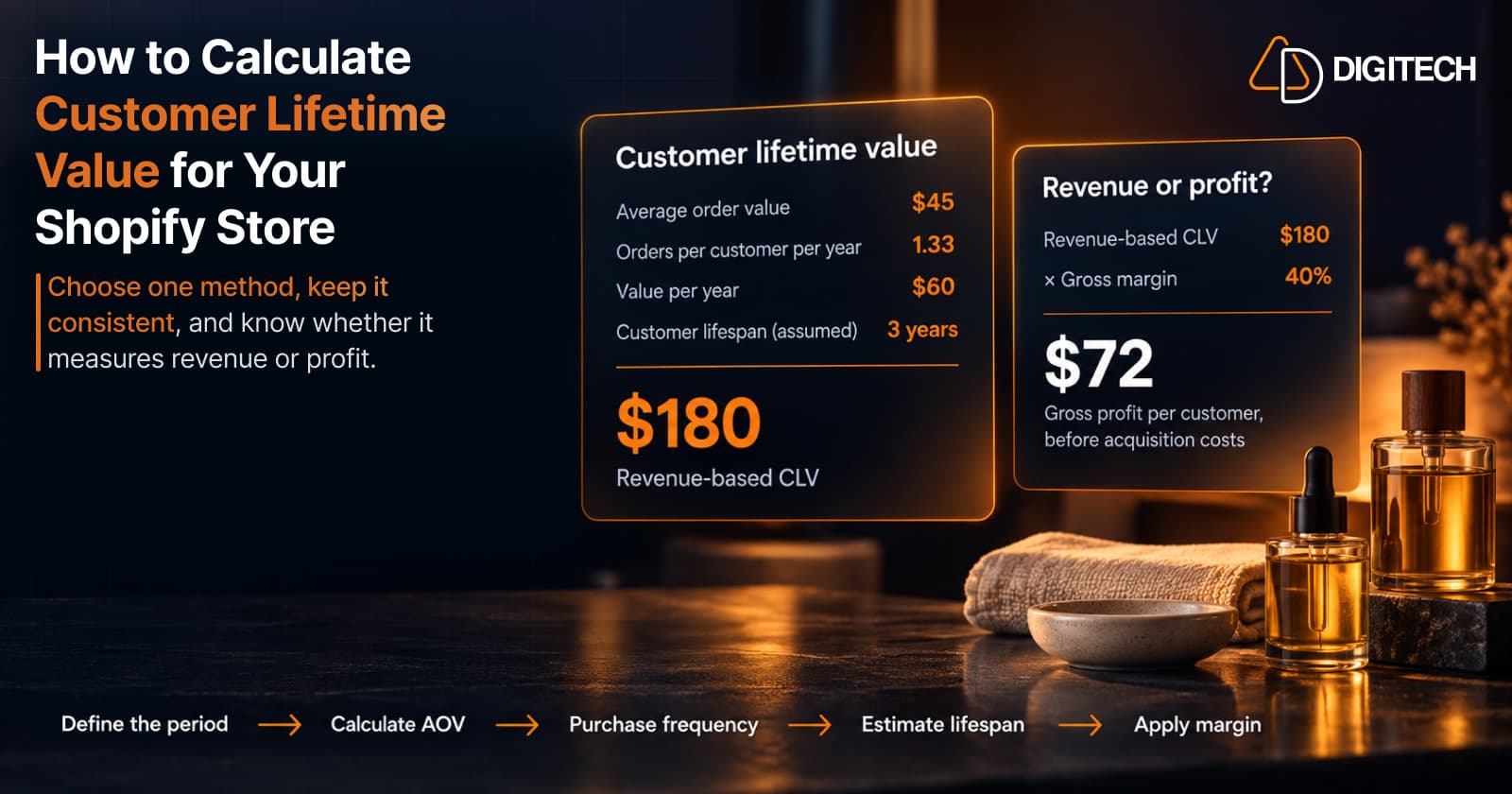
How to Calculate Customer Lifetime Value for Your Shopify Store
Learn how to calculate customer lifetime value for a Shopify store, choose between revenue and profit-based CLV, find the data in Shopify, and avoid common mistakes.
Read article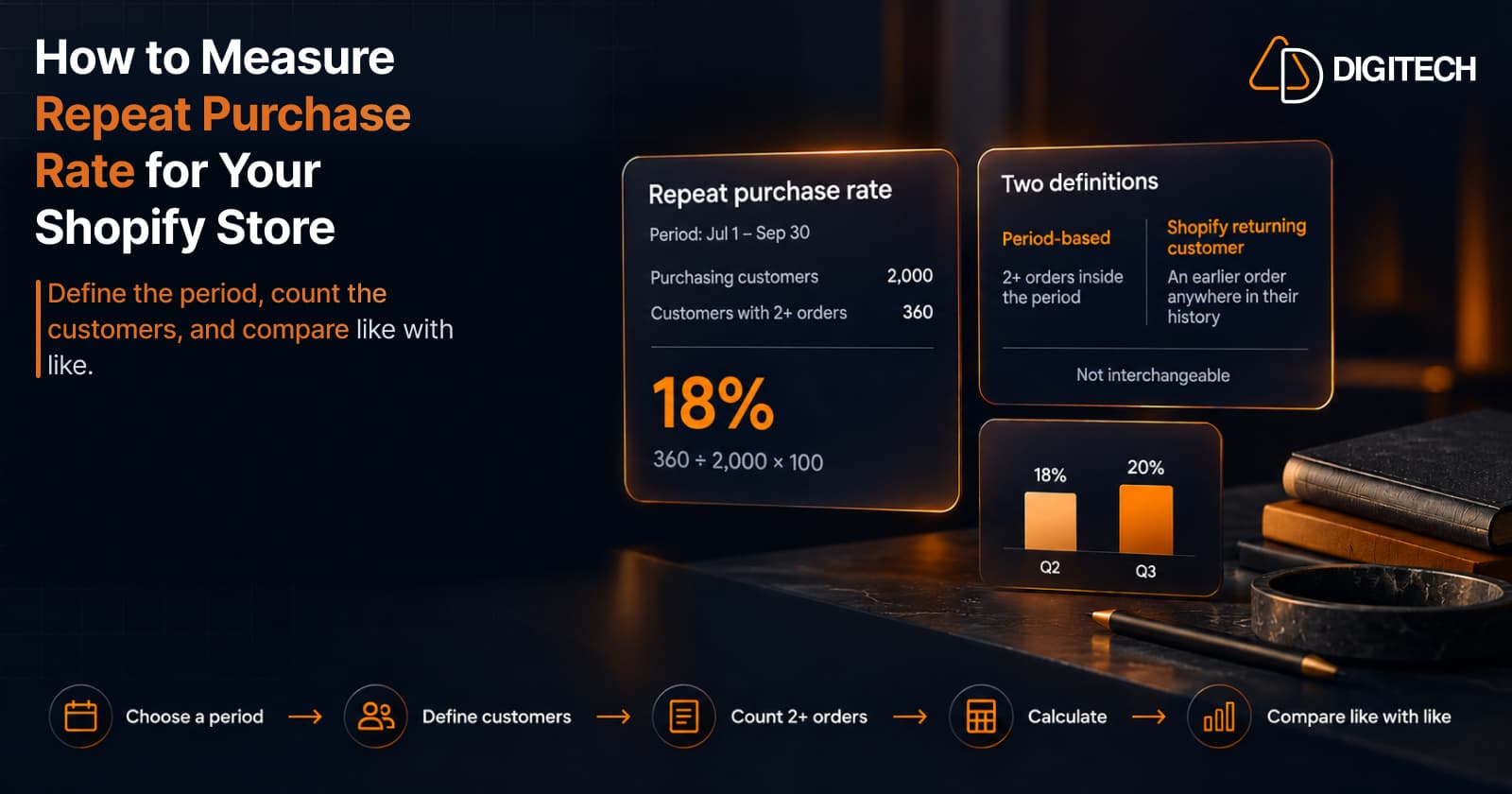
How to Measure Repeat Purchase Rate for Your Shopify Store
Learn how to calculate repeat purchase rate for a Shopify store, choose the right period and customer population, read the result carefully, and track the related retention metrics.
Read article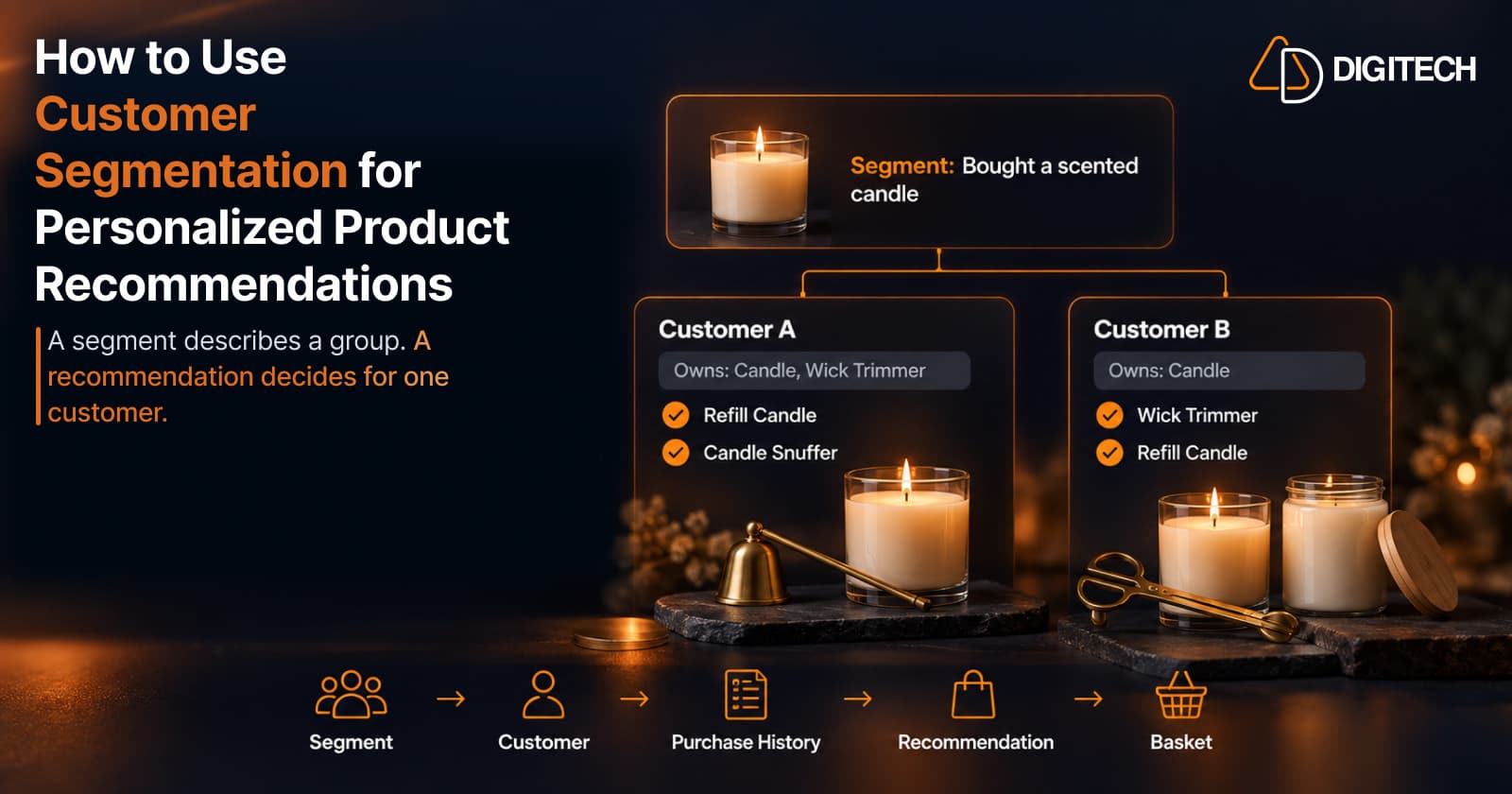
How to Use Customer Segmentation for Personalized Product Recommendations on Shopify
Learn how to use Shopify customer segments to make product recommendations more relevant, and how to turn a segment-level insight into a recommendation for one customer.
Read article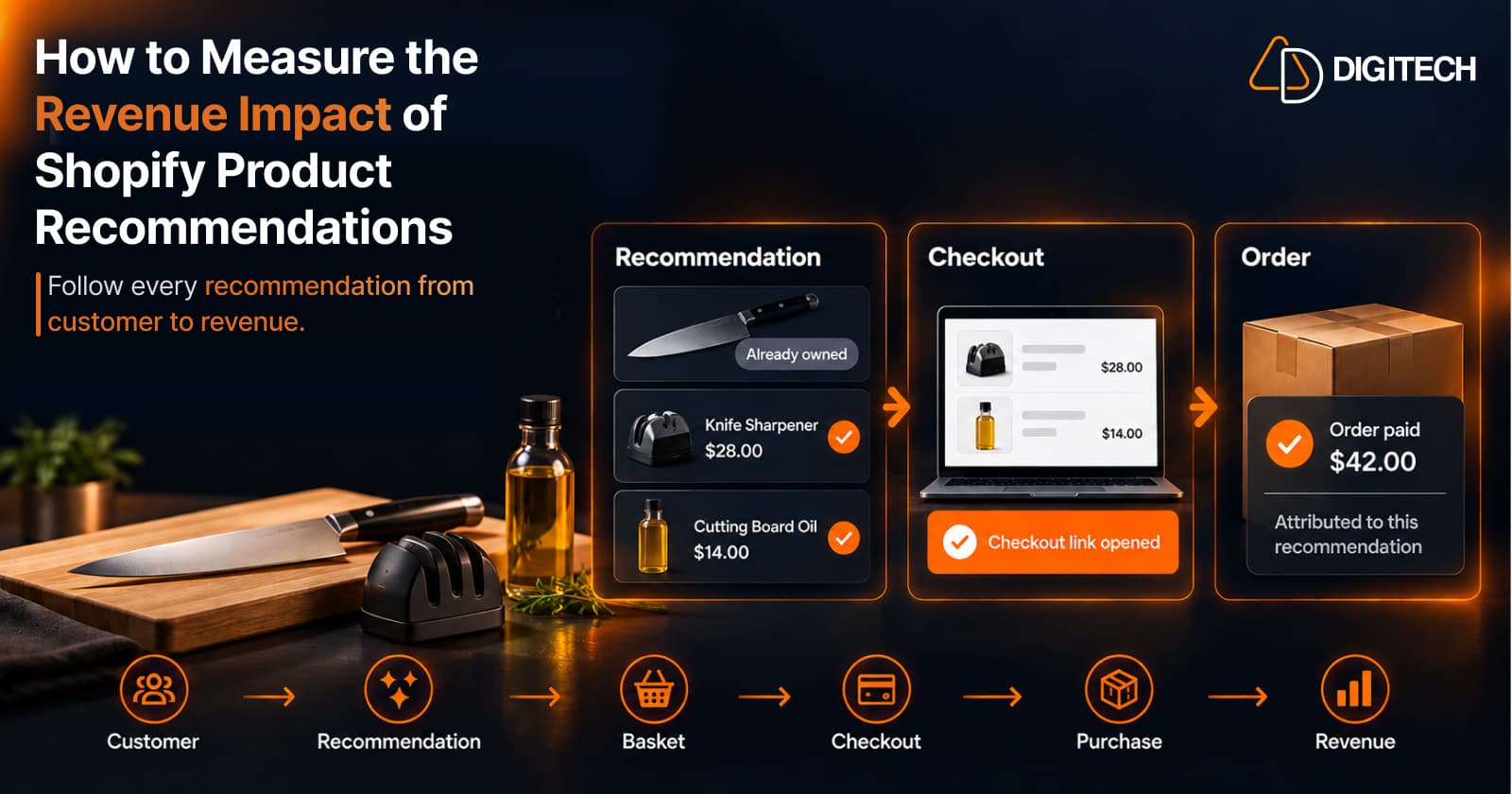
How to Measure the Revenue Impact of Shopify Product Recommendations
Learn how Shopify merchants can measure product recommendation performance, track checkout activity, attribute revenue, and improve personalized recommendations.
Read article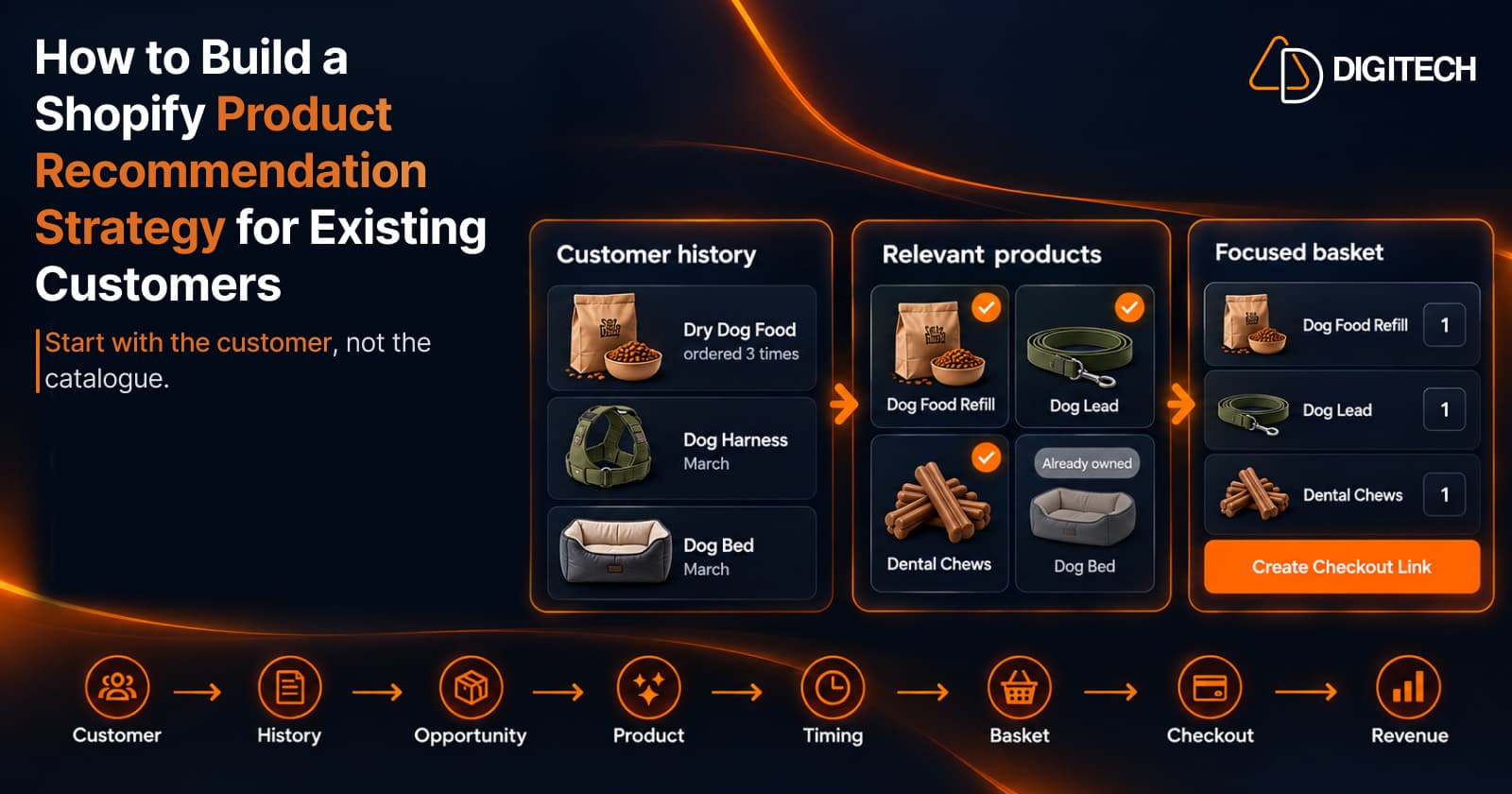
How to Build a Shopify Product Recommendation Strategy for Existing Customers
Learn how to build a Shopify product recommendation strategy using customer history, product relationships, timing, and personalized recommendations.
Read article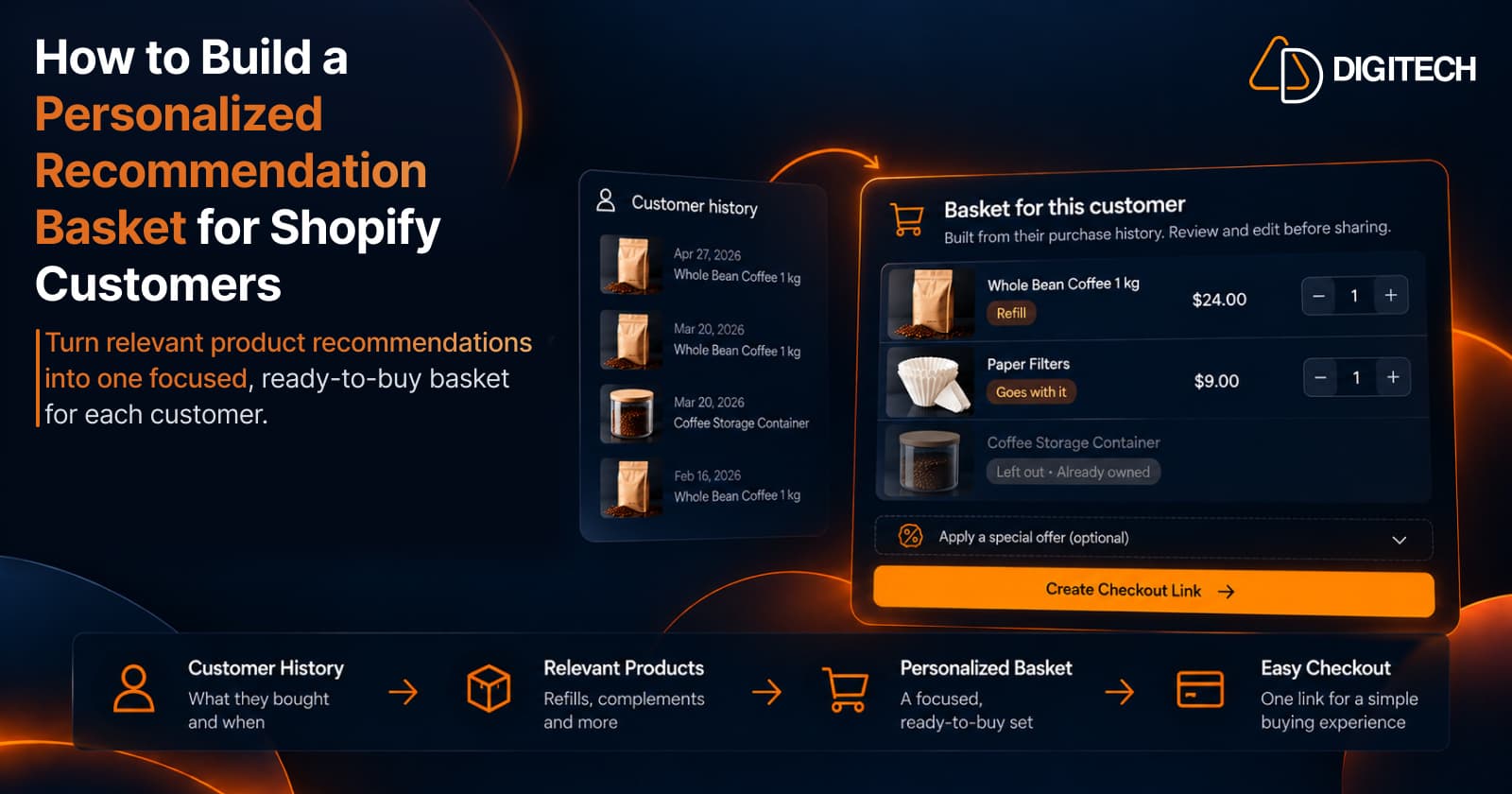
How to Build a Personalized Recommendation Basket for Shopify Customers
Learn how Shopify merchants can build personalized recommendation baskets using customer history, product relationships, timing, and product fit.
Read article