Shopify Agentic Commerce in October 2026: Shop MCP, Checkout and What Changed for Merchants
Shopify agentic commerce moved forward in September and October 2026: Shop MCP, Cart and Checkout MCP, WebMCP, buyer consent and store locations. Here's what it means for merchants.
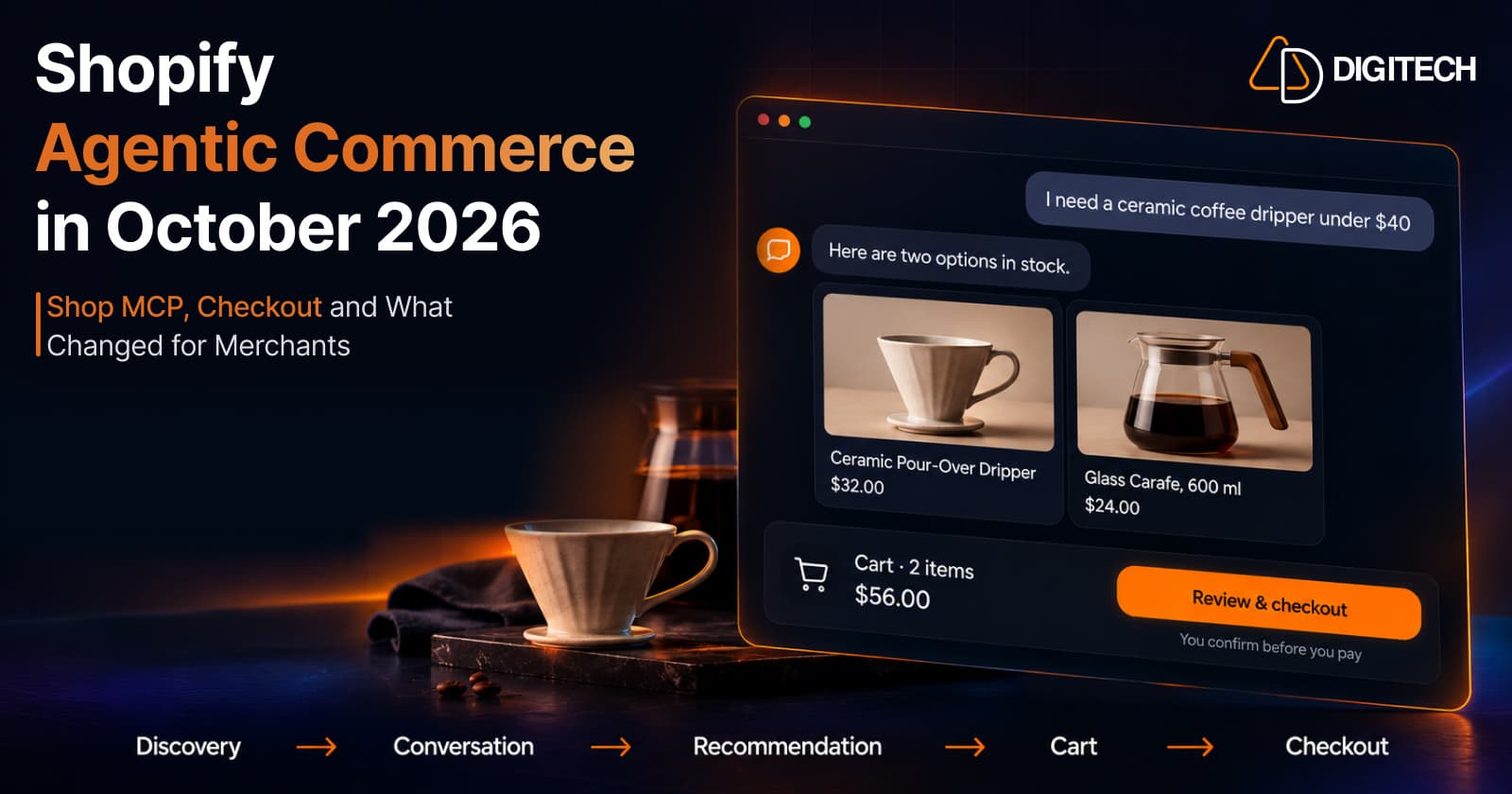
In June we wrote about what agentic commerce means for Shopify stores and how to get ready for it. Since then, Shopify agentic commerce has moved from announcement to working tools. In August and September, Shopify storefronts and checkout gained tools that browser-based AI agents can use. In October, Shopify launched Shop MCP, added buyer consent to its existing Cart MCP and Checkout MCP tools, and let agents find a merchant's physical stores.
Most of these updates are written for developers. This guide explains them for merchants, and where an on-store AI Sales Agent, such as Grovia's, fits next to them.
What Is Shopify Agentic Commerce?
Agentic commerce is shopping where an AI agent does part of the work for the customer. Instead of opening a store, searching and clicking through pages, a customer can ask an assistant for "a ceramic coffee dripper under $40", compare options, build a cart and, with the customer's confirmation, check out.
On Shopify, that rests on three pieces:
- Shopify Catalog, which structures product data so agents can read it.
- The Universal Commerce Protocol (UCP), an open standard for how agents and merchants exchange product, cart and checkout information.
- Tools agents can call, such as Shop MCP, Cart MCP, Checkout MCP and WebMCP. Some are new this autumn; others gained new capabilities.
The agent isn't buying on its own judgment. In every flow covered here, the shopper confirms before the purchase completes, and the order appears in the merchant's Shopify admin like any other.
Why Agentic Commerce Is Becoming Important in 2026
Shopify calls this "the first holiday season of the agentic era." Its October 6 news post cites Shopify's 2026 Global Holiday Retail Report: 65% of shoppers say they'll use AI for at least one shopping task this season.
That doesn't mean most purchases will run through agents this BFCM. It means more shoppers will meet your products through an AI conversation before, or instead of, your homepage.
What Shopify Changed in September and October 2026
Shopify introduced and expanded several agentic commerce capabilities through September and October 2026. These updates build on Shopify's existing agent infrastructure and include Shop MCP, WebMCP support for checkout, UCP support, buyer consent capabilities and UCP location search. Not all of it launched in October:
September 2026
- September 4: Shopify storefronts began supporting UCP 2026-08-25, the protocol version the later updates build on.
- September 28: WebMCP support for checkout became available, so browser-based agents can work with an active checkout.
October 2026
- October 13: Shop MCP became available for catalog search, carts, checkout and Shop Pay checkout after the shopper confirms.
- October 16: the existing Cart MCP and Checkout MCP added UCP buyer consent.
- October 22: UCP location search and lookup became available, so agents can find a merchant's retail stores and check product availability where supported.
Shop MCP
On October 13, 2026, Shopify launched Shop MCP. It's a single connection an agent or app can use to:
- Search Shopify Catalog and look up product details.
- Build a cart and create a checkout at the store that sells the product.
- For a signed-in shopper, use their saved addresses and Shop Pay, and complete the purchase after the shopper confirms the total and payment method.
- Find a signed-in shopper's orders and tracking.
Shopify says it works with over 1 billion products in Catalog. Orders placed through an agent appear in the merchant's admin like any other order.
What it isn't: a feature every AI assistant now has. Shop MCP is infrastructure that developers and agent builders connect to. Shopify's own changelog lists no action for merchants.
Cart MCP
Cart MCP isn't an October launch. It's part of Shopify's existing agent infrastructure, and in October it gained buyer consent (see below). It lets an agent build and adjust a cart before the shopper commits. It holds line items, localization context such as the shipping country, and optional buyer details. It can estimate totals and give the shopper a link to the cart. Carts last a long time, so a shopper can keep exploring over several turns of a conversation.
Checkout MCP
Checkout MCP is also part of the existing infrastructure, and gained buyer consent at the same time. It takes over when the shopper is ready to buy. It creates and manages a checkout session, converts a cart from Cart MCP into a checkout, and can refer the shopper to the merchant's own store to finish. That happens, for example, when a merchant requires the buyer to review something. Shopify keeps checkout sessions short-lived and limits them more strictly than carts.
WebMCP
WebMCP works differently. It's a proposed web standard that lets an agent working inside the shopper's browser use tools the page offers, instead of reading code and simulating clicks.
- Since August 5, 2026, every Liquid storefront and the Hydrogen developer preview offer tools to search the catalog, view products and variants, manage the cart, go to checkout, manage orders, and search store policies and FAQs. There's nothing to install.
- Since September 28, 2026, checkout offers WebMCP tools too. Our guide to browser AI agents in Shopify checkout covers what they can and can't do.
Agent support is currently limited to Chromium-based browsers through an origin trial.
The difference in one line: WebMCP is an agent helping a shopper on your website, in their browser. Shop MCP, Cart MCP and Checkout MCP let an agent shop with your store from its own interface, without opening your website.
UCP and Buyer Consent
On October 16, Shopify added UCP buyer consent to Cart MCP and Checkout MCP. Agents that support it can show the shopper the same privacy and marketing choices your checkout offers, such as email or SMS opt-in, with links to your policies. Your store receives those choices with the cart, checkout and order.
If an agent doesn't send a choice, Shopify applies your store's default settings for the buyer's country. If the country is unknown, consent defaults to opt-out.
Physical stores. On October 22, Shopify also let compatible agents find a merchant's retail locations and check which stores carry the items a shopper wants. This covers locations set up to sell in person and enabled as a physical storefront. Shopify notes availability here isn't a stock count, a pickup promise or a reservation, and pickup checkout for a chosen location isn't supported.
How Agentic Shopping Works
A typical journey through these tools:
Discovery → Conversation → Product Selection → Cart → Checkout → Order
- Discovery: the shopper asks an AI assistant, which searches Shopify Catalog.
- Conversation: the agent asks follow-up questions.
- Product selection: it shows products, variants, prices and stock.
- Cart: it builds a cart and refines it as the shopper decides.
- Checkout: the shopper confirms the total and payment, or finishes on your store.
- Order: the order arrives in your admin like any other.
Not every agent supports every step. Some only search; some hand the shopper to your website for checkout. That depends on how each agent was built.
Agentic Commerce vs Traditional Ecommerce
| Traditional Ecommerce | Agentic Commerce | |
|---|---|---|
| Product discovery | Search engines, ads, store navigation | The shopper asks an AI assistant, which searches catalog data |
| Customer interaction | Browsing pages and filters | A conversation with follow-up questions |
| Product comparison | The shopper opens tabs and compares | The agent compares options it can read |
| Cart creation | The shopper adds items on your site | The agent builds a cart the shopper can review |
| Checkout | Your store's checkout | Your checkout, through an agent or on your store, after the shopper confirms |
| Customer experience | Shaped by your site's design | Shaped by the agent and by your product data |
| Role of AI | Optional tools on the site | The interface between shopper and store |
The key change isn't that AI recommends products. It's that an AI conversation can become the place where customers discover, evaluate and buy, while the shopper still confirms the purchase.
What This Means for Shopify Merchants
Your product data is your storefront in AI channels. An agent can only describe what it can read. Vague titles, missing variant details or out-of-date stock show up directly in the answer a shopper gets.
Your checkout still matters. Agent orders go through your Shopify checkout, with your shipping, payment and consent settings. Problems there affect agent orders too.
Policies are now answers. WebMCP includes a tool for searching store policies and FAQs. An unclear returns policy becomes an unclear answer.
Not every store is equally ready, and not every agent is equally capable. Being on Shopify gives your store access to this infrastructure. It doesn't mean every AI assistant shows your products, or shows them well.
How to Prepare Your Shopify Store for AI Shopping
Our June guide has the full readiness checklist. These are the points the October updates make more urgent:
- Keep product data accurate: titles, descriptions, variants, pricing, availability, images and product attributes. Our guide to Shopify Catalog and SEO explains why this matters.
- Write for understanding, not just keywords. State what a product is, who it's for, sizes, materials and what's included.
- Keep policies and FAQs specific and current, including returns, shipping and warranty.
- Keep inventory reliable. An agent that offers an out-of-stock item loses the shopper's trust and yours.
- Make product relationships clear: complementary products, accessories, alternatives, bundles and variants.
- Check your price data. Compare-at prices are now shared with AI channels when the setting is on.
- Review consent defaults for the countries you sell to, now that agents can pass consent choices through.
- Set up retail locations correctly if you sell in person, so agents can find the right stores.
- Think beyond traditional SEO. Search still matters. AI shopping adds a second question: can an agent understand and recommend your products?
Where AI Sales Agents Fit Into the Customer Journey
Shopify's agentic commerce tools serve agents outside your store. Many purchases still happen on your store, and that's where an on-store AI Sales Agent fits.
Grovia's AI Sales Agent is a conversational shopping experience merchants add to their own Shopify surfaces. It's part of Grovia's Pro plan, and the checkout version requires Shopify Plus.
- Checkout: answers product questions, handles objections, recommends products and suggests upsells.
- Thank You Page: continues the conversation after the purchase, answers questions about the order, and recommends add-ons and upgrades as a separate purchase.
- Order Status Page: answers order and shipping questions, recommends complementary products and supports re-orders. Our guide to Order Status Page upsells and recommendations covers that page in depth.
It uses product knowledge, order context and the conversation so far. It supports product recommendations, cart modifications, variant swaps, discount code application and multi-turn conversations with memory.
It doesn't place orders on its own; the shopper still decides and buys. It's also a separate product from Shopify's agentic commerce tools: the merchant's own sales conversation, on the merchant's own pages.
Shopify Agentic Commerce vs On-Store AI Sales Agents
| Shopify Agentic Commerce Infrastructure | On-Store AI Sales Agent | |
|---|---|---|
| External agent commerce | Lets outside AI agents search, build carts and check out | Not its role |
| Storefront conversation | WebMCP lets a browser agent use your store's tools | A conversation the merchant places on supported Shopify pages |
| Product discovery | Through Shopify Catalog and your storefront | Within your store, using your product information |
| Customer questions | Answered by the outside agent from your data and policies | Answered on your checkout and post-purchase pages |
| Checkout and cart | Cart MCP, Checkout MCP and Shop MCP | Can modify the cart, swap variants and apply discount codes |
| Post-purchase conversation | Order lookup for signed-in shoppers through Shop MCP | Thank You Page and Order Status Page conversations |
| Merchant control | Shopify and each agent decide the experience | The merchant sets up and controls the conversation |
They complement each other. One brings shoppers from AI channels; the other helps the shoppers who are already on your store.
What Merchants Should Watch Next
- Which AI channels support which tools. Support will grow unevenly.
- Webhooks for Shop MCP. There are none at launch, so agents check order status themselves.
- WebMCP browser support, currently Chromium-based browsers through an origin trial.
- Your own data: orders from AI channels and the questions shoppers ask.
Conclusion
Shopify agentic commerce is no longer a concept. Since August, Shopify has added and expanded working tools for agents to search, build carts, check out with shopper confirmation, respect consent and find stores. For merchants, the work is mostly familiar: accurate product data, clear policies, reliable inventory and a working checkout. What's new is that an AI agent may read it first.
Many shoppers will still buy on your store, and a helpful conversation there is the part you control directly.
Frequently asked questions
What is agentic commerce in Shopify?
It's shopping where an AI agent helps a customer find, compare and buy products, using Shopify's commerce systems instead of the store's website alone. The customer still confirms the purchase.
What is Shopify Shop MCP?
A connection developers can add to an AI agent or app, available since October 13, 2026. It lets the agent search Shopify Catalog, build carts, create checkouts and complete a Shop Pay checkout after the shopper confirms. AI assistants don't support it automatically.
What are Cart MCP and Checkout MCP?
Two of Shopify's tools for agents. Cart MCP lets an agent build and adjust a cart, with estimated totals, while the shopper is still deciding. Checkout MCP turns that cart into a checkout session when the shopper is ready to buy, and can send the shopper to the store to finish when needed.
What is WebMCP?
A proposed web standard that lets an AI agent in a shopper's browser use tools a page provides. Liquid storefronts have offered WebMCP tools since August 5, 2026, and checkout since September 28, 2026.
What is UCP?
The Universal Commerce Protocol, an open standard for how AI agents and merchants exchange product, cart and checkout information. Shopify's Cart MCP and Checkout MCP implement it.
Do Shopify merchants need to install anything for agentic commerce?
For the updates covered here, Shopify lists no merchant action: the WebMCP tools needed nothing to install, and the MCP tools are used by agent developers. Whether an AI channel shows your products depends on your setup, so check your Agentic Storefronts and Catalog settings.
How can Shopify merchants prepare for AI shopping?
Keep product data, variants, prices, stock, policies and FAQs accurate and specific, make product relationships clear, and set up consent and store locations correctly. Our June guide has the full readiness checklist.
Is a Shopify AI Sales Agent the same as agentic commerce?
No. Shopify's agentic commerce tools let outside AI agents shop on Shopify stores. An on-store AI Sales Agent, such as Grovia's, is a conversation the merchant adds to their own checkout and post-purchase pages.
Turn Your Thank You Page Into a Better Post-Purchase Experience
With Grovia, you can add relevant product recommendations, bundles, upsells, offers and post-purchase surveys to your Shopify Thank You Page — without coding.
Related reading
Shopify AI Sales Agent: How AI Can Help Customers Buy More Confidently
Learn how Shopify AI Sales Agents can help customers with product questions, recommendations, upsells and post-purchase conversations.
Read article
How to Use Your Shopify Thank You Page for BFCM Sales
Learn how to use the Shopify Thank You Page during BFCM with relevant upsells, product recommendations, bundles, offers and countdown timers.
Read article
What to Sell on the Shopify Thank You Page: 15 Post-Purchase Product Ideas
Discover 15 Shopify Thank You Page product ideas, from complementary accessories and bundles to upgrades, refills and relevant post-purchase offers.
Read article
How to Add a Countdown Timer to the Shopify Thank You Page
Learn how to add a countdown timer to the Shopify Thank You Page and use time-sensitive offers, discounts and relevant products to drive post-purchase engagement.
Read article
Shopify Thank You Page Marketing: 10 Ideas to Engage Customers After Checkout
Discover 10 Shopify Thank You Page marketing ideas to engage customers after checkout with recommendations, offers, bundles, feedback and useful content.
Read article
Shopify Thank You Page Offers: How to Create Post-Purchase Offers
Learn how to create Shopify Thank You Page offers with discounts, coupons, countdown timers and relevant promotions to drive additional purchases.
Read article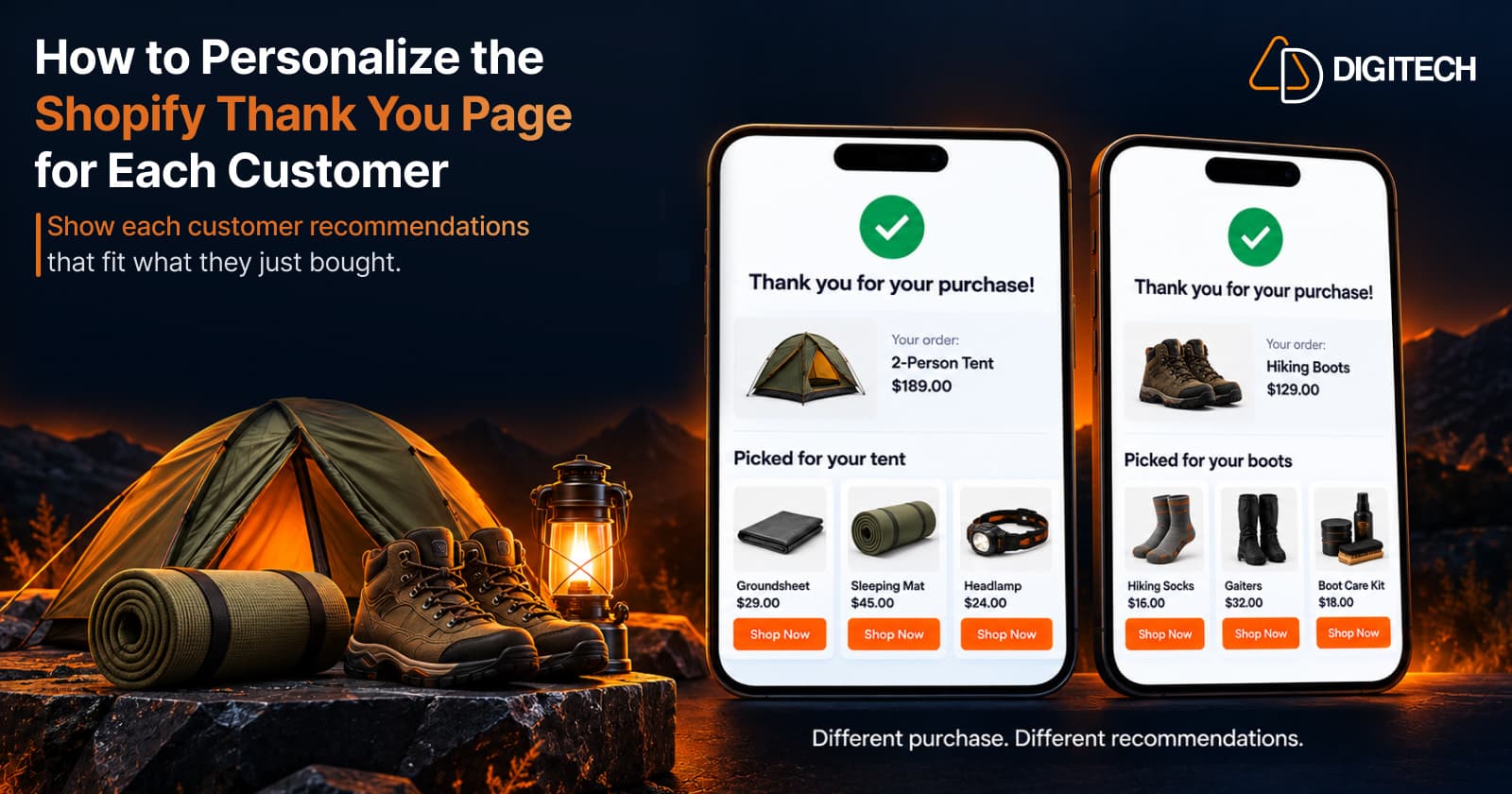
How to Personalize the Shopify Thank You Page for Each Customer
Learn how to personalize the Shopify Thank You Page with relevant recommendations, cross-sells, bundles, offers and post-purchase content.
Read article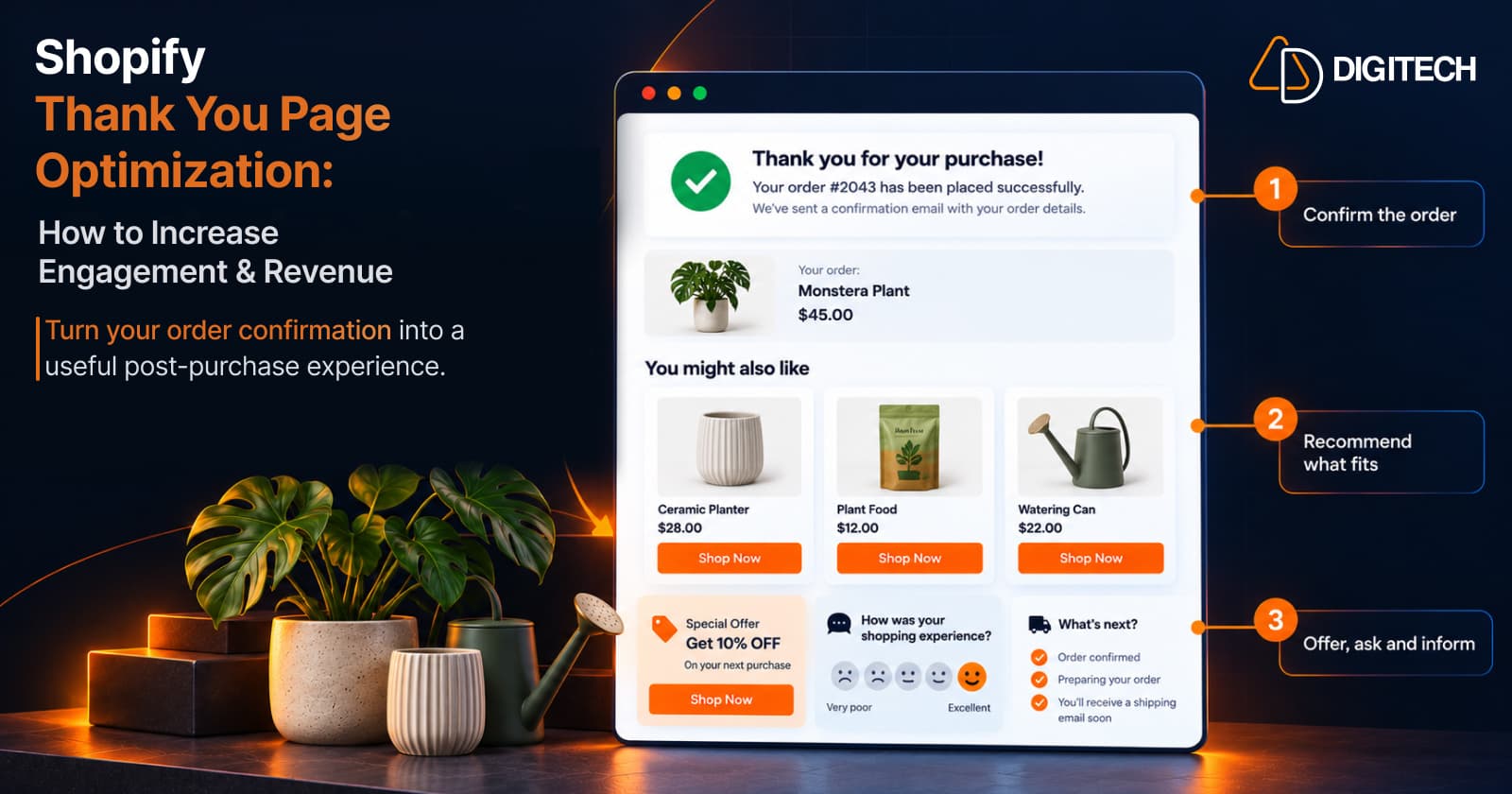
Shopify Thank You Page Optimization: How to Increase Engagement & Revenue
Learn how to optimize your Shopify Thank You Page with recommendations, upsells, bundles, offers and surveys to create a better post-purchase experience.
Read article
Shopify Order Status Page: How to Add Upsells, Recommendations & Offers
Learn how to customize the Shopify Order Status Page with product recommendations, upsells, bundles and offers to create better post-purchase experiences.
Read article