Shopify AI Sales Agent: How AI Can Help Customers Buy More Confidently
Learn how Shopify AI Sales Agents can help customers with product questions, recommendations, upsells and post-purchase conversations.
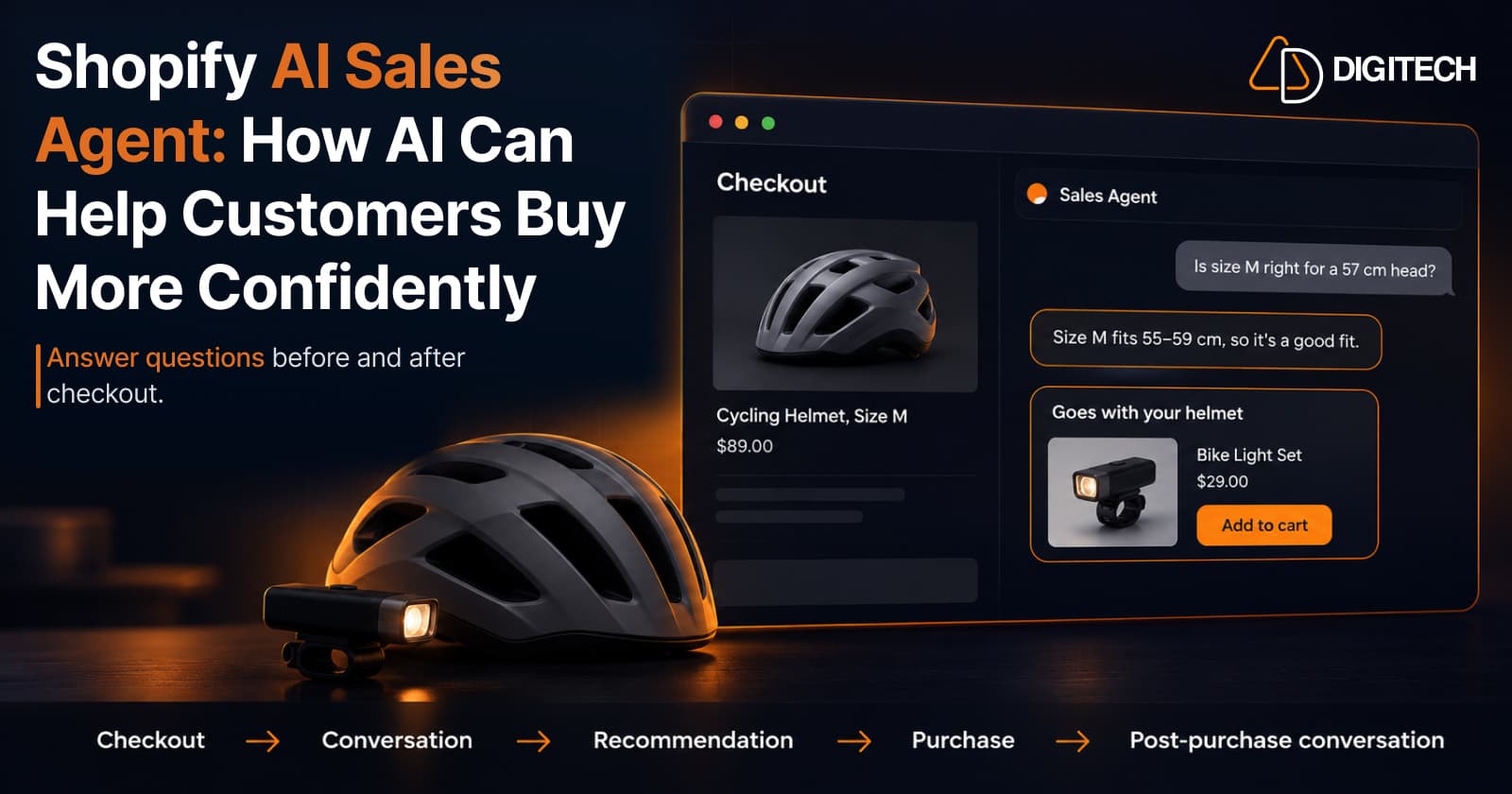
A customer reaches checkout with a pair of trail running shoes in the cart and one question: do these run small? There's no one to ask. They can leave to search reviews, guess, or abandon the purchase. After they buy, a different question appears: when will it ship, and do I need anything else for my first run?
Those moments are where a Shopify AI Sales Agent fits. Instead of showing the same widget to everyone, it lets customers ask what they actually want to know and get an answer in the context of what they're buying or have just bought.
This guide explains what an AI sales agent is, how it works on Shopify's checkout, Thank You Page and Order Status Page, what it can and can't do, and how to measure it.
What Is a Shopify AI Sales Agent?
A Shopify AI Sales Agent is a conversational assistant placed inside the buying journey. Customers type a question in their own words, and the agent answers using your product information and, where it's available, their order.
It differs from the tools most stores already use:
- Static recommendations show the same products to everyone.
- Rule-based recommendations show products based on rules you set, such as "same collection" or "frequently bought together".
- Popups and banners deliver one message, whether or not it's relevant.
- Upsell widgets present an offer, but can't explain it or answer a follow-up question.
An AI sales agent responds to the customer. If someone asks whether a serum suits sensitive skin, it can answer from your product information and suggest a gentler alternative if that's a better fit.
Why Shopify Stores Are Exploring AI Sales Conversations
Most hesitation in a store isn't about price. It's about uncertainty:
- Product questions: size, fit, materials, compatibility, how to use it.
- Objections: "Is this worth the upgrade?" or "Will this work with what I have?"
- Discovery: customers often don't know an accessory or refill exists.
- Buying confidence: a clear answer at the right moment can help someone decide either way.
- Post-purchase engagement: after buying, customers have new questions about the order and what goes with it.
An AI sales agent gives customers somewhere to ask. It won't win every hesitant customer, and it shouldn't try to. The aim is to answer the questions that would otherwise go unanswered.
How a Shopify AI Sales Agent Works Across the Customer Journey
Shopify has three different surfaces where a conversation can happen, each at a different moment:
| Surface | Customer moment | What a conversation can do |
|---|---|---|
| Checkout | Before purchase, deciding | Answer product questions, handle objections, recommend products and upsells |
| Thank You Page | Immediately after purchase | Answer order questions, suggest add-ons or upgrades as a separate purchase |
| Order Status Page | Later, checking the order | Answer order and shipping questions, suggest complementary products and re-orders |
These are separate pages in Shopify, and none of them is Shopify's native post-purchase page. That's a different surface, shown after payment but before the Thank You Page, with its own extension type that's still in beta.
AI Sales Agent on the Shopify Checkout Page
Checkout is where a customer is closest to buying and most likely to stall on a question. Apps add content to checkout through checkout UI extensions, and apps on the information, shipping and payment steps are available only on Shopify Plus.
Practical uses:
- Product questions: "Is this jacket waterproof or water-resistant?"
- Objections: "I'm not sure about the size." The agent can point to the size guide details in your product information.
- Comparison: "What's the difference between the 500 ml and 1 L version?"
- Recommendations and upsells: a matching item or the next size up, when it genuinely fits the question.
An illustrative example:
Customer: Will this tent fit two adults and gear? Agent: It fits two adults comfortably, with a vestibule for packs. If you need more inside space for gear, the 3-person version is 40 cm wider.
The best checkout conversations are short and help the customer finish the purchase they came for.
AI Sales Agent on the Shopify Thank You Page
The Thank You Page is the purchase confirmation customers see immediately after checkout, and the original purchase is already complete. A conversation there doesn't change that order. If the customer buys something the agent recommends, it's a separate, additional purchase.
The Thank You Page is extended through checkout UI extensions as well. It's a good moment for:
- Order questions: "Did my discount apply?" or "Can I change my delivery address?" The agent can answer from the order or point to the right next step.
- Add-ons: a case for the phone, filters for the coffee machine.
- Upgrades: a related premium product, shown as an option rather than a correction of what they just bought.
- Relevant discovery: products that go with the purchase.
If you already show recommendations here, a conversation adds a way for customers to ask about them. Our guides to Thank You Page upsells and complementary cross-sells cover the non-conversational side.
AI Sales Agent on the Shopify Order Status Page
The Order Status Page is the page customers can revisit later to track their order, often more than once. It's extended through customer account UI extensions, and Shopify doesn't show app extensions on the public, unauthenticated version of the page.
Practical uses:
- Order and shipping questions: "When will this arrive?" or "Has it shipped?"
- Returning engagement: a customer checking on a gift order may want something for themselves.
- Complementary products: the item that goes with what's on its way.
- Re-orders: a refill for a consumable, when the timing makes sense.
Our guide to Order Status Page upsells and recommendations covers how this page differs from the Thank You Page.
What Can a Shopify AI Sales Agent Do?
A well-built AI sales agent can:
- Answer questions in natural language, using your product information.
- Recommend products relevant to the question or the order.
- Handle objections with clear, factual answers.
- Suggest add-ons and upgrades where they fit.
- Update the cart or swap a variant where the app supports it, always as a change the customer chooses.
- Apply a discount code where the app supports it and you've set one up.
- Continue multi-turn conversations, remembering what the customer already said.
- Use product and order context to keep answers specific.
What it can't do is know things that aren't in your product information. If your product pages don't say whether a jacket is machine washable, the agent shouldn't guess. Good product data is the foundation.
Shopify AI Sales Agent Examples
These examples are illustrative, not case studies.
Skincare (checkout):
Customer: Can I use this vitamin C serum with retinol? Agent: Many people use vitamin C in the morning and retinol at night. The product page recommends patch testing first. Would you like the gentle cleanser that pairs with it?
Apparel (checkout): a customer unsure between two sizes asks about fit. The agent answers from the size guide and the product's fit notes.
Home (Thank You Page): a customer who just bought a linen duvet cover asks whether pillowcases match. The agent suggests the matching set as a separate purchase.
Electronics (Thank You Page): after buying headphones, a customer asks whether they need an adapter for flights. The agent recommends the travel adapter if you sell one.
Food and beverage (Order Status Page): a customer checking a coffee order asks when to reorder. The agent can suggest a refill based on the bag size they bought.
Accessories (Order Status Page): a customer tracking a watch asks about straps. The agent shows compatible straps for that model.
AI Sales Agent vs Traditional Product Recommendations
Product recommendations show relevant products based on rules or recommendation logic, and they do that job well. An AI Sales Agent adds a conversational layer on top: the customer can ask questions and explain what they need, and the agent can respond to objections, recommend products in context and continue the conversation across the buying journey.
| Static recommendations | Rule-based recommendations | AI conversational sales agent | |
|---|---|---|---|
| Interaction | None, display only | None, display only | Two-way conversation |
| Answers questions | No | No | Yes, from your product information |
| Handles objections | No | No | Can respond to common concerns |
| Uses context | Same for everyone | Follows your rules | Uses the question and, where available, the order |
| Discovery | Fixed list | Relevant list | Suggests products in response to what's asked |
| Across the journey | Shown where you place it | Shown where you place it | Can continue from checkout to the Thank You and Order Status pages |
| Best for | Simple stores, best sellers | Predictable product pairings | Products that raise questions before or after buying |
They work together. Rule-based recommendations are reliable for predictable pairings, and a conversation helps when customers need answers. Our guide to personalizing the Thank You Page explains the rule-based side in more detail.
Best Practices for Using an AI Sales Agent on Shopify
- Keep recommendations relevant to the question or the order.
- Don't overwhelm customers. One or two suggestions are usually enough.
- Give useful answers first, then suggest a product only if it helps.
- Keep the conversation concise, especially at checkout.
- Use product and order context carefully. Answer from what you know, and don't overreach.
- Make discounts clear, including what they apply to and when they end.
- Respect customer intent. A customer asking about shipping wants a shipping answer.
- Don't force upsells, particularly right after a large purchase.
- Test different conversation experiences and compare results.
- Monitor performance, and review conversations to find gaps in your product information.
How to Measure AI Sales Agent Performance
Track what your tools report:
- Conversations started, by surface.
- Completion rate: how many conversations reach an answer or a natural end.
- Recommendation interactions: clicks on suggested products.
- Add-to-cart actions, where available.
- Purchases that follow a conversation.
- Revenue attribution, where your app supports it.
- Drop-off points: where customers leave a conversation.
- Common questions: which reveal missing product information.
Compare against your own baseline, such as a period without the agent, and don't credit every purchase to a conversation. Some customers would have bought anyway.
How Grovia's AI Sales Agent Works
Grovia's Sales Agent brings AI sales conversations to the Checkout, Thank You Page and Order Status Page. Grovia's AI Sales Agent is available on the Pro plan, with usage-based conversation billing: $39.99/month with 1,500 conversations included, then $0.04 per additional conversation. The checkout version requires Shopify Plus.
It supports natural language conversations, product knowledge, order context and conversational context, product recommendations, add-ons and upgrades, cart modifications and variant swaps, discount code application, and multi-turn conversations with memory.
The Sales Agent sits alongside Grovia's other tools rather than replacing them. The same app includes rule-based product recommendations, bundles, upsells and cross-sells, offers, post-purchase surveys, and quizzes with Jump Logic and score- or answer-based results, plus Klaviyo and Omnisend integrations. A store might use a rule-based recommendation for its standard pairings and the Sales Agent for the questions those recommendations can't answer.
As with any of these tools, the Sales Agent doesn't change a completed order, and it isn't Shopify's native post-purchase extension. Anything a customer buys after checkout is a separate purchase.
Conclusion
A Shopify AI Sales Agent gives customers a place to ask the questions that make them hesitate, before checkout, right after buying and when they come back to check their order. Used well, it can help customers buy with more confidence and discover products that fit. It works best with accurate product information, concise answers and a light touch on upsells. Start with the surface where your customers ask the most questions, and measure from there.
Frequently asked questions
What is a Shopify AI Sales Agent?
It's a chat assistant inside your store's buying journey that answers customer questions in natural language, uses your product information and, where available, the customer's order, and can recommend relevant products during the conversation.
Can an AI Sales Agent work on Shopify Checkout?
Yes, through an app that adds a checkout UI extension. Apps that add content to the checkout steps themselves (information, shipping and payment) are available only on Shopify Plus, so an AI Sales Agent in checkout requires a Plus store.
Can an AI Sales Agent work on the Thank You Page?
The customer has completed checkout, and the Thank You Page is shown immediately after checkout. A Thank You Page UI extension cannot directly modify the original purchase, so any additional purchase opportunity should be treated as a separate purchase.
Can an AI Sales Agent work on the Order Status Page?
Yes. The Order Status Page is extended with customer account UI extensions. Customers return to it to check their order, so it suits order questions, complementary products and re-orders.
Can an AI Sales Agent handle customer objections?
It can respond to common concerns, such as sizing, compatibility or how a product differs from another, using your product information. How well it does depends on the quality and completeness of that information.
Can an AI Sales Agent increase Shopify sales?
It can create more opportunities for customers to get answers and discover relevant products, but it doesn't guarantee more sales. Measure conversations, recommendations and purchases against your own baseline.
What is the difference between an AI Sales Agent and product recommendations?
Product recommendations show a set of products based on rules or data. An AI Sales Agent holds a conversation: it can answer questions, respond to concerns and suggest products in response to what the customer actually asks.
Turn Your Thank You Page Into a Better Post-Purchase Experience
With Grovia, you can add relevant product recommendations, bundles, upsells, offers and post-purchase surveys to your Shopify Thank You Page — without coding.
Related reading
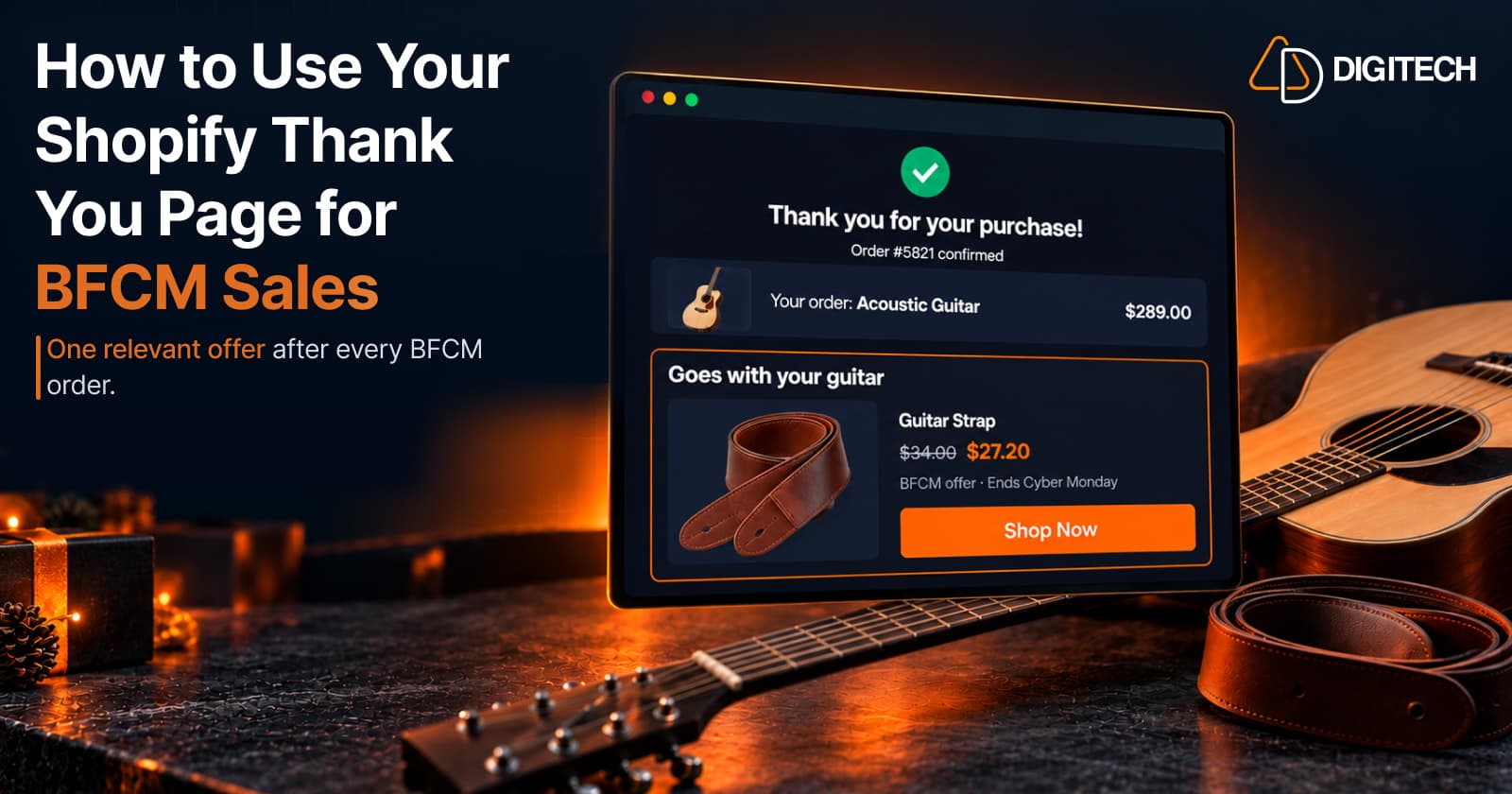
How to Use Your Shopify Thank You Page for BFCM Sales
Learn how to use the Shopify Thank You Page during BFCM with relevant upsells, product recommendations, bundles, offers and countdown timers.
Read article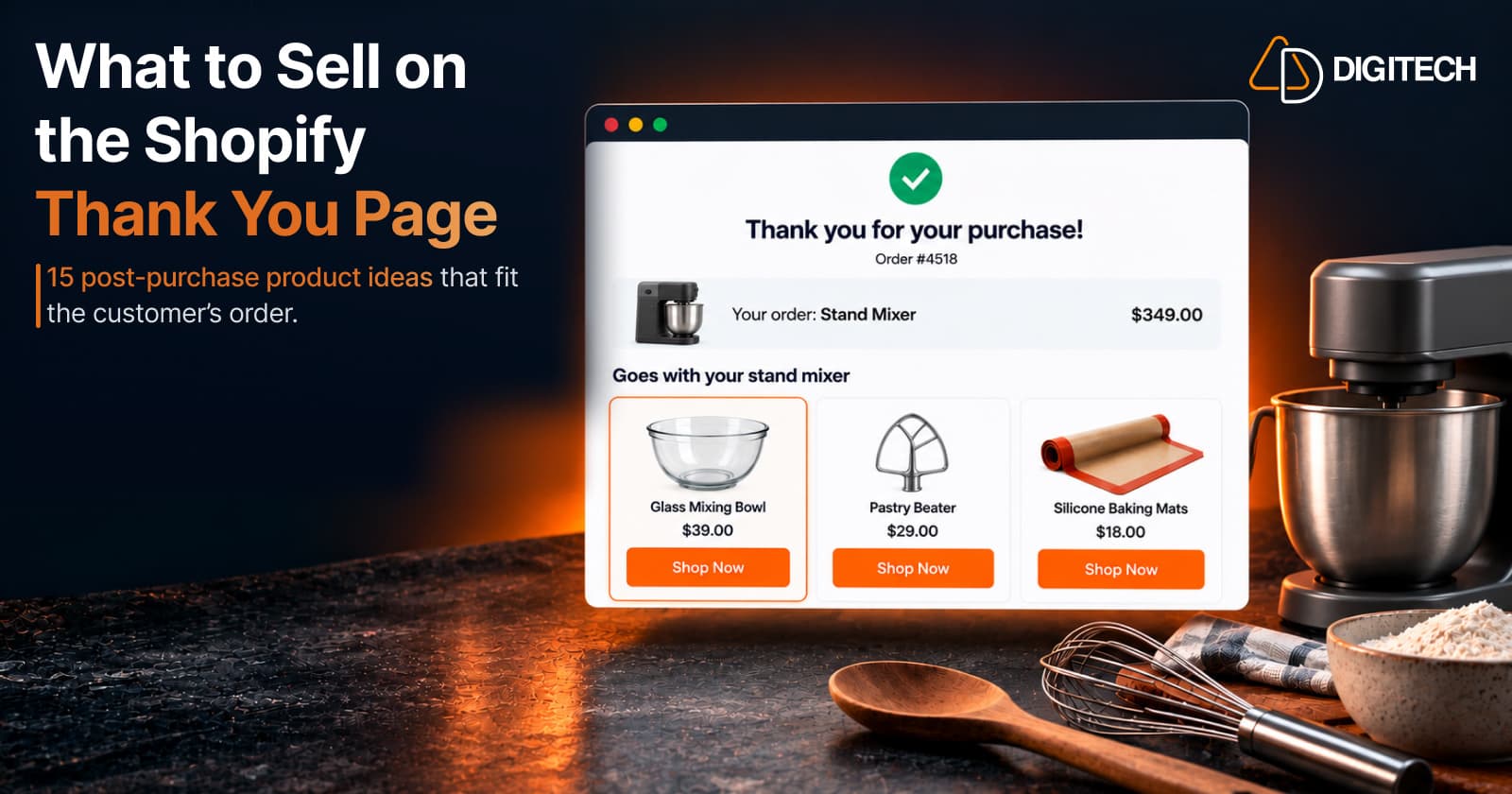
What to Sell on the Shopify Thank You Page: 15 Post-Purchase Product Ideas
Discover 15 Shopify Thank You Page product ideas, from complementary accessories and bundles to upgrades, refills and relevant post-purchase offers.
Read article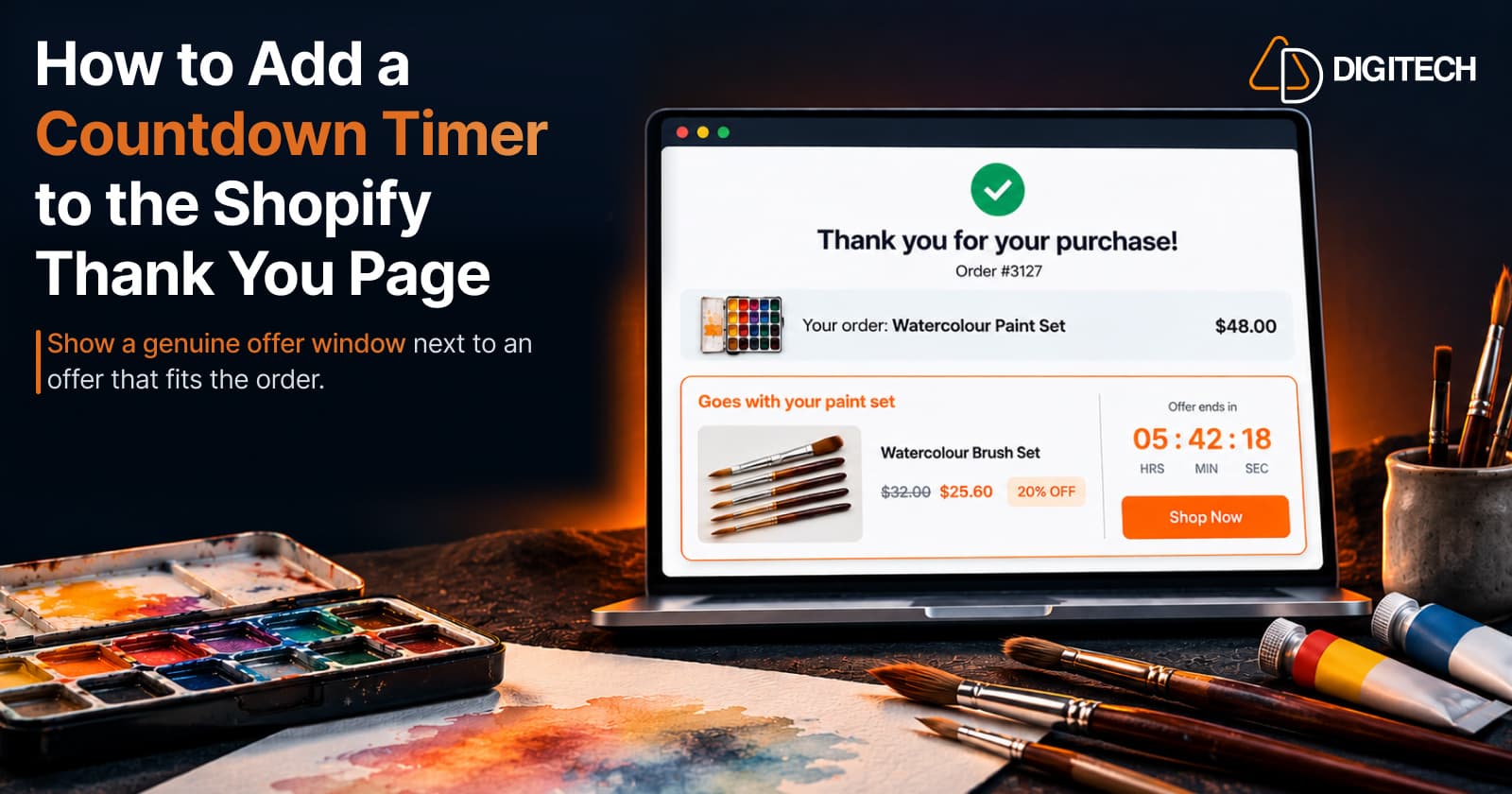
How to Add a Countdown Timer to the Shopify Thank You Page
Learn how to add a countdown timer to the Shopify Thank You Page and use time-sensitive offers, discounts and relevant products to drive post-purchase engagement.
Read article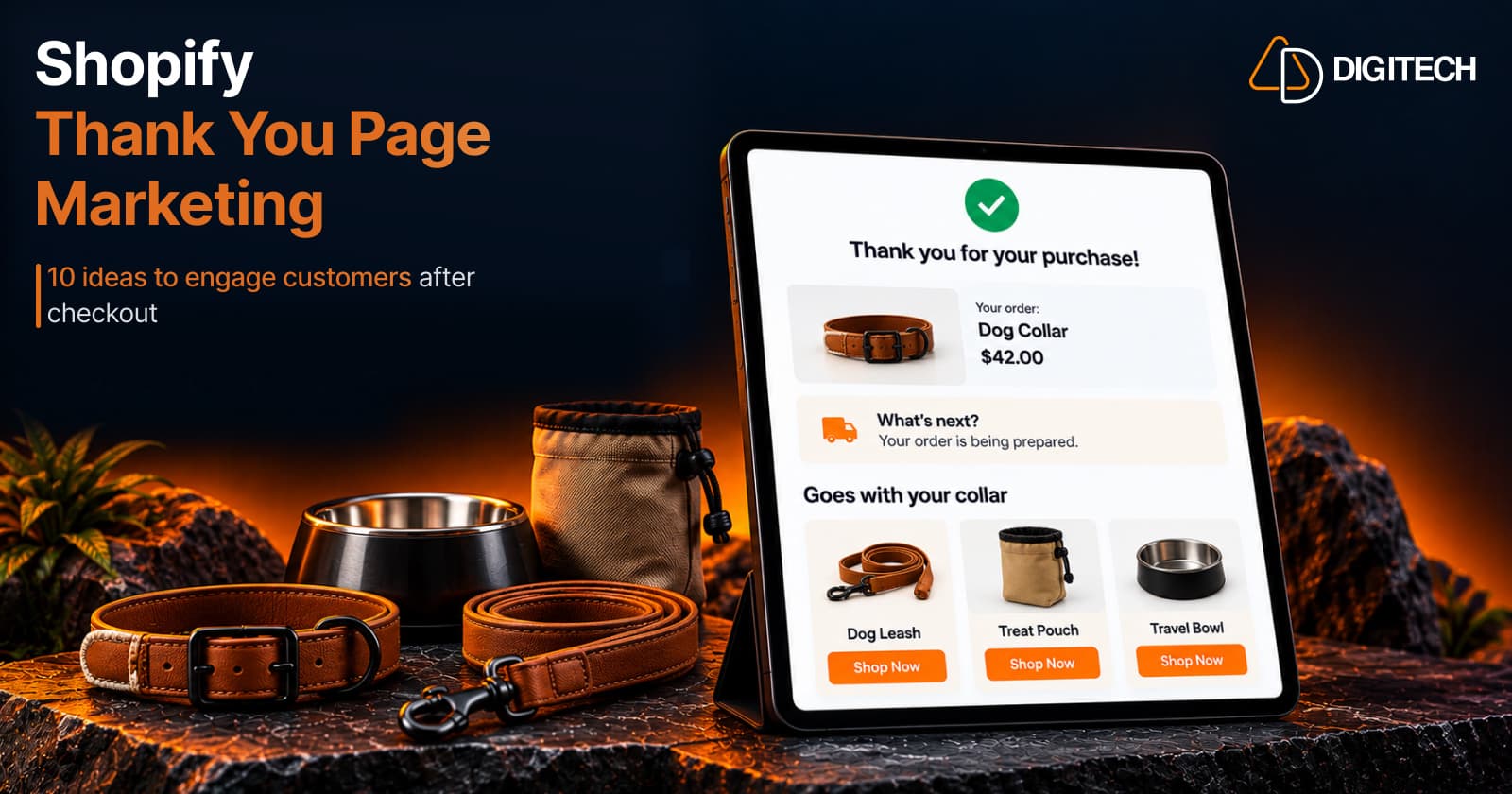
Shopify Thank You Page Marketing: 10 Ideas to Engage Customers After Checkout
Discover 10 Shopify Thank You Page marketing ideas to engage customers after checkout with recommendations, offers, bundles, feedback and useful content.
Read article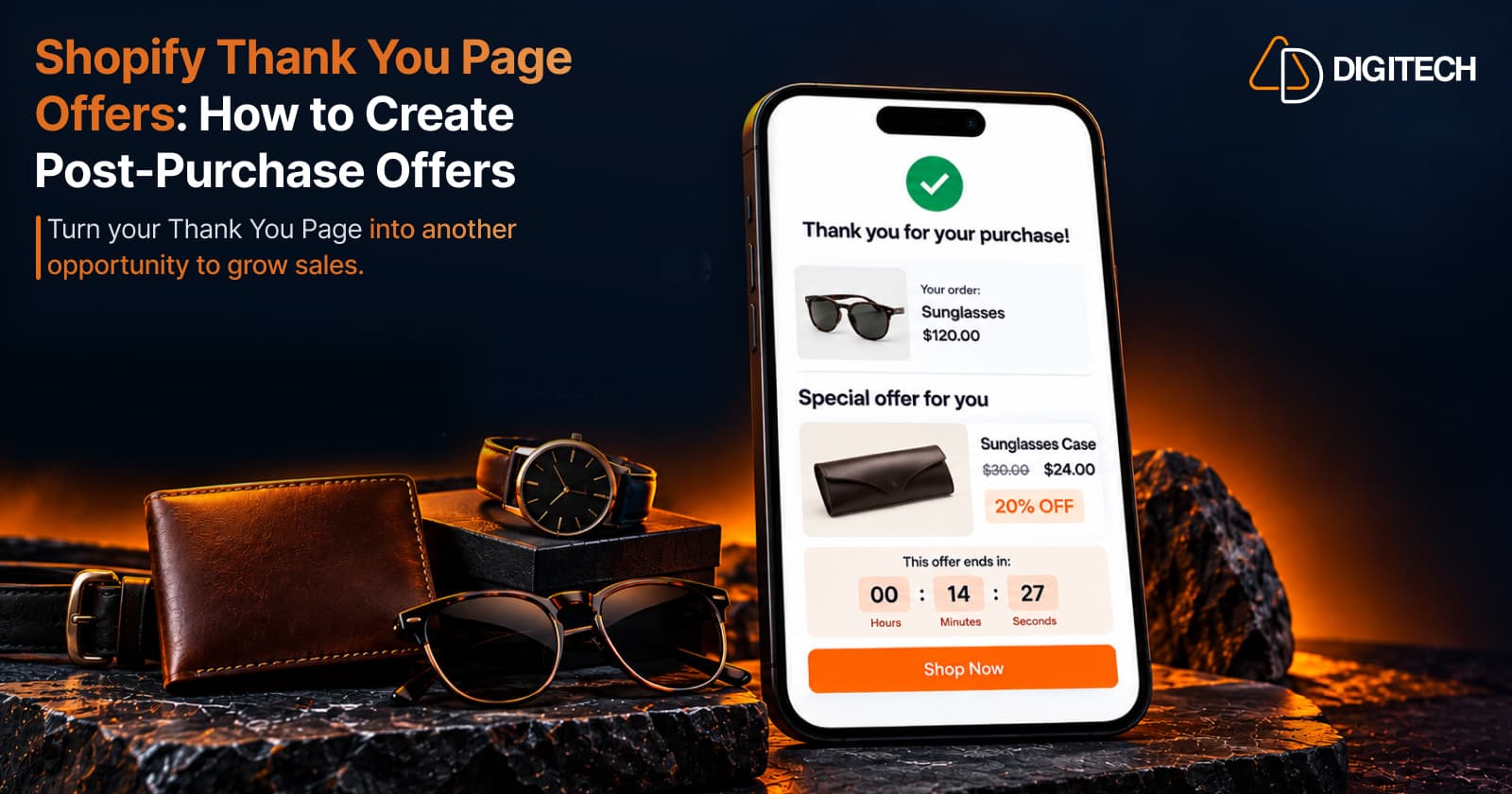
Shopify Thank You Page Offers: How to Create Post-Purchase Offers
Learn how to create Shopify Thank You Page offers with discounts, coupons, countdown timers and relevant promotions to drive additional purchases.
Read article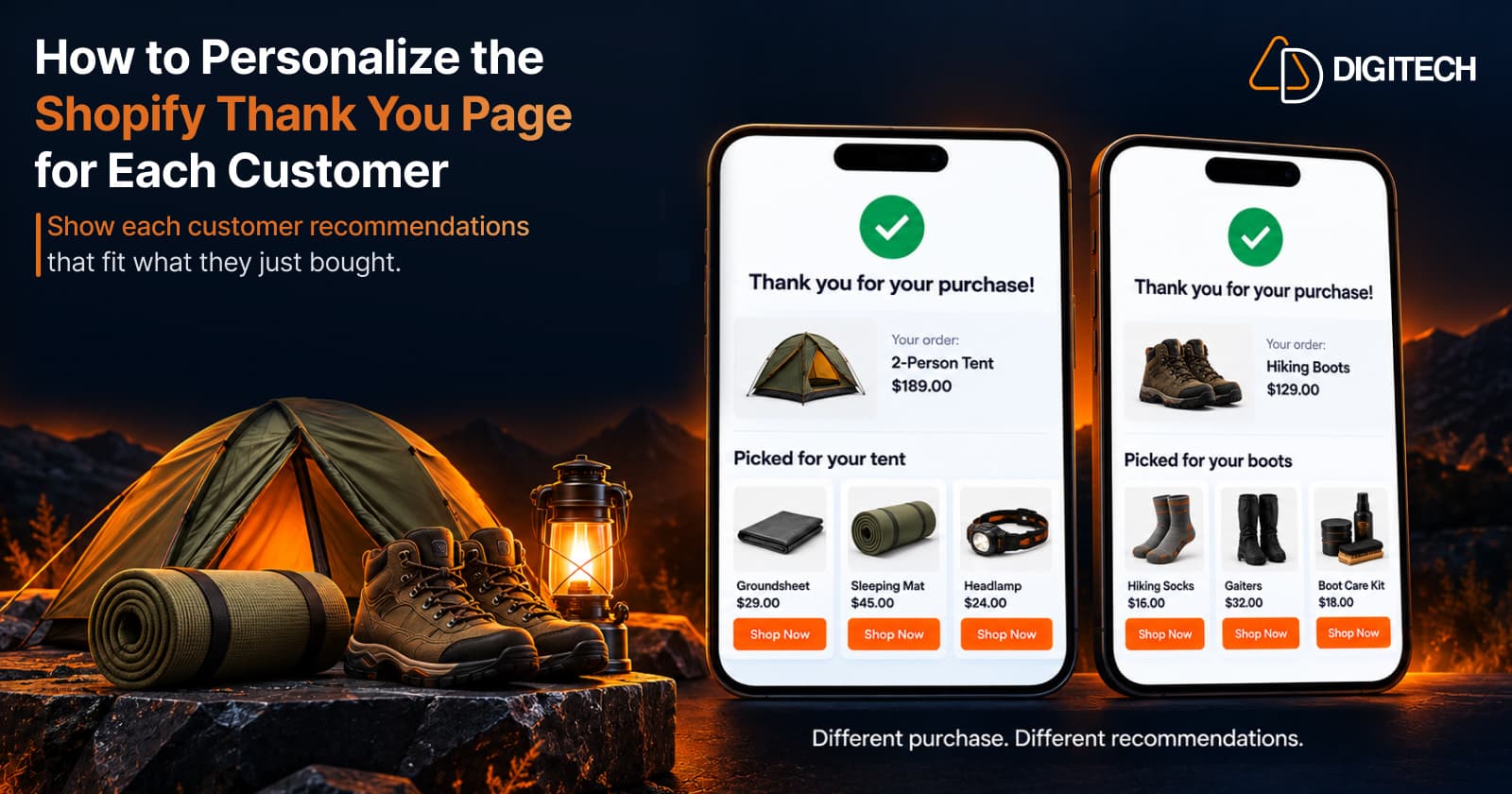
How to Personalize the Shopify Thank You Page for Each Customer
Learn how to personalize the Shopify Thank You Page with relevant recommendations, cross-sells, bundles, offers and post-purchase content.
Read article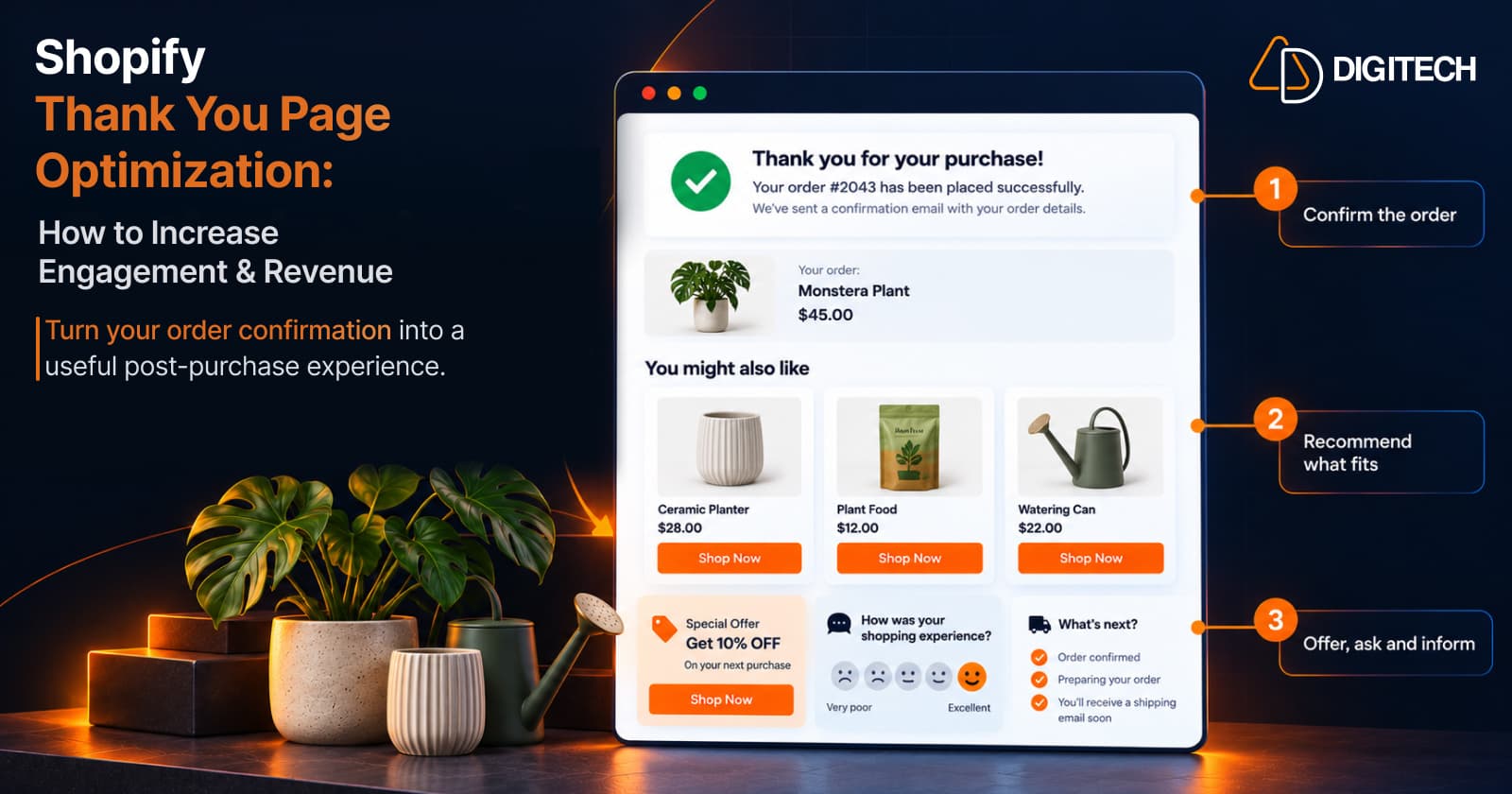
Shopify Thank You Page Optimization: How to Increase Engagement & Revenue
Learn how to optimize your Shopify Thank You Page with recommendations, upsells, bundles, offers and surveys to create a better post-purchase experience.
Read article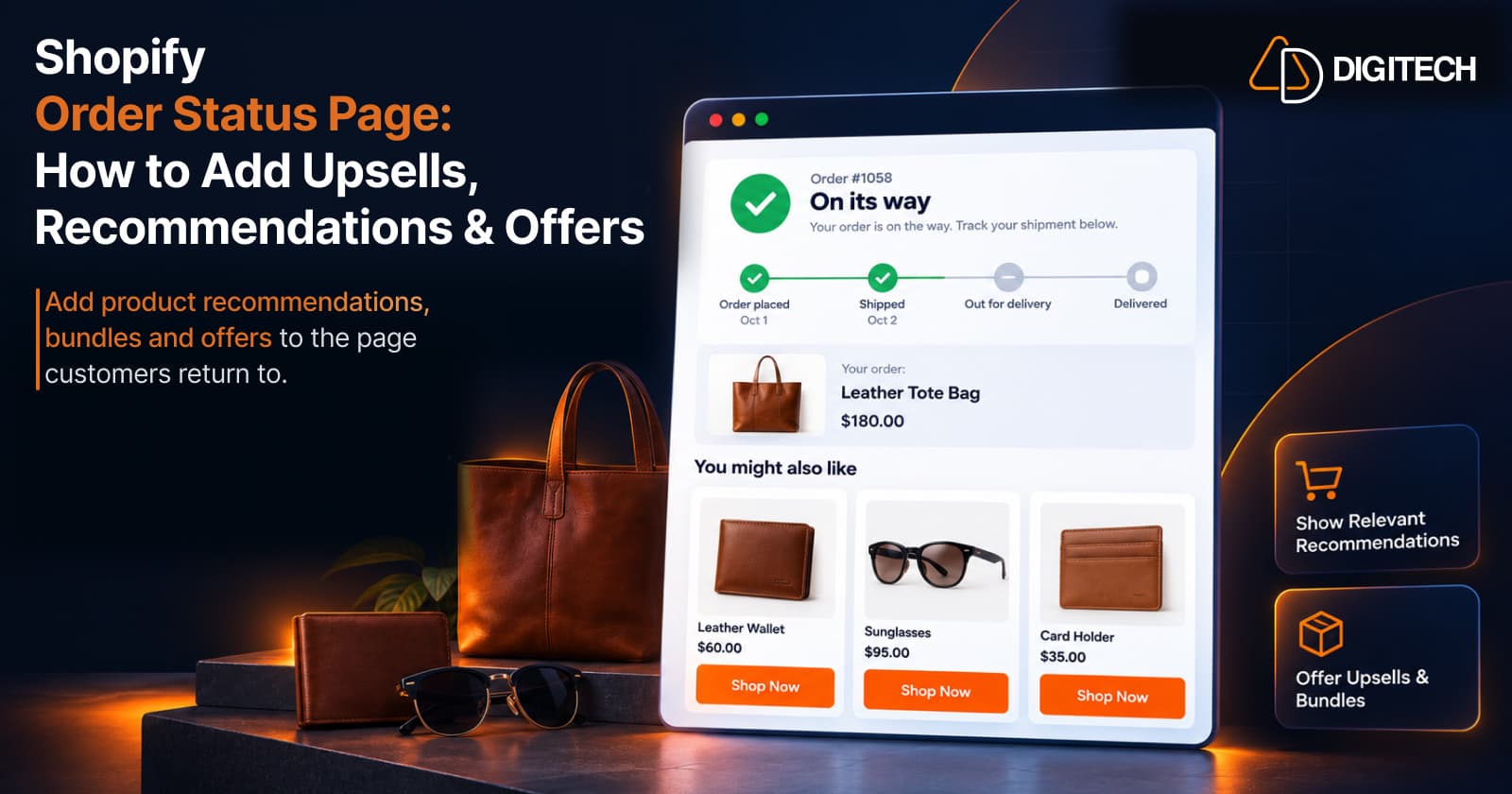
Shopify Order Status Page: How to Add Upsells, Recommendations & Offers
Learn how to customize the Shopify Order Status Page with product recommendations, upsells, bundles and offers to create better post-purchase experiences.
Read article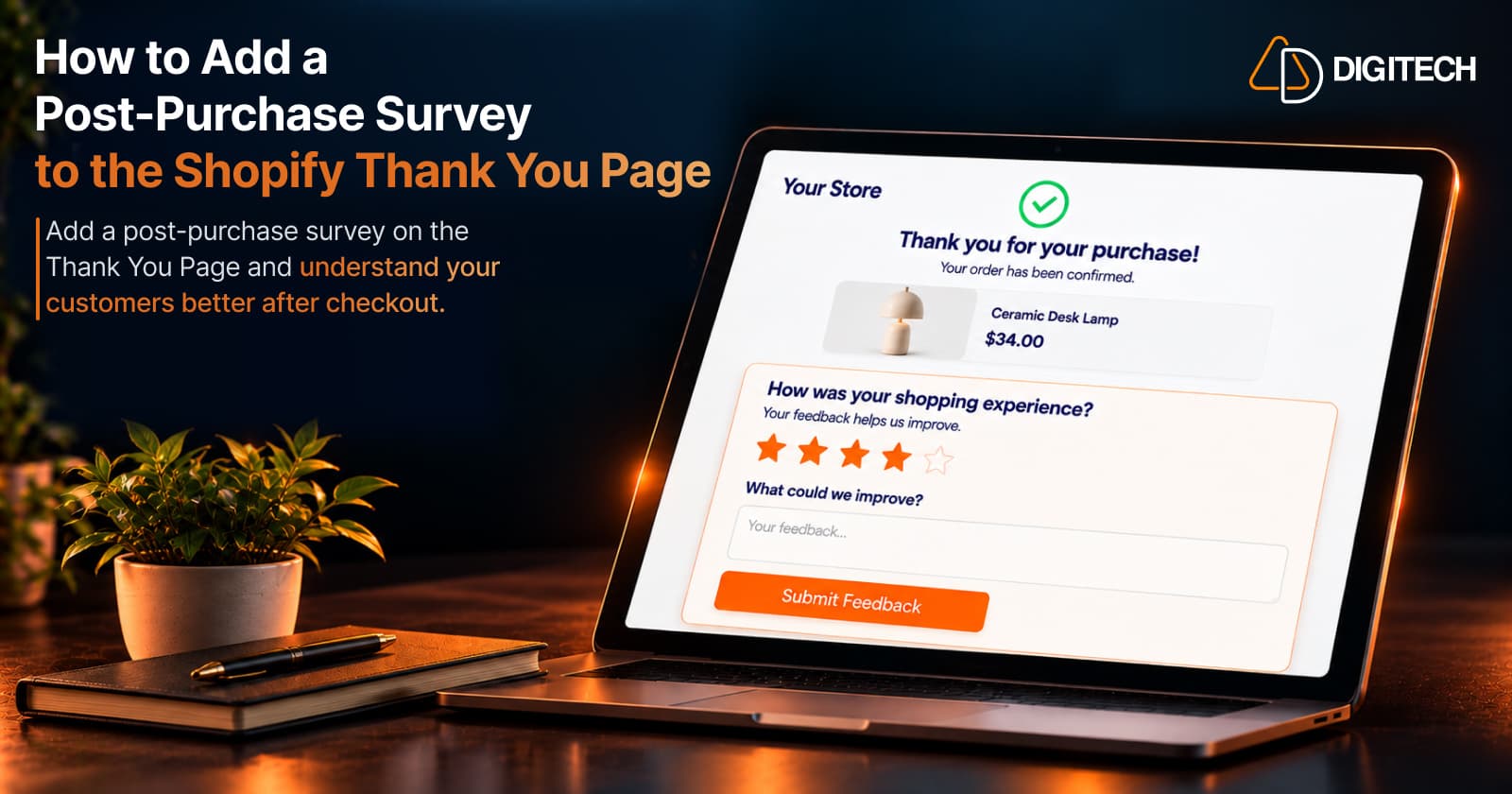
How to Add a Post-Purchase Survey to the Shopify Thank You Page
Learn how to add a Shopify Thank You Page survey, choose better post-purchase questions, collect customer feedback and use responses to improve your store.
Read article