Why Your Shopify Product Catalog Matters More Than SEO in 2026
Discovery is moving from ranked web pages to AI agents that read structured product data. In 2026, the quality of your Shopify Catalog — not your meta tags and backlinks — increasingly decides whether AI recommends and sells your products. Here's why the catalog is the new front page, and what to do about it.
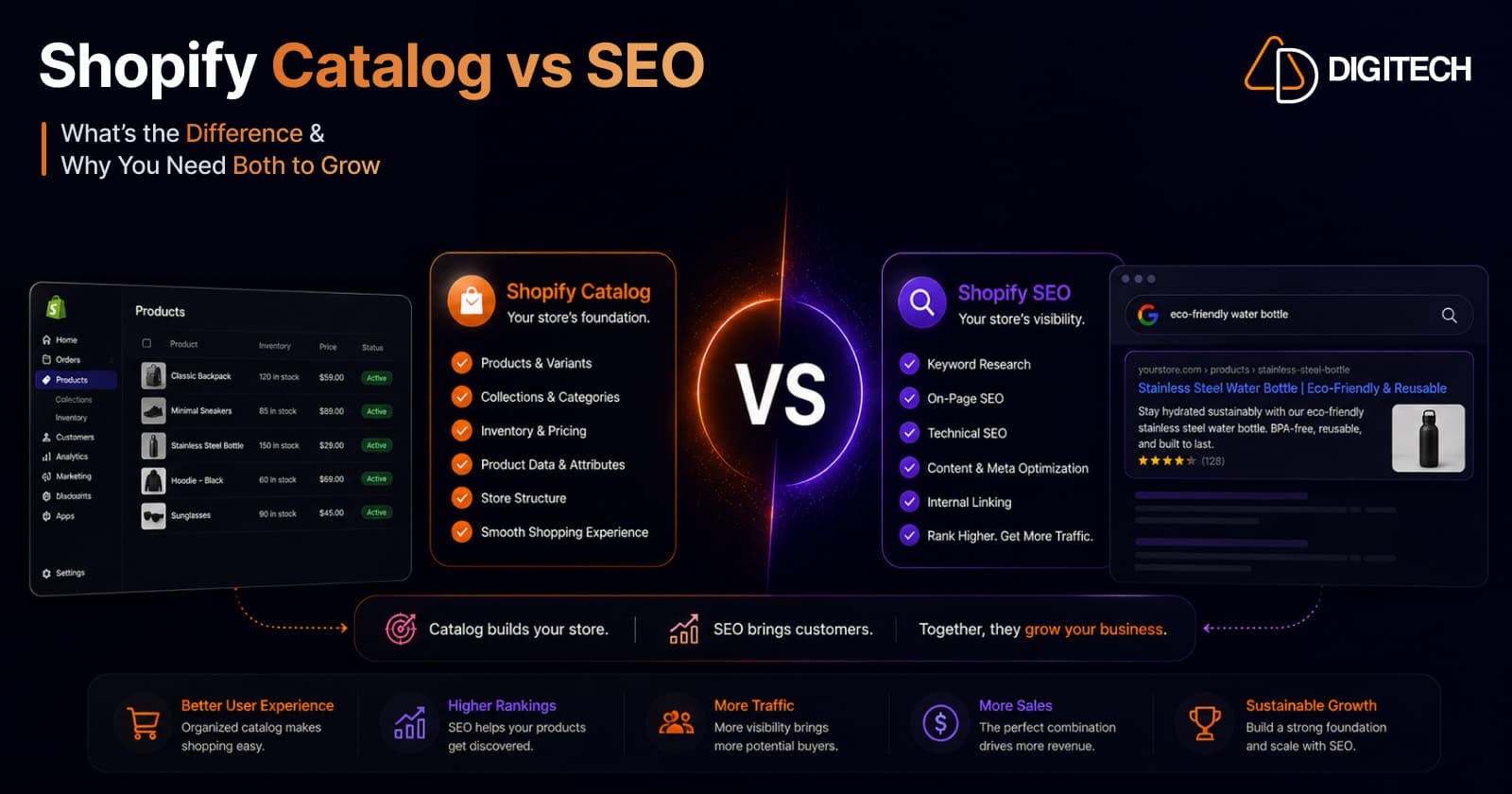
The short version: shoppers are increasingly discovering products by asking an AI a question, not by scanning a page of blue links. AI agents don't rank your web pages — they read your structured product data. So in 2026, the quality of your Shopify Catalog is doing the job SEO used to do, and for a growing share of revenue it matters more.
We help Shopify brands get found and recommended across AI, so here's the shift, why it favors your catalog over your keywords, and what to actually do.
Discovery is moving off the search results page
The behavior change is already measurable. Shopify reports that in Q1 2026, AI-driven traffic to its stores grew 8x year-over-year, and orders from AI-powered searches grew nearly 13x. And the queries don't look like search queries: OpenAI's internal data shows 70% of shopping-related questions in ChatGPT are phrased as natural language — "what's the best skincare set for dry skin?" — not "skincare set dry skin."
That's a different game. There's no ranked list of ten links to optimize for. There's an agent that reads available product data and decides what to surface, describe, and recommend — often completing the sale without the shopper ever landing on a category page.
What SEO optimized for vs. what AI reads
Traditional SEO is built around a human clicking a result:
- SEO optimizes titles, meta descriptions, keyword pages, backlinks, and site structure so a page ranks and a person clicks through.
- AI agents read structured product data — attributes, specs, real-time price and inventory, descriptions — to decide what to recommend in a conversation.
You can have brilliant SEO and still be invisible to an AI agent if your product data is thin, inconsistent, or out of date — because the agent was never going to read your landing page copy. It was going to read your catalog.
What Shopify Catalog actually is
Shopify Catalog is the layer that makes your products legible to AI. It automatically structures, cleans, and standardizes your product data into a universal taxonomy, verifies pricing and inventory in real time, and syndicates it to every connected AI platform — ChatGPT, Microsoft Copilot, the Shop app, and future partners — through direct API, with no bespoke integrations.
The model is list once, represented everywhere. You maintain your products in Shopify; Catalog keeps them accurate across every AI surface where shoppers are asking questions.
The conversion gap: structured data vs. scraped data
Here's why this isn't a nice-to-have. When an AI platform doesn't have structured access to your catalog, it falls back to scraping your website — and scraping surfaces outdated prices, incorrect inventory, and missing context. That misrepresents you, erodes buyer trust, and quietly costs you sales.
The numbers are stark: Shopify reports that AI shopping searches pulling from Catalog data convert at double the rate of searches relying on scraped product data. Same product, same shopper — twice the conversion, purely because the AI had accurate, structured data to work with.
Why this levels the playing field
Traditional SEO rewards domain authority and budgets — it's hard for a small brand to outrank a Fortune 500 retailer. AI discovery works differently: recommendations are organic and data-driven, so a niche brand with excellent, well-structured product data can be surfaced over a giant with lazy catalog data.
It's already happening. Red-light-therapy brand Omnilux attributed about 3.2% of total revenue to AI channels in March 2026. Luxury bedding brand Cozy Earth reported AI-channel revenue up roughly 20x year-over-year. These aren't platform giants — they're focused brands whose product data was ready.
So what does "more than SEO" really mean?
To be clear: SEO isn't dead. Google still drives enormous traffic, and you should keep doing the fundamentals. The argument is about where the next hour of effort pays off.
For most stores, another keyword page is a marginal gain on a mature channel — while their product data is incomplete enough that they're losing the fastest-growing channel by default. When the choice is "polish one more meta description" vs. "make our catalog accurate and complete enough for AI to confidently recommend us," in 2026 the catalog wins. That's the rebalance.
What good Catalog data looks like
Treat your product data like the storefront it now is:
- Accurate, descriptive titles — clear, specific, not keyword soup.
- Rich descriptions — what it is, who it's for, what problem it solves.
- Real structured attributes & specs — material, size, compatibility, use case, ingredients — the facts an agent matches against a shopper's question.
- High-quality images — multiple, clean, representative.
- Correct real-time pricing & inventory — the single biggest trust-killer when wrong.
- Complete shipping details — so the agent can answer "can I get it by Friday?"
And pair it with brand context: clean Catalog data tells AI what you sell, while your Shopify Knowledge Base tells it who you are and how to answer customer questions. Together they're what make an agent confident enough to recommend you.
How to get started
- Turn on Shopify's agentic-commerce tools so your store is connected to the AI surfaces.
- Audit and complete your product data — fill the gaps above, fix stale prices and attributes, and standardize across your catalog.
- Add brand context via the Knowledge Base.
- Let it syndicate — Catalog pushes accurate data to every connected AI platform automatically, and keeps it current.
This is the same groundwork that lets AI not just recommend you but transact on your behalf, and it sits alongside the broader discipline of getting recommended by AI search. The brands cleaning up their catalogs now are compounding an advantage while competitors keep pouring effort into a channel that's growing slower.
We help Shopify brands get AI-ready end to end — catalog data hygiene and structure, Knowledge Base setup, and the technical work that makes AI confident enough to recommend and sell your products. See our Shopify store development and AI work, or talk to us about your store's agentic readiness.
Frequently asked questions
Is SEO dead for Shopify in 2026?
No — Google still sends huge volumes of traffic, and traditional SEO still matters. But the fastest-growing discovery channel, AI, doesn't read your site the way a search crawler does. It reads structured product data from Shopify Catalog. So the point isn't 'stop doing SEO'; it's that your product data has become a primary discovery asset, and most stores massively under-invest in it relative to keywords and links. Do both — but rebalance toward your catalog.
What is Shopify Catalog?
It's Shopify's system that automatically structures, cleans, and standardizes your product data (titles, descriptions, images, pricing, inventory, shipping) into a universal taxonomy, verifies pricing and inventory in real time, and syndicates it to every connected AI platform — ChatGPT, Microsoft Copilot, the Shop app, and future partners — via direct API. You maintain your products once and they're represented accurately everywhere AI shopping happens.
How is Catalog data different from AI web scraping?
AI platforms without access to structured data fall back to scraping your site, which often surfaces outdated prices, wrong inventory, and missing product context — eroding buyer trust and costing sales. Catalog feeds accurate, real-time, structured data directly instead. Shopify reports that AI-powered shopping searches pulling from Catalog data convert at double the rate of searches using scraped product data.
Can a small store really compete with big retailers in AI discovery?
Yes — and this is the part that favors smaller brands. AI recommendations are organic and data-driven, so a niche brand with detailed, well-structured product data can be surfaced over a Fortune 500 retailer with lazy catalog data. Real examples: red-light brand Omnilux attributed about 3.2% of total revenue to AI channels in March 2026, and luxury bedding brand Cozy Earth reported AI-channel revenue up roughly 20x year over year.
What should I do first to get agentic-ready?
Three things: turn on Shopify's agentic-commerce tools so you're connected to the AI surfaces; clean and complete your product data (accurate titles, rich descriptions, real attributes and specs, high-quality images, correct real-time pricing and inventory); and add your brand context via the Knowledge Base so agents can answer customer questions. Once your data is solid, Catalog syndicates it automatically.
Building something on Shopify?
We design, build, and maintain Shopify apps, stores, and AI products — to the standard this article describes.
Related reading
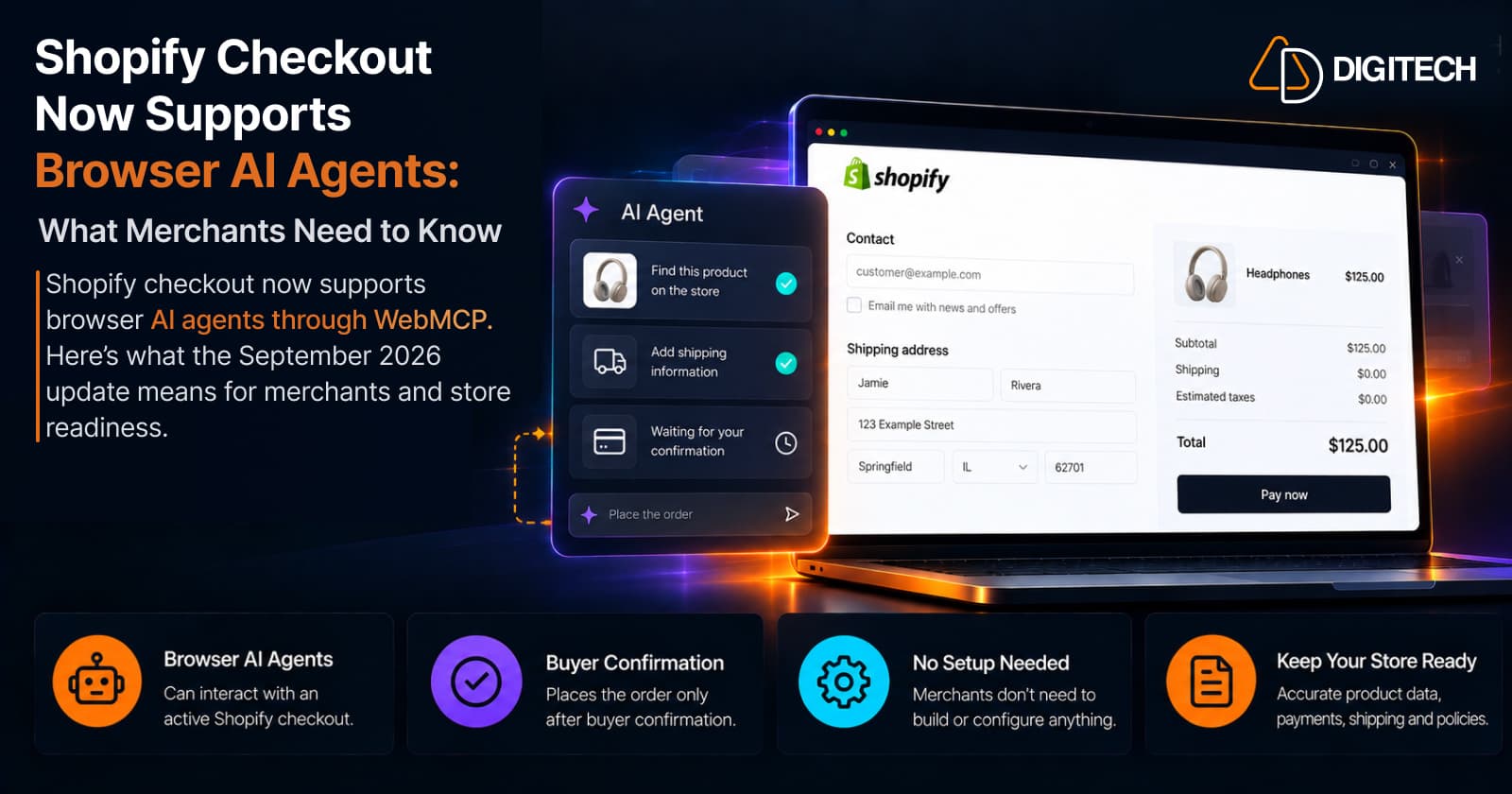
Shopify Checkout Now Supports Browser AI Agents: What Merchants Need to Know
Shopify checkout now supports browser AI agents through WebMCP. Here's what the September 2026 update means for merchants and store readiness.
Read article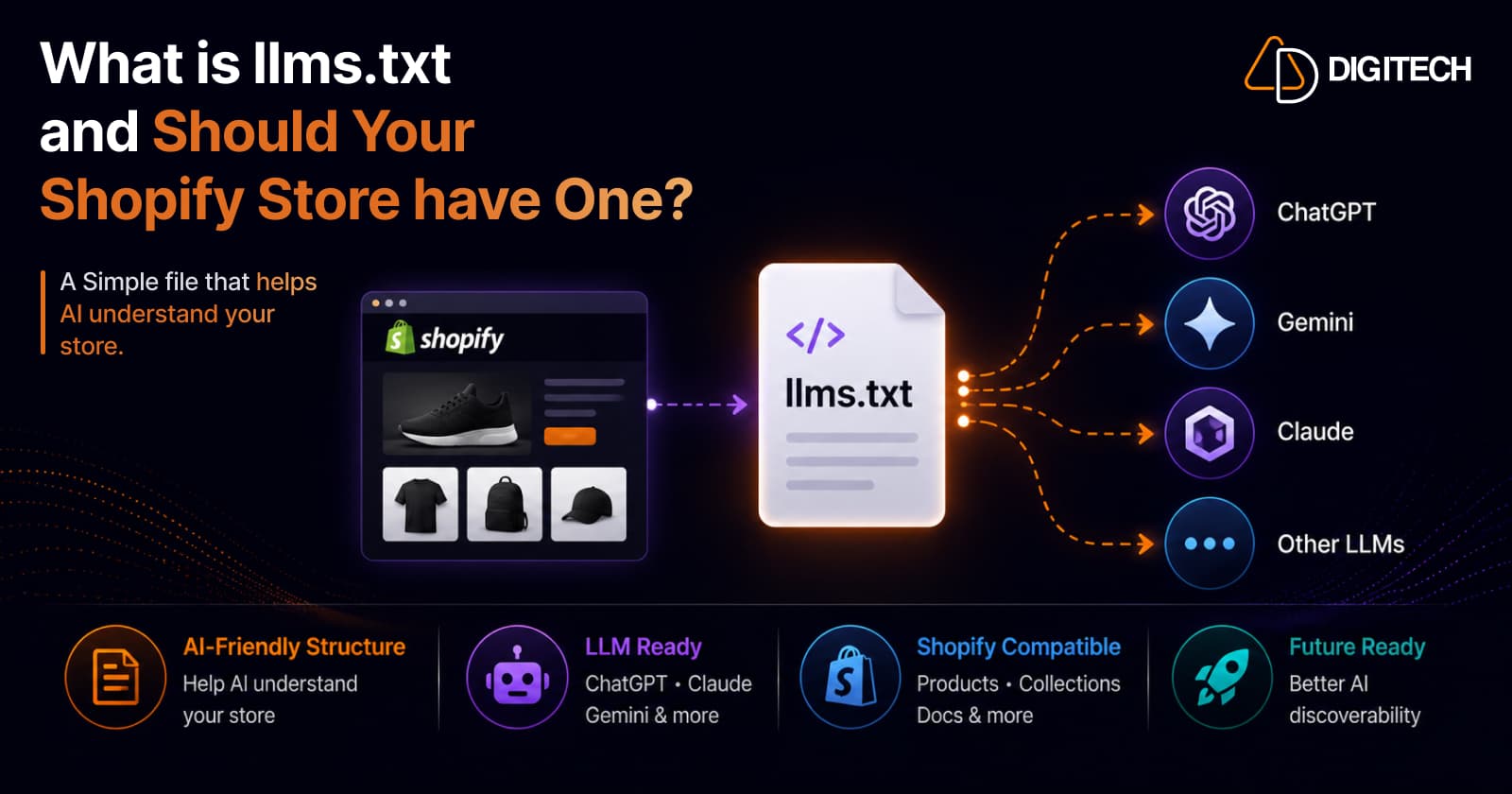
What Is llms.txt and Should Your Shopify Store Have One?
llms.txt is a proposed file that tells AI models which of your pages matter. But here's the honest truth: no major AI platform has confirmed it reads them, and Google said no on the record. So should your Shopify store have one? A qualified yes — as cheap insurance, not a strategy. Here's what it is, what the evidence actually shows, and where AI visibility really comes from.
Read article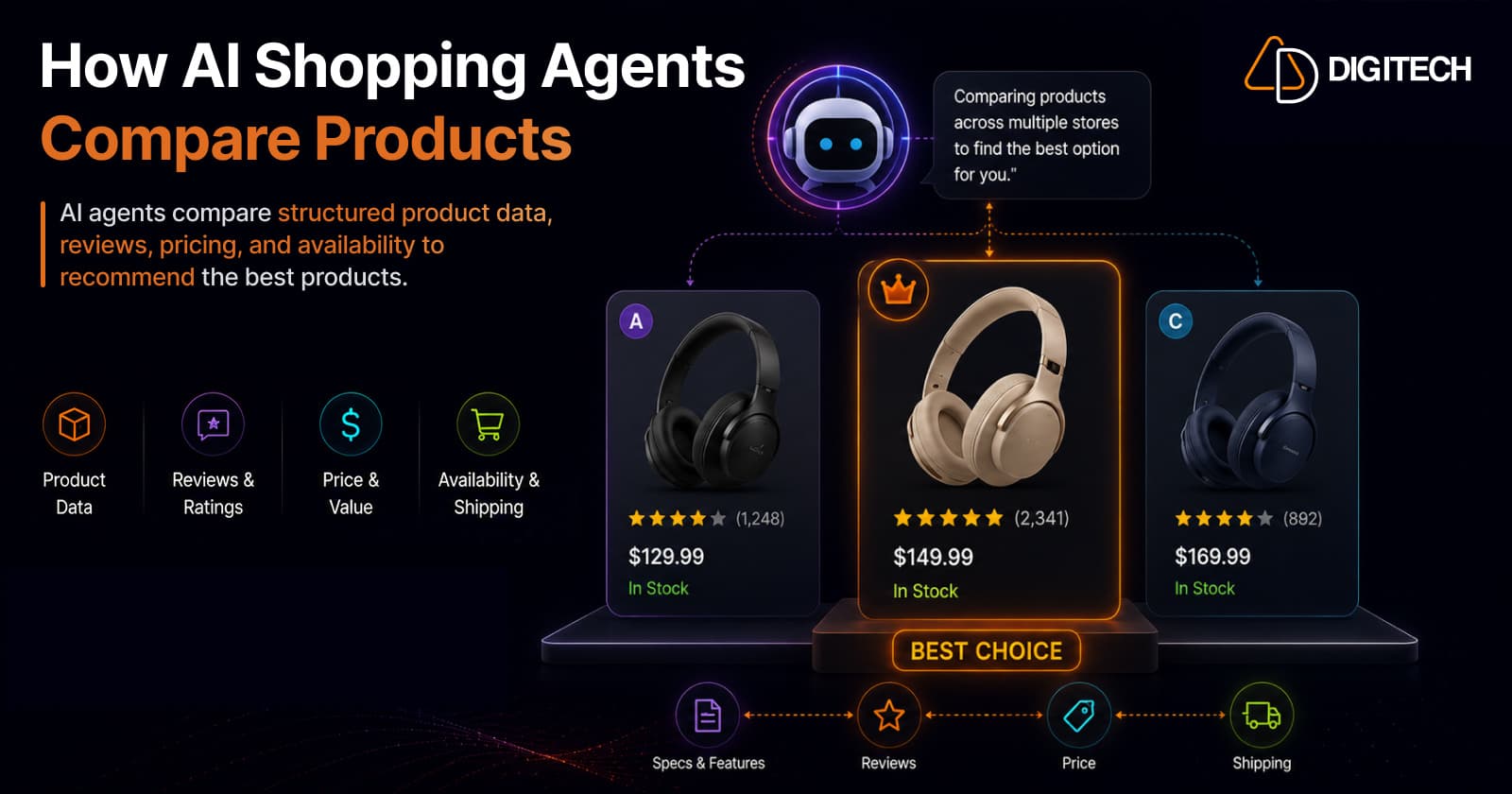
How AI Shopping Agents Compare Products on Shopify Stores
When a shopper asks an AI for the best product, the agent doesn't browse like a human — it reads structured product data across dozens of stores and compares them head-to-head on attributes, value, price, and reviews, then picks winners. Here's exactly how that comparison works, the signals it weighs, and how to make your Shopify products win the shortlist.
Read article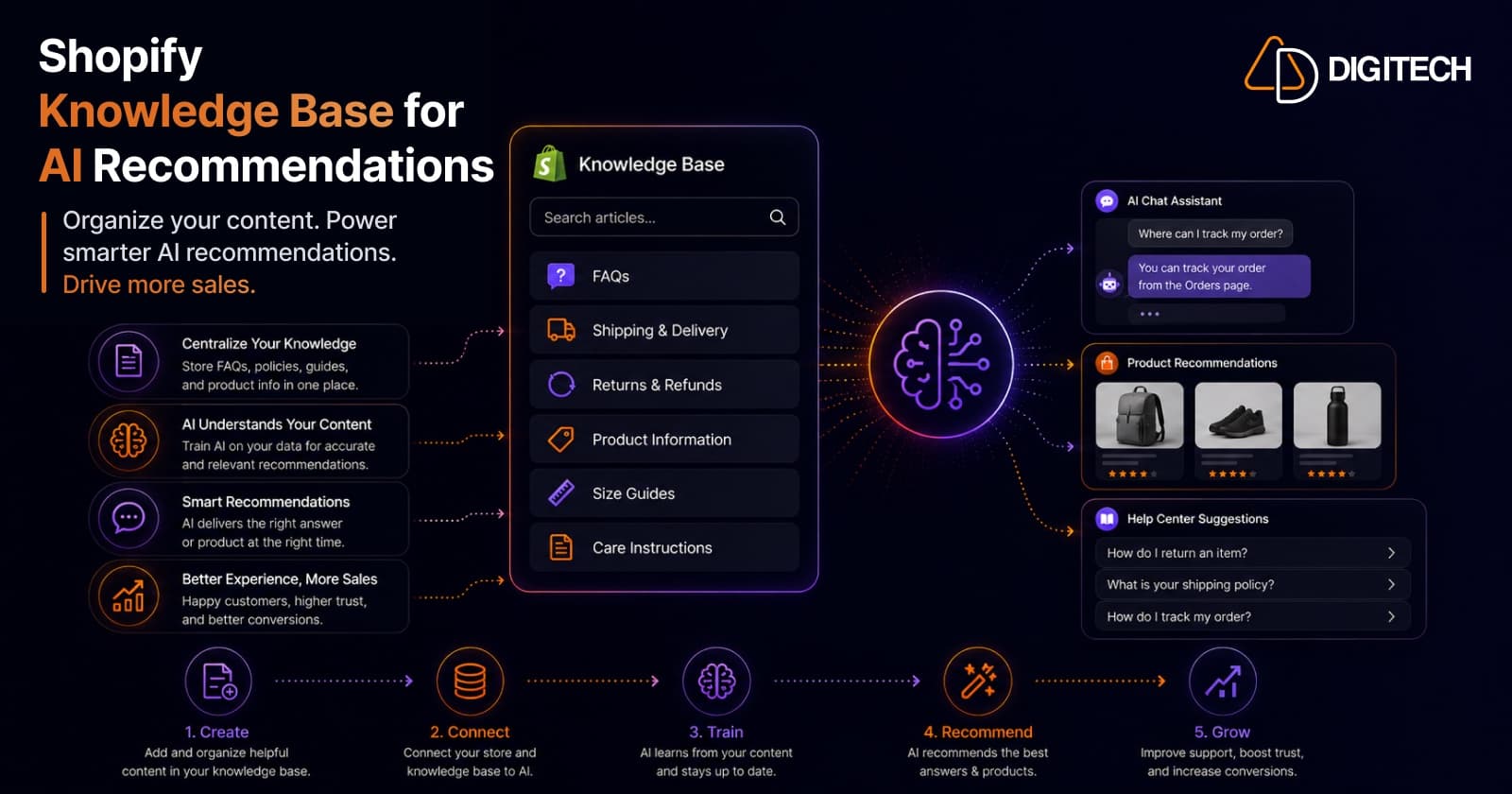
How Shopify Knowledge Base Helps AI Recommend Your Products
AI assistants only recommend products they understand and can answer questions about. Shopify's Knowledge Base feeds your brand context — policies, FAQs, and brand voice — directly to AI, so agents represent you accurately and recommend you instead of a competitor. Here's how it works, why it matters, and what to put in it.
Read article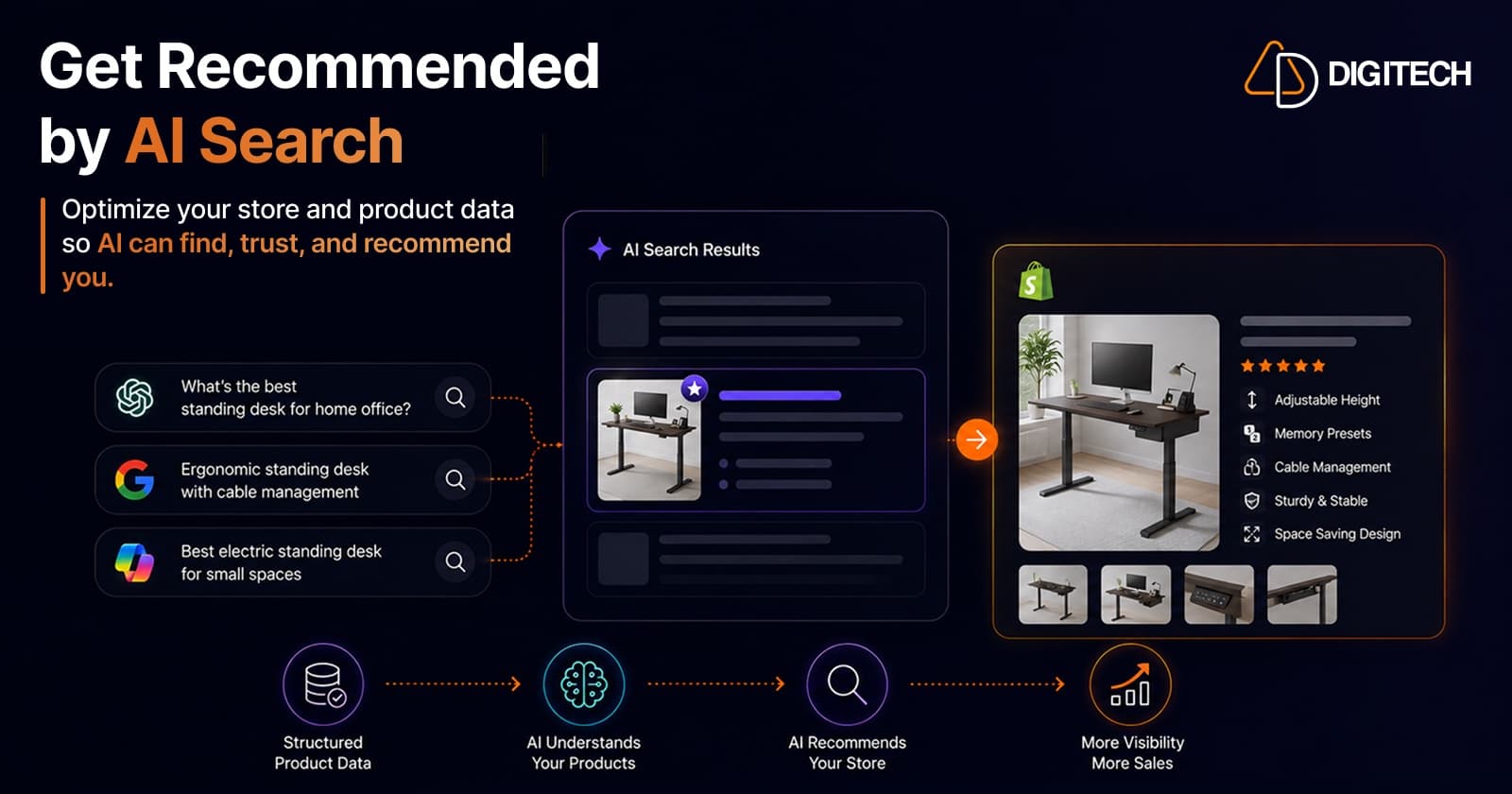
How Shopify Brands Can Get Recommended by ChatGPT, Claude & AI Search Engines
ChatGPT, Claude, and Perplexity now recommend products directly to shoppers. Here's how Shopify brands earn those recommendations — a practical 2026 guide to Generative Engine Optimization (GEO): the signals AI models trust, what to fix on-site and off-site, and how to measure your AI visibility.
Read article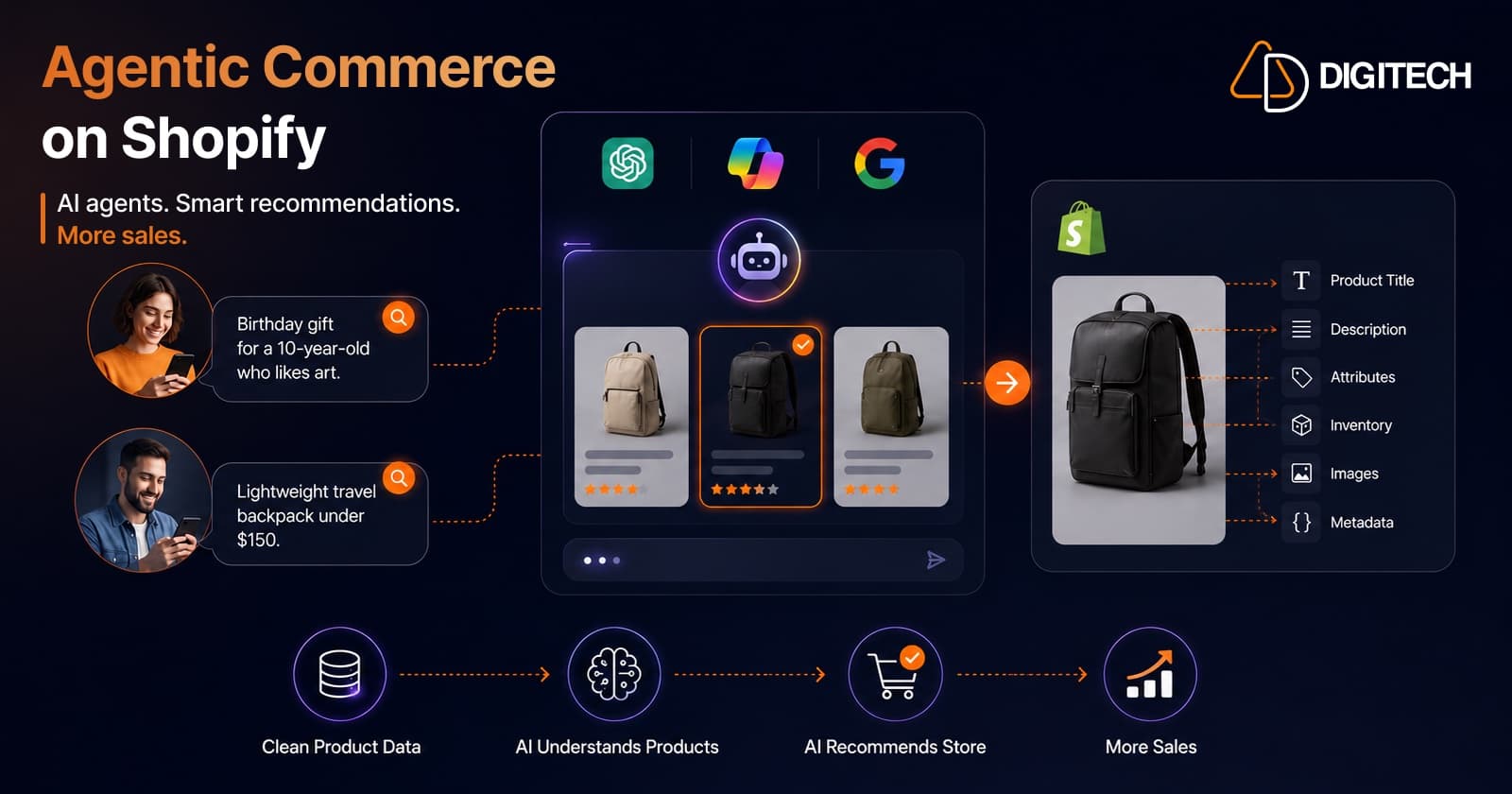
Agentic Commerce on Shopify: How to Get Your Store Ready for AI Shopping Agents (2026)
Shopify's Spring '26 Edition makes your products buyable inside ChatGPT, Microsoft Copilot, and Google AI Mode. Here's what agentic commerce actually means for merchants — and a practical, no-hype checklist to get your Shopify store ready for AI shopping agents in 2026.
Read article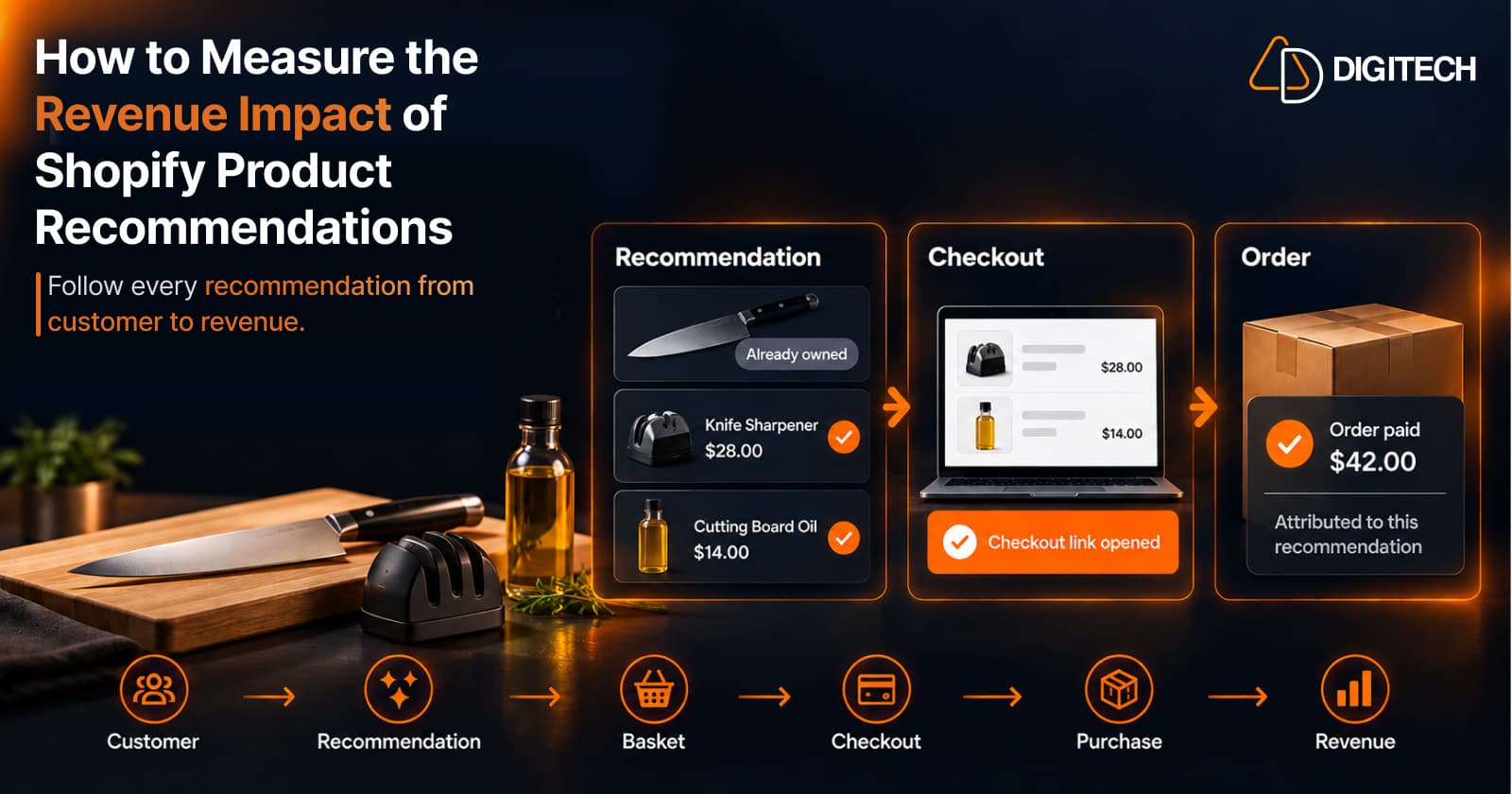
How to Measure the Revenue Impact of Shopify Product Recommendations
Learn how Shopify merchants can measure product recommendation performance, track checkout activity, attribute revenue, and improve personalized recommendations.
Read article
Shopify Thank You Page Offers: How to Create Post-Purchase Offers
Learn how to create Shopify Thank You Page offers with discounts, coupons, countdown timers and relevant promotions to drive additional purchases.
Read article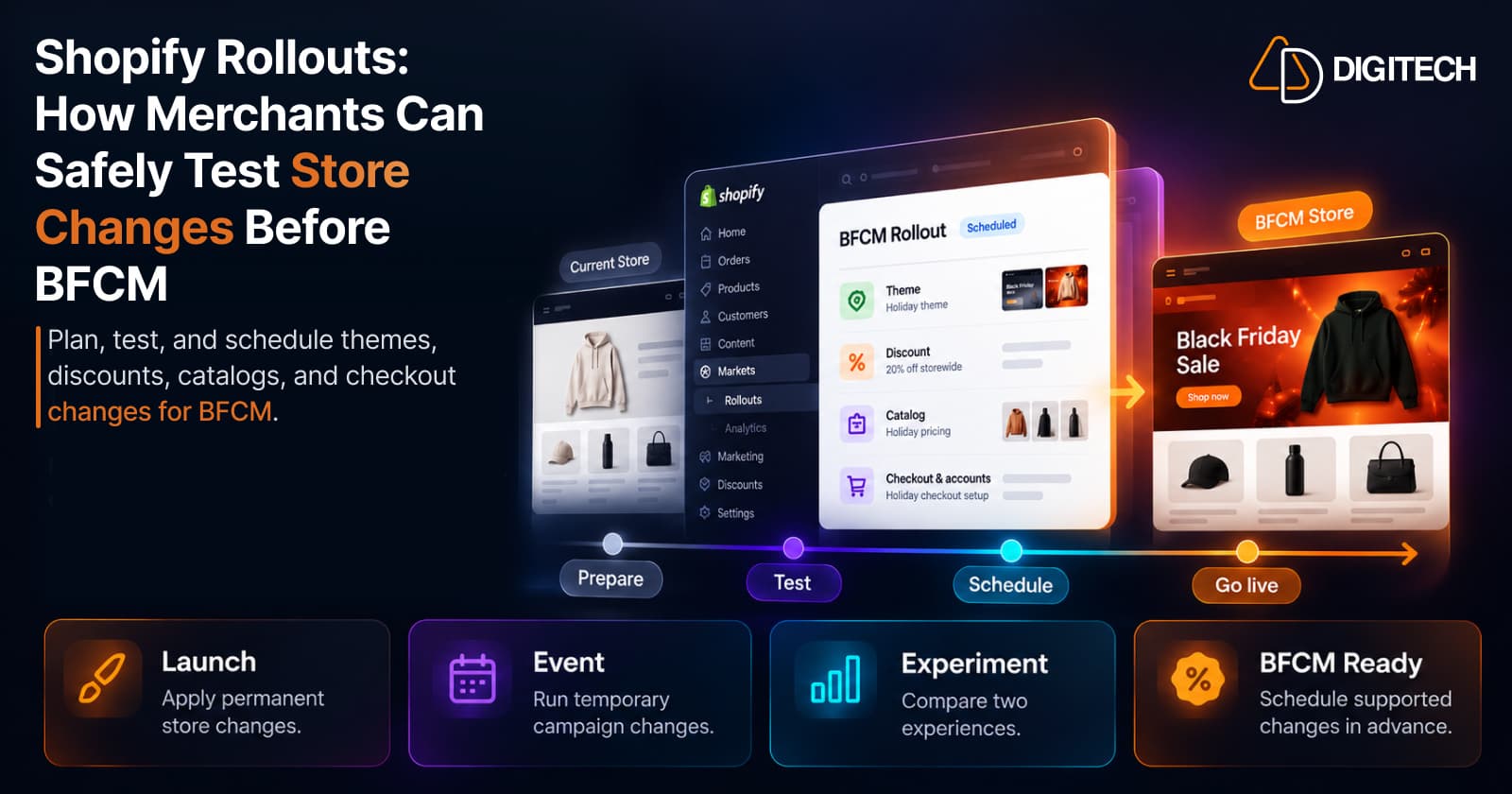
Shopify Rollouts: How Merchants Can Safely Test Store Changes Before BFCM
Learn how Shopify Rollouts let merchants schedule, test, and launch store changes safely before BFCM, including themes, discounts, catalogs, and checkout.
Read article