What Is llms.txt and Should Your Shopify Store Have One?
llms.txt is a proposed file that tells AI models which of your pages matter. But here's the honest truth: no major AI platform has confirmed it reads them, and Google said no on the record. So should your Shopify store have one? A qualified yes — as cheap insurance, not a strategy. Here's what it is, what the evidence actually shows, and where AI visibility really comes from.
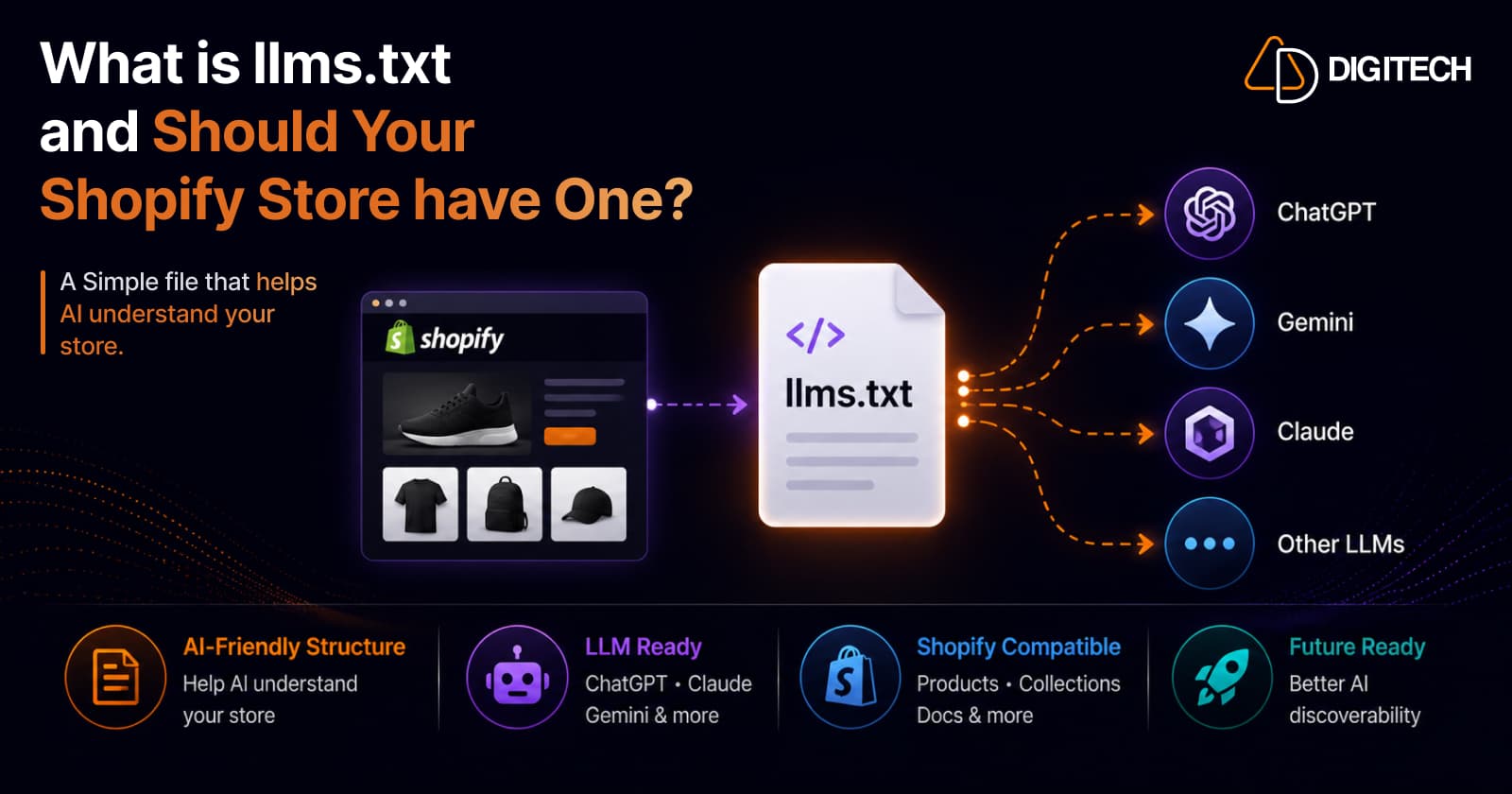
The short version: llms.txt is a proposed file that tells AI models which of your pages matter. But the honest truth is that no major AI platform has confirmed it reads them — Google said no on the record — and the evidence for any benefit is thin. Should your Shopify store have one? A qualified yes: as cheap insurance with real optionality, never as an AI-visibility strategy. Anyone selling it as the latter is overselling.
We help Shopify brands get found by AI, so here's the version without the hype.
That's the promise you'll see in every llms.txt explainer — the tidy diagram above included, arrows running confidently from one little file straight into ChatGPT, Gemini, and Claude. The reality, as we'll get into, is more sober.
What llms.txt actually is
llms.txt is a proposed standard — a Markdown file placed at the root of your domain (yourstore.com/llms.txt) that links to your most important content, each with a one-line description. The idea is to hand a large language model a curated map of your site so it doesn't have to guess what matters from raw HTML.
The mental model people reach for is "robots.txt, but for AI." That's roughly the intent: robots.txt tells crawlers what they may access; llms.txt tries to tell LLMs what's worth reading. It's a clean idea. Whether it works is a different question.
The uncomfortable truth: almost nobody official reads it
This is the part most "add llms.txt now!" articles skip, so let's be direct:
- Google said no. On the record. Google confirmed it does not support llms.txt and isn't planning to — its Search team has likened the idea to the discredited keywords meta tag, a file you fill in that the engine simply ignores.
- OpenAI and Anthropic haven't confirmed they use it. Notably, Anthropic publishes its own llms.txt, yet hasn't confirmed Claude references it during conversations.
- The crawlers skip it. GPTBot, ClaudeBot, PerplexityBot, OAI-SearchBot, and Google-Extended overwhelmingly ignore
/llms.txtand crawl your HTML directly.
And the adoption reflects that hesitation: after eighteen months of industry chatter, roughly one in ten sites publishes one (about 8.7% of the top 1,000; ~10% across a 300,000-domain study).
And the evidence for benefit is thin
It's not just that platforms haven't committed — there's little sign it helps:
- One analysis found 8 of 9 sites saw no measurable traffic change after adding llms.txt.
- A citation-prediction model trained on AI-citation data actually improved when the llms.txt variable was removed — meaning, for that model, the file was noise, not signal.
So if someone tells you an llms.txt file will get your store cited by ChatGPT, ask them for the data. Right now, it isn't there.
So why does anyone bother?
Because the honest case for llms.txt isn't "it works" — it's optionality at near-zero cost.
- It takes about half a day to produce.
- The developer-tool ecosystem already uses it — IDE coding agents and doc sites genuinely consume these files, so there's a real, live use case (just not a shopper-facing one).
- If a major AI provider decides tomorrow to start honoring it, you're already correct — no scramble.
That's a legitimate reason to ship one. It is not a reason to believe it's doing anything for your store's AI visibility today.
The Shopify-specific reality
Two things matter here, and the second is the one that actually moves revenue.
First — you may already have one, or can get it in a click. Several Shopify apps generate and maintain an llms.txt for you automatically. Before you do anything, check yourstore.com/llms.txt — you might already be publishing one via a theme or app you forgot about. If you want one, an app is the low-effort route; keep it current, because a stale map is worse than no map.
Second — and far more important — llms.txt is not how a store gets into AI answers. When a shopper asks an AI "best waterproof jacket under $200," the agent isn't reading your Markdown file. It's reading structured product data — titles, attributes, price, availability, reviews. On Shopify, that flows through Shopify Catalog, and it's the actual mechanism that puts you in front of AI shoppers. (This is the whole argument in why your product catalog matters more than SEO, and it's how AI shopping agents compare products.)
A Markdown file listing your pages does nothing to fix thin product attributes, a missing spec, or a wrong price — which are the things that actually cost you the AI recommendation.
The GEO reframe that puts it in perspective
The useful lens here is GEO — Generative Engine Optimization. As AI answers replace the blue-link result for millions of shoppers, the goal shifts:
You're no longer trying to rank. You're trying to be included.
Being included is earned by things AI systems demonstrably read and weigh: accurate structured product data, genuine reviews, complete descriptions, and brand context it can answer questions from. Those are proven levers. (See getting recommended by AI search and the Knowledge Base approach.)
llms.txt, at best, is a tiny, unproven supplement to that list — and the real risk isn't the file itself, it's letting it distract you from the work that actually gets you included.
So — should your Shopify store have one?
A clear, honest decision:
| Add an llms.txt if… | Skip or deprioritize it if… |
|---|---|
| It's free / near-free (an app, or you already have one) | You'd pay meaningfully for it |
| You want the optionality and it's low effort | You think it replaces real GEO work |
| You have content worth mapping (a real blog, docs, guides) | You'd do it instead of fixing product data |
Rule of thumb: ship it if it's cheap and you keep it current — as a low-cost hedge, nothing more. But spend your actual AI-visibility effort on Catalog data, reviews, and content, because that's what AI systems read today.
If you do add one
Keep it simple and honest:
- Publish
yourstore.com/llms.txt— a Markdown file linking your genuinely important pages (top collections, best guides, key policies), each with a one-line description. - Only list what's actually useful — a curated short list beats a dump of every URL.
- Keep it current — treat it like the sitemap, not a set-and-forget file.
- Don't stop there — it's the least important thing you'll do for AI visibility this quarter.
The bottom line
llms.txt is a reasonable idea whose moment hasn't arrived — and might not. No major AI platform has committed to reading it, Google has actively declined, and the measured benefit so far is roughly nil. Ship one if it's cheap; it's a fair bet on optionality.
But don't mistake it for the work. Your products get into AI answers through structured data, reviews, and clear content — not a Markdown file most AI systems currently skip. Get those right first, and add llms.txt as the harmless afterthought it currently is.
We help Shopify brands get genuinely AI-ready — Catalog data hygiene, structured product data, reviews and content strategy, and the GEO groundwork that actually gets you included in AI answers. See our AI work and Shopify store development, or talk to us about your store's AI readiness.
Frequently asked questions
What is llms.txt?
It's a proposed standard: a Markdown file at the root of your domain (yourstore.com/llms.txt) that lists your most important pages with a one-line description of each, so a large language model can find and understand your key content quickly. Think of it as robots.txt or a sitemap, but curated for AI instead of search crawlers.
Do ChatGPT, Claude, and Google actually read llms.txt?
Not officially — and this is the crux. Google has said on the record that it does not support llms.txt and isn't planning to, with its Search team likening the idea to the discredited keywords meta tag. OpenAI and Anthropic haven't confirmed their systems reference it during conversations, and AI crawlers like GPTBot and ClaudeBot overwhelmingly skip the file and crawl your HTML directly. Adoption sits around one in ten sites.
Does llms.txt actually improve AI visibility or SEO?
There's no evidence yet that it does. One analysis found 8 of 9 sites saw no measurable traffic change after adding it, and a citation-prediction model actually performed better when the llms.txt variable was removed — meaning it added noise, not signal. It's a low-cost bet on possible future adoption, not a proven tactic.
Should my Shopify store have an llms.txt file?
It's reasonable as cheap insurance if it's free or near-free to add and you don't expect it to move the needle. But it is not an AI-visibility strategy. For a store, being included in AI answers comes from clean, structured product data (Shopify Catalog), genuine reviews, and clear content — not a Markdown file most AI systems currently ignore.
How do I add llms.txt to a Shopify store?
Publish a Markdown file at yourstore.com/llms.txt that lists your key pages — top collections, best guides, key policies — each with a one-line description. Several Shopify apps will generate and maintain one for you automatically; check whether you already have one at that URL first. If you ship it, keep it current, because a stale map is worse than none.
What actually gets my products into AI answers?
Structured, accurate product data syndicated through Shopify Catalog; real reviews; and complete, clear content — the same signals that win AI product comparisons. llms.txt, at most, is a tiny supplement to those, and only if AI platforms decide to honor it in future.
Building something on Shopify?
We design, build, and maintain Shopify apps, stores, and AI products — to the standard this article describes.
Related reading
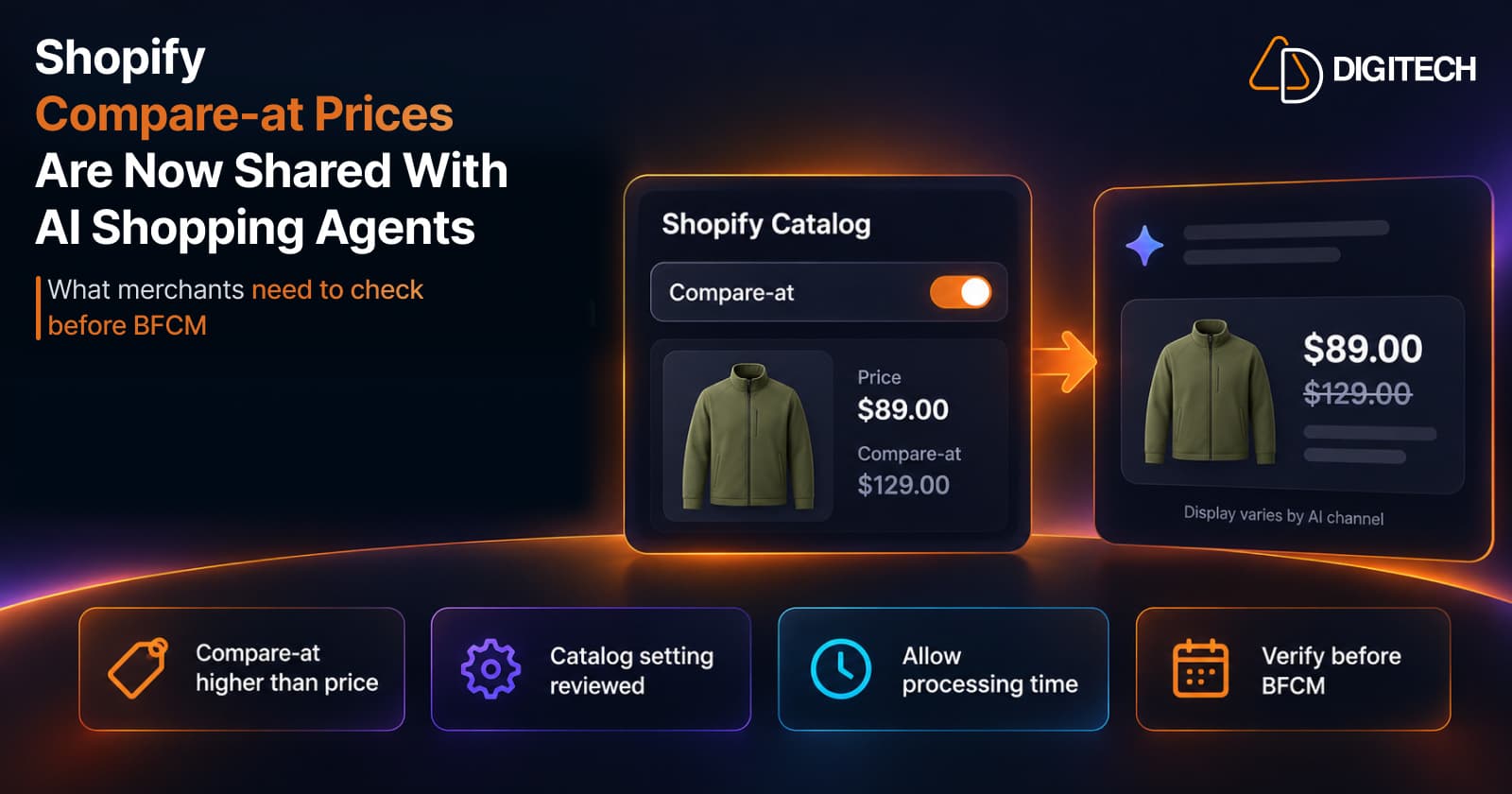
Shopify Compare-at Prices Are Now Shared With AI Shopping Agents: What Merchants Need to Check Before BFCM
Shopify Catalog can now send compare-at prices to AI shopping agents. Here's where the setting lives, how it works, and what to check before BFCM.
Read article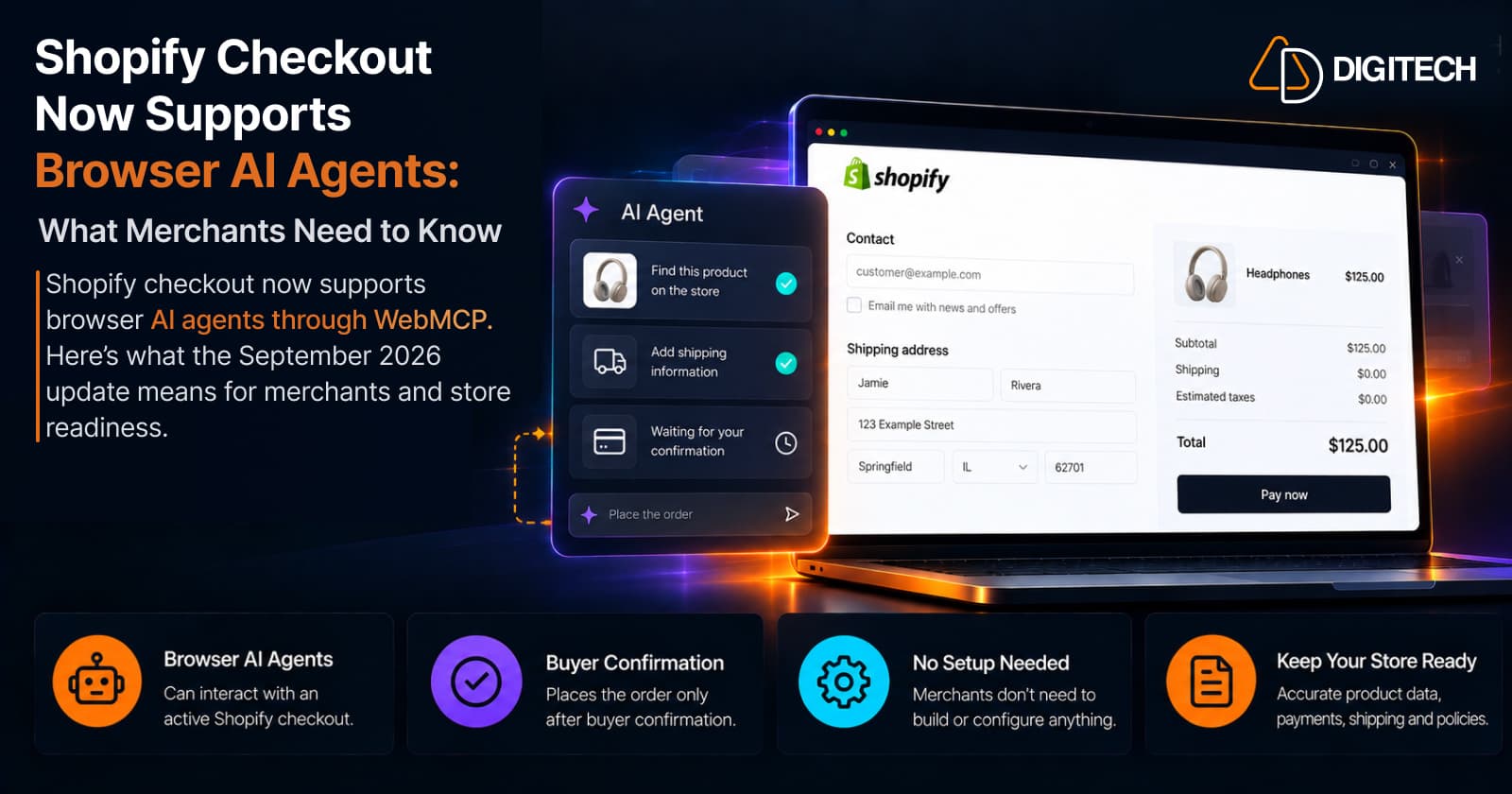
Shopify Checkout Now Supports Browser AI Agents: What Merchants Need to Know
Shopify checkout now supports browser AI agents through WebMCP. Here's what the September 2026 update means for merchants and store readiness.
Read article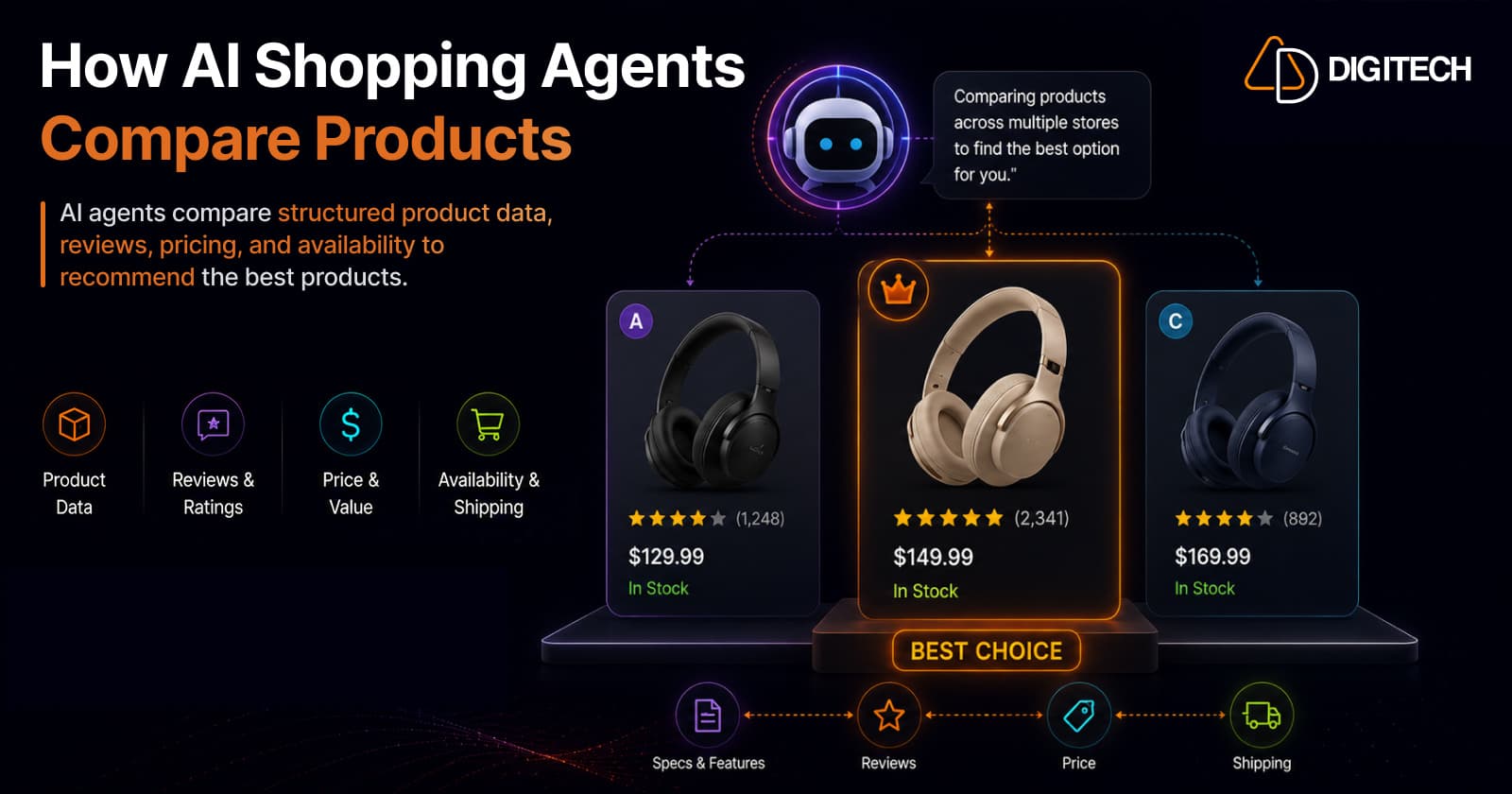
How AI Shopping Agents Compare Products on Shopify Stores
When a shopper asks an AI for the best product, the agent doesn't browse like a human — it reads structured product data across dozens of stores and compares them head-to-head on attributes, value, price, and reviews, then picks winners. Here's exactly how that comparison works, the signals it weighs, and how to make your Shopify products win the shortlist.
Read article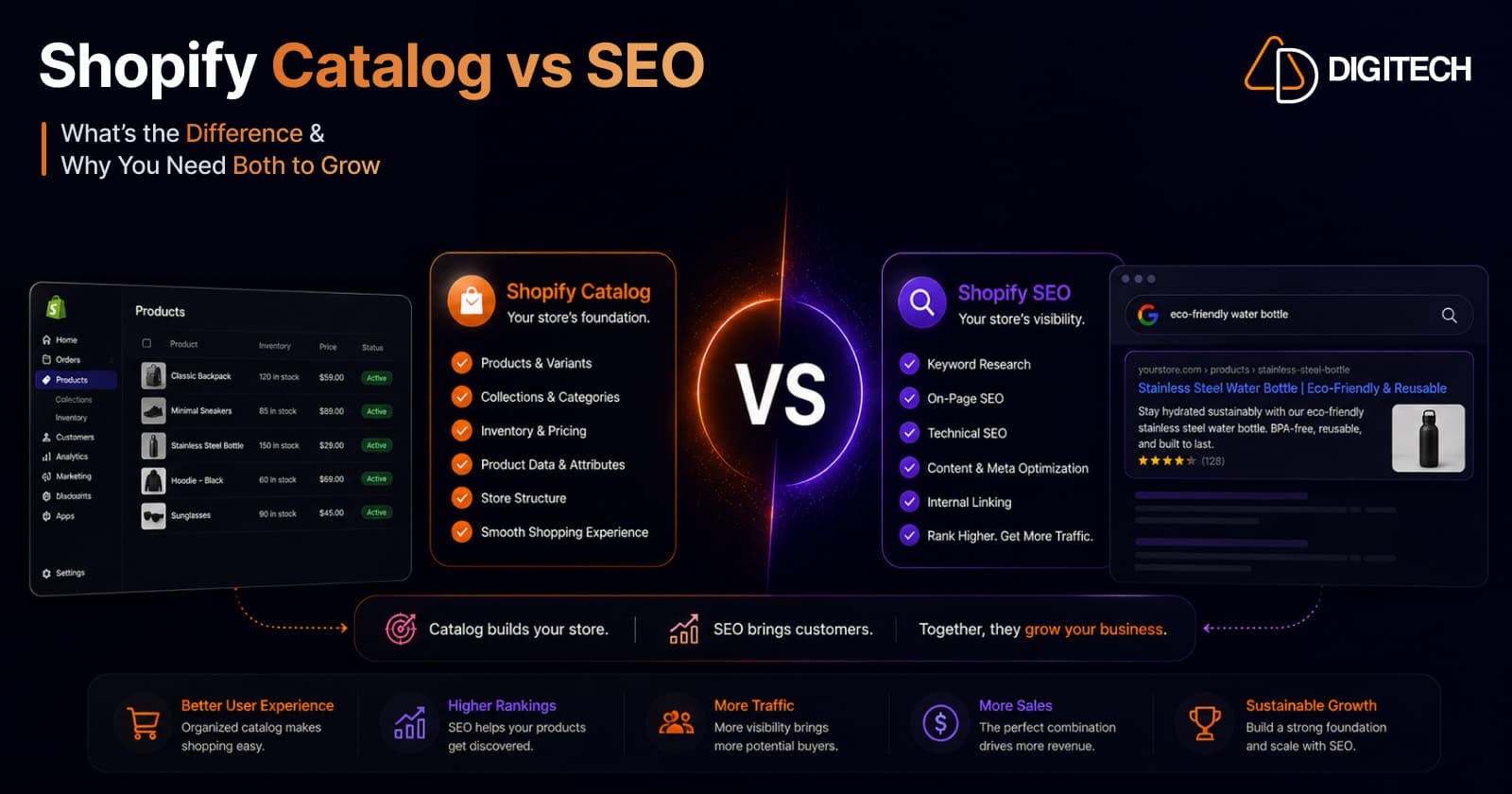
Why Your Shopify Product Catalog Matters More Than SEO in 2026
Discovery is moving from ranked web pages to AI agents that read structured product data. In 2026, the quality of your Shopify Catalog — not your meta tags and backlinks — increasingly decides whether AI recommends and sells your products. Here's why the catalog is the new front page, and what to do about it.
Read article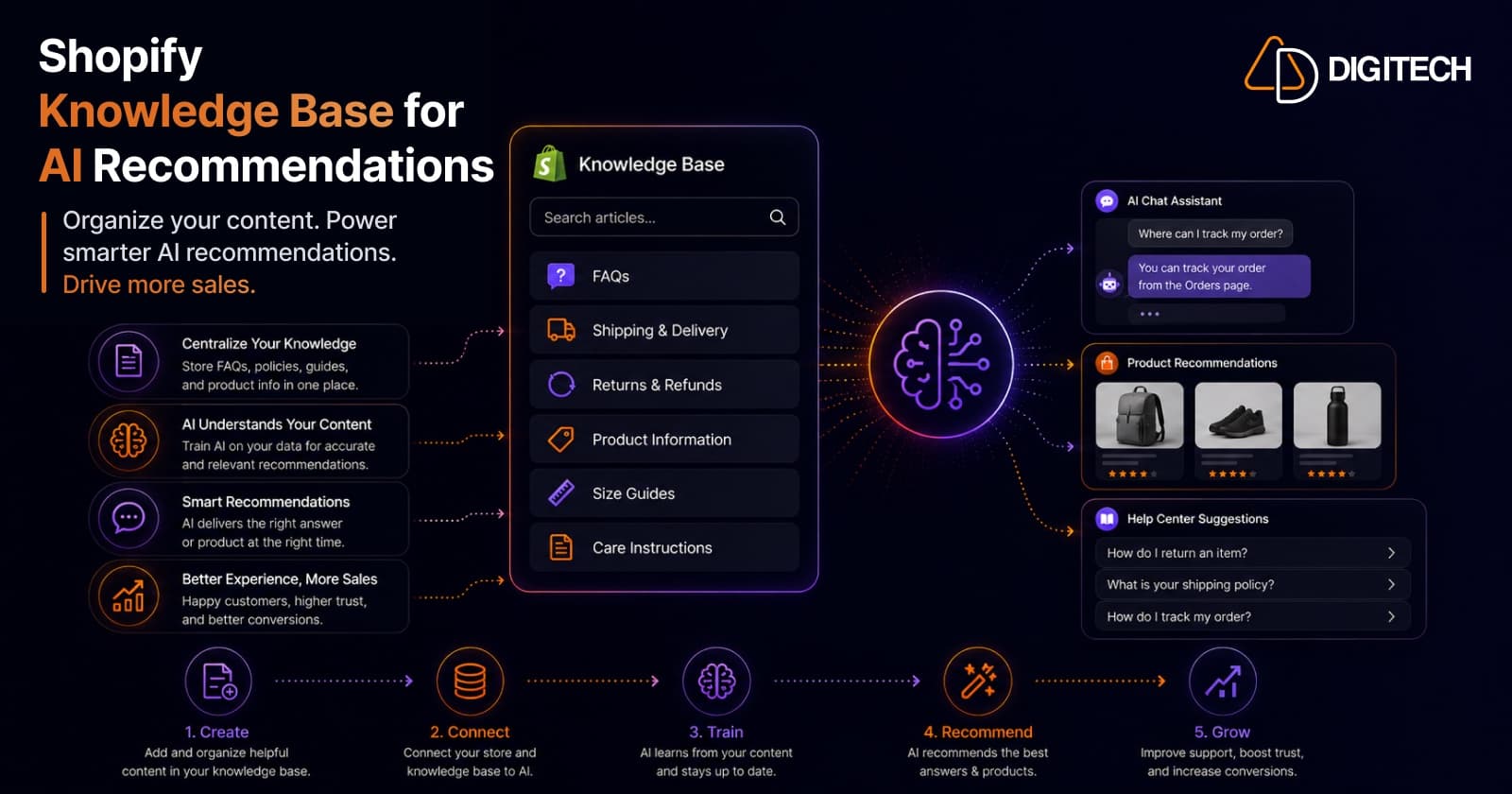
How Shopify Knowledge Base Helps AI Recommend Your Products
AI assistants only recommend products they understand and can answer questions about. Shopify's Knowledge Base feeds your brand context — policies, FAQs, and brand voice — directly to AI, so agents represent you accurately and recommend you instead of a competitor. Here's how it works, why it matters, and what to put in it.
Read article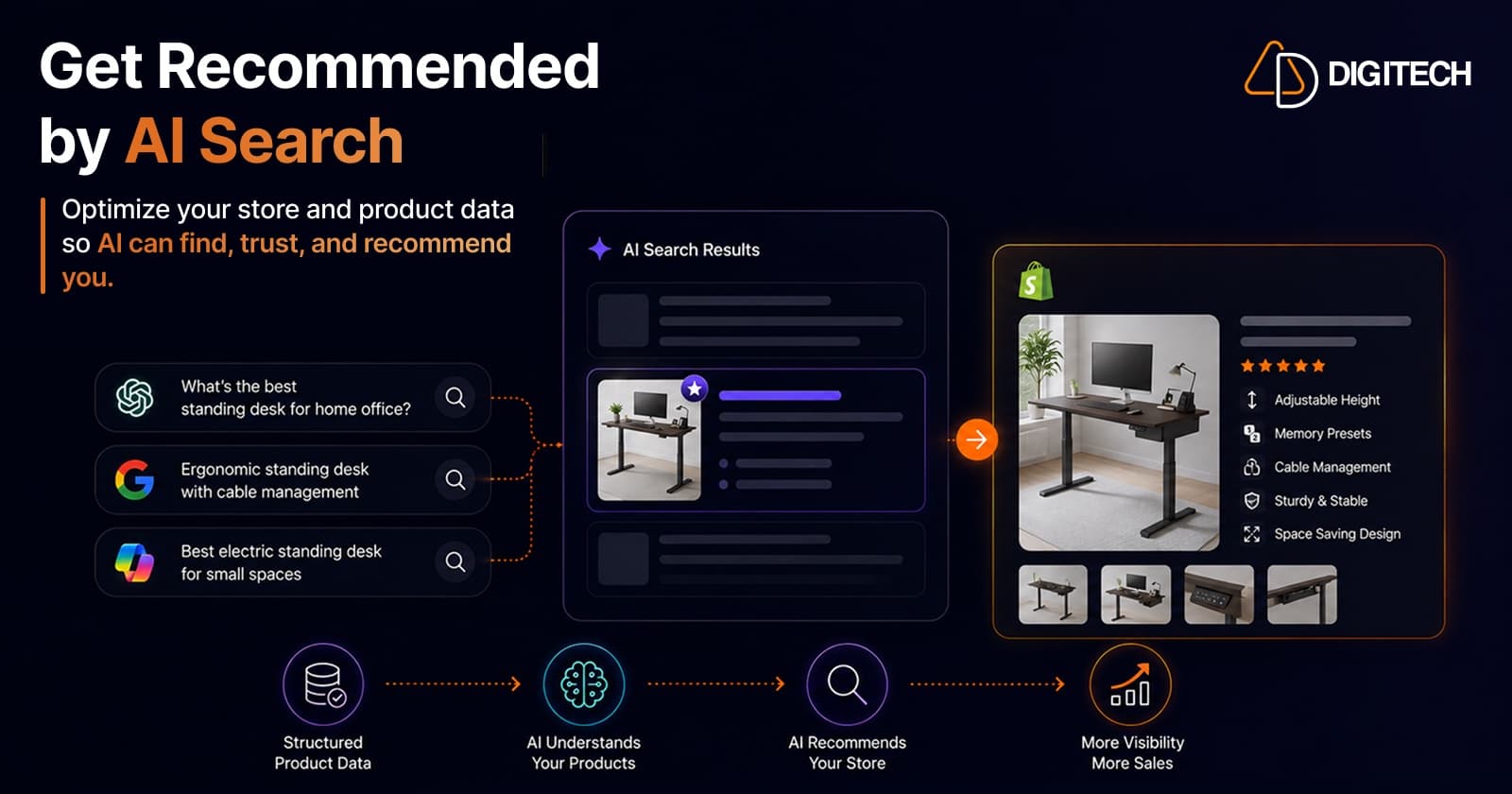
How Shopify Brands Can Get Recommended by ChatGPT, Claude & AI Search Engines
ChatGPT, Claude, and Perplexity now recommend products directly to shoppers. Here's how Shopify brands earn those recommendations — a practical 2026 guide to Generative Engine Optimization (GEO): the signals AI models trust, what to fix on-site and off-site, and how to measure your AI visibility.
Read article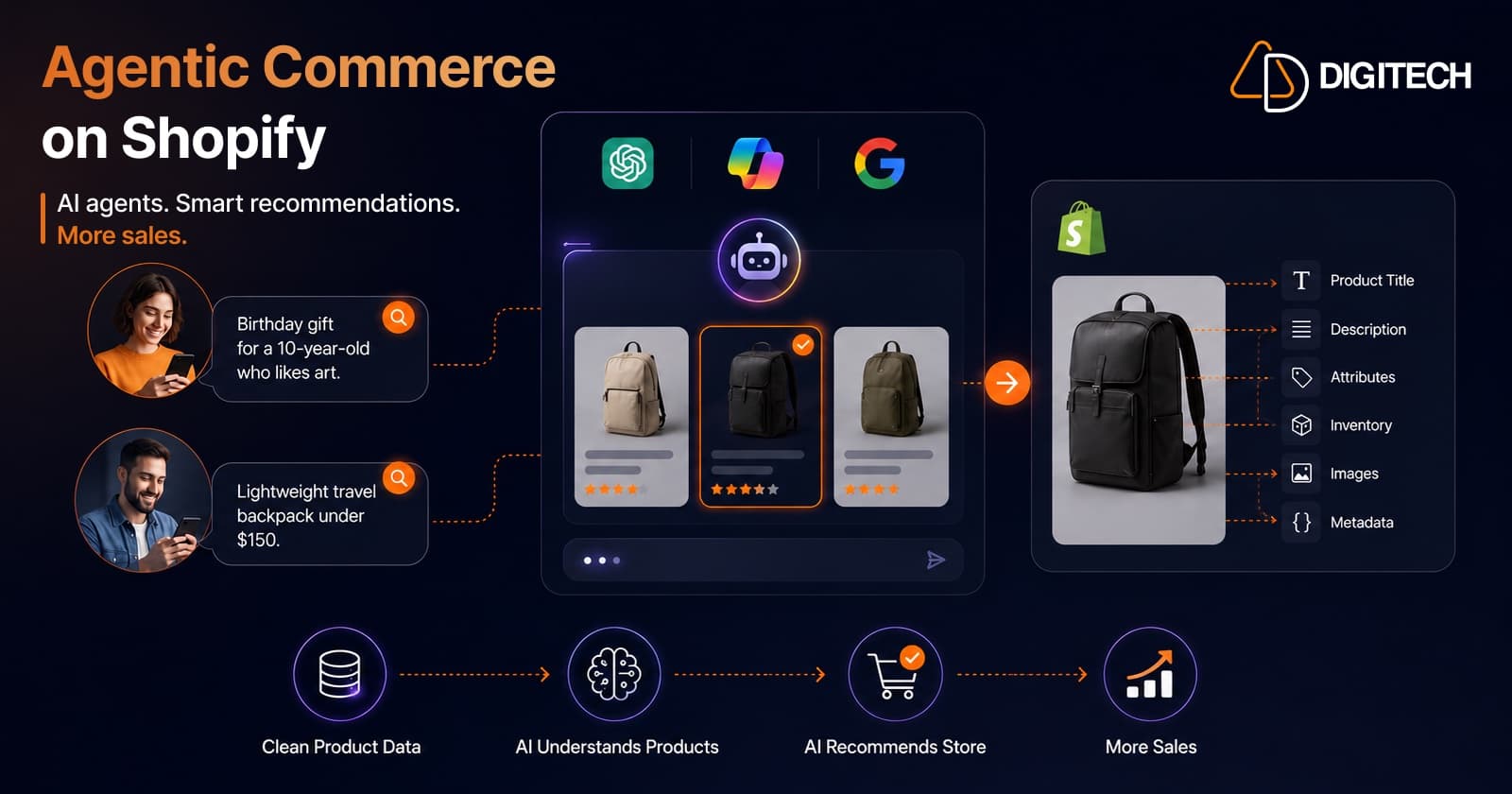
Agentic Commerce on Shopify: How to Get Your Store Ready for AI Shopping Agents (2026)
Shopify's Spring '26 Edition makes your products buyable inside ChatGPT, Microsoft Copilot, and Google AI Mode. Here's what agentic commerce actually means for merchants — and a practical, no-hype checklist to get your Shopify store ready for AI shopping agents in 2026.
Read article
How to Measure the Revenue Impact of Shopify Product Recommendations
Learn how Shopify merchants can measure product recommendation performance, track checkout activity, attribute revenue, and improve personalized recommendations.
Read article
Shopify Thank You Page Offers: How to Create Post-Purchase Offers
Learn how to create Shopify Thank You Page offers with discounts, coupons, countdown timers and relevant promotions to drive additional purchases.
Read article