How AI Shopping Agents Compare Products on Shopify Stores
When a shopper asks an AI for the best product, the agent doesn't browse like a human — it reads structured product data across dozens of stores and compares them head-to-head on attributes, value, price, and reviews, then picks winners. Here's exactly how that comparison works, the signals it weighs, and how to make your Shopify products win the shortlist.
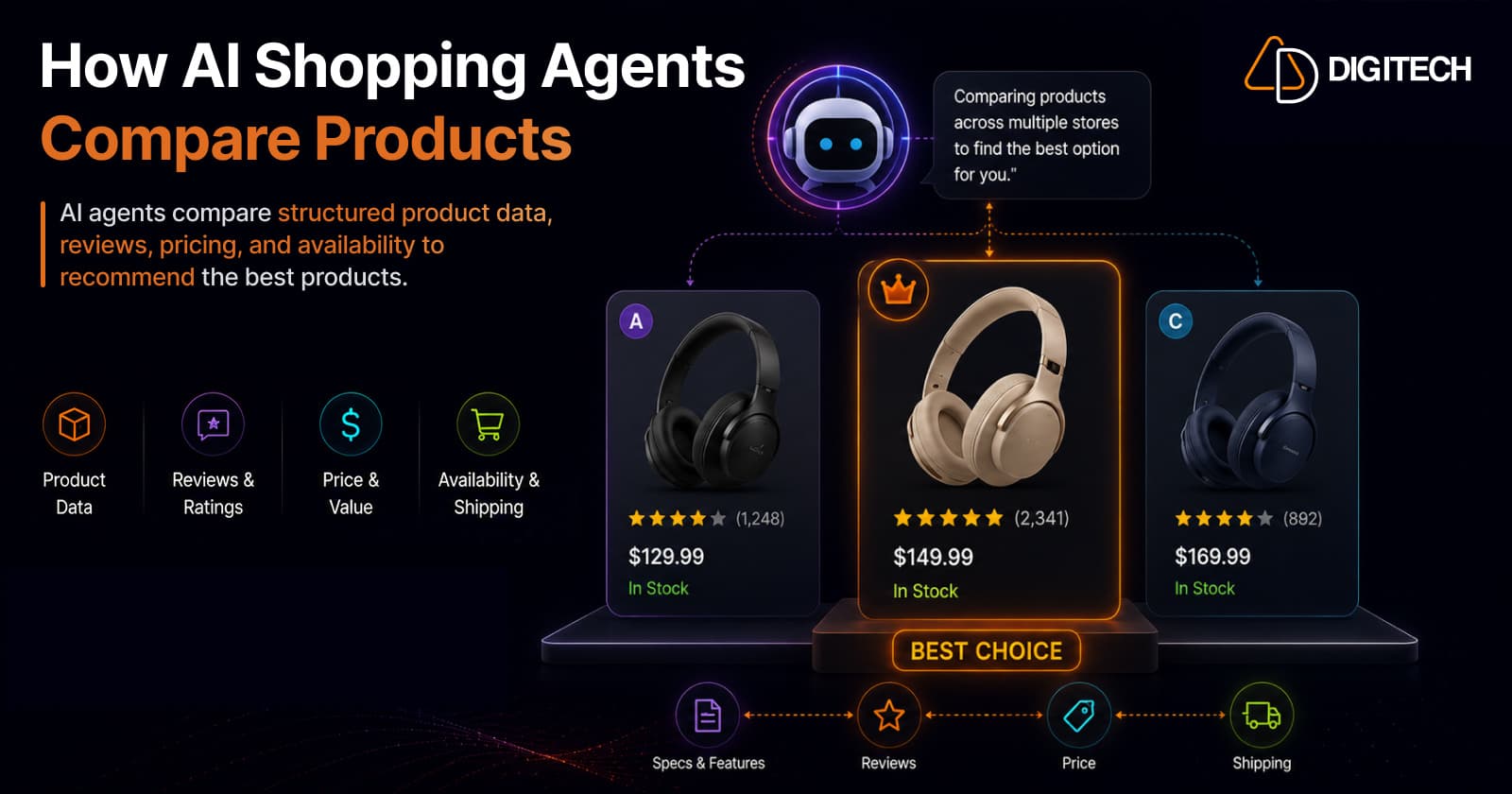
The short version: when a shopper asks an AI for "the best X," the agent doesn't shop like a human. It reads structured product data across dozens of stores, compares them head-to-head on attributes, value, price, and reviews, and returns a short ranked list. Winning the shortlist is about the data the agent can read — not the page a human would see.
We help Shopify brands get found and chosen by AI, so here's exactly how the comparison works and how to win it.
What an AI shopping agent actually does
An AI shopping agent acts on the shopper's behalf: it understands a natural-language request, researches options across many sources, and compares features and prices to recommend — or buy. In one query it will scan dozens of stores, read reviews, compare products, and produce a shortlist.
That's a fundamentally different motion from a human clicking through search results. The agent isn't browsing; it's building a comparison table in its head and filling the cells with whatever data it can extract about each product.
How the comparison actually works
Here's the mechanic that matters: the language model picks overall winners by value and price, and evaluates products head-to-head on several product-specific attributes.
So a comparison for "best waterproof hiking boot under $200" isn't a keyword match — it's the agent lining up candidates and judging them attribute by attribute:
- Does it meet the constraint (waterproof, under $200)?
- How does it compare on the attributes that matter (weight, grip, materials, break-in, sizing)?
- What's the value — the price relative to what it delivers?
- What do the reviews say?
The product that wins is the one whose data lets the agent confidently say "this is the best fit." If your product's attributes are missing or vague, the agent can't place you in the comparison — and silence loses.
The signals agents compare on
Optimize for what the agent actually reads and weighs:
- Structured attributes and specs — the cells of the comparison table. Material, size, compatibility, features, use case, ingredients. This is the single biggest lever.
- Price and value — not just "cheapest." Agents judge value: price against what the product offers. Clear positioning helps you win on value, not price alone.
- Reviews and ratings — social proof the agent reads and summarizes to break ties.
- Availability and shipping — in stock, delivery speed, and cost feed directly into the recommendation.
- Accurate, complete descriptions — so the agent can match your product to the shopper's intent in the first place.
- Brand context — whether the agent can answer the shopper's follow-ups (returns, sizing, guarantees) via your Knowledge Base.
Why structured data decides it
The uncomfortable truth: an AI agent can only compare what it can read as data. And structured data is measurably decisive — pages with structured data are cited roughly 3.1x more often in Google's AI Overviews.
How the big agents get their data differs, which is why this matters:
- Google maintains a real-time structured product database.
- ChatGPT and Perplexity rely on web scraping plus merchant data feeds.
Scraping is where brands lose. It surfaces stale prices, wrong inventory, and missing attributes — and an agent comparing you on bad data will quietly rank you last or misrepresent you. Feeding accurate, structured, first-party data is how you make sure the comparison runs on your facts. (This is the whole case for treating your catalog as more important than SEO.)
How to win the comparison on Shopify
Concretely, for a Shopify store:
- Complete every structured attribute. Fill the spec fields — the agent compares cell by cell, and empty cells are lost comparisons.
- Keep pricing and inventory accurate in real time. Wrong price or "out of stock" data drops you instantly.
- Build and surface reviews. They're a tiebreaker the agent reads and quotes.
- Write descriptions that state the value, not just keywords — help the agent argue why you win.
- Add brand context via the Knowledge Base, so the agent can handle the follow-up questions that close the sale.
- Syndicate through Shopify Catalog, so agents read your accurate first-party data instead of scraping.
The Shopify advantage
Shopify sits in a strong position here. Shopify Catalog structures and syndicates your product data to the AI platforms in real time, so agents compare you on current, accurate attributes — and agentic purchases complete through Shopify's checkout pathway. A well-structured Shopify product is therefore set up to be compared accurately and bought, rather than misrepresented by scraped data.
That's the same groundwork behind getting recommended by AI and letting AI transact on your behalf — clean, structured, complete product data is the through-line.
The brands that win AI comparisons aren't the loudest or the cheapest. They're the ones whose product data is complete and accurate enough for an agent to confidently pick them.
We help Shopify brands get AI-ready end to end — structured product data and attributes, review and content strategy, Knowledge Base setup, and Catalog syndication — so your products win the comparisons that increasingly decide the sale. See our AI work and Shopify store development, or talk to us about your store's AI readiness.
Frequently asked questions
How do AI shopping agents compare products?
They read structured product data across many stores and evaluate products head-to-head on product-specific attributes — specs, features, materials, use case — then pick overall winners by value and price, factoring in reviews and availability. In practice an agent scans dozens of stores, reads reviews, compares the options, and returns a short, ranked shortlist to the shopper.
What product data do AI agents use to compare?
Structured attributes and specs, price, availability and shipping, product descriptions, and reviews. Structured data matters most for being considered at all: pages with structured data are cited roughly 3.1x more often in Google's AI Overviews, so complete, machine-readable product attributes are what let an agent slot you into its comparison.
How is this different from ranking in Google search?
Traditional search ranks pages for a human to click; an AI shopping agent extracts and compares structured product data to make a decision on the shopper's behalf. You're no longer optimizing a page for a click — you're optimizing product data for a comparison. Thin data can rank fine for humans yet lose every AI comparison.
How do I make my Shopify products win AI comparisons?
Fill in complete, accurate structured attributes (the cells of the comparison table); keep real-time pricing and inventory correct; build strong reviews; state the value clearly in descriptions; add brand context via the Knowledge Base so the agent can answer follow-ups; and syndicate through Shopify Catalog so agents read your accurate first-party data instead of scraped, stale information.
Which AI shopping agents actually matter?
ChatGPT is the largest — around 800 million weekly users and roughly 50 million daily shopping-related queries — alongside Google's AI experiences, Perplexity, and Amazon's Rufus. Google maintains a real-time structured product database; ChatGPT and Perplexity lean on web scraping plus merchant data feeds, which is exactly why feeding them clean first-party data (via Shopify Catalog) changes your outcomes.
Does Shopify help my products get compared accurately?
Yes. Shopify Catalog structures and syndicates your product data to the AI platforms, and agentic purchases complete through Shopify's checkout pathway. So a well-structured Shopify product is positioned to be compared on accurate, current data — and bought — rather than misrepresented by scraped information.
Building something on Shopify?
We design, build, and maintain Shopify apps, stores, and AI products — to the standard this article describes.
Related reading
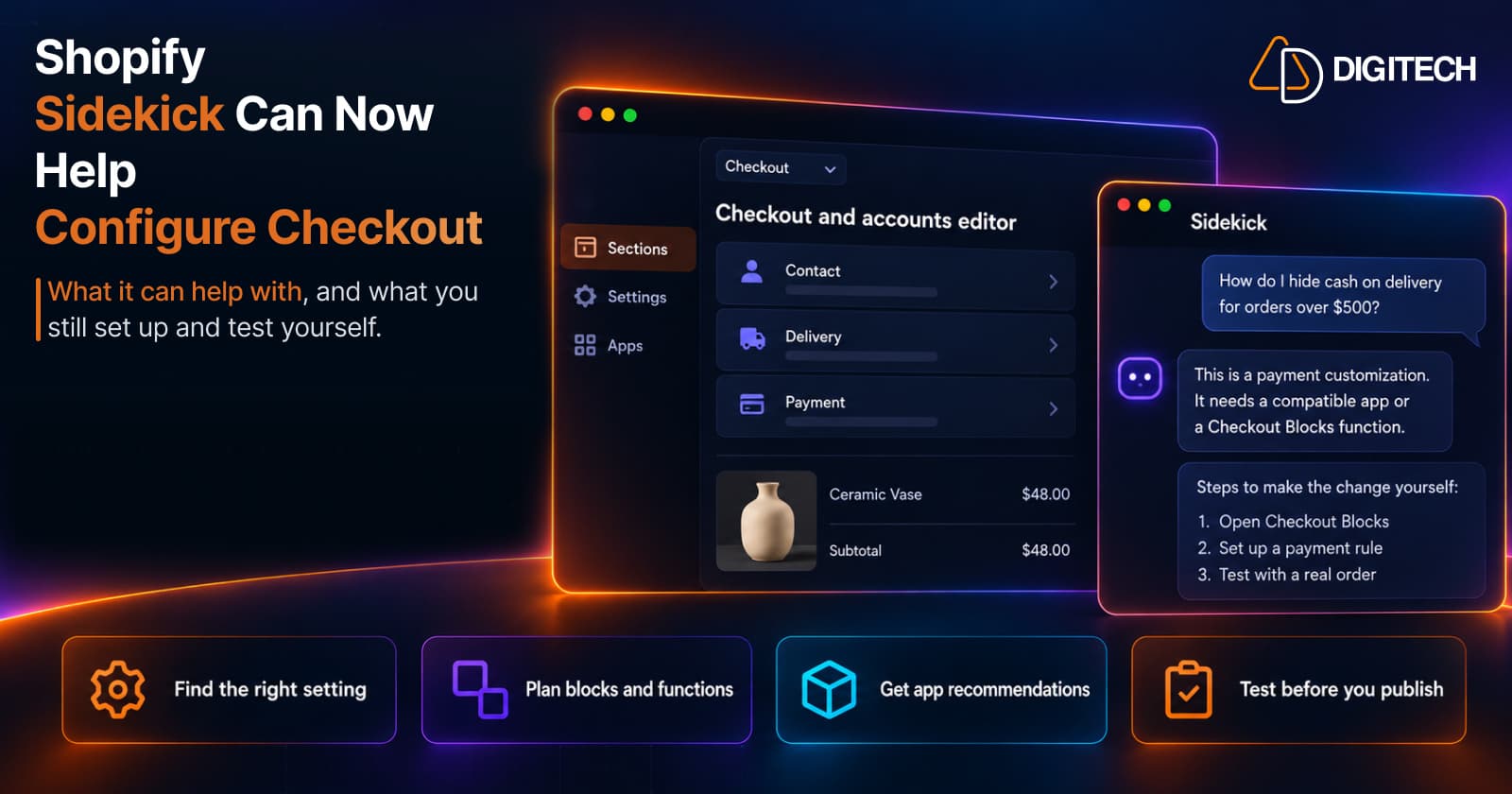
Shopify Sidekick Can Now Help Configure Checkout: What Merchants Should Know in 2026
On October 13, 2026, Shopify added Sidekick to the checkout and accounts editor and the Checkout Blocks app. Here's what it can help with, what you still configure yourself, and the plan limits to know.
Read article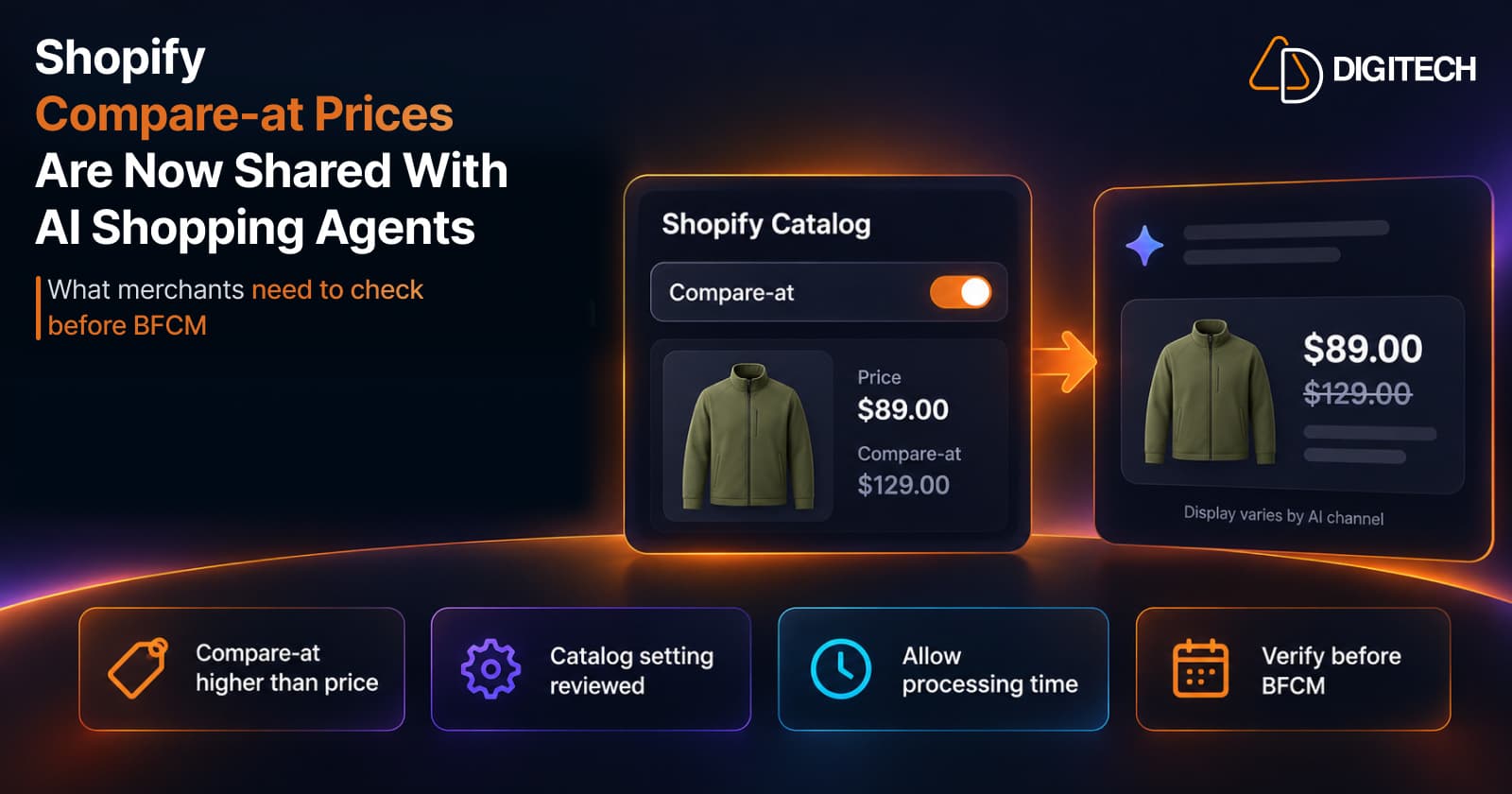
Shopify Compare-at Prices Are Now Shared With AI Shopping Agents: What Merchants Need to Check Before BFCM
Shopify Catalog can now send compare-at prices to AI shopping agents. Here's where the setting lives, how it works, and what to check before BFCM.
Read article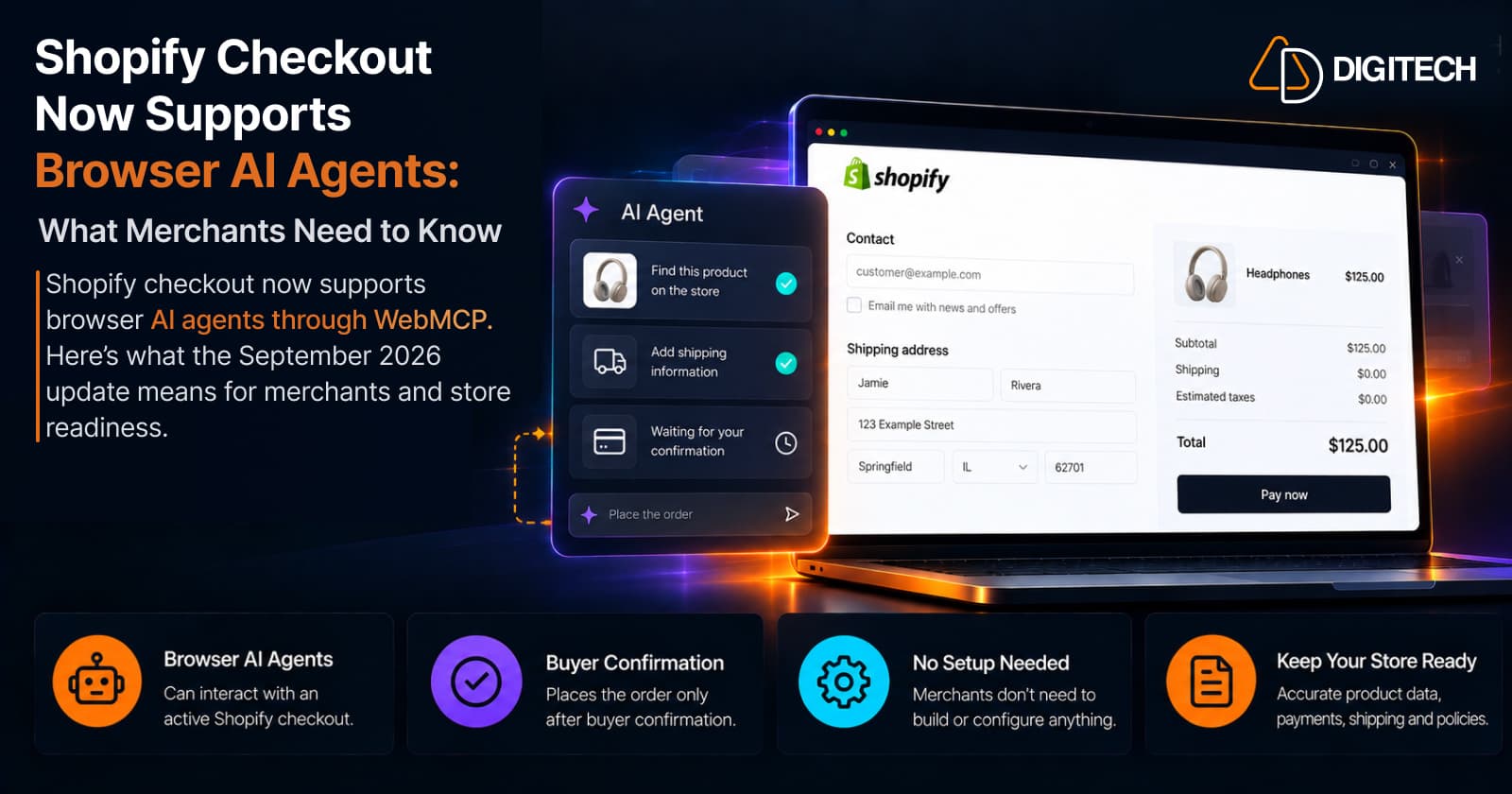
Shopify Checkout Now Supports Browser AI Agents: What Merchants Need to Know
Shopify checkout now supports browser AI agents through WebMCP. Here's what the September 2026 update means for merchants and store readiness.
Read article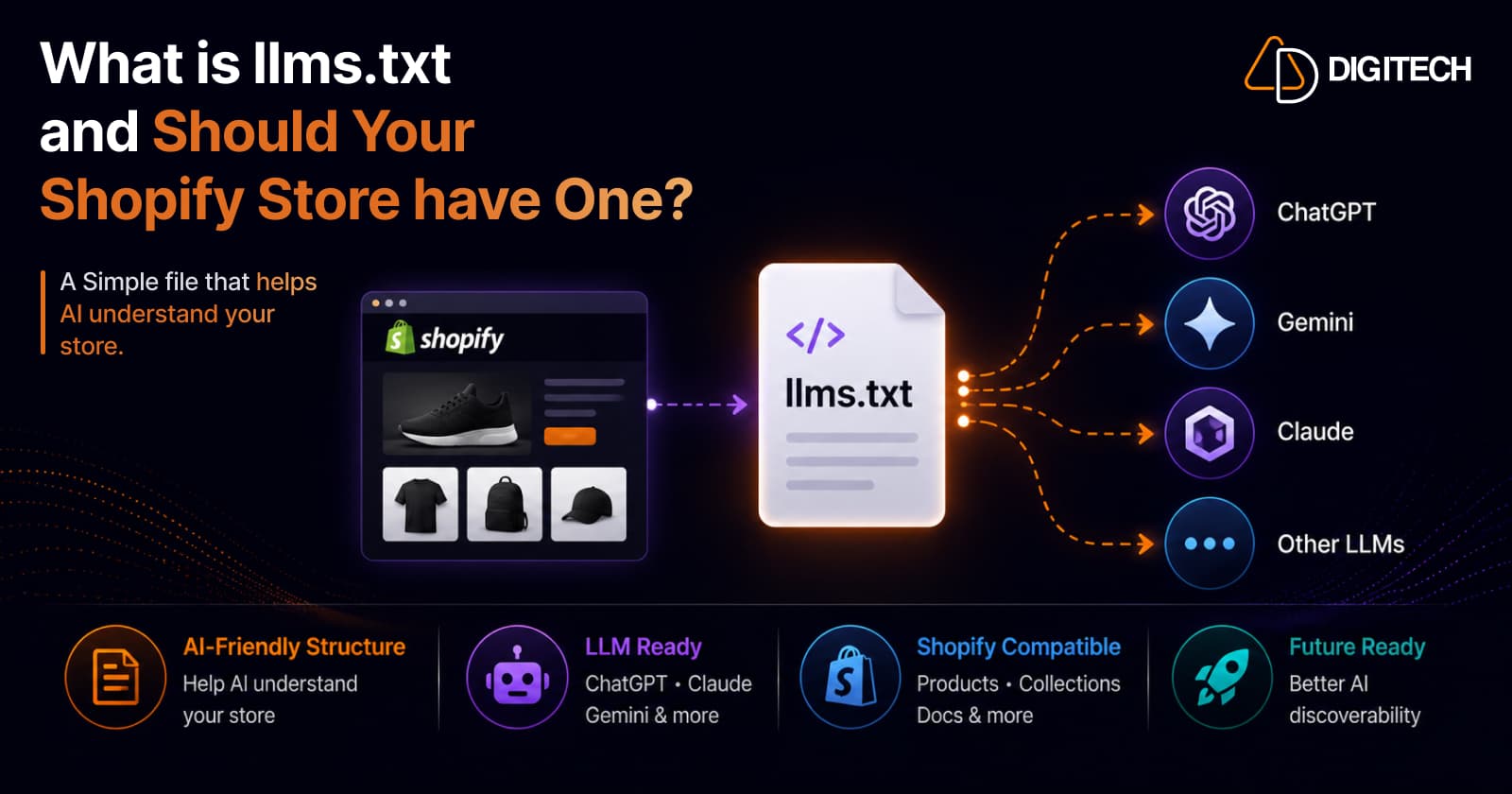
What Is llms.txt and Should Your Shopify Store Have One?
llms.txt is a proposed file that tells AI models which of your pages matter. But here's the honest truth: no major AI platform has confirmed it reads them, and Google said no on the record. So should your Shopify store have one? A qualified yes — as cheap insurance, not a strategy. Here's what it is, what the evidence actually shows, and where AI visibility really comes from.
Read article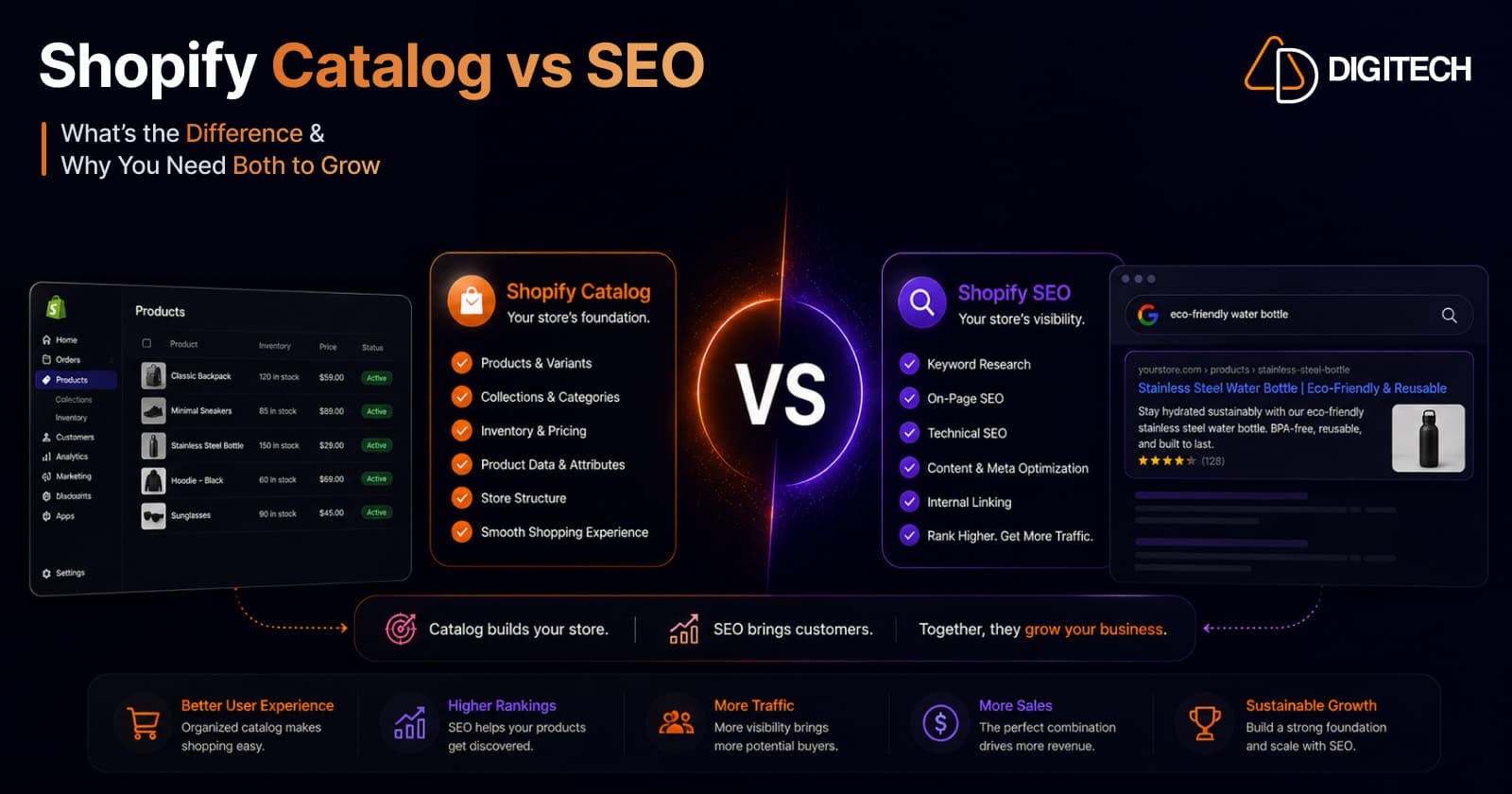
Why Your Shopify Product Catalog Matters More Than SEO in 2026
Discovery is moving from ranked web pages to AI agents that read structured product data. In 2026, the quality of your Shopify Catalog — not your meta tags and backlinks — increasingly decides whether AI recommends and sells your products. Here's why the catalog is the new front page, and what to do about it.
Read article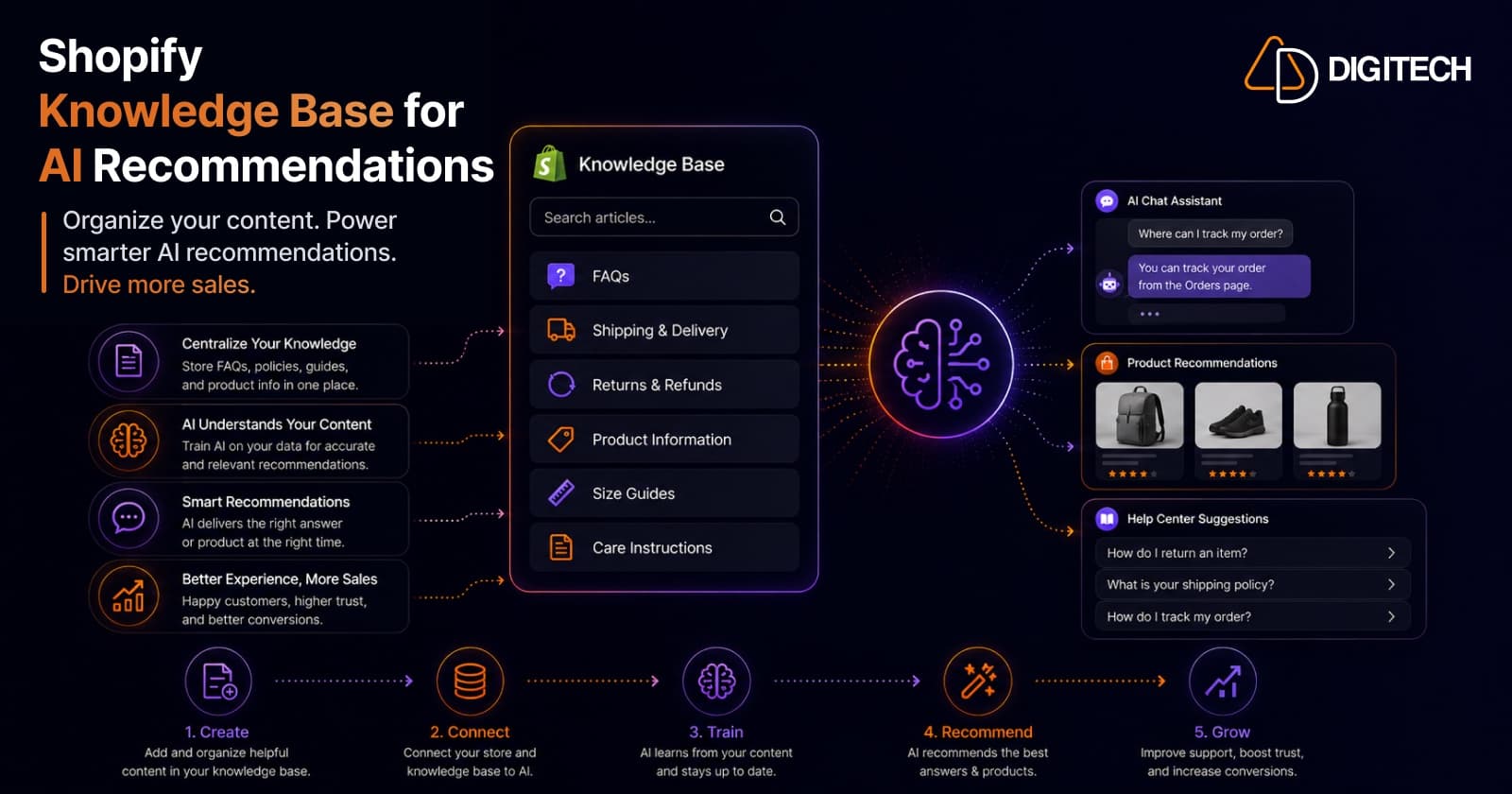
How Shopify Knowledge Base Helps AI Recommend Your Products
AI assistants only recommend products they understand and can answer questions about. Shopify's Knowledge Base feeds your brand context — policies, FAQs, and brand voice — directly to AI, so agents represent you accurately and recommend you instead of a competitor. Here's how it works, why it matters, and what to put in it.
Read article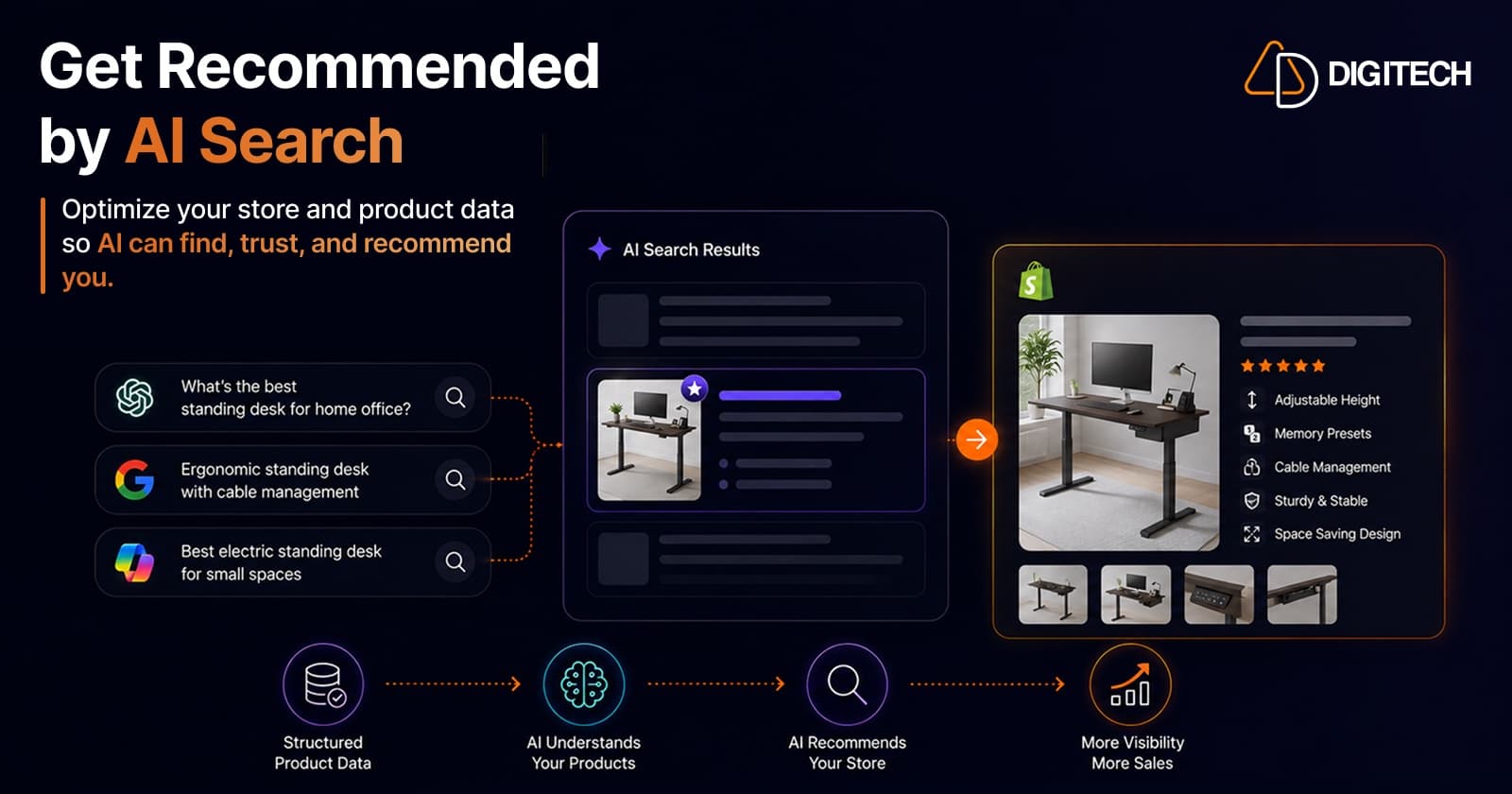
How Shopify Brands Can Get Recommended by ChatGPT, Claude & AI Search Engines
ChatGPT, Claude, and Perplexity now recommend products directly to shoppers. Here's how Shopify brands earn those recommendations — a practical 2026 guide to Generative Engine Optimization (GEO): the signals AI models trust, what to fix on-site and off-site, and how to measure your AI visibility.
Read article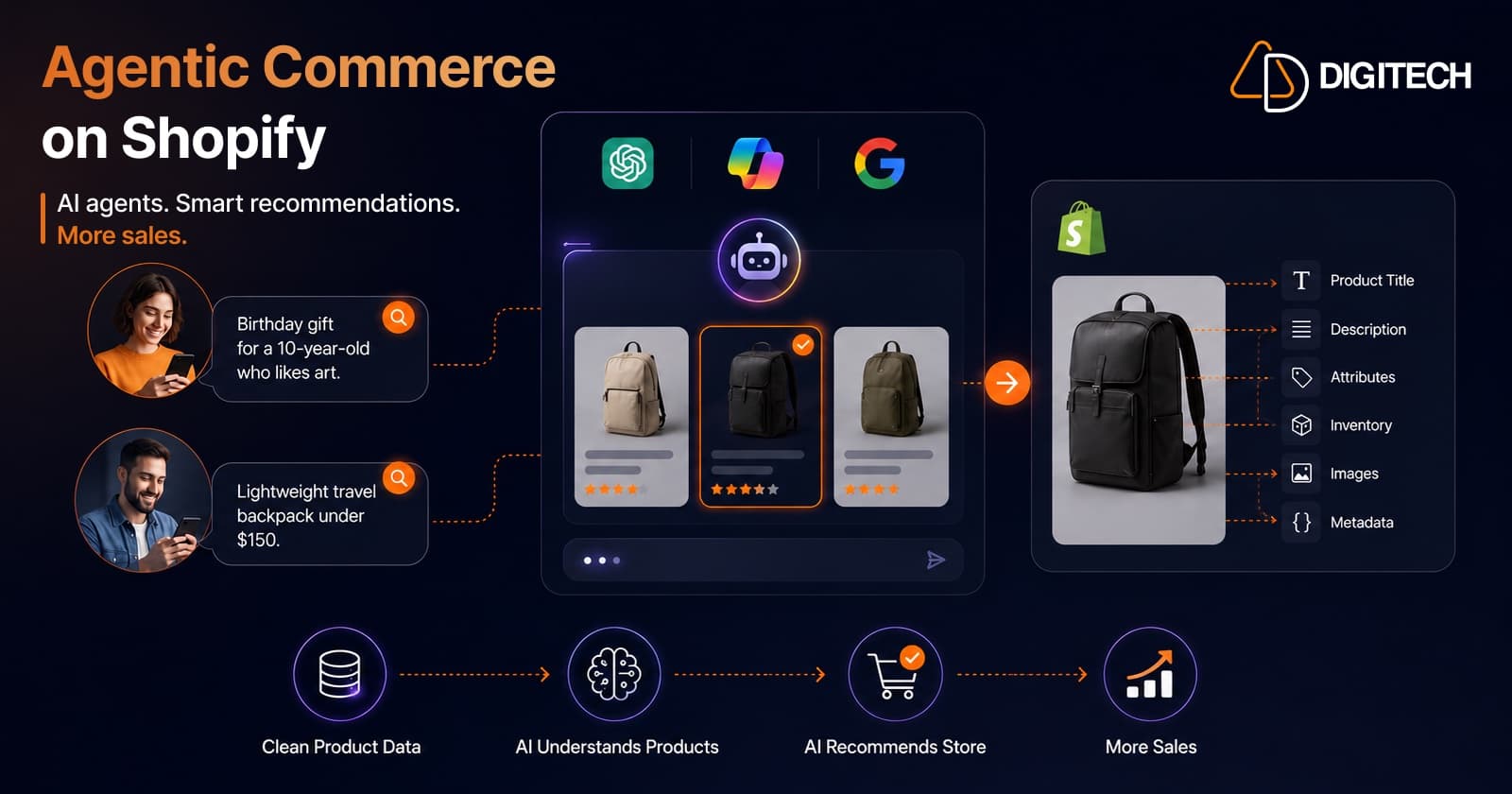
Agentic Commerce on Shopify: How to Get Your Store Ready for AI Shopping Agents (2026)
Shopify's Spring '26 Edition makes your products buyable inside ChatGPT, Microsoft Copilot, and Google AI Mode. Here's what agentic commerce actually means for merchants — and a practical, no-hype checklist to get your Shopify store ready for AI shopping agents in 2026.
Read article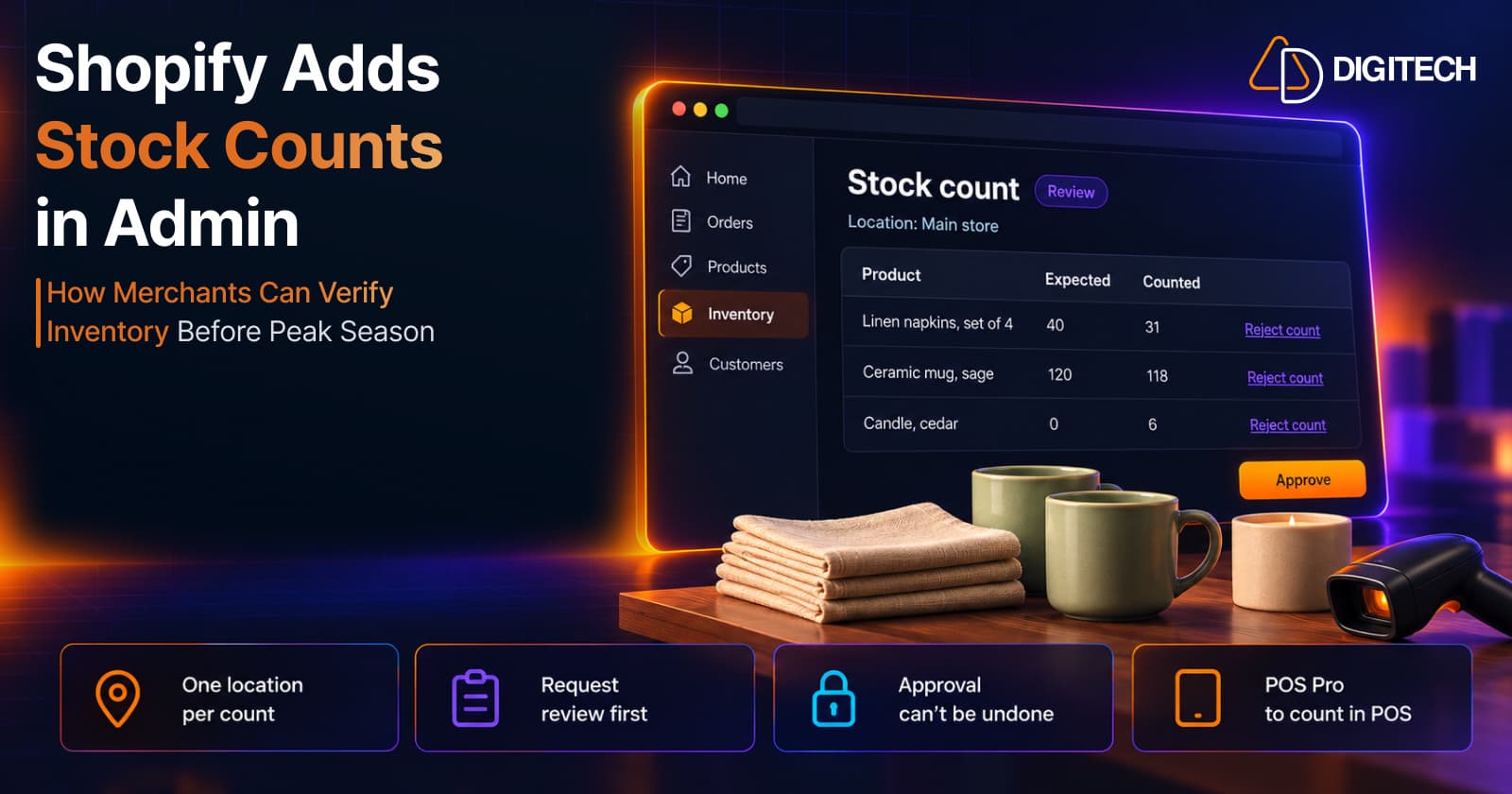
Shopify Adds Stock Counts in Admin: How Merchants Can Verify Inventory Before Peak Season
Shopify stock counts let staff record what's on the shelf and let a manager approve the differences before inventory changes. Here's how the workflow works in admin and POS.
Read article