How Shopify Brands Can Get Recommended by ChatGPT, Claude & AI Search Engines
ChatGPT, Claude, and Perplexity now recommend products directly to shoppers. Here's how Shopify brands earn those recommendations — a practical 2026 guide to Generative Engine Optimization (GEO): the signals AI models trust, what to fix on-site and off-site, and how to measure your AI visibility.
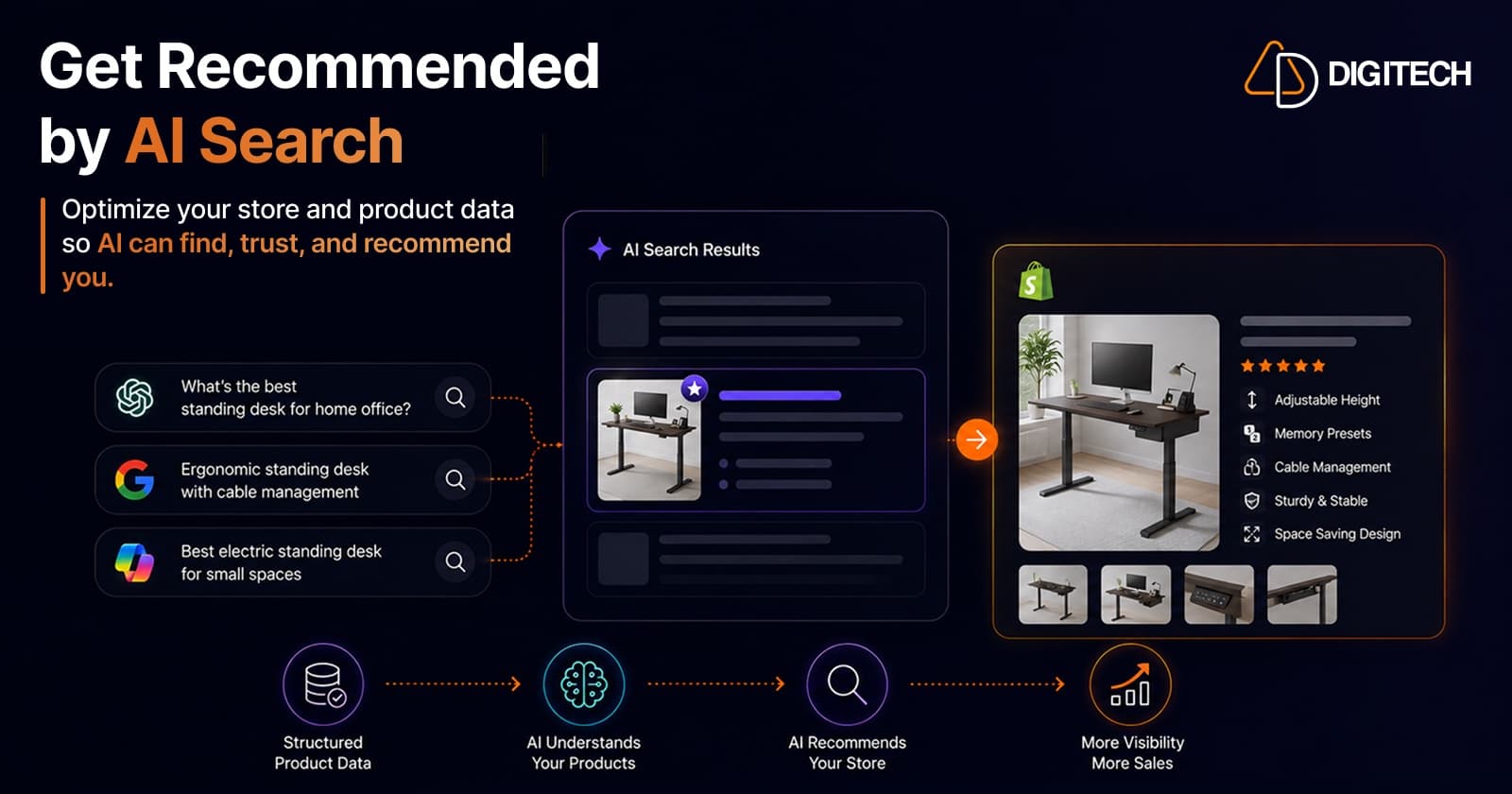
The short version: AI assistants now recommend products directly, and you earn those recommendations the same way you earn human trust — by being the clearest, most credible, best-structured source the web agrees on. It's a discipline (Generative Engine Optimization) you can work at, not a black box.
We help Shopify brands show up where buyers are actually looking — and increasingly, that's inside ChatGPT, Claude, and Perplexity, not just Google. This is the practical playbook we use. (It's the visibility companion to getting your store ready to sell through AI agents — that post covers the transaction; this one covers getting recommended in the first place.)
Why this matters now
Product research is moving into AI. Shoppers are asking "what's the best protein powder for sensitive stomachs?" or "a durable travel backpack under $150" and getting a short, confident shortlist — often without visiting a single store. Gartner has projected that 25% of search volume shifts to AI engines by 2026, and industry analyses report that visitors arriving from AI search tend to convert at roughly twice the rate of traditional organic traffic, often buying in a third of the sessions — because the AI has already done the comparison and pre-qualified the buyer.
The risk is quiet but real: if the AI doesn't understand or trust your brand, it recommends a competitor, and you never see the lost sale in your analytics. Being absent from the answer is invisible.
How AI models actually decide what to recommend
AI assistants don't "rank" pages the way Google does. They synthesize an answer from two sources: what they absorbed in training, and what they retrieve live from the web at question time. Then they cite and recommend the sources they find most trustworthy and easiest to parse.
Crucially, the engines don't all behave the same way:
| AI engine | Tends to favor |
|---|---|
| ChatGPT | Established, authoritative sources and well-known references |
| Perplexity | Real-time web results and community sources (notably Reddit) |
| Claude | Well-structured, fact-dense, clearly-sourced content |
| Google AI Overviews | Pages that already rank well, plus clean structured data |
The throughline: clarity, credibility, and structure win. A widely-cited GEO study found that adding authoritative citations, statistics, and quotations to content can lift its visibility in AI answers by up to 40% — even for lower-ranked pages. Language models reward sources that state facts plainly and back them up.
The GEO playbook for Shopify brands
Here's where to focus, roughly in order of leverage.
1. Get your structured product data right
This is the foundation. Make every product machine-readable with complete Product schema — name, brand, description, price, availability, SKU/GTIN, image, and aggregate ratings. Add Organization and FAQ schema for your brand and content pages. On Shopify, that means clean product fields, structured metafields, and accurate, real-time inventory and pricing. Schema alone won't win you citations, but missing or wrong schema guarantees AI works from incomplete or stale data — and recommends someone else.
2. Write the way people ask AI
AI answers favor content that reads like a direct, honest response to a real question. Practically:
- Target long-tail, intent-rich queries ("best X for Y", "X vs Z", "is X worth it") with dedicated pages.
- Lead with a clear, fact-dense answer, then support it. Short paragraphs, plain language.
- Build genuine comparison and "best of" content — AI leans on these heavily for shortlists.
- Cite statistics and sources. Fact density is one of the strongest signals you can add.
3. Build off-site authority and mentions
AI models triangulate trust from across the web, not just your domain. Analyses have found that sites with very large numbers of referring domains are several times more likely to be cited by ChatGPT. You don't need 30,000 backlinks, but you do need to show up where the models look:
- Reviews on Google, Trustpilot, and category-specific platforms (consensus matters — AI weighs the aggregate).
- Reddit and communities — increasingly central to AI product recommendations. Be present authentically: answer real questions, don't spam.
- Comparison sites, roundups, and press that mention your brand in the right category.
- Consistent brand facts everywhere — same name, category, and positioning — so models form one clear, correct picture of who you are.
4. Make sure AI can actually read you
None of the above matters if AI crawlers can't reach your pages. Allow the major AI bots (GPTBot, ClaudeBot, PerplexityBot, Google-Extended) rather than blocking them, keep pages fast and server-rendered so content is in the HTML, and consider an llms.txt to guide models to your key pages. Crawlability is the difference between being a candidate and being invisible.
5. Stack genuine social proof
AI recommendations skew toward consensus. Steady, structured reviews and ratings — surfaced on your product pages and on third-party platforms — give models the signal that real customers vouch for you.
How to measure your AI visibility
You can't improve what you don't watch. Build a simple routine:
- Prompt the engines directly. Ask ChatGPT, Claude, and Perplexity the questions your buyers ask ("best [your category] for [use case]") and see whether you appear — and how you're described.
- Track mentions and citations over time, by query and by competitor. A handful of GEO/AI-visibility trackers now do this across engines.
- Watch AI referral traffic in GA4 (referrals from chatgpt.com, perplexity.ai, etc.) as a growing channel.
- Reverse-engineer winners. When a competitor gets recommended and you don't, look at what the AI cited — that's your roadmap.
GEO and SEO are partners, not rivals
It's tempting to treat this as a brand-new game, but most of GEO is good SEO applied to a new reader. Authority, fast crawlable pages, accurate structured data, and genuinely helpful content serve both the Google crawler and the language model. The difference is the goal: SEO earns a ranked link a human clicks; GEO earns a recommendation an AI speaks. Do the fundamentals well and you compound on both.
Where to start
For most Shopify brands, the highest-leverage first moves are unglamorous: fix your product and brand structured data, publish a few genuinely useful comparison/answer pages, and make sure AI crawlers aren't blocked. Then build authority and review presence over time. The brands that start now are teaching the models — while their competitors are still optimizing for a search box fewer people use.
We help Shopify brands get found and recommended across AI search — structured data, GEO content, technical AI-readiness, and the agentic-commerce groundwork that lets AI not just recommend you but sell for you. Take a look at our AI work and Shopify services, or talk to us about your store's AI visibility.
Frequently asked questions
What is Generative Engine Optimization (GEO)?
GEO is the practice of optimizing your brand, content, and product data so that AI assistants — ChatGPT, Claude, Perplexity, Gemini, and Google's AI Overviews — recommend and cite you in their answers. Where traditional SEO aims to rank a page for a keyword, GEO aims to convince a language model that your brand is the most trustworthy, clearly-structured source for a given question.
How do I get my products recommended by ChatGPT?
Make your products easy for AI to understand and trust: complete, structured product data (Product schema with name, brand, description, price, availability, reviews), clear fact-dense content that answers real buyer questions, strong third-party signals (reviews, mentions, comparison and 'best of' lists), and crawlability for AI bots like GPTBot. AI assistants recommend the brands they can confidently understand and that the wider web validates — not the one with the most keywords.
Is GEO different from SEO?
They overlap but optimize for different things. SEO earns ranked links for keywords; GEO earns citations and recommendations inside AI-generated answers. The good news is they reinforce each other — authority, clean structured data, fast crawlable pages, and genuinely useful content help both. GEO is best treated as an extension of solid SEO, not a replacement.
Does structured data (schema) help AI recommend my products?
Yes, as table stakes. Product, Organization, and FAQ schema make your pages machine-readable so AI can extract accurate facts (price, availability, brand, ratings). Some research suggests schema alone doesn't guarantee more citations, but missing or incorrect schema actively hurts — it leaves AI guessing or pulling stale data. Treat structured data as the non-negotiable foundation, then layer authority and content on top.
Why does Reddit matter for AI product recommendations?
Because AI engines lean on it heavily for real-world product opinions. Industry analyses in early 2026 found Reddit's share of AI citations growing sharply, with Perplexity drawing roughly a quarter of its citations from Reddit. Authentic presence in relevant communities — genuine answers, not spam — is increasingly one of the strongest off-site signals for being recommended.
Building something on Shopify?
We design, build, and maintain Shopify apps, stores, and AI products — to the standard this article describes.
Related reading
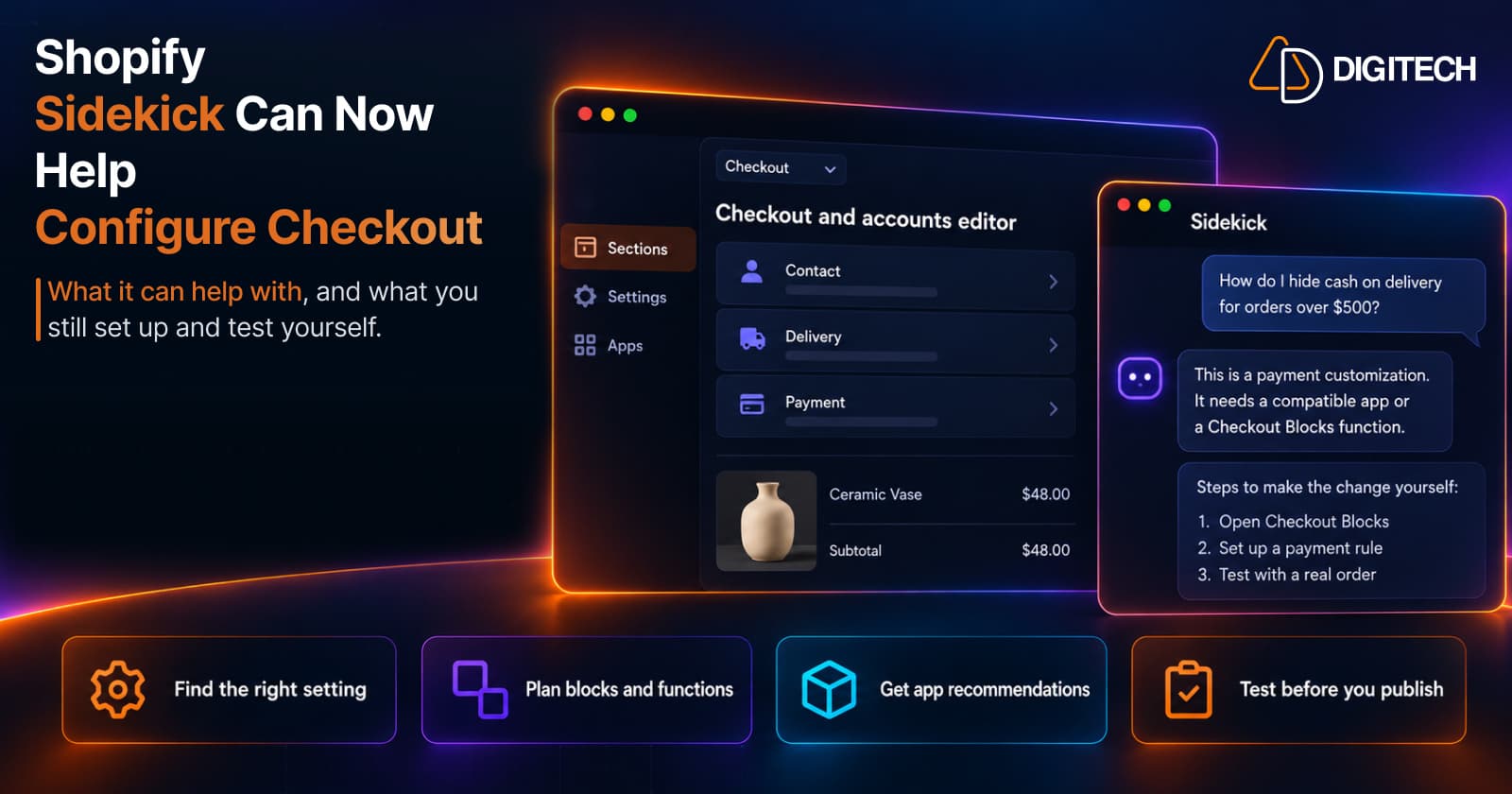
Shopify Sidekick Can Now Help Configure Checkout: What Merchants Should Know in 2026
On October 13, 2026, Shopify added Sidekick to the checkout and accounts editor and the Checkout Blocks app. Here's what it can help with, what you still configure yourself, and the plan limits to know.
Read article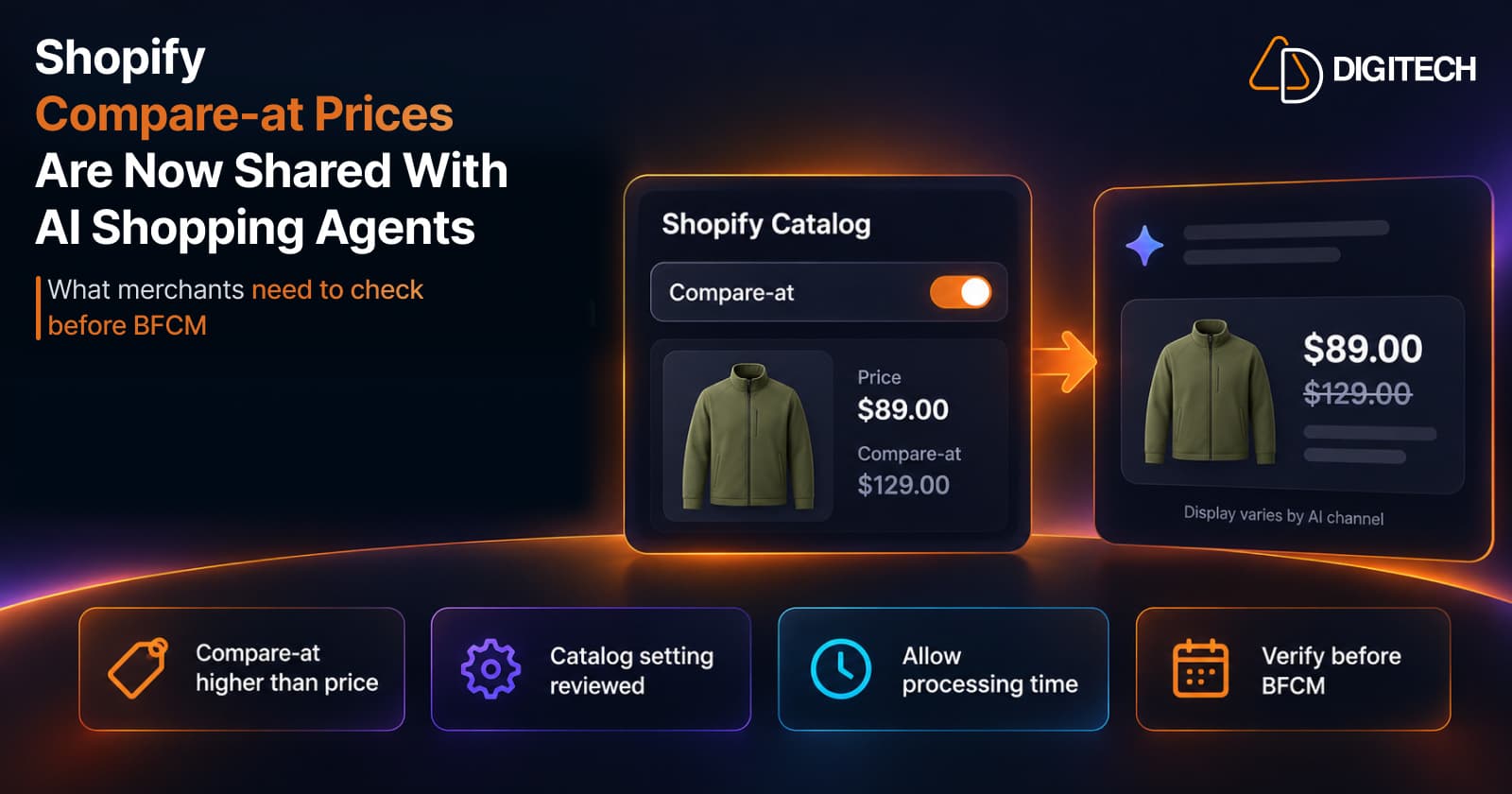
Shopify Compare-at Prices Are Now Shared With AI Shopping Agents: What Merchants Need to Check Before BFCM
Shopify Catalog can now send compare-at prices to AI shopping agents. Here's where the setting lives, how it works, and what to check before BFCM.
Read article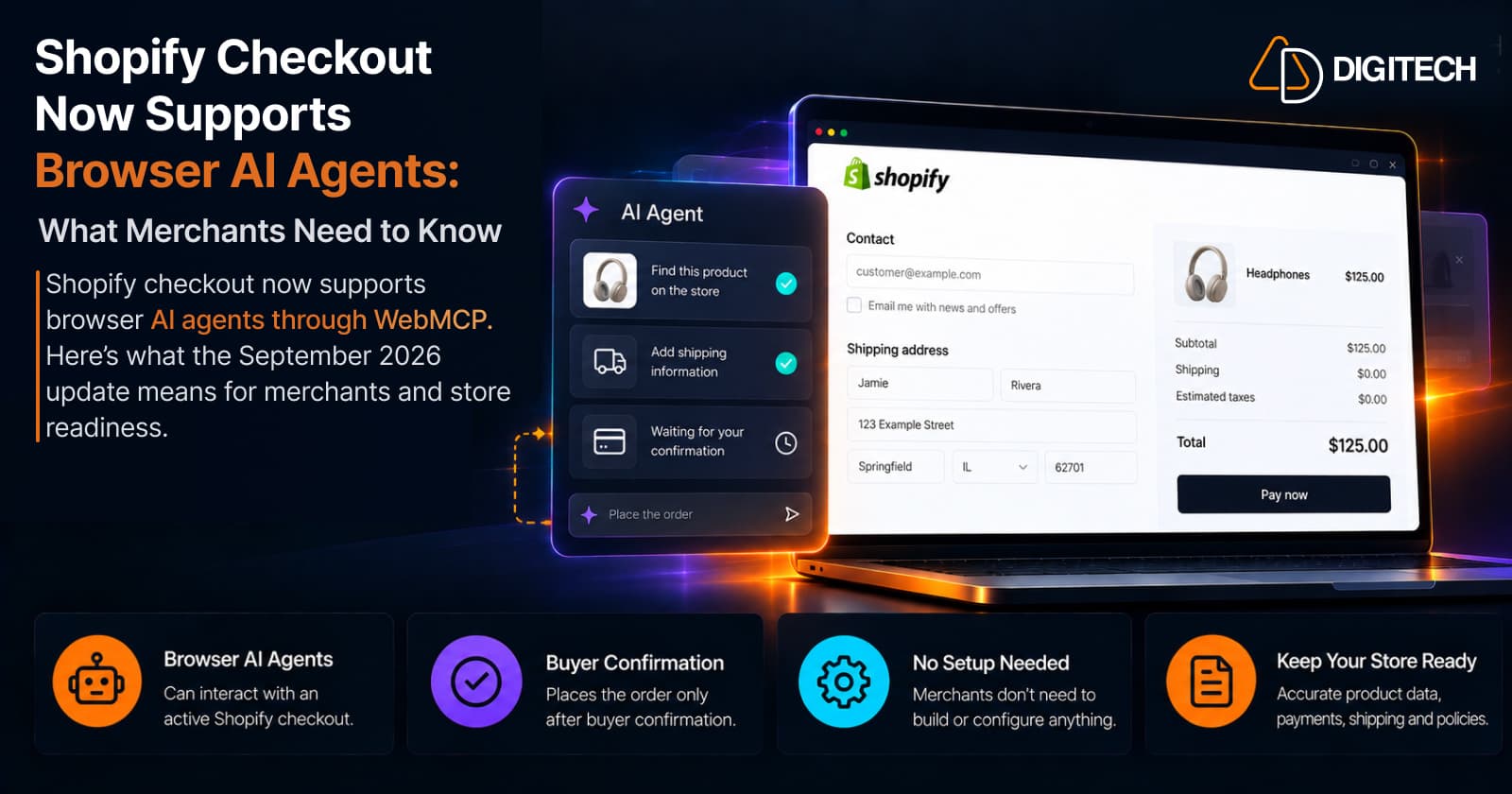
Shopify Checkout Now Supports Browser AI Agents: What Merchants Need to Know
Shopify checkout now supports browser AI agents through WebMCP. Here's what the September 2026 update means for merchants and store readiness.
Read article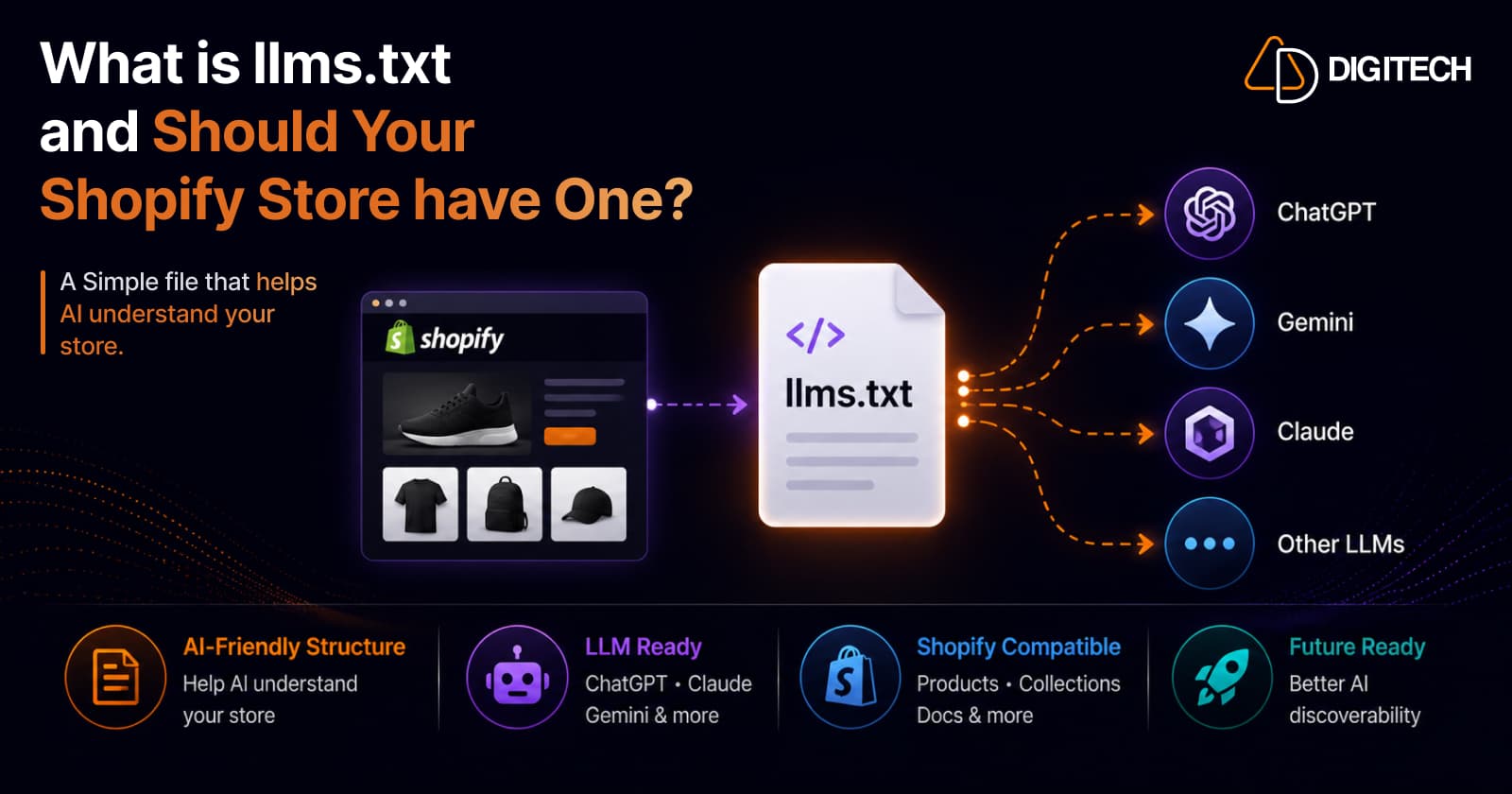
What Is llms.txt and Should Your Shopify Store Have One?
llms.txt is a proposed file that tells AI models which of your pages matter. But here's the honest truth: no major AI platform has confirmed it reads them, and Google said no on the record. So should your Shopify store have one? A qualified yes — as cheap insurance, not a strategy. Here's what it is, what the evidence actually shows, and where AI visibility really comes from.
Read article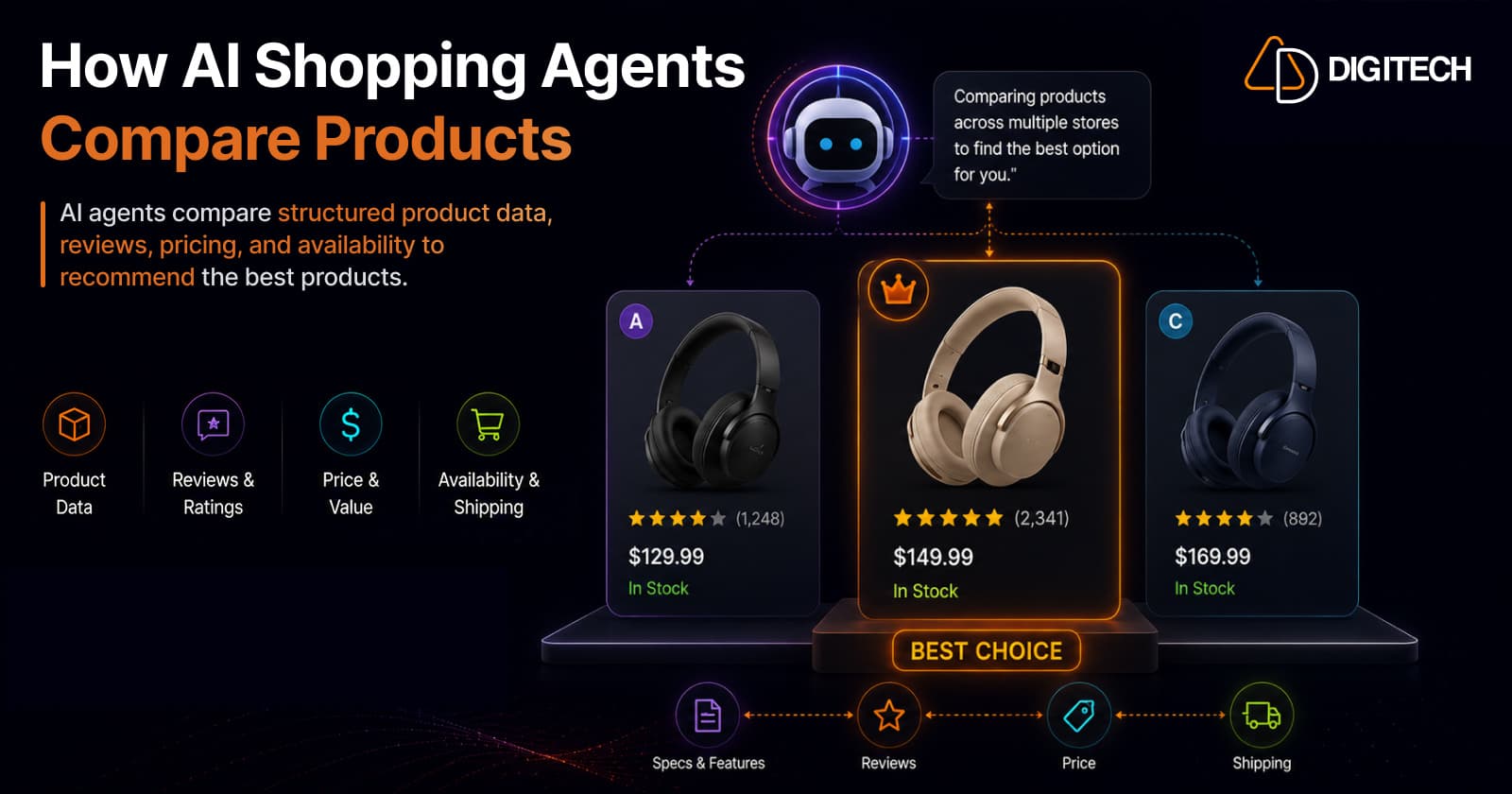
How AI Shopping Agents Compare Products on Shopify Stores
When a shopper asks an AI for the best product, the agent doesn't browse like a human — it reads structured product data across dozens of stores and compares them head-to-head on attributes, value, price, and reviews, then picks winners. Here's exactly how that comparison works, the signals it weighs, and how to make your Shopify products win the shortlist.
Read article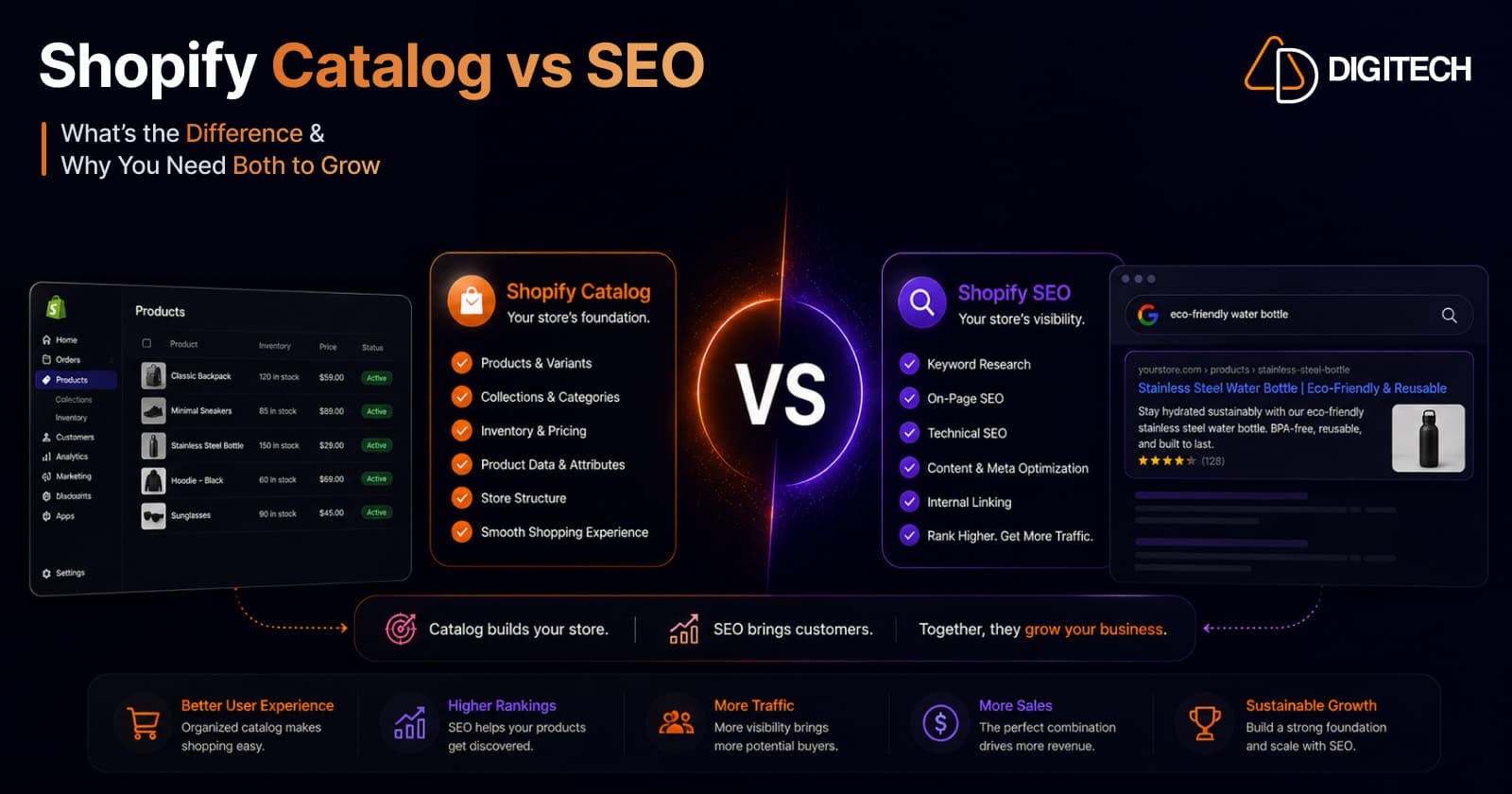
Why Your Shopify Product Catalog Matters More Than SEO in 2026
Discovery is moving from ranked web pages to AI agents that read structured product data. In 2026, the quality of your Shopify Catalog — not your meta tags and backlinks — increasingly decides whether AI recommends and sells your products. Here's why the catalog is the new front page, and what to do about it.
Read article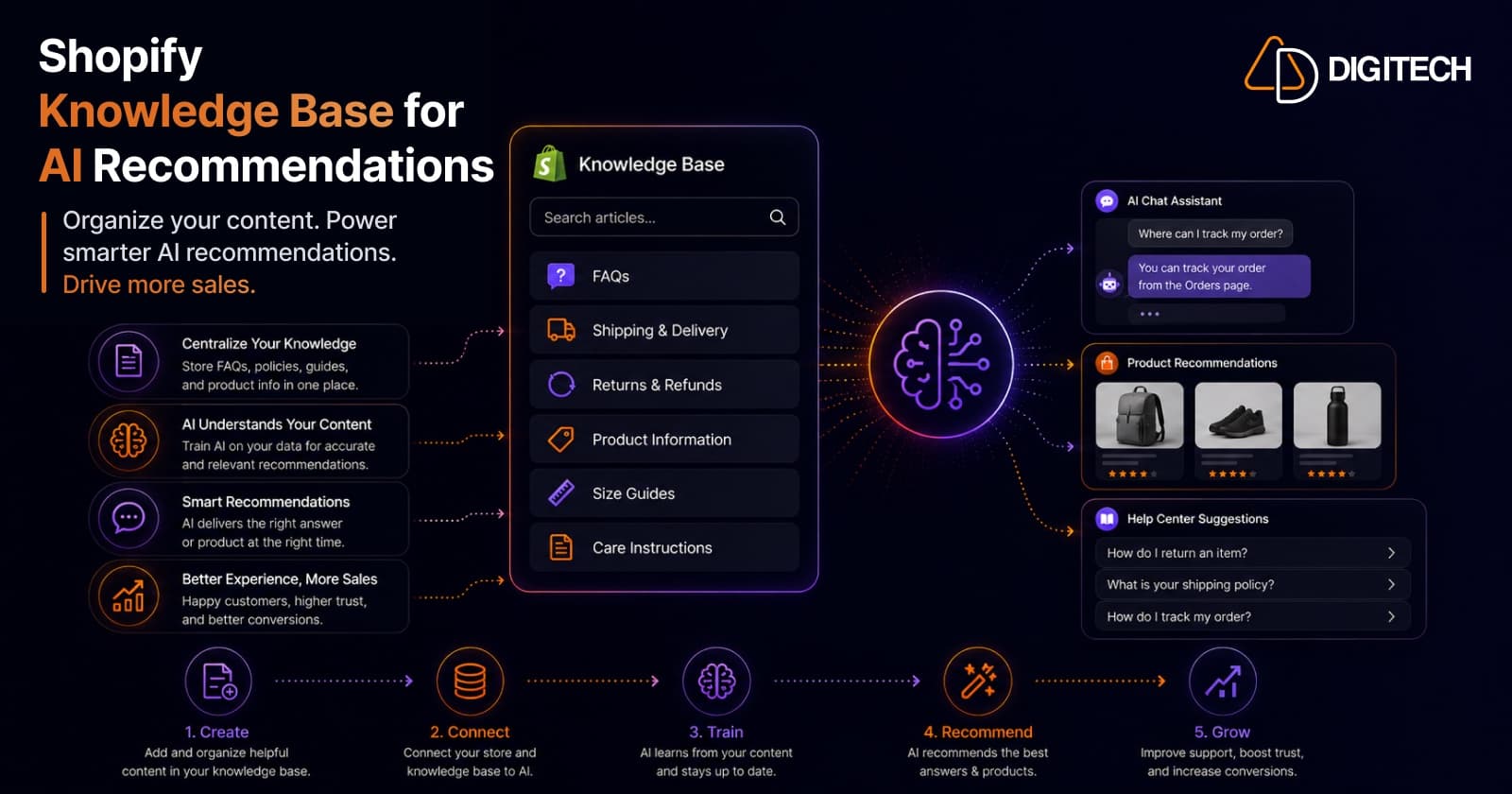
How Shopify Knowledge Base Helps AI Recommend Your Products
AI assistants only recommend products they understand and can answer questions about. Shopify's Knowledge Base feeds your brand context — policies, FAQs, and brand voice — directly to AI, so agents represent you accurately and recommend you instead of a competitor. Here's how it works, why it matters, and what to put in it.
Read article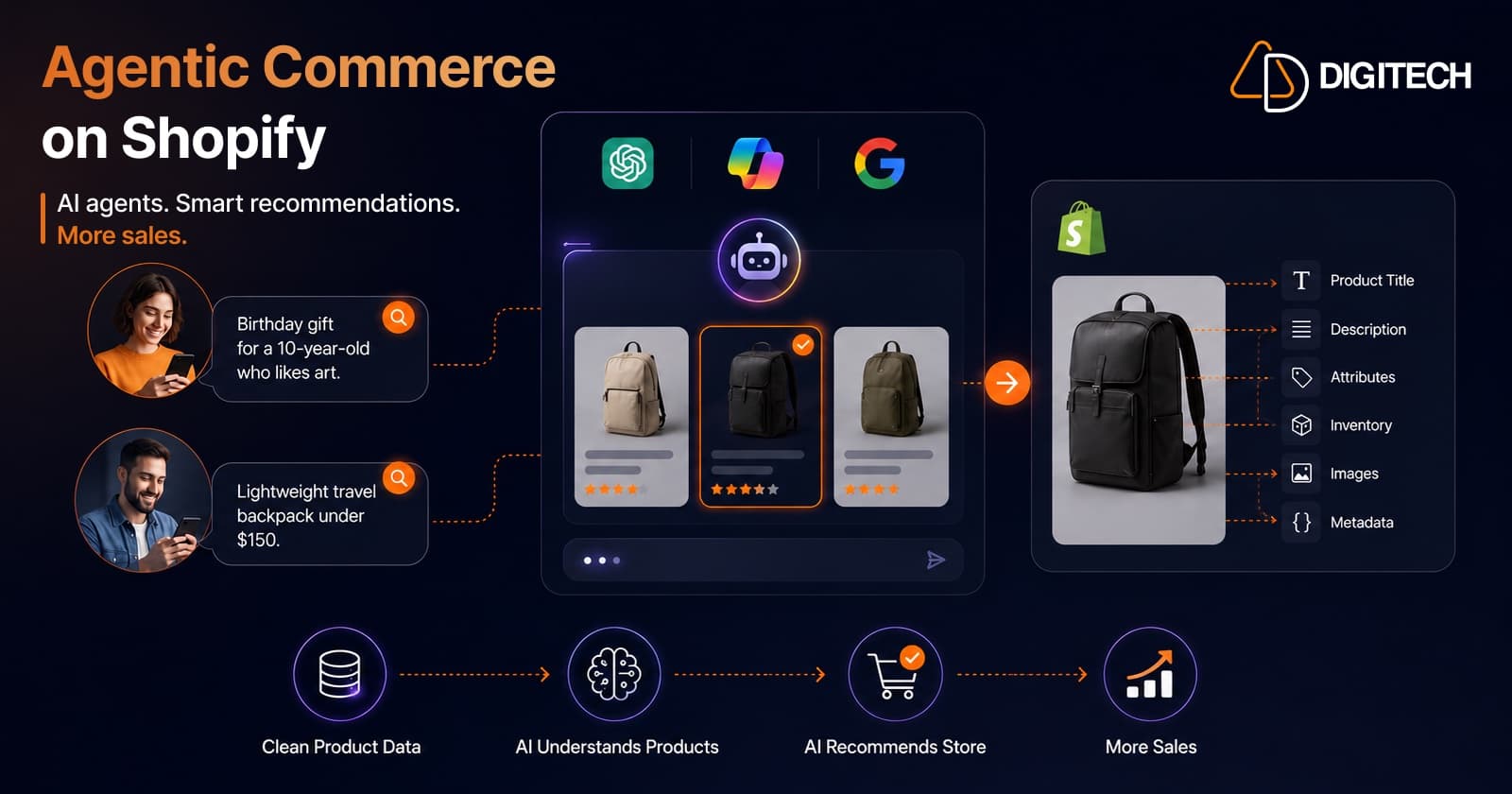
Agentic Commerce on Shopify: How to Get Your Store Ready for AI Shopping Agents (2026)
Shopify's Spring '26 Edition makes your products buyable inside ChatGPT, Microsoft Copilot, and Google AI Mode. Here's what agentic commerce actually means for merchants — and a practical, no-hype checklist to get your Shopify store ready for AI shopping agents in 2026.
Read article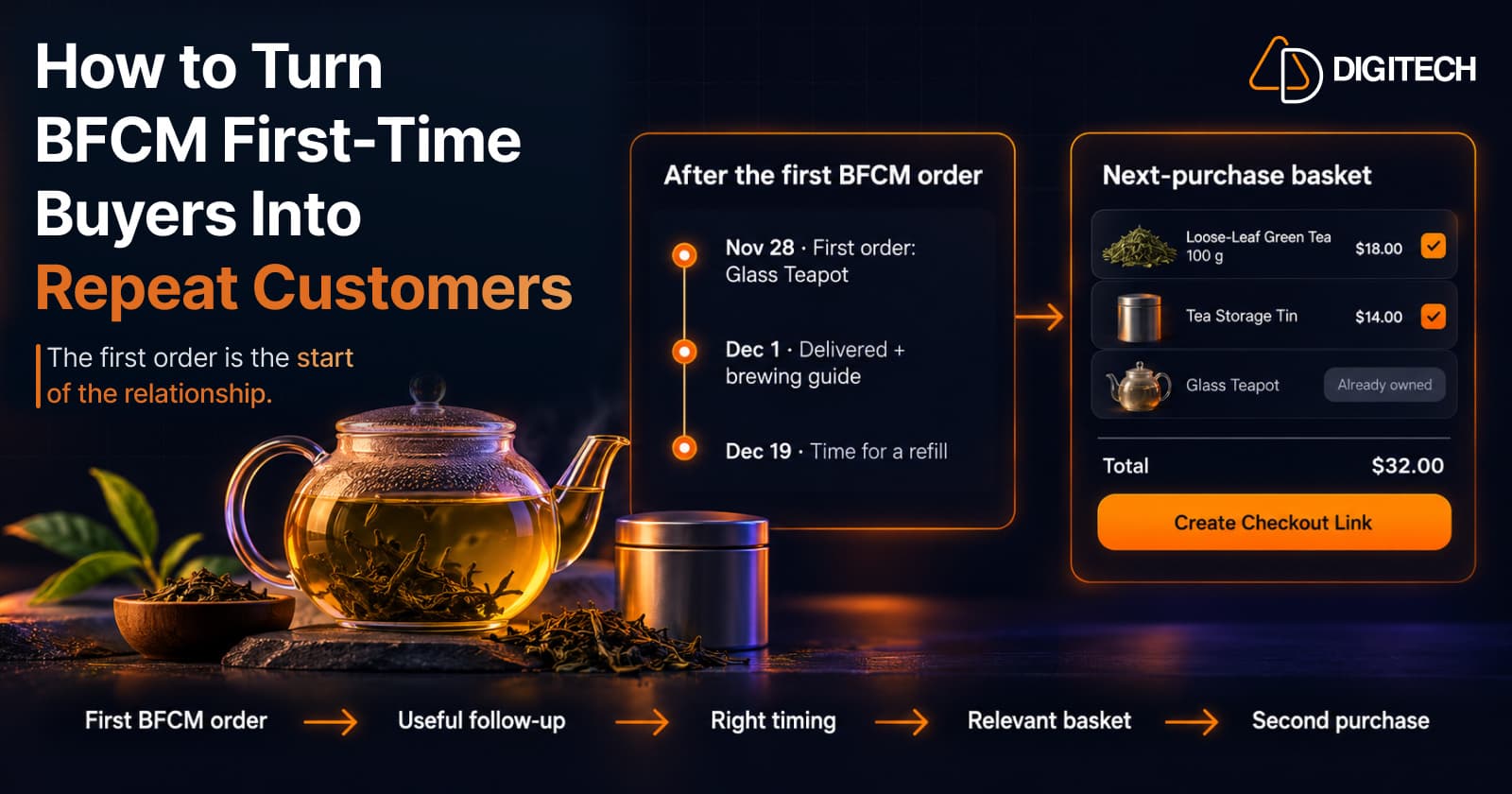
How to Turn BFCM First-Time Buyers Into Repeat Customers
A first BFCM order is the start of a customer relationship. Here's how to follow up with first-time buyers so a relevant second purchase becomes more likely.
Read article