Shopify Return Shipping Fees: What U.S. Merchants Need to Know Before October 23, 2026
From October 23, 2026, Shopify Tax and Tax Platform tax return shipping fees on U.S. orders. Who's affected, what's excluded, and what to review.
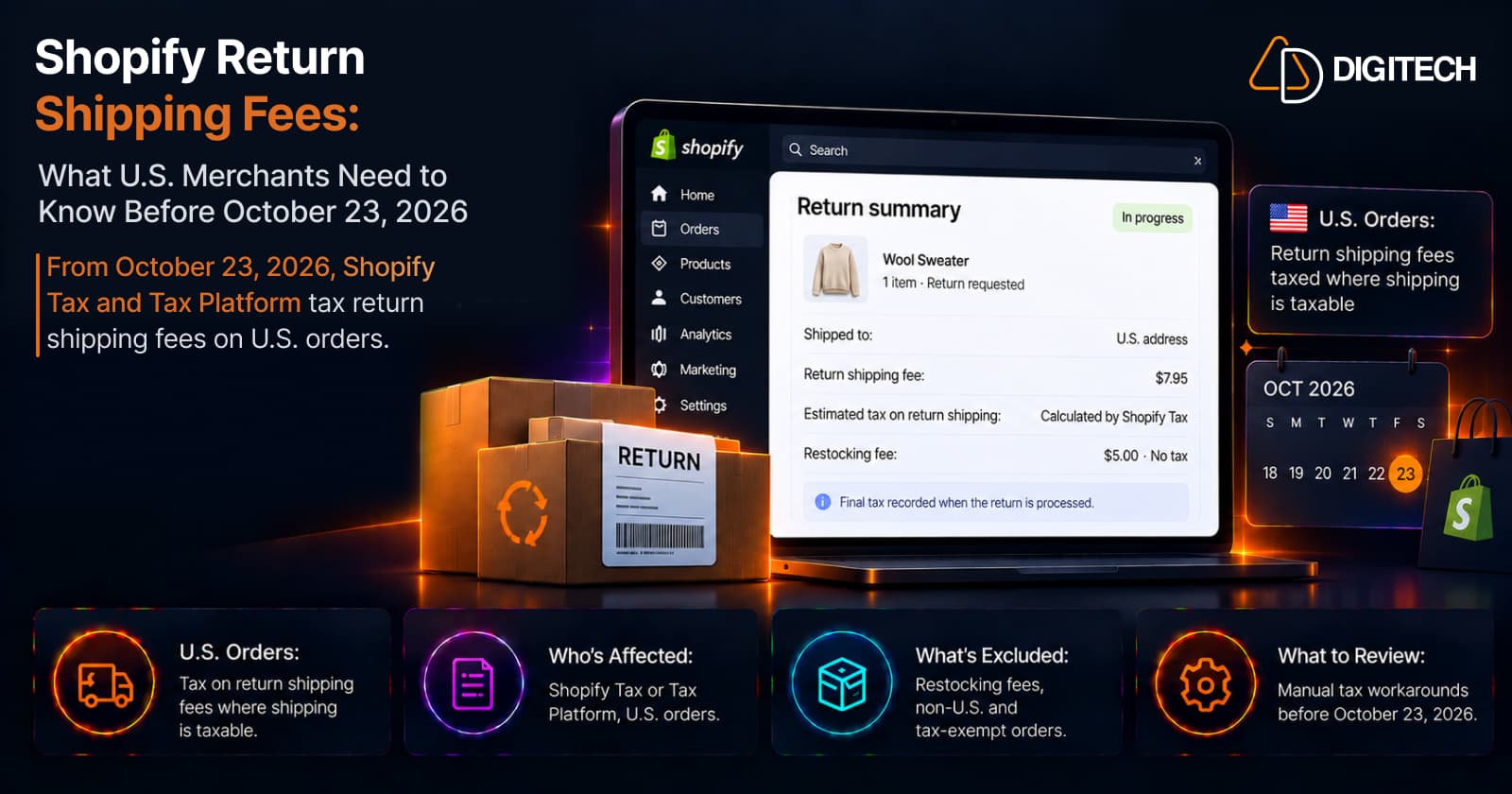
On September 25, 2026, Shopify announced a change to how it handles tax on returns. Starting October 23, 2026, Shopify Tax and Tax Platform will calculate tax on return shipping fees for orders shipped to U.S. addresses, treating them like any other shipping charge.
For most merchants, this happens in the background. Shopify calculates and applies the tax automatically and says no action is required, unless you already handle this tax yourself. But if you charge return shipping fees and have a manual process, a returns app, or an accounting integration built around them, October 23 is the date to plan for. Returns from Black Friday and holiday orders will be created after it.
This article explains what Shopify is changing. It isn't tax or legal advice: your obligations depend on where you're registered and where you ship, so confirm them with a qualified tax professional.
What's Changing on October 23, 2026?
A return shipping fee is what you charge a customer when they send an order back. In Shopify, you set it in your return rules (Settings > Policies > Return and cancellation rules) as a flat fee per return, and staff can edit it on an individual return.
Shopify frames the update as removing the need to fix under-collection of tax on returns yourself. From October 23:
- Tax is calculated automatically. Shopify Tax or Tax Platform calculates and applies tax to the return shipping fee, but only if the fee is taxable where the order was shipped.
- You see an estimate first. When you create a return, the estimated tax appears with the return shipping fee and is included in the return's total tax.
- The final amount is recorded at processing. When you process the return, Shopify records the final tax.
- It flows into reporting. These taxes appear in your Shopify tax reports automatically.
Shopify isn't changing tax law. It's changing how its own tax calculation treats return shipping fees, so the result follows whether shipping is taxable in the jurisdiction the order was shipped to.
Five Charges That Are Easy to Confuse
The change touches one specific charge. It helps to keep it separate from the others on a return:
| Charge | What it is | Changing on October 23? |
|---|---|---|
| Product tax | Tax on the items sold | No |
| Original shipping charge | What the customer paid to ship the order out | No, it follows your existing shipping tax rules |
| Shipping tax | Tax on shipping charges where shipping is taxable | This is the treatment now applied to return fees |
| Return shipping fee | What you charge when the customer sends the order back | Yes, taxed where shipping is taxable (Shopify Tax or Tax Platform, U.S. orders) |
| Restocking fee | A percentage fee you can charge on a return | No, Shopify states tax isn't calculated on restocking fees |
Which Shopify Merchants Are Affected?
A return is in scope when all of these are true:
- You use Shopify Tax or Tax Platform.
- The order was shipped to a U.S. address.
- You charge a return shipping fee on the return.
- The fee is taxable in the jurisdiction the order was shipped to.
- The order isn't tax exempt.
Shipping taxability varies by state, and your existing shipping tax settings still apply. Shopify's example is direct: if you've set shipping to be untaxed in a state, return shipping fees in that state remain untaxed. And if you offer free return shipping, there's no return shipping fee to tax.
What Isn't Changing?
- Not every return shipping fee becomes taxable. Tax applies only where the fee is taxable for the order's destination.
- Restocking fees aren't included. Shopify's Help Center states that tax isn't calculated on restocking fees.
- Orders shipped outside the U.S. aren't covered.
- Tax-exempt orders aren't covered.
- Other tax services aren't covered. Shopify says tax isn't calculated on return shipping fees if you use another tax service, such as Manual Tax or Basic Tax. If you calculate tax through a third-party app, ask that provider how it treats return shipping fees.
- Your product tax and outbound shipping tax work as they did before.
What to Review Before October 23
Shopify says no action is needed unless you have a manual workaround. In practice, it's worth confirming which group you're in, especially if returns touch several systems.
Your settings
- Return shipping fee configuration. Do you charge a flat return shipping fee in your return rules, and do staff adjust fees on individual returns? Note that changes to return rules apply only to future orders.
- Shipping tax settings and overrides. Because return fees follow your shipping tax settings, any shipping overrides or registration choices (such as whether you collect tax on shipping in a given state) also shape where return fees are taxed.
Where tax on returns already lives
- Manual calculations. Spreadsheets, notes on returns, or refund adjustments that add tax to return fees.
- Accounting and reconciliation. How return shipping revenue and its tax are recorded in your books today.
- Third-party returns apps. Ask the provider how its return fees are recorded in Shopify, and whether it calculates tax on them itself.
- ERP, accounting integrations, and custom workflows. Anything that imports, calculates, or posts tax on return fees, including custom scripts or automation built for your store.
Your reporting
Expect return shipping tax to appear in Shopify's tax reports from October 23, and make sure whoever files or reconciles tax knows it's coming.
The Biggest Risk: Double-Counting Tax
The main risk is double-counting tax if you already have a manual process for calculating, collecting, importing, or reconciling tax on return shipping fees. Review that process before October 23 so the new Shopify calculation doesn't overlap with your existing workflow.
Here's how that overlap could happen, conceptually:
- Today, your finance team calculates tax on return shipping fees in a spreadsheet and adds it during reconciliation, or an integration imports it into your accounting system.
- From October 23, Shopify calculates that tax automatically and records it in your tax reports.
- If the manual process continues unchanged, the same tax could be counted twice: once in Shopify's calculation and once in your own workflow.
Shopify's calculation itself isn't the problem, and merchants without such a process have nothing to change. Where one exists, identify it now, decide which system handles return shipping tax from October 23, and retire or adjust the duplicate step. Ask your tax professional how returns that straddle the date should be treated.
How This Affects Holiday and BFCM Returns
Black Friday falls on November 27, 2026, about five weeks after the change. Returns from BFCM and holiday orders will be created after October 23, so they'll all use the new calculation.
That makes October the practical window:
- Settle your return fee policy before holiday orders arrive. Return rule changes apply only to future orders, so a fee change made in December won't reach orders placed in November.
- Brief support and finance teams on why return totals may now include tax on the return shipping fee, so a customer question or a reconciliation difference doesn't turn into a support escalation.
- Keep return terms visible to shoppers. If you're preparing product pages for peak season, make sure return costs are easy to find before checkout (BFCM product page optimization covers where they belong).
If you're already running a pre-peak review of checkout and tax settings, add return shipping fees to it; our 2026 checkout review is a good starting list. And if you're adopting Shopify's 2026 fulfillment changes this fall, review your return settings at the same time.
A Pre-October-23 Checklist
- Confirm which tax service you use: Shopify Tax, Tax Platform, or another
- Confirm the U.S. states you ship to and are registered in
- Review shipping tax settings and overrides
- Review your return shipping fee configuration
- Find any manual process that calculates, collects, imports, or reconciles tax on return shipping fees
- Check returns apps, accounting integrations, and custom workflows
- Create a test return with a return shipping fee on or soon after October 23
- Check that the tax appears as expected in Shopify's tax reports
- Confirm accounting reconciliation with your finance team
- Document the new workflow for support and finance
The Bottom Line
If you use Shopify Tax or Tax Platform, ship to U.S. addresses, and charge return shipping fees, Shopify will start taxing those fees where shipping is taxable from October 23, 2026. For most merchants, that happens automatically and no action is required. The merchants who need to act are those with an existing manual process for calculating, collecting, importing, or reconciling this tax, because that's where double-counting could occur.
If your returns run through custom workflows, third-party apps, or accounting integrations, AD Digitech can review the technical setup before October 23. For your specific tax obligations, speak with a qualified tax professional.
Frequently asked questions
Does Shopify tax all return shipping fees?
No. From October 23, 2026, Shopify Tax and Tax Platform calculate tax on return shipping fees only for orders shipped to U.S. addresses, and only where the fee is taxable in that jurisdiction. If you've set shipping to be untaxed in a state, return shipping fees there stay untaxed.
Does this affect merchants outside the U.S.?
The update applies to orders shipped to U.S. addresses. Shopify's Help Center states that tax isn't calculated on return shipping fees for orders shipped to an address outside the United States.
Does this apply if I use Manual Tax?
No. Shopify lists Manual Tax and Basic Tax as examples of other tax services where tax isn't calculated on return shipping fees. The change applies to Shopify Tax and Tax Platform.
Are restocking fees taxed by this update?
No. Shopify's Help Center states that tax isn't calculated on restocking fees. This change covers return shipping fees only.
What should I do if I already manually calculate return shipping tax?
Review that process before October 23, 2026, as Shopify advises, to avoid double-counting tax once Shopify begins calculating it automatically. Decide which system handles the tax from that date, and confirm the treatment with a qualified tax professional.
Building something on Shopify?
We design, build, and maintain Shopify apps, stores, and AI products — to the standard this article describes.
Related reading
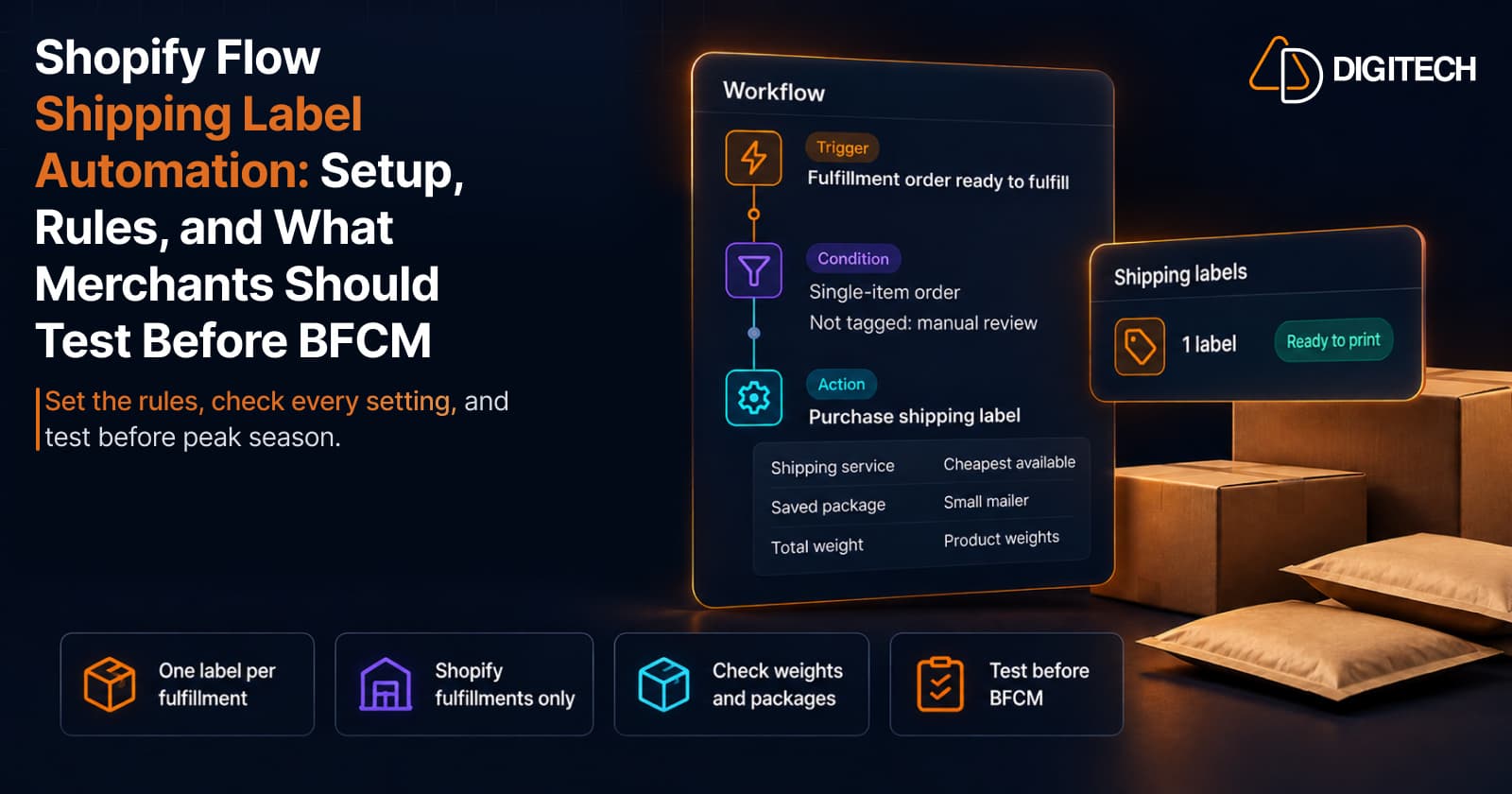
Shopify Flow Shipping Label Automation: Setup, Rules, and What Merchants Should Test Before BFCM
Shopify Flow can now buy shipping labels automatically for orders that match your rules. Here's how the action works, example workflows, and what to test before BFCM.
Read article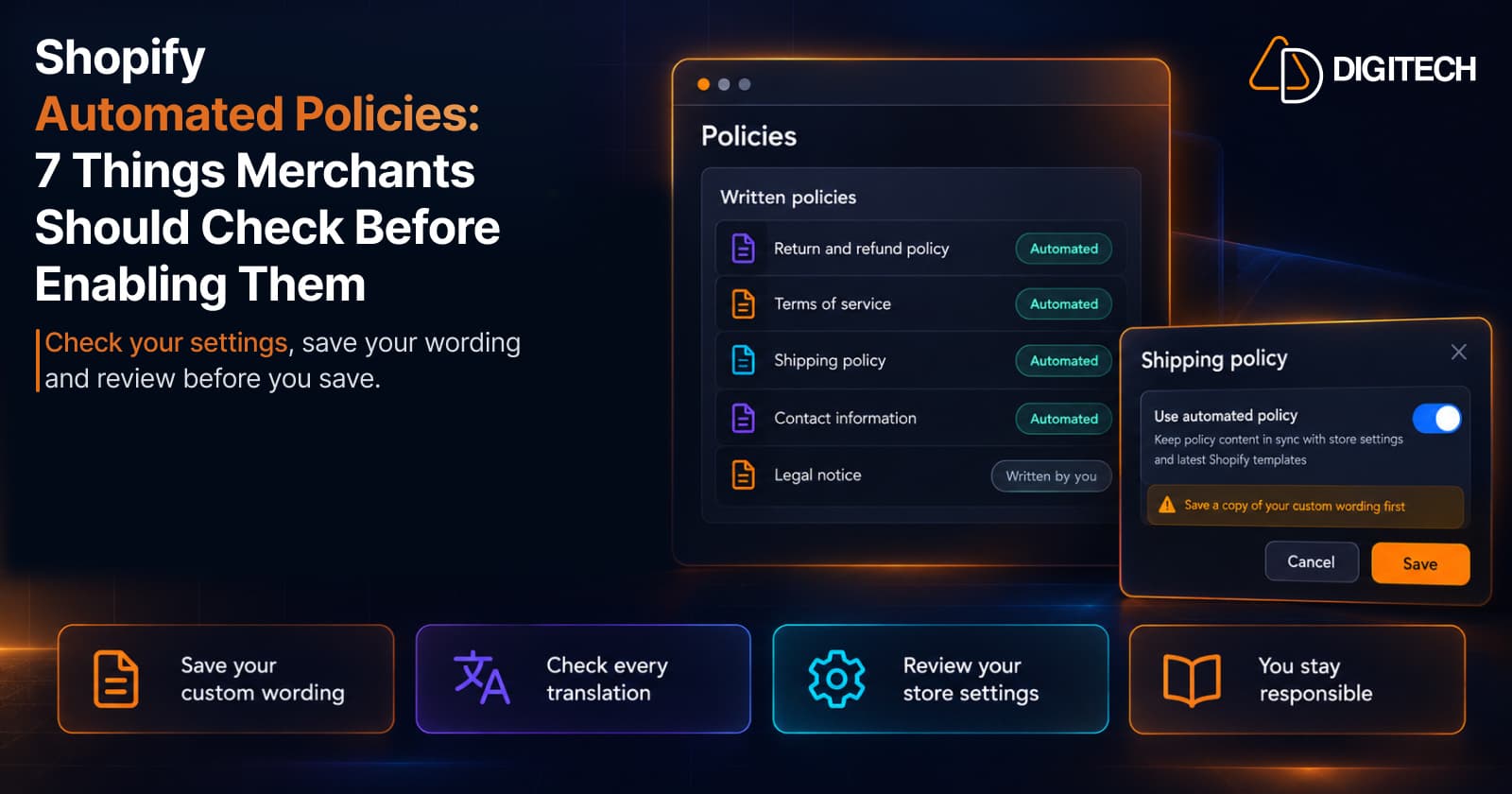
Shopify Automated Policies: 7 Things Merchants Should Check Before Enabling Them
Shopify can now generate and update your return, shipping, terms of service and contact policies from your store settings. Here's what to check before you turn automation on.
Read article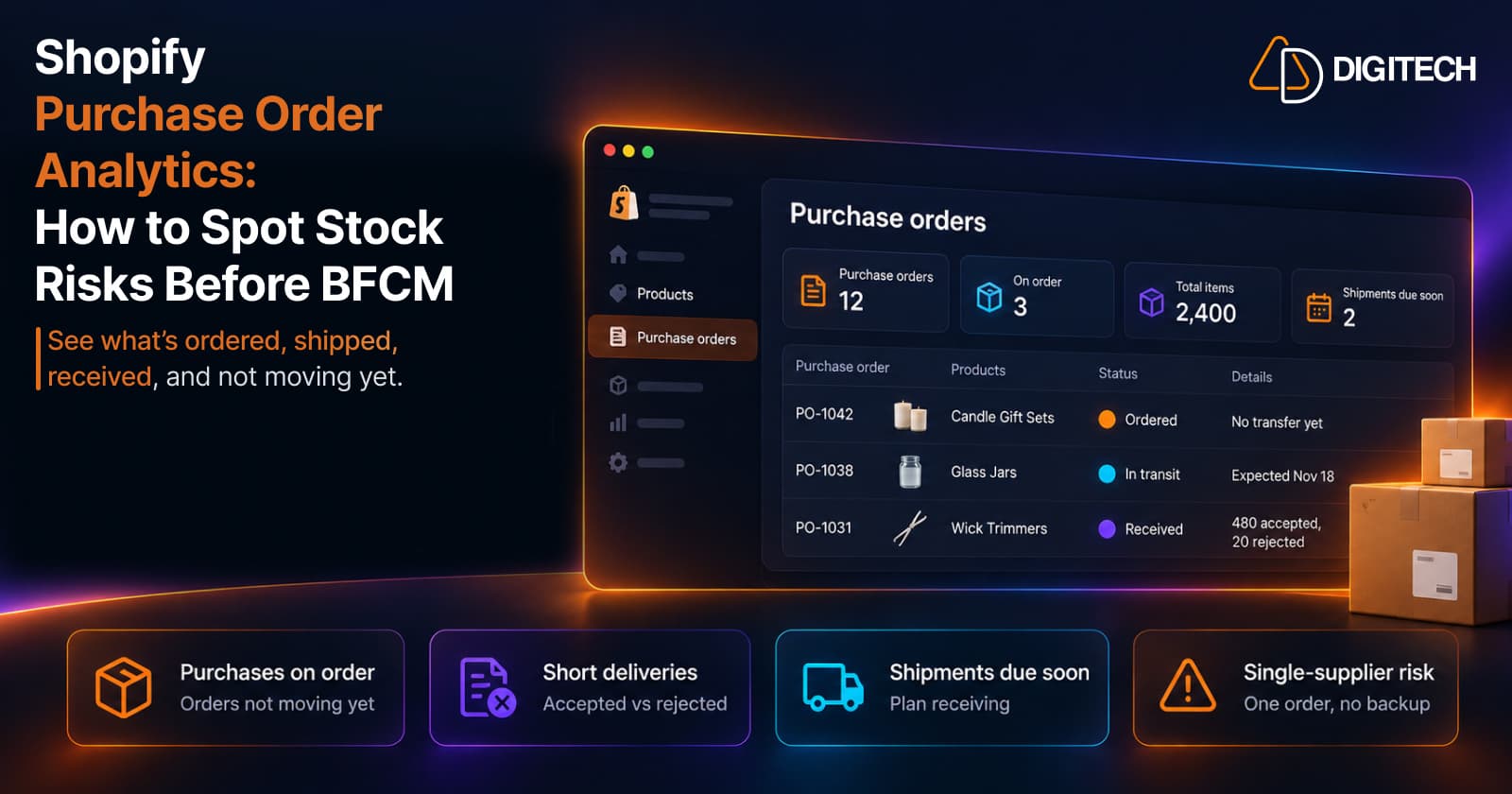
Shopify Purchase Order Analytics: How to Spot Stock Risks Before BFCM
Shopify Analytics now includes purchase order reports. Here's what each report shows, how to use them to spot stock risks before BFCM, and what they can't tell you.
Read article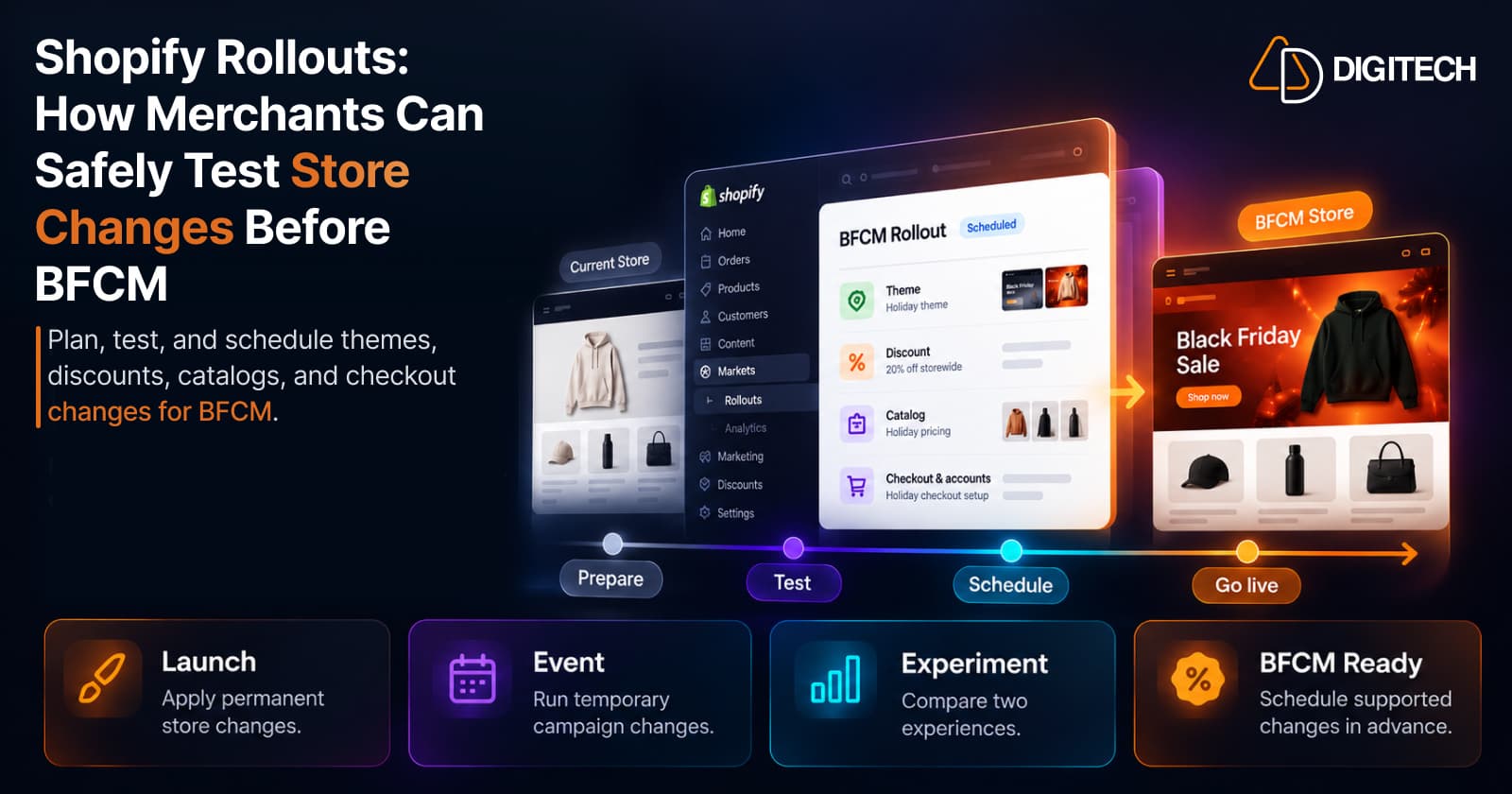
Shopify Rollouts: How Merchants Can Safely Test Store Changes Before BFCM
Learn how Shopify Rollouts let merchants schedule, test, and launch store changes safely before BFCM, including themes, discounts, catalogs, and checkout.
Read article
Shopify Shop Checkout Gets Faster: What Merchants Need to Know
Shopify's October 5, 2026 Shop update brings faster checkout and carts that sync across devices. See how it works, who qualifies and what to check before BFCM.
Read article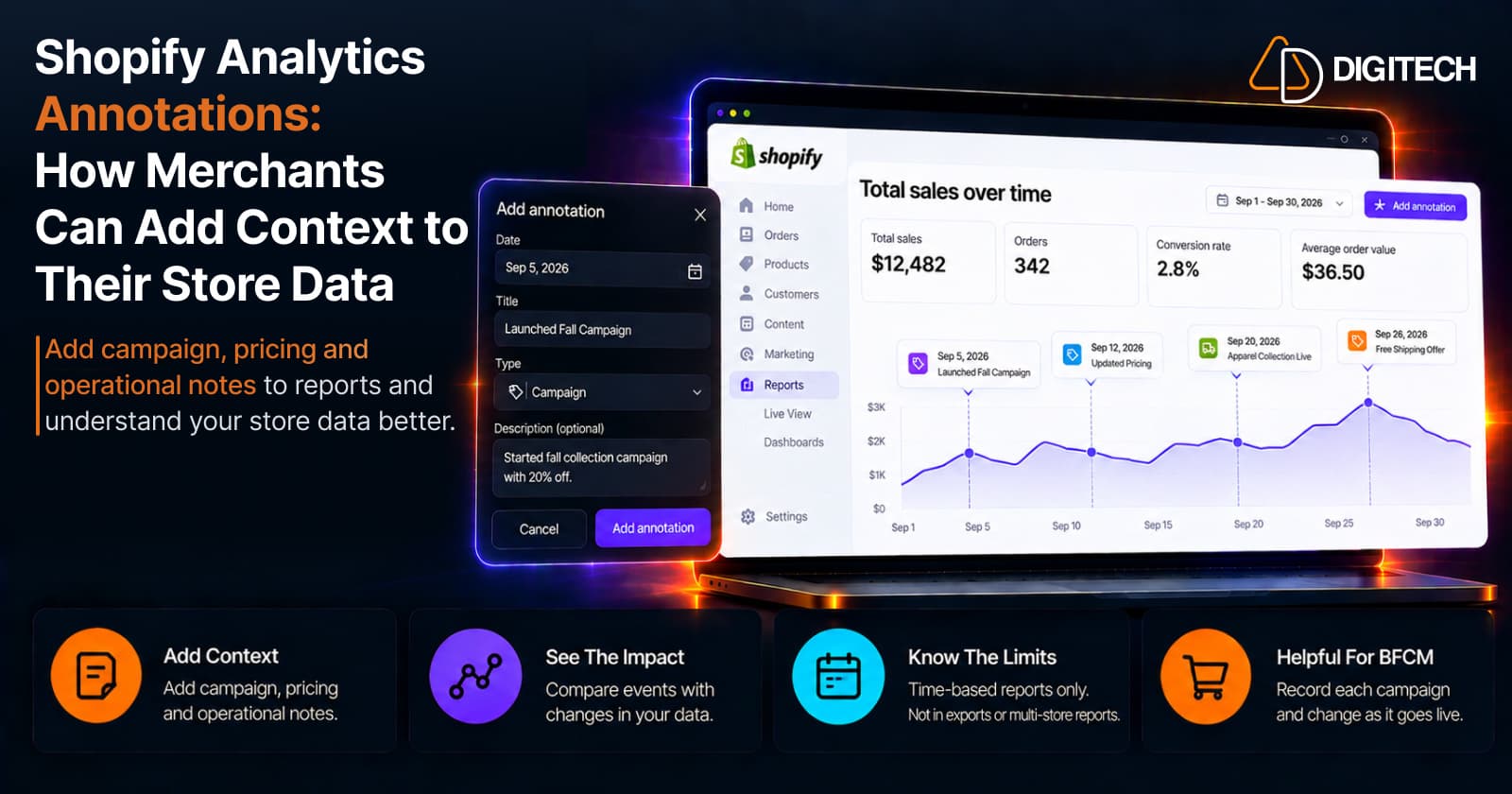
Shopify Analytics Annotations: How Merchants Can Add Context to Their Store Data
Shopify Analytics annotations let merchants add campaign, pricing and operational notes to reports. See how they work, the limits, and how to use them for BFCM.
Read article
Shopify Canvas Explained: How AI Is Changing Shopify Store Design in 2026
Shopify Canvas, announced October 1, 2026, lets merchants design a store with Sidekick. See how it works, its current limits, and what it means for developers.
Read article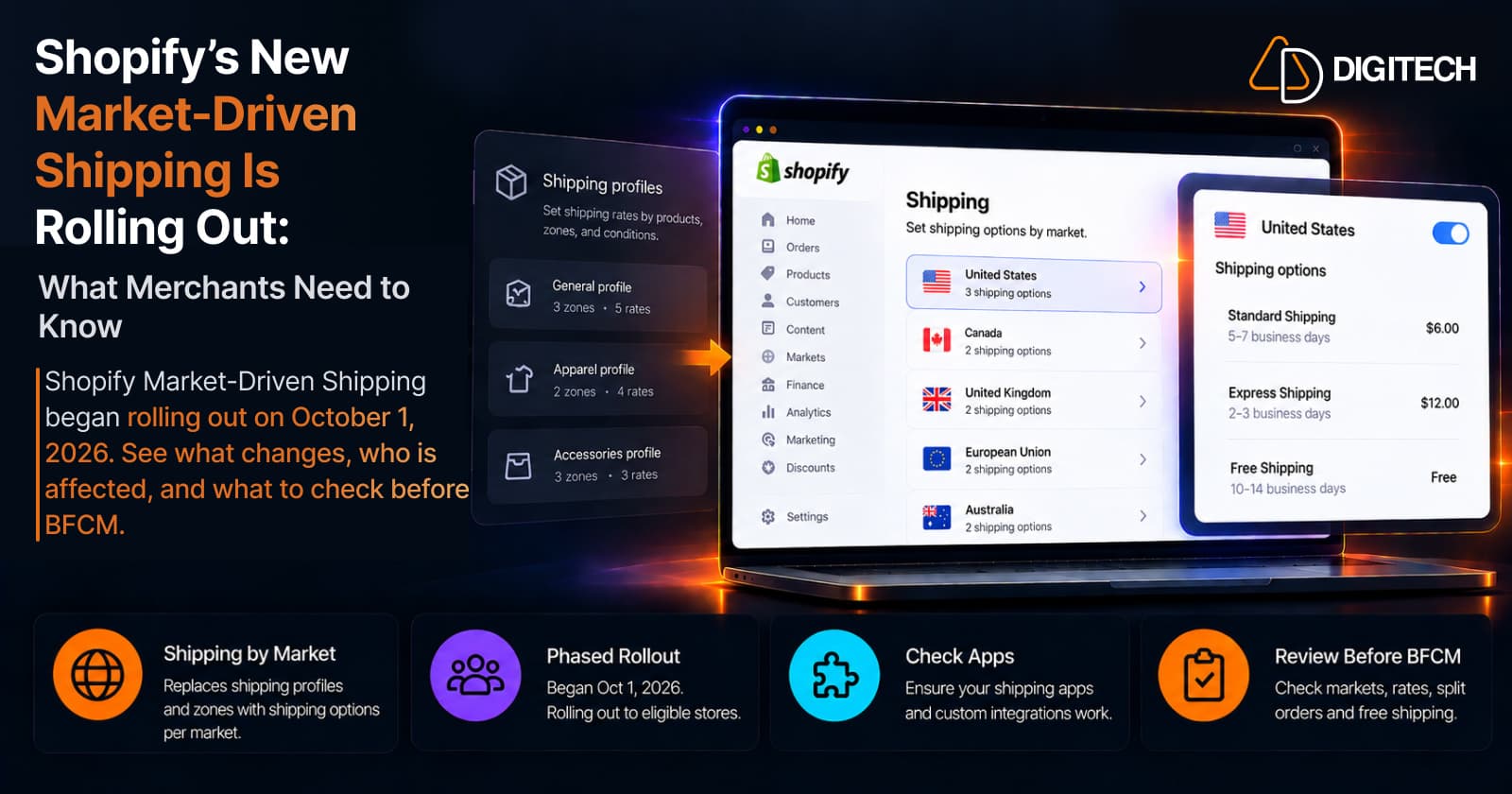
Shopify's New Market-Driven Shipping Is Rolling Out: What Merchants Need to Know
Shopify Market-Driven Shipping began rolling out on October 1, 2026. See what changes, who is affected, and what to check before BFCM.
Read article
Shopify Liquid Storefronts Now Start Loading 29% Faster: What Merchants Need to Know
Shopify now streams the top of eligible Liquid pages early, cutting TTFB about 29% at p75. What it means for FCP, LCP, your theme, and what still needs fixing.
Read article