Shopify B2B in 2026: Is Shopify Ready for Serious Wholesale Businesses?
Shopify B2B had a big 2026: native wholesale features are no longer Plus-only, and Winter '26 closed much of the gap with dedicated B2B platforms. So is Shopify ready for serious wholesale? For most brands, yes — here's what you get, where the real scale line sits, and the honest limitations to know before you commit.
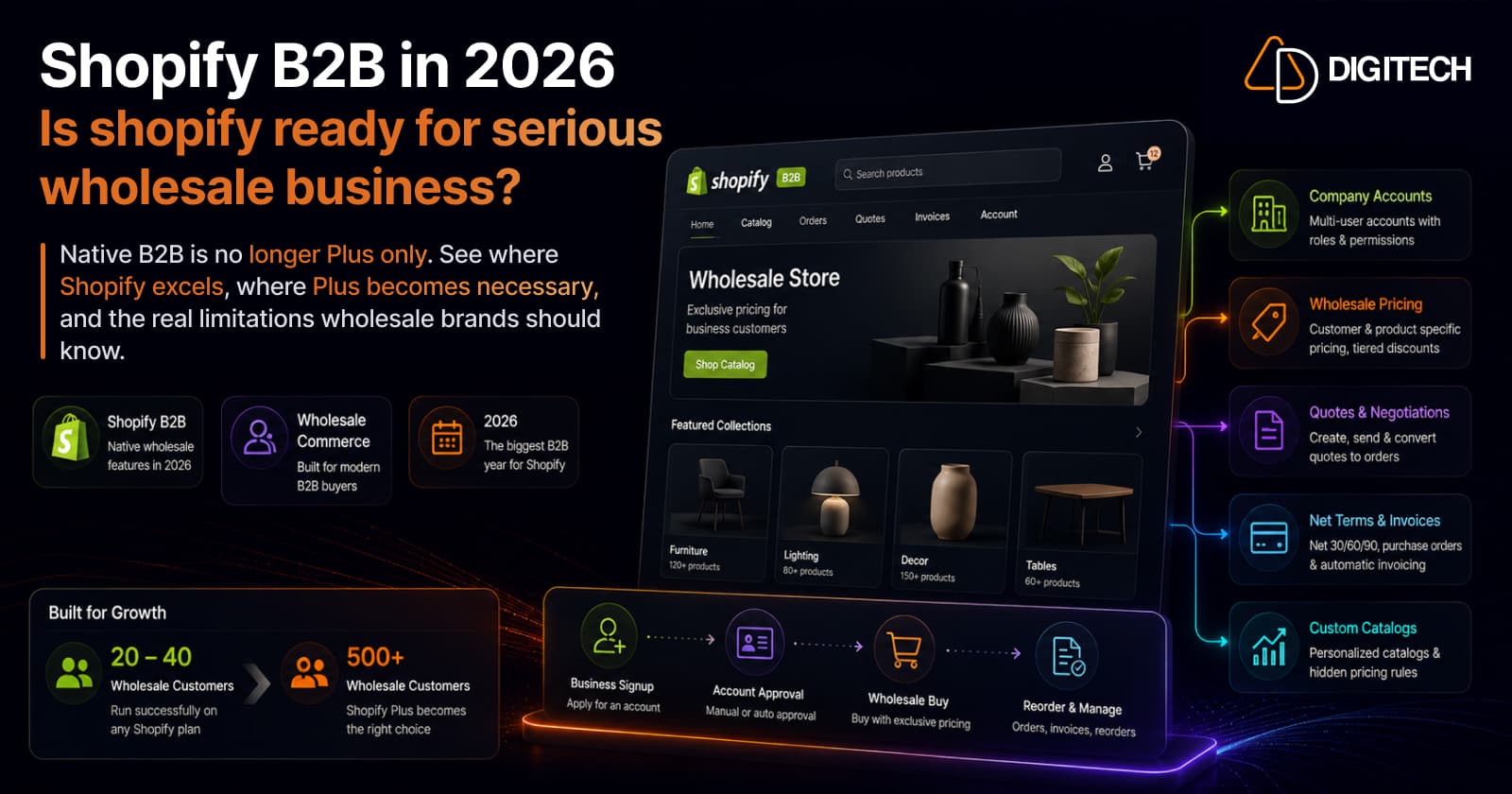
The short answer: for the vast majority of wholesale businesses in 2026, yes — Shopify is genuinely ready. It just got dramatically more accessible: native B2B is no longer Plus-only, and Winter '26 closed much of the gap with dedicated B2B platforms. The honest exception is very large or unusually complex operations, where you'll either need Plus or, in rare cases, a specialized platform.
We build Shopify B2B and wholesale stores, so here's the practical, no-hype assessment.
The big 2026 shift: B2B is no longer Plus-only
This is the headline. For years, serious B2B on Shopify meant Shopify Plus. As of late 2025, native B2B features are available across Basic, Grow, Advanced, and Plus. For the first time, merchants on non-Plus plans get:
- Company profiles for wholesale buyers
- Up to three custom catalogs with tailored pricing
- Volume discounts and quantity rules
- Vaulted credit cards
- Payment terms (net 30, etc.)
For small and mid-sized wholesalers, that removes the single biggest barrier — you no longer need an enterprise plan to run real wholesale.
What Shopify B2B actually gives you
The native toolkit covers the fundamentals of wholesale:
- Company profiles — model your buyers as companies with multiple locations and buyer roles, not just individual logins.
- Custom catalogs and pricing — different products, prices, and discounts per company or segment.
- Net payment terms — offer net 30/60/90 and vaulted cards, not just pay-now.
- A dedicated B2B checkout — a checkout built for wholesale, distinct from your retail flow.
And critically, it all runs on the same backend as your DTC commerce. Wholesale buyers see B2B pricing and payment options after they log in; retail shoppers see your normal storefront. One store, one product catalog to maintain, both channels served.
Can it run a real wholesale business? For most, clearly yes
Here's the concrete test. A wholesaler with 20–40 wholesale customers, fixed-percentage pricing tiers, and net-30 terms can run its entire B2B operation on Advanced — no Plus required. That profile describes a huge share of wholesale brands: you get company accounts, tiered pricing, terms, and a proper B2B checkout, on a mainstream plan.
If that's you, the answer to "is Shopify ready?" is an easy yes — and you get the operational simplicity of running wholesale and DTC from one system.
Where Shopify Plus becomes necessary: the scale line
Shopify B2B has a real ceiling, and it's worth knowing exactly where it is. Five Plus-only capabilities matter at scale:
- Unlimited catalogs (non-Plus caps you at three)
- Direct catalog-to-company/location assignment
- Partial payments
- Deposits
- Sales-rep permission scoping
The practical threshold is around 500 wholesale customers. Below that line, non-Plus B2B usually works fine. Above it, the 3-catalog cap, the lack of partial payments, and the sales-rep gaps turn into genuine operational blockers — that's when Plus stops being optional. (For the broader plan decision, see Shopify Plus vs Shopify.)
Winter '26 closed much of the gap with dedicated platforms
For brands already on Plus, the platform got materially stronger. Winter '26 added around ten B2B features that closed much of the gap with dedicated B2B platforms like Adobe Commerce (Magento) and BigCommerce B2B Edition.
The honest state of play: those specialized platforms still offer deeper customization for highly complex, bespoke procurement systems — but Shopify Plus B2B has evolved into a highly capable wholesale solution for the vast majority of B2B brands, at a fraction of the operational overhead of running Magento.
The honest limitations — know these before you commit
No platform is perfect, and these are the real gaps:
- No buyer-facing post-purchase editing. This is the one Plus teams notice most at scale: buyers can't self-serve changes, so quantity adjustments, address corrections, and PO updates all become support tickets. If your wholesale flow involves frequent order edits, budget for that operationally (or an app/custom workflow).
- Deeply complex procurement — multi-level approval chains, punchout catalogs, very tight ERP-driven ordering — is where dedicated B2B platforms still lead. A minority of large or unusual operations genuinely need that depth.
- The 3-catalog cap on non-Plus — fine for simple tiered pricing, limiting if you need many distinct customer-specific catalogs.
None of these are dealbreakers for most brands — but you should size them against your wholesale workflow before committing.
The decision framework
| Shopify B2B is the right call if… | Look harder (Plus or a specialist) if… |
|---|---|
| You have up to a few hundred wholesale accounts | You're past ~500 wholesale customers |
| Percentage/tiered pricing and net terms cover your needs | You need partial payments, deposits, or many custom catalogs |
| You want B2B and DTC from one system | You need sales-rep permission scoping at scale |
| Your order flow is relatively standard | You have deep multi-level procurement / punchout / tight ERP ordering |
Rule of thumb: most wholesalers should start on Shopify (Advanced or Plus), and only look at a dedicated B2B platform if their procurement complexity genuinely demands it — which is rarer than it used to be.
Getting started
- Pick the plan by your scale — Advanced covers most mid-market wholesale; move to Plus at ~500 customers or when you hit the five Plus-only needs.
- Set up company profiles, catalogs, and price lists for your buyer segments.
- Configure payment terms and the B2B checkout (and consider customizing that checkout with extensions for wholesale-specific fields like PO numbers).
- Plan for the order-edit gap — decide how you'll handle post-purchase changes before you launch.
We build and migrate Shopify B2B and wholesale stores end to end — company/catalog architecture, custom pricing logic, B2B checkout, and the ERP and workflow integrations that make wholesale run smoothly. See our Shopify store development work, or talk to us about your wholesale build.
Frequently asked questions
Is Shopify B2B only on Shopify Plus?
Not anymore. As of late 2025, native B2B features are available on Basic, Grow, Advanced, and Plus — not just Plus. Non-Plus plans get company profiles for wholesale buyers, up to three custom catalogs with tailored pricing, volume discounts and quantity rules, vaulted credit cards, and payment terms. Shopify Plus adds unlimited catalogs and the advanced controls that matter at scale.
Can Shopify run a serious wholesale business in 2026?
For the vast majority of wholesalers, yes. A brand with 20–40 wholesale customers, fixed-percentage pricing tiers, and net-30 terms can run its entire B2B operation on Advanced. Shopify B2B provides company profiles, custom catalogs and pricing, net payment terms, and a dedicated B2B checkout — all on the same backend as your DTC store.
When do I actually need Shopify Plus for B2B?
When you scale past roughly 500 wholesale customers, or when you need one of five Plus-only capabilities: unlimited catalogs (beyond the 3-catalog cap), direct catalog-to-company/location assignment, partial payments, deposits, or sales-rep permission scoping. Below that line, non-Plus B2B usually works; above it, the catalog cap and missing payment/rep controls become operational blockers.
What are Shopify B2B's main limitations?
The one most teams notice at scale is that native B2B has no buyer-facing post-purchase editing — buyers contact you for quantity adjustments, address corrections, and PO updates, which become support tickets. And highly complex procurement (deep multi-level approval chains, very tight ERP integration) still favors dedicated platforms for a minority of large operations.
Shopify B2B vs Adobe Commerce or BigCommerce — which is better?
For most B2B brands, Shopify Plus B2B is now highly capable and far simpler to run — Winter '26 added around ten features that materially closed the gap. Adobe Commerce (Magento) and BigCommerce B2B Edition still offer deeper customization for highly complex, bespoke procurement systems, which a minority of very large or unusual operations genuinely need.
Can I run B2B and DTC on the same Shopify store?
Yes — and it's a core strength. B2B runs on the same backend as your DTC commerce. Wholesale buyers see B2B pricing and payment options after they authenticate; retail customers see the standard storefront. One store, one catalog to maintain, both channels.
Building something on Shopify?
We design, build, and maintain Shopify apps, stores, and AI products — to the standard this article describes.
Related reading
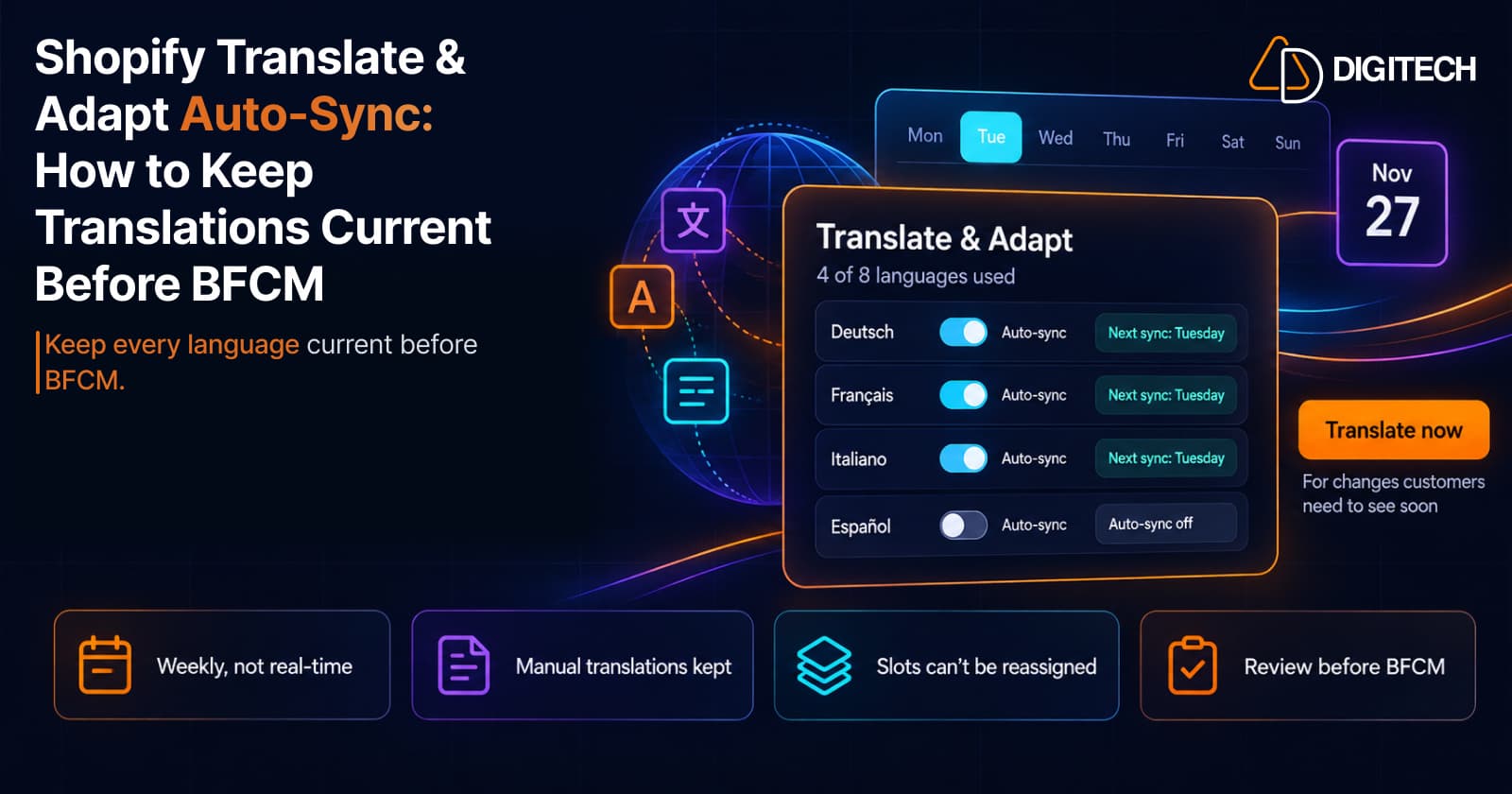
Shopify Translate & Adapt Auto-Sync: How to Keep Translations Current Before BFCM
Translate & Adapt can now update translations weekly with Auto-sync. Here's who can use it, how it differs from Translate now, and how to plan translations before BFCM.
Read article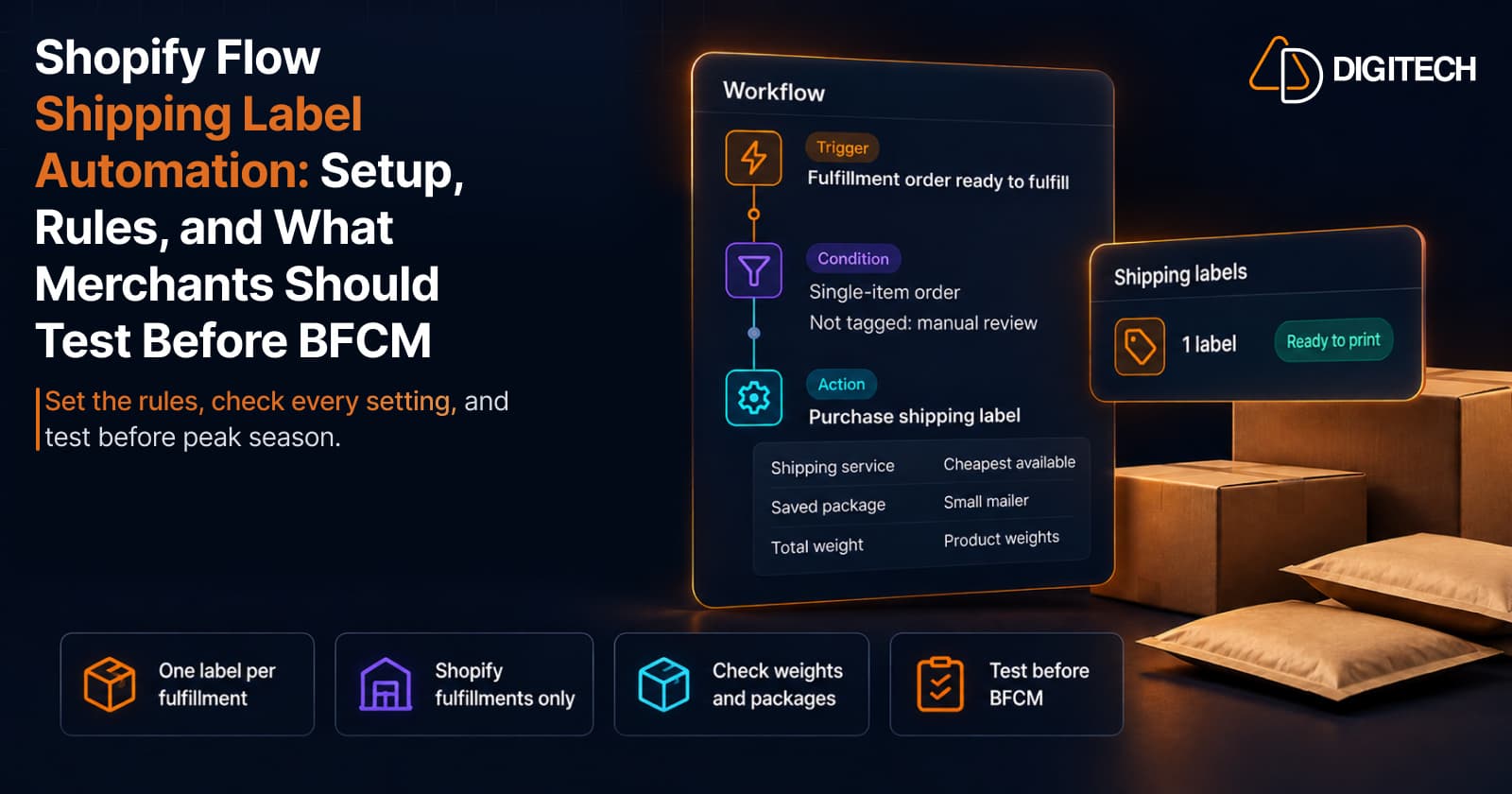
Shopify Flow Shipping Label Automation: Setup, Rules, and What Merchants Should Test Before BFCM
Shopify Flow can now buy shipping labels automatically for orders that match your rules. Here's how the action works, example workflows, and what to test before BFCM.
Read article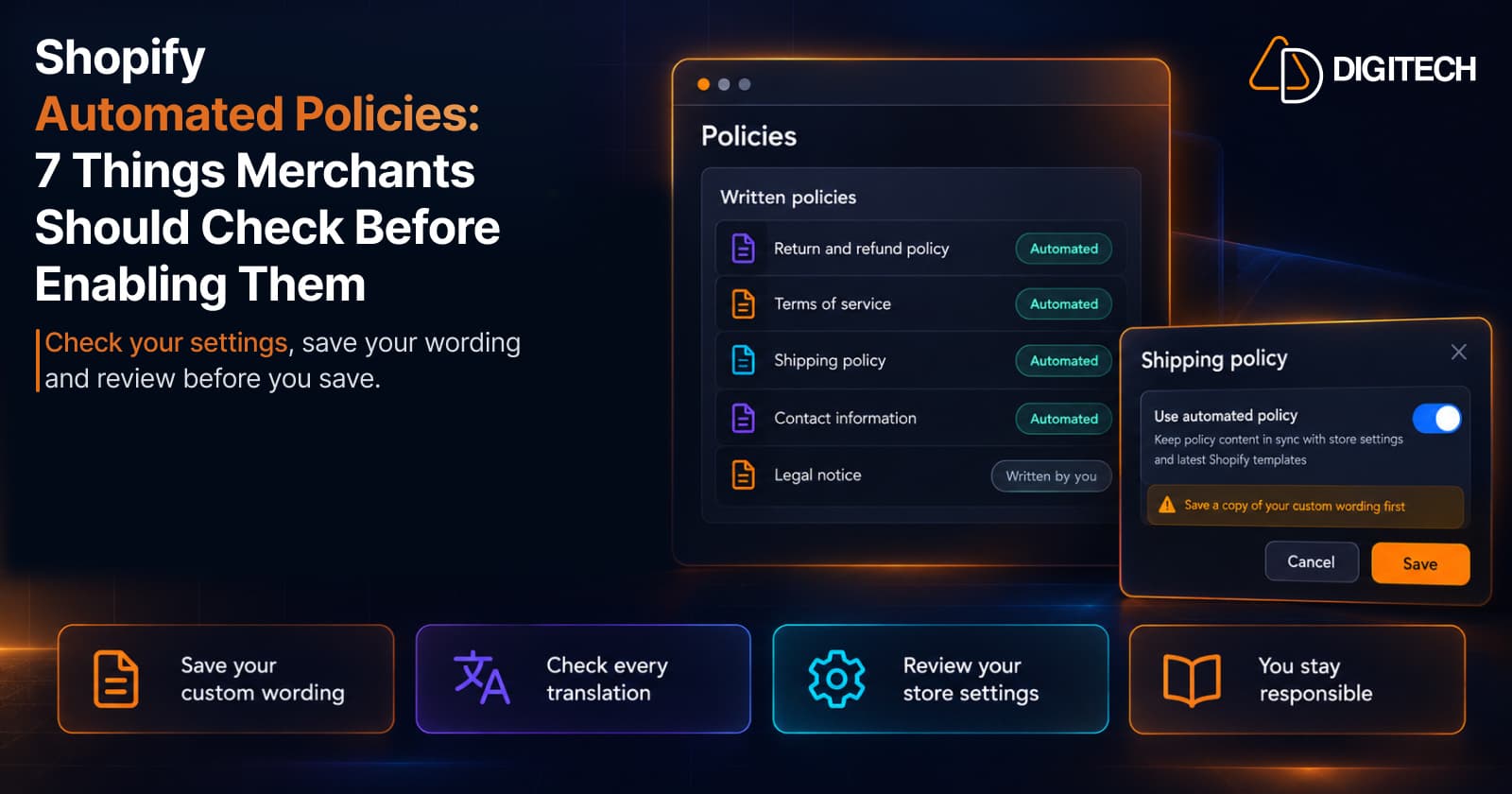
Shopify Automated Policies: 7 Things Merchants Should Check Before Enabling Them
Shopify can now generate and update your return, shipping, terms of service and contact policies from your store settings. Here's what to check before you turn automation on.
Read article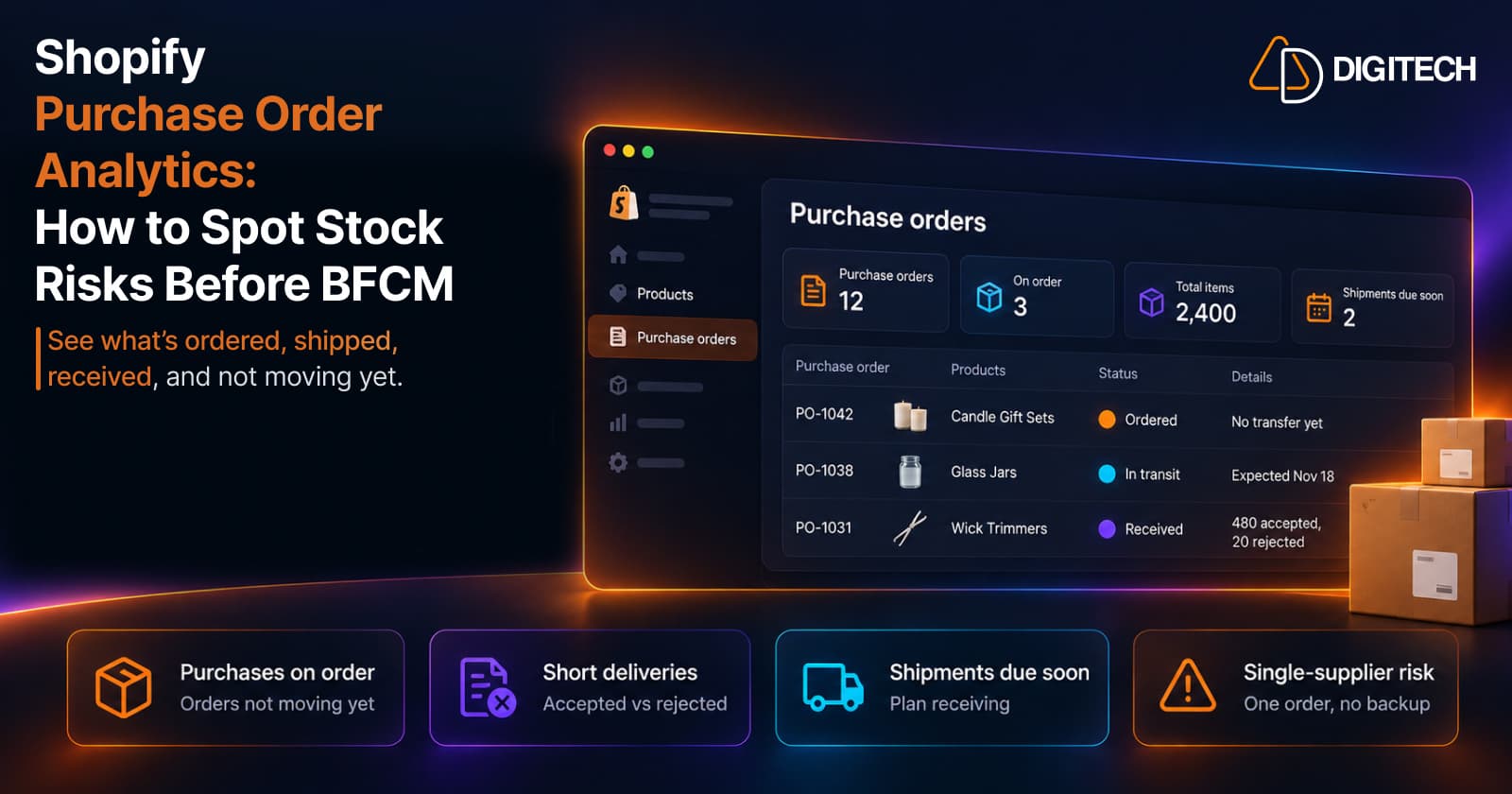
Shopify Purchase Order Analytics: How to Spot Stock Risks Before BFCM
Shopify Analytics now includes purchase order reports. Here's what each report shows, how to use them to spot stock risks before BFCM, and what they can't tell you.
Read article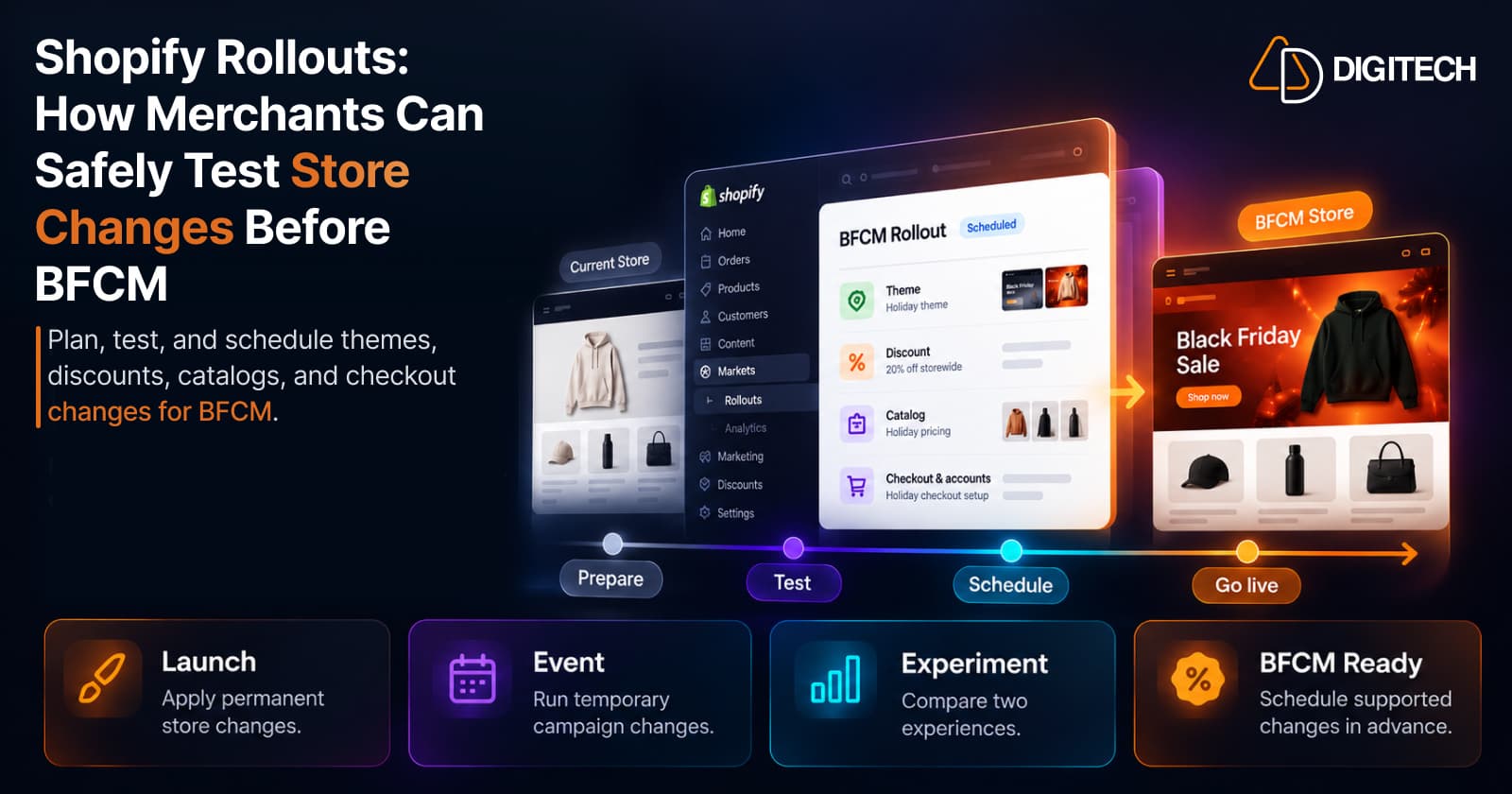
Shopify Rollouts: How Merchants Can Safely Test Store Changes Before BFCM
Learn how Shopify Rollouts let merchants schedule, test, and launch store changes safely before BFCM, including themes, discounts, catalogs, and checkout.
Read article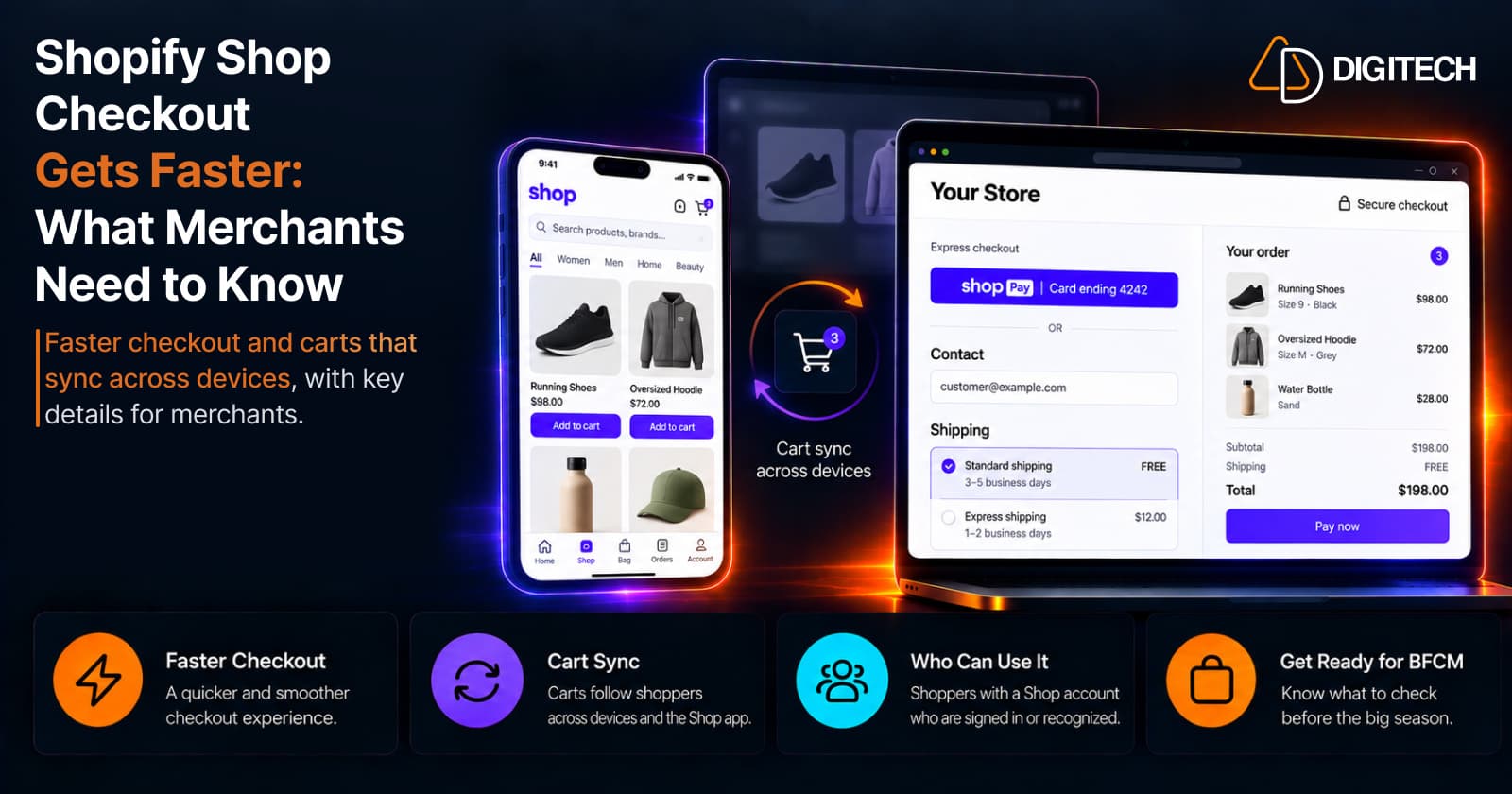
Shopify Shop Checkout Gets Faster: What Merchants Need to Know
Shopify's October 5, 2026 Shop update brings faster checkout and carts that sync across devices. See how it works, who qualifies and what to check before BFCM.
Read article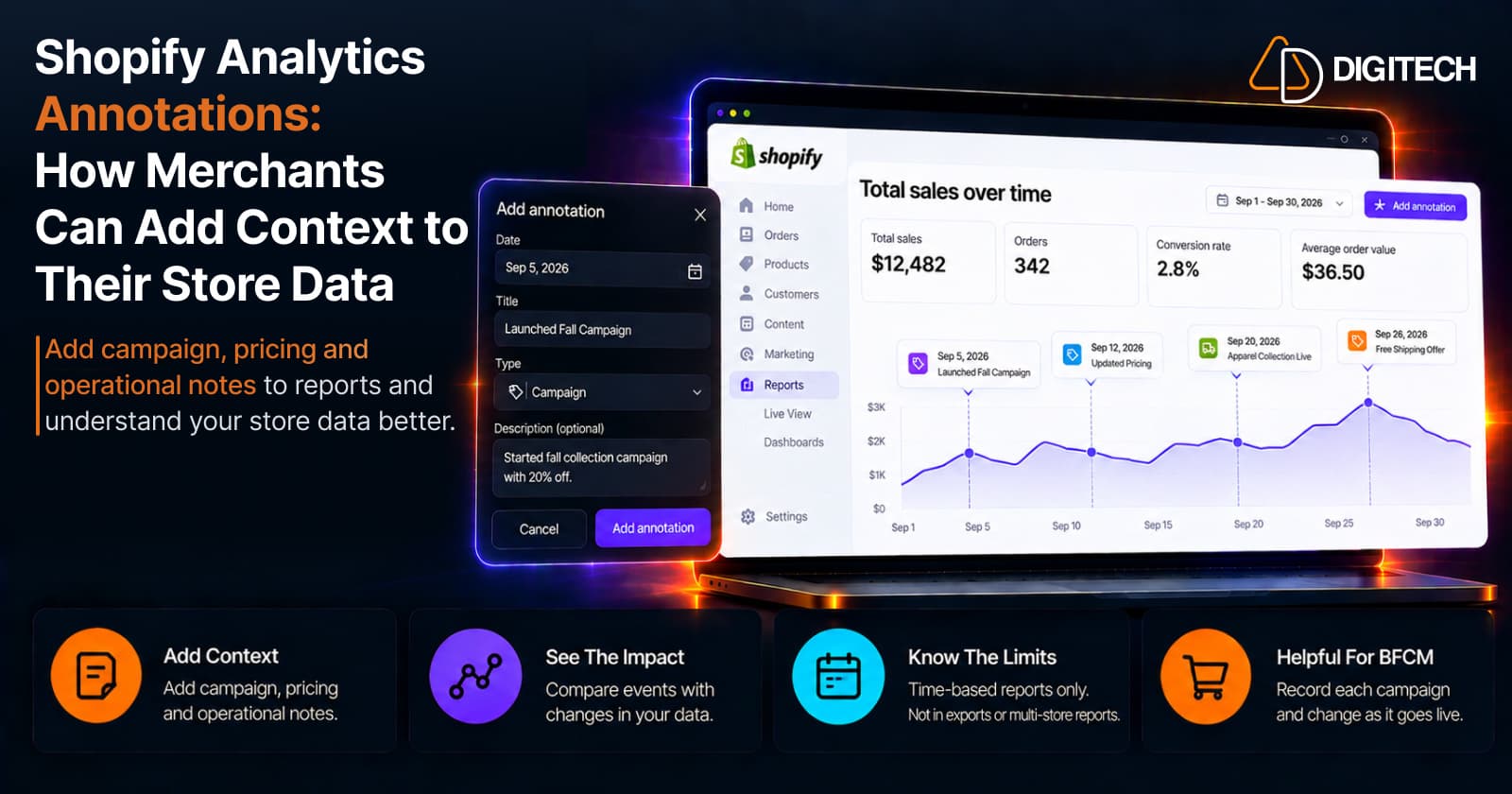
Shopify Analytics Annotations: How Merchants Can Add Context to Their Store Data
Shopify Analytics annotations let merchants add campaign, pricing and operational notes to reports. See how they work, the limits, and how to use them for BFCM.
Read article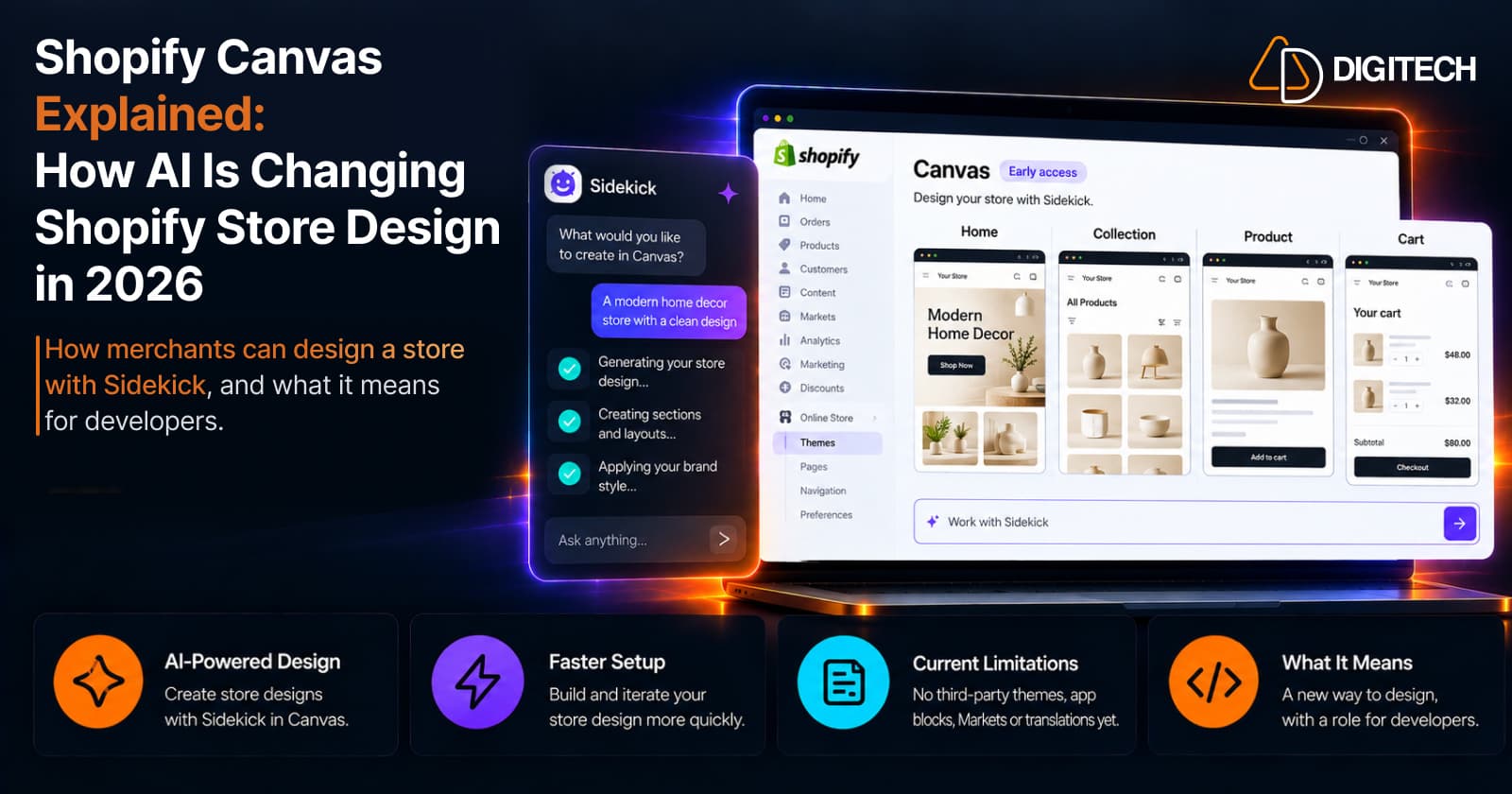
Shopify Canvas Explained: How AI Is Changing Shopify Store Design in 2026
Shopify Canvas, announced October 1, 2026, lets merchants design a store with Sidekick. See how it works, its current limits, and what it means for developers.
Read article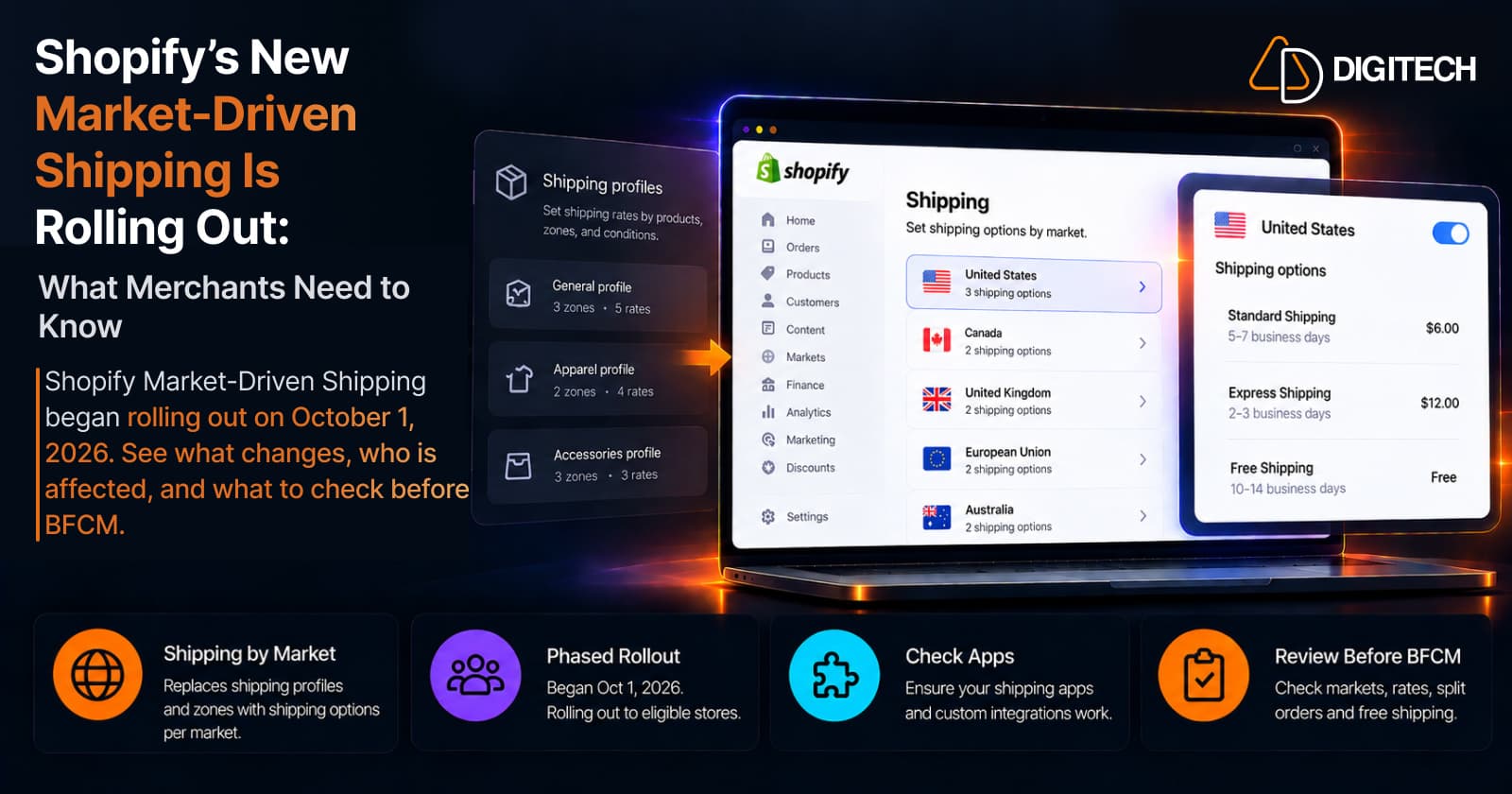
Shopify's New Market-Driven Shipping Is Rolling Out: What Merchants Need to Know
Shopify Market-Driven Shipping began rolling out on October 1, 2026. See what changes, who is affected, and what to check before BFCM.
Read article